ماما تَطْبُخ
Mama is Cooking
A Hayya Beena Naqraa story · Tier 1 · For ages 5–7
Cover page
ماما تَطْبُخ
Mama is Cooking
🎨 Illustration prompt
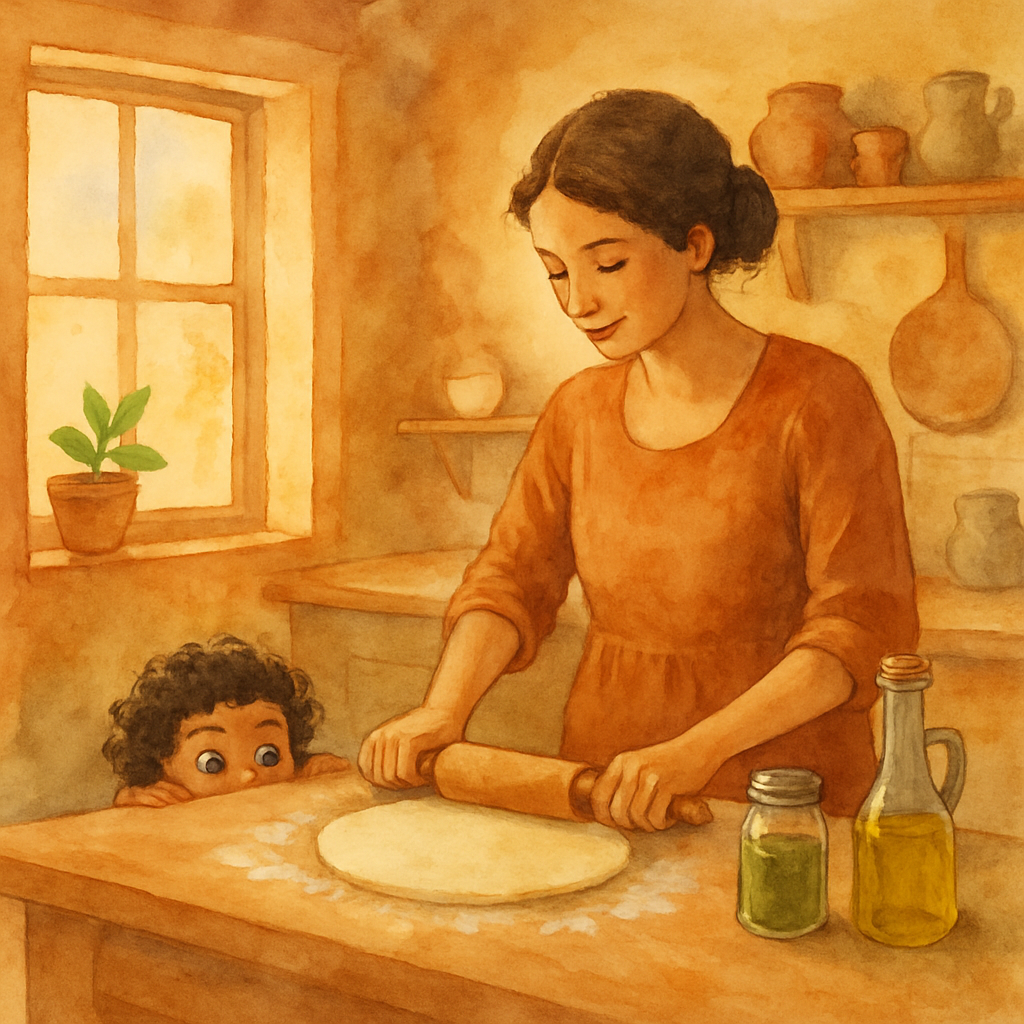
A soft watercolor illustration of a warm Levantine kitchen in the morning. A mother with her hair tied back stands at a wooden counter, rolling dough with a small rolling pin. A young child with curly dark hair peeks over the counter, eyes wide with curiosity. A small jar of green za'atar and a bottle of olive oil sit nearby. Sunlight pours through a window with a sprig of mint on the sill. Earthy terracotta and warm yellow tones. Watercolor style. No text in the image.
Page 1
أَنا جائِع.
I am hungry.
🎨 Illustration prompt
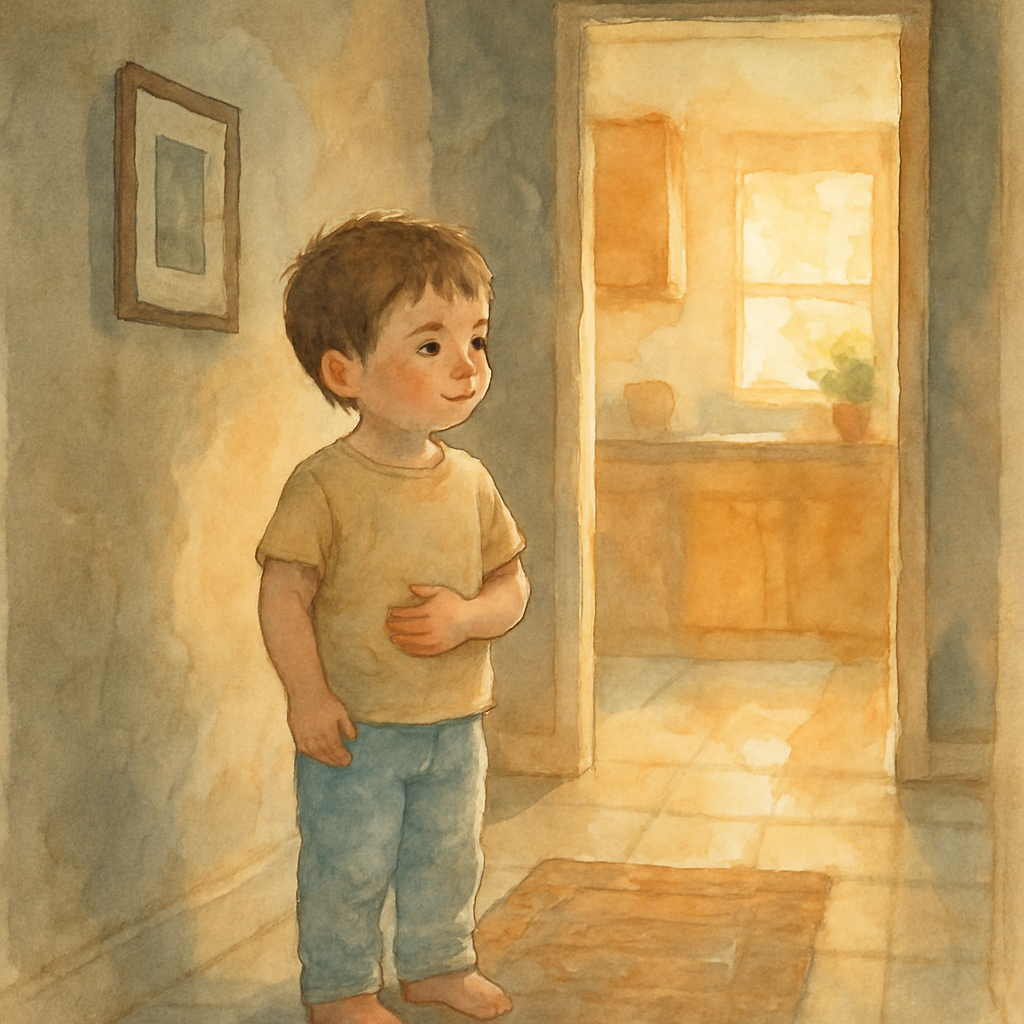
The young child stands in a sunlit hallway, one hand on their belly, looking toward the kitchen with a small hopeful smile. They wear a soft cotton t-shirt and pajama pants. The hallway has a simple framed photo on the wall and a small woven rug on the tile floor. Morning light spills in from the open kitchen doorway. Watercolor style. No text in the image.
Page 2
ماما تَطْبُخُ في المَطْبَخ.
Mama is cooking in the kitchen.
🎨 Illustration prompt
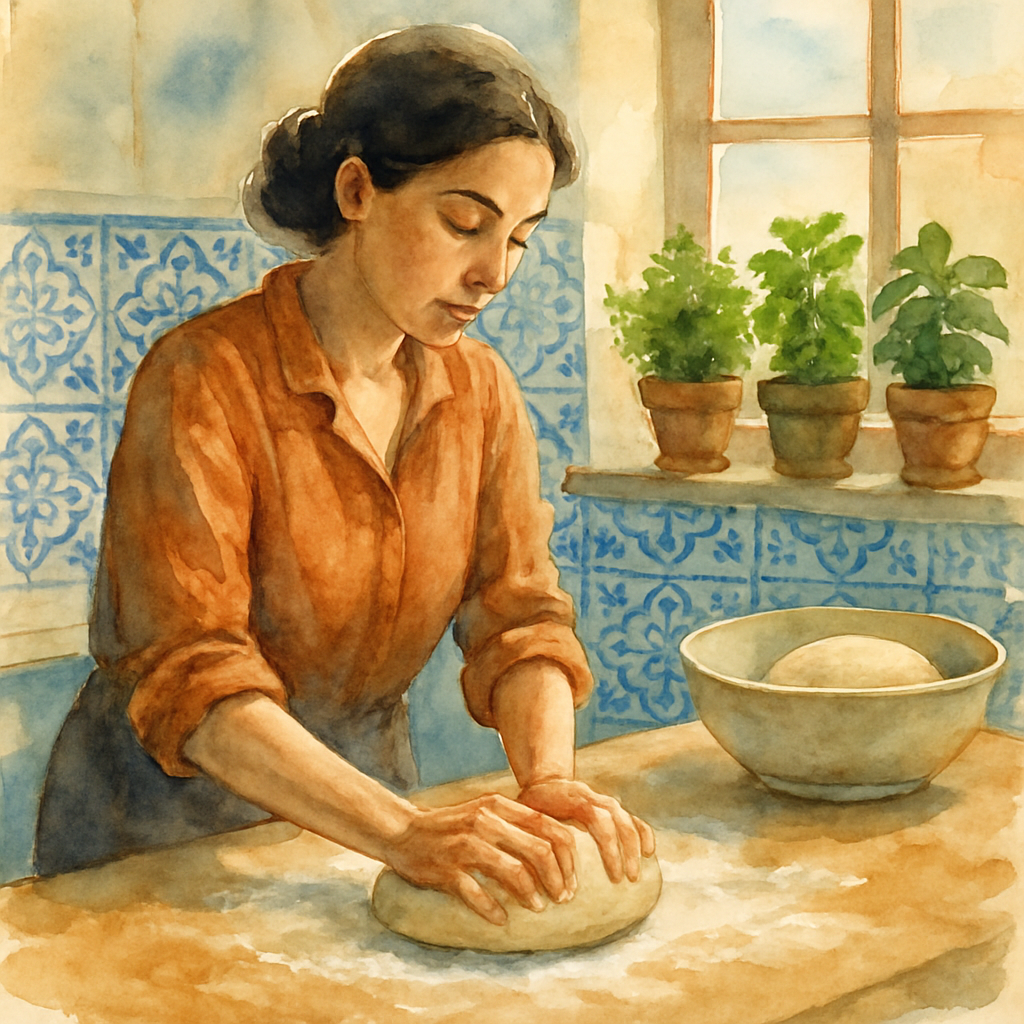
The mother stands at the kitchen counter in a sunny Levantine kitchen, sleeves rolled up, kneading a soft ball of dough. Flour lightly dusts the counter. Behind her, blue and white patterned tiles and a window with small potted herbs — parsley, mint, basil. A simple ceramic bowl holds more dough. The mother's expression is calm and focused. Watercolor style. No text in the image.
Page 3
أَنْظُرُ إِلى العَجين.
I watch the dough.
🎨 Illustration prompt
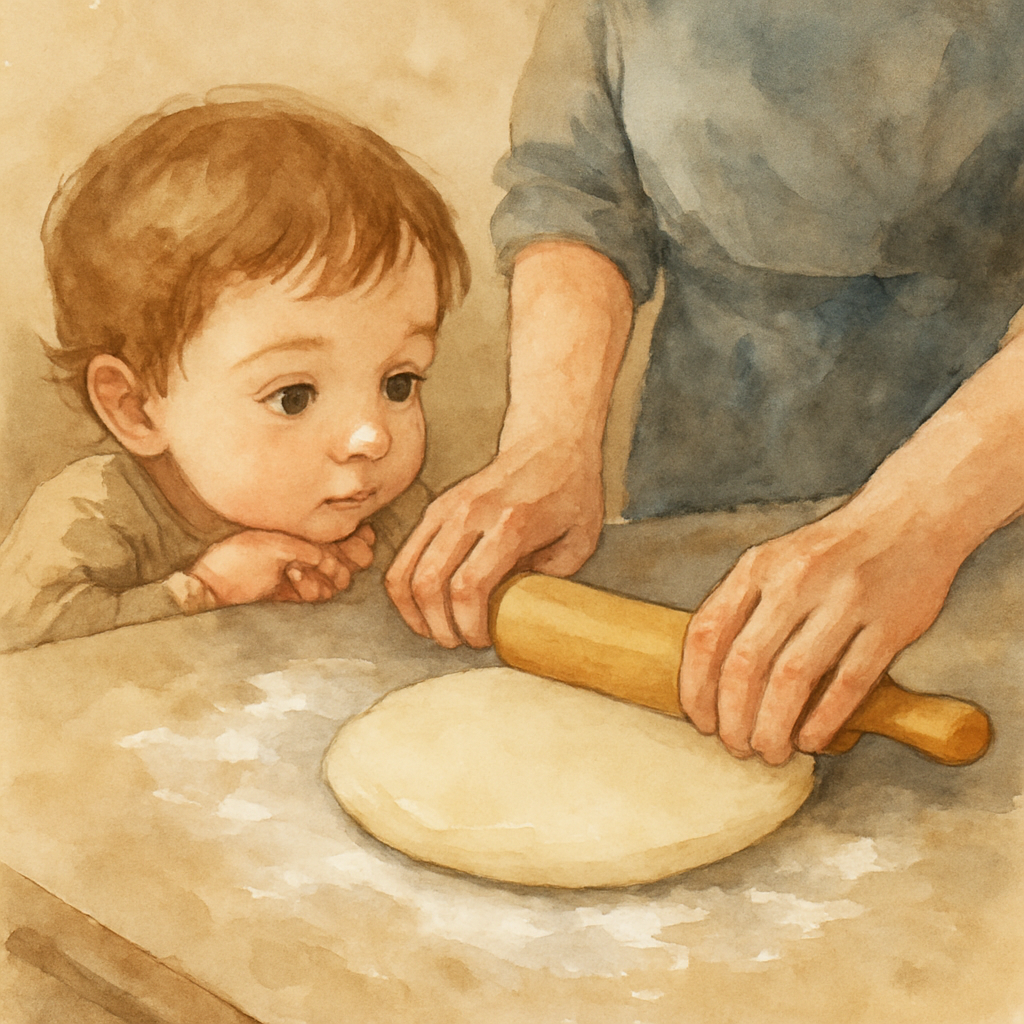
Close-up of the child standing on tiptoes at the edge of the counter, chin resting on their hands, watching the mother's hands roll out a round piece of dough with a small wooden rolling pin. The dough is pale and soft. Flour on the child's nose. The scene is intimate and quiet. Watercolor style. No text in the image.
Page 4
تَضَعُ الزَّعْتَرَ وَالزَّيْت.
She spreads the za'atar and oil.
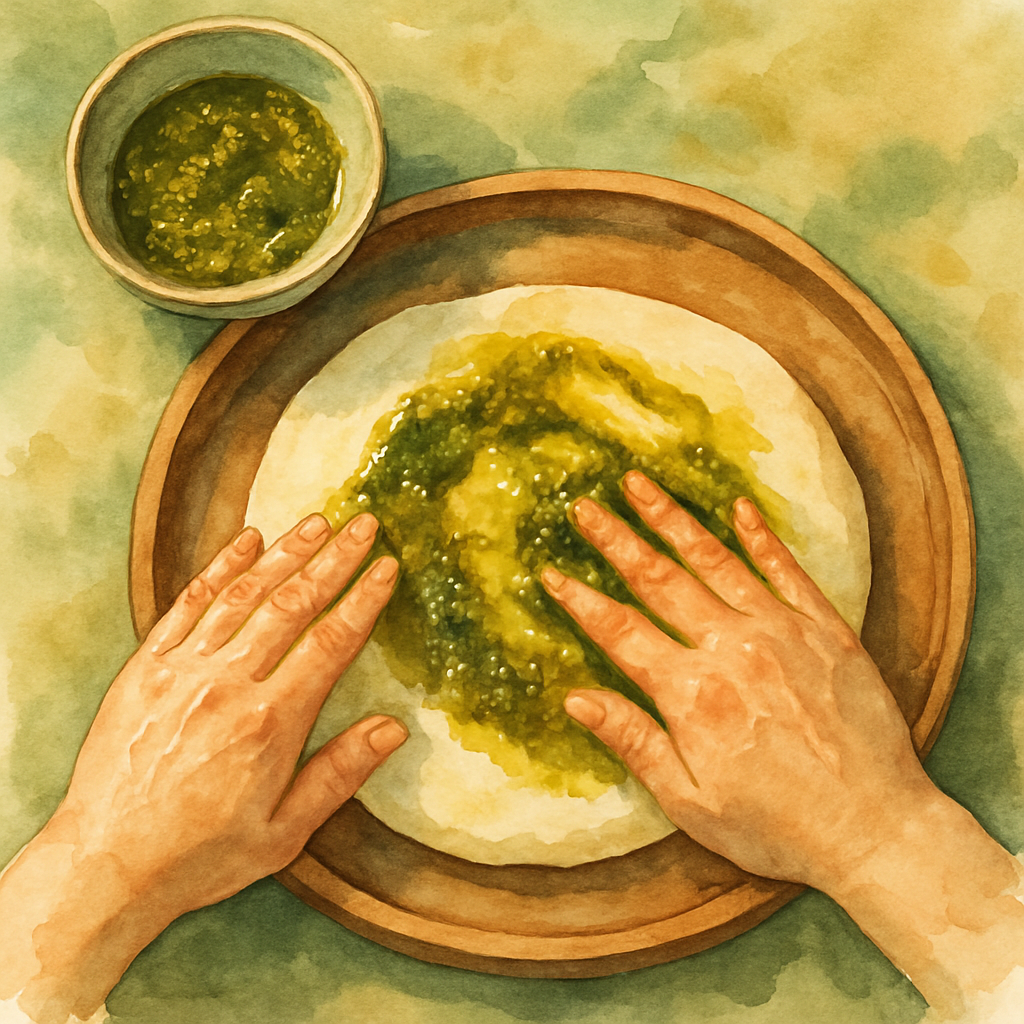
🎨 Illustration prompt
Overhead view of the mother's hands spreading a mixture of green za'atar and golden olive oil across a flat round of dough. A small ceramic bowl holds the za'atar paste. The dough rests on a wooden tray. Tiny sesame seeds are visible in the za'atar mix. Warm light, earthy greens and golds. Watercolor style. No text in the image.
Page 5
الرَّائِحَةُ تَمْلَأُ البَيْت.
The smell fills the house.
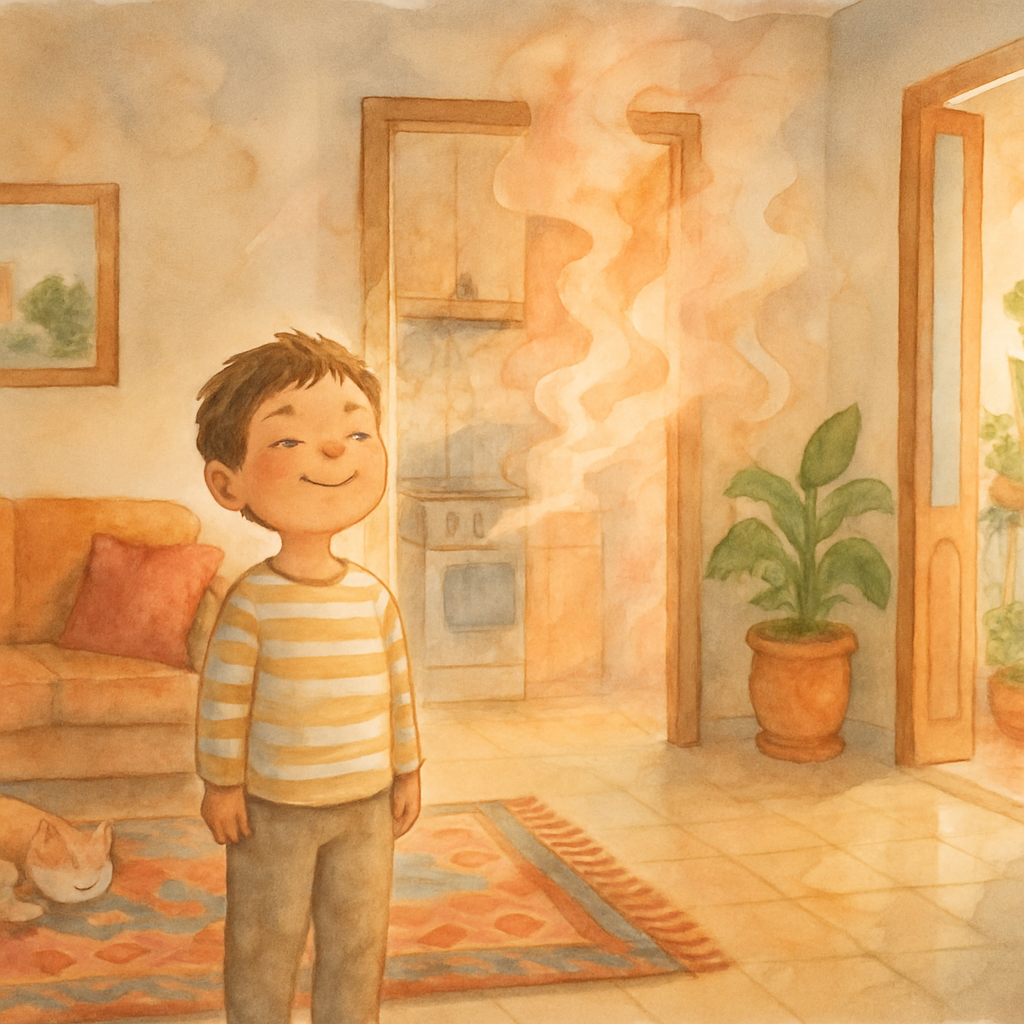
🎨 Illustration prompt
A wide view of the small Levantine apartment. The child stands in the living room, eyes closed, smiling, breathing in deeply. Soft swirls of warm steam drift from the kitchen doorway in gentle watercolor washes. A cat naps on a kilim rug. Plants on the balcony beyond. Late morning light. Watercolor style. No text in the image.
Page 6
الخُبْزُ ساخِنٌ وَطازَج.
The bread is hot and fresh.
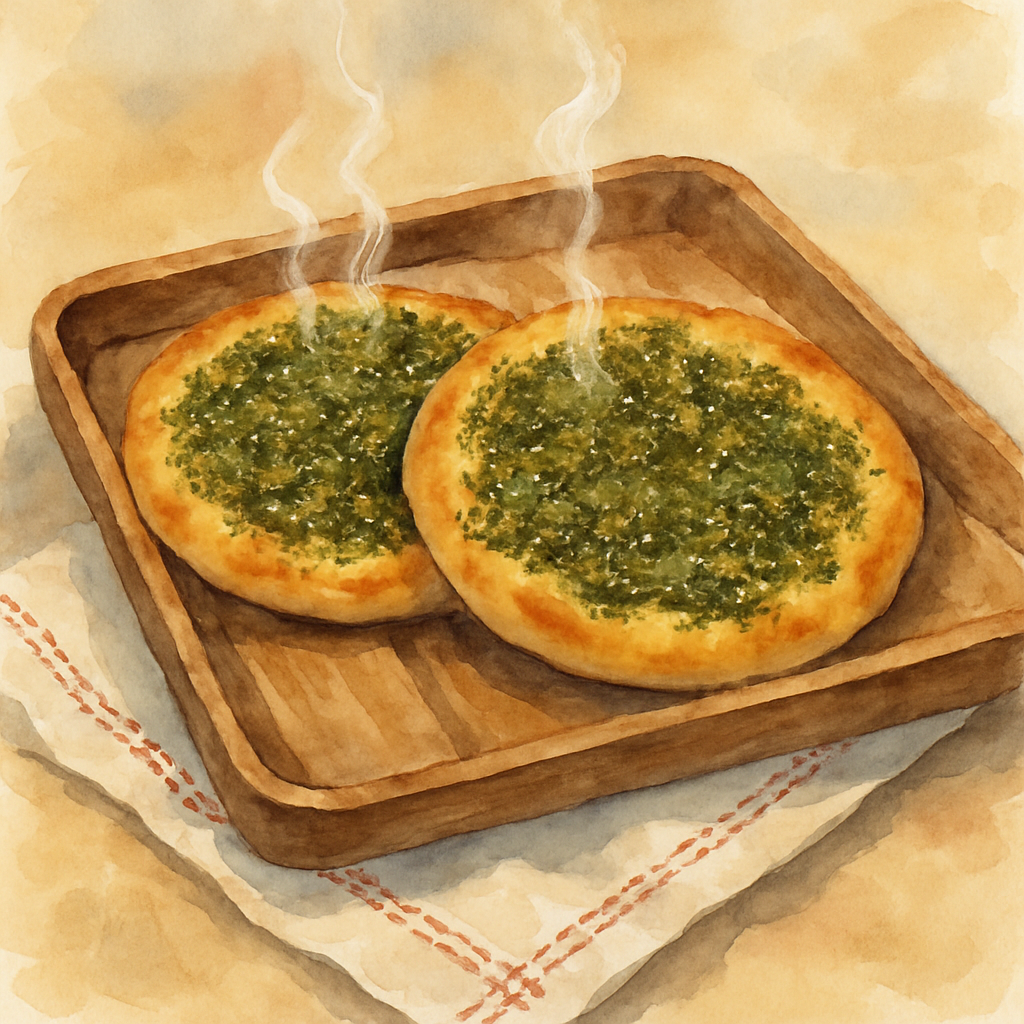
🎨 Illustration prompt
A wooden tray holding two freshly baked manakish — round flatbreads topped with green za'atar and glistening olive oil. Tiny wisps of steam rise from them. The edges of the bread are golden brown. The tray rests on a kitchen towel with simple red embroidery. Warm and inviting. Watercolor style. No text in the image.
Page 7
نَأْكُلُ مَعًا. لَذيذ!
We eat together. Delicious!
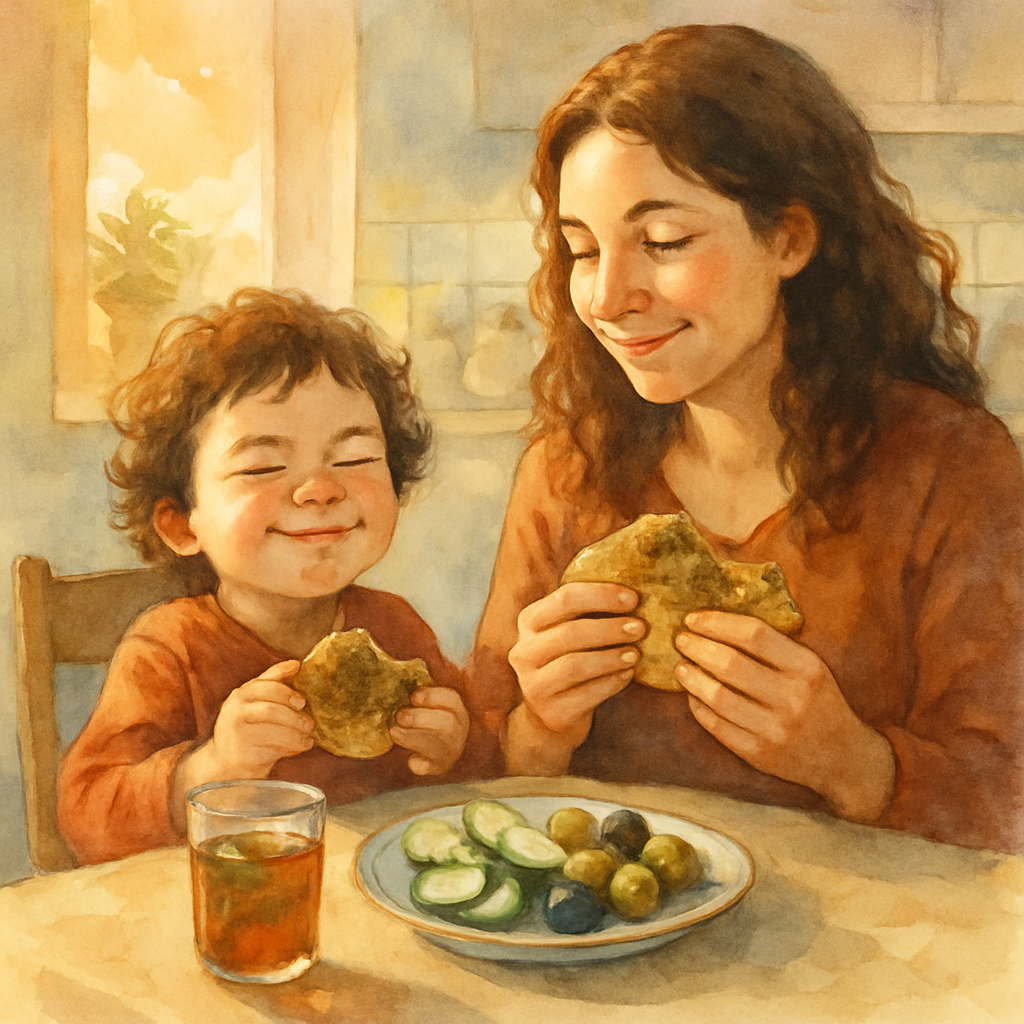
🎨 Illustration prompt
The mother and child sit together at a small kitchen table, each holding a folded piece of za'atar manakish. The child has a tiny smudge of za'atar at the corner of their mouth, eyes scrunched in happiness. A glass of mint tea and a plate of cucumbers and olives sit between them. Warm morning light, the heart of the book. Watercolor style. No text in the image.
كَلِمَاتٌ جَدِيدَة · New Words
| Arabic | How to say it | English |
|---|---|---|
ماما |
ma-ma | mama |
مَطْبَخ |
mat-bakh | kitchen |
عَجين |
'a-jeen | dough |
زَعْتَر |
za'-tar | thyme blend |
زَيْت |
zayt | oil |
خُبْز |
khubz | bread |
لَذيذ |
la-dheedh | delicious |
🗣️ Talk about it (for parent or teacher)
These are not test questions — they're conversation starters. Ask one. Listen.
- What's your favorite food that someone in your family makes? What does it smell like when it's cooking?
- Have you ever tried manakish? What other breads do you like — pita, toast, something else?
- The child watches Mama cook. Do you like to help in the kitchen? What could you help with?
✏️ Try it (a tiny activity, 2 minutes)
Pick one:
- Smell something good. Walk into the kitchen and find one smell you love. Tell someone in your family what it is.
- Draw your favorite breakfast. Add a little green za'atar on top, just for fun.
- Say it together: za'-tar, zayt, khubz. Three little words that make one delicious breakfast.
A note for grown-ups reading along
The Arabic in this story uses full vowel marks (تَشْكيل) so early readers can sound out each word. As your child gets more comfortable, the vowel marks gradually disappear in higher tiers.
Read the Arabic line first. Then the English. Or the other way around — whatever feels natural. If you don't know Arabic yet, just read the English and point to the Arabic. Your child will start matching the shapes to the sounds.
Read this book again tomorrow. Repetition is the secret. By the third time, your child will start saying khubz and za'-tar with you before you say the English. And if you can, make manakish together one morning. The smell will teach them more than the page ever could.
— Hayya Beena Naqraa (هَيَّا بِنَا نَقْرَأ)