الثَّلْج الصَّغِير
The Little Snow
A Hayya Beena Naqraa story · Tier 1 · For ages 5–7
Cover page
الثَّلْج الصَّغِير
The Little Snow
🎨 Illustration prompt
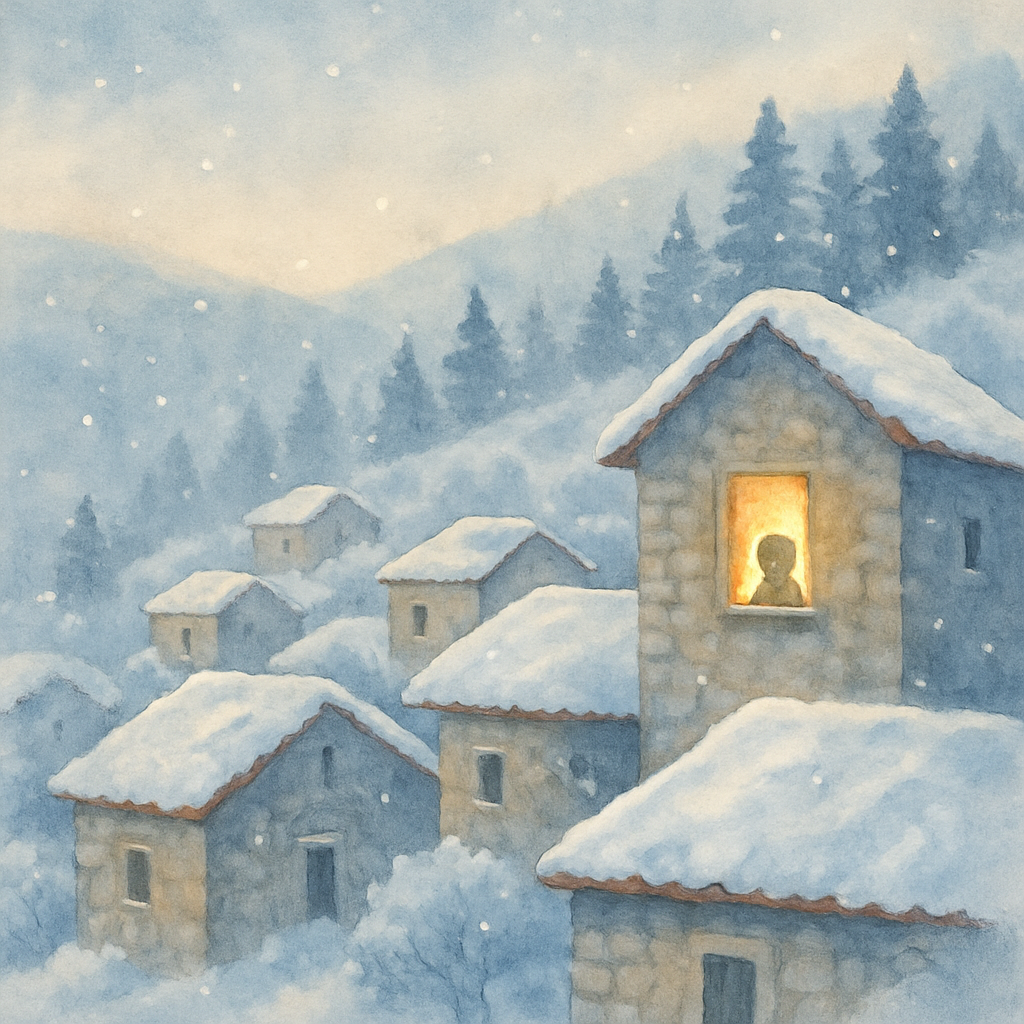
A soft watercolor illustration of a small Lebanese mountain village blanketed in fresh snow at dawn. Stone houses with red clay tile roofs are dusted white, and a single window glows warm yellow from inside. A child's silhouette is just visible at the window. Snowflakes drift gently in the quiet air. Pine trees stand still on the slope behind the village. Muted blues, soft whites, and warm window-light. Watercolor style. No text in the image.
Page 1
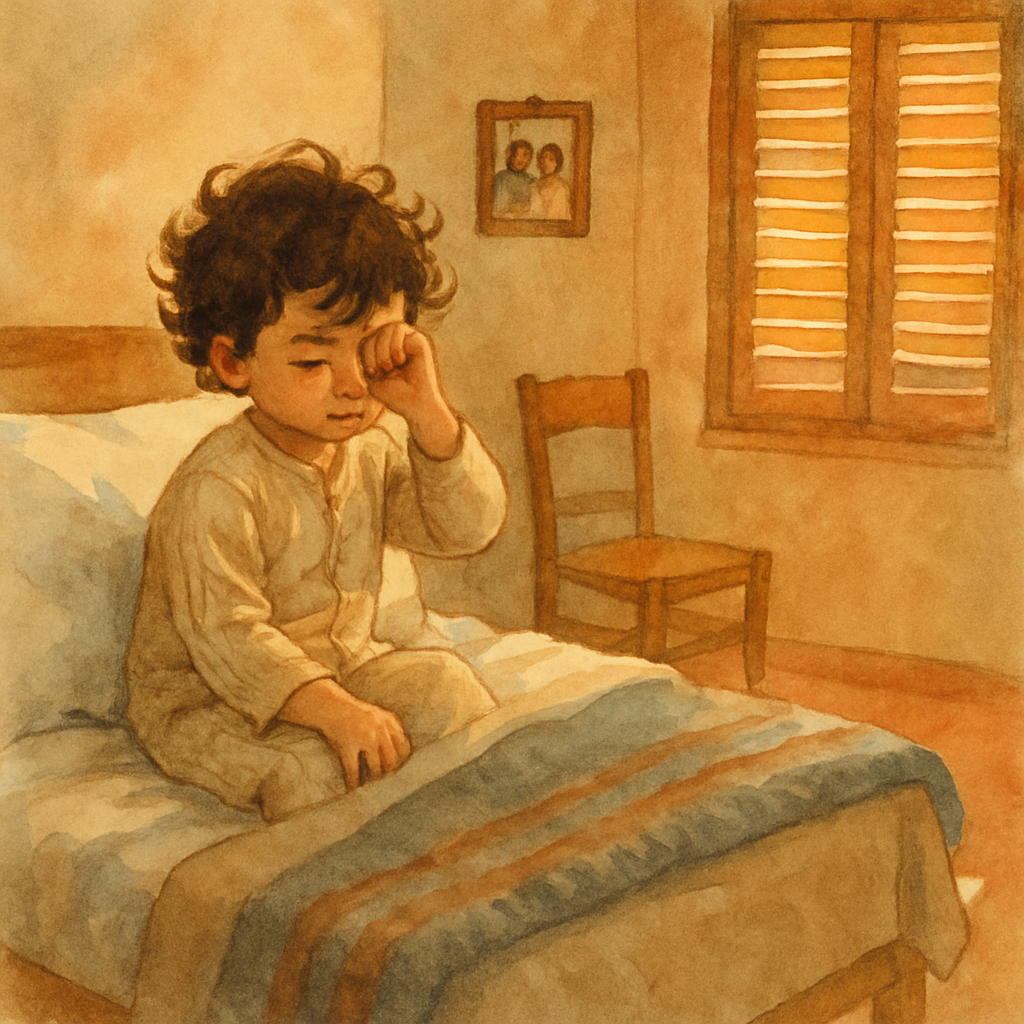
اسْتَيْقَظَ الطِّفْلُ فِي الصَّبَاحِ.
The child woke up in the morning.
🎨 Illustration prompt
A young child with dark wavy hair sitting up in bed, rubbing one eye sleepily. They are wearing soft cotton pajamas. The bedroom is small and cozy — a wool blanket folded at the foot of the bed, a wooden chair, a small framed family photo on the wall. Pale morning light filters through closed wooden shutters, making thin bright lines across the floor. Warm Levantine home tones. Watercolor style. No text in the image.
Page 2
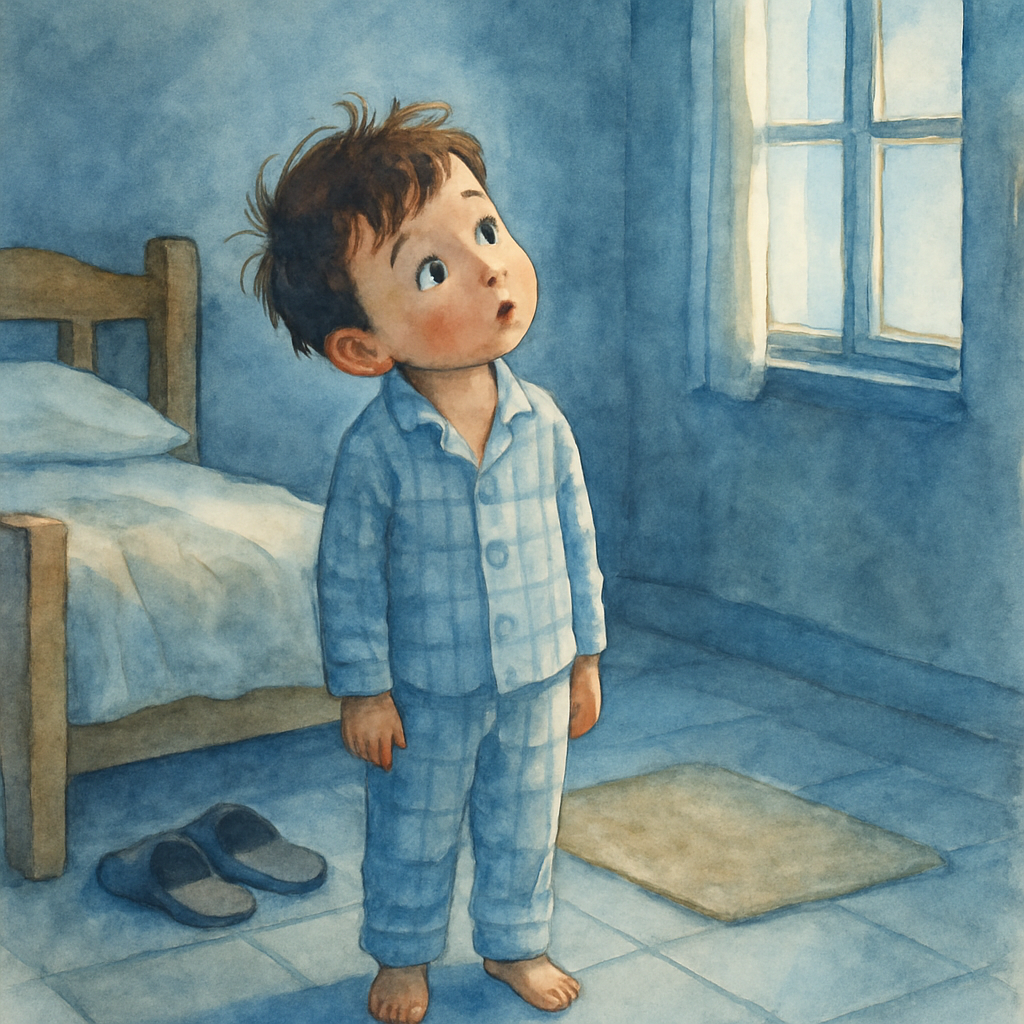
شَيْءٌ مَا مُخْتَلِفٌ الْيَوْمَ.
Something is different today.
🎨 Illustration prompt
The same child standing in their pajamas on a tiled floor, head tilted, listening. The whole room feels unusually still and quiet. A pair of slippers by the bed, a small rug, and a closed window with soft pale light coming through the cracks. The child's expression is curious — eyebrows lifted, lips slightly parted. Watercolor style with cool morning blues and warm skin tones. No text in the image.
Page 3
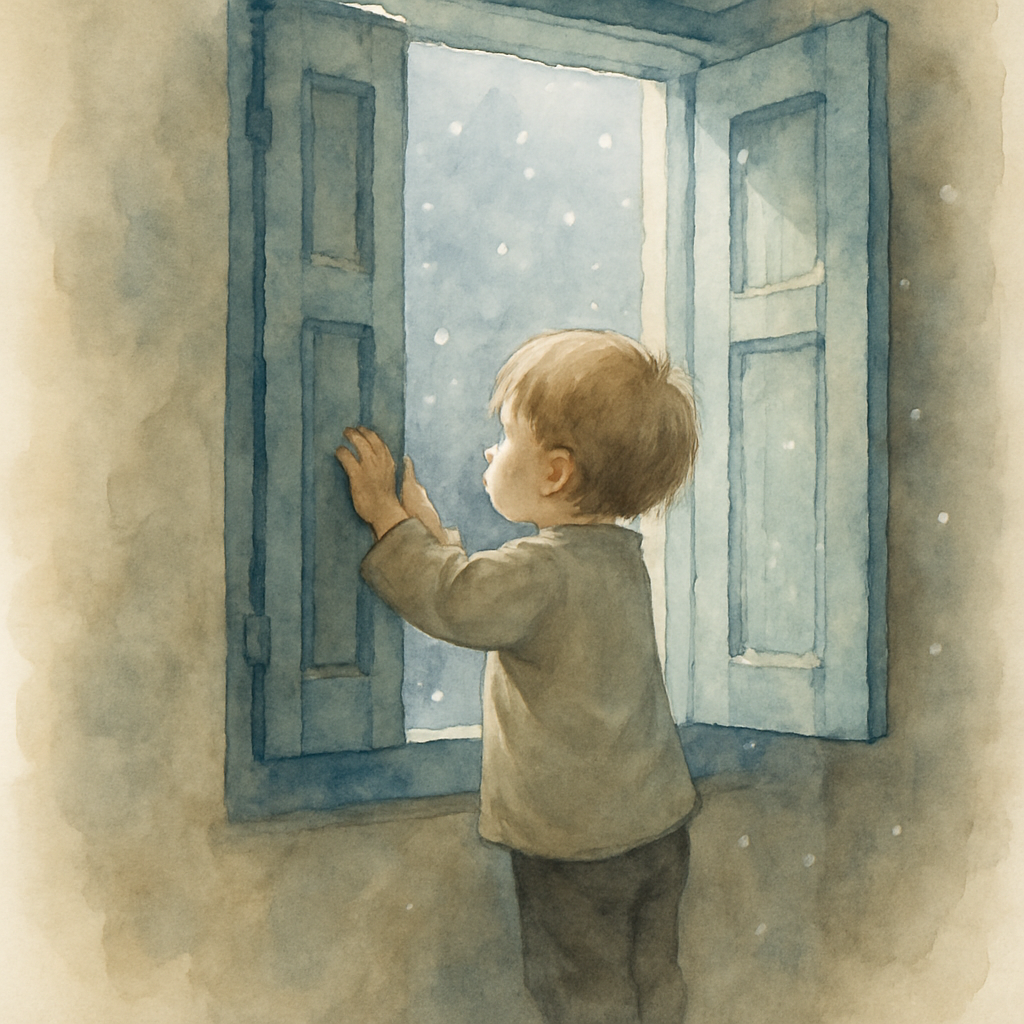
فَتَحَ النَّافِذَةَ بِهُدُوءٍ.
He opened the window quietly.
🎨 Illustration prompt
The child standing on tiptoe, small hands pushing open a wooden shutter window. We see them from behind and slightly to the side. Cold pale light spills onto their face. The first snowflakes are just beginning to float into the room. The window frame is painted a faded blue, typical of Levantine mountain homes. Watercolor style, soft and hushed. No text in the image.
Page 4
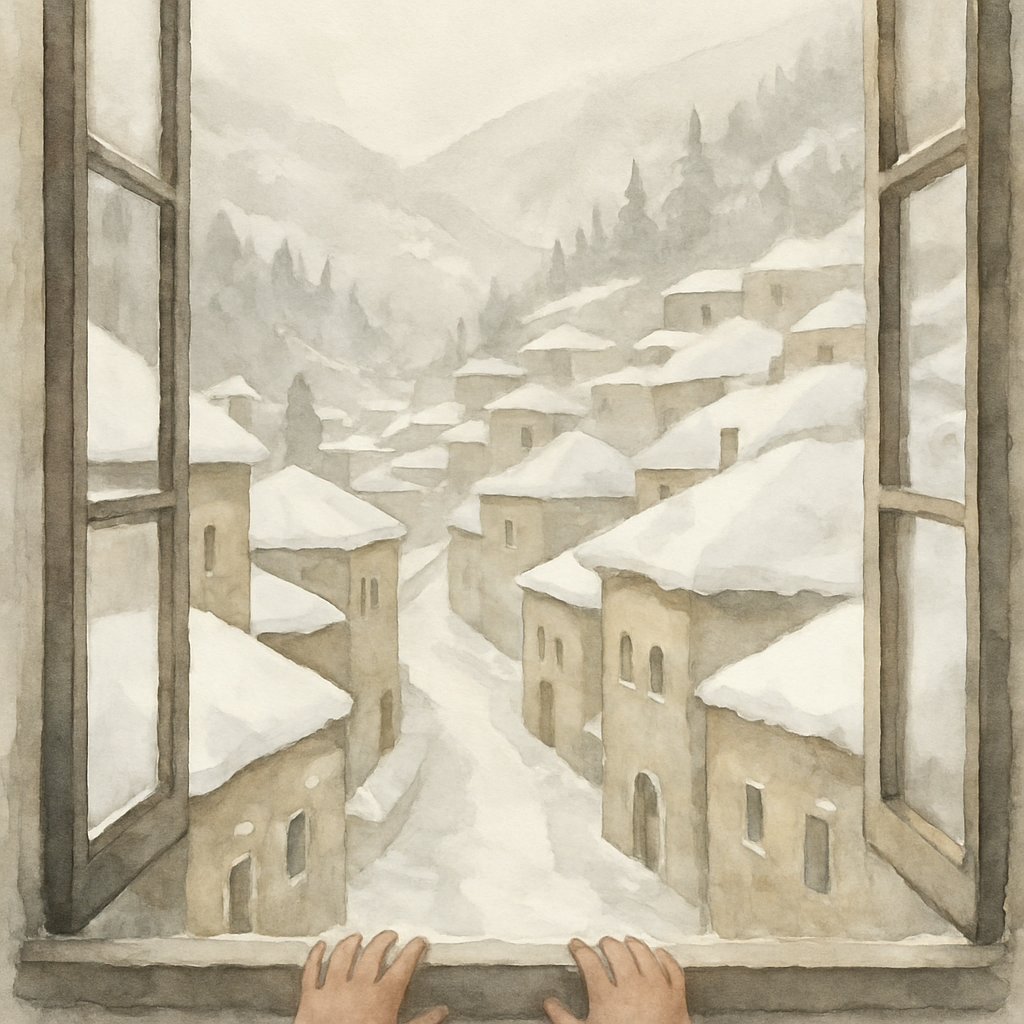
ثَلْجٌ! كُلُّ شَيْءٍ أَبْيَضُ.
Snow! Everything is white.
🎨 Illustration prompt
A wide view from the open window looking out over a Lebanese mountain village. Every roof is covered in thick white snow. The narrow stone street below is white. Distant pine trees on the mountainside are dusted with snow. The sky is pale silver. The child's small hands rest on the windowsill in the foreground. A feeling of wonder and stillness. Watercolor style with lots of soft whites and gentle grays. No text in the image.
Page 5
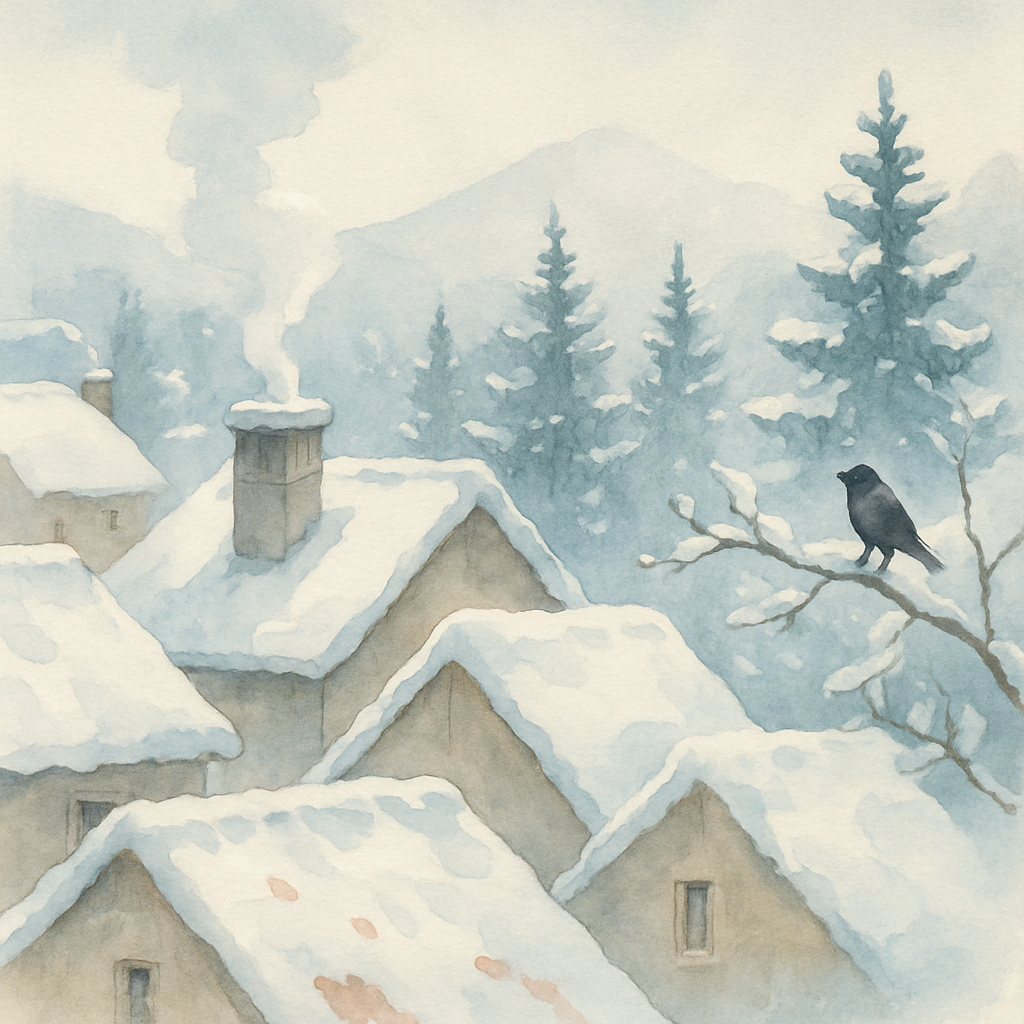
الْأَشْجَارُ بَيْضَاءُ وَالسُّطُوحُ بَيْضَاءُ.
The trees are white and the roofs are white.
🎨 Illustration prompt
A closer view of the village rooftops and a row of pine trees, all coated in fresh snow. A single bird sits on a snowy branch. Smoke curls gently from one stone chimney. The red clay tiles peek out under the white in tiny patches. Mountains rise softly in the background, also white. Watercolor style, calm and dreamlike. No text in the image.
Page 6
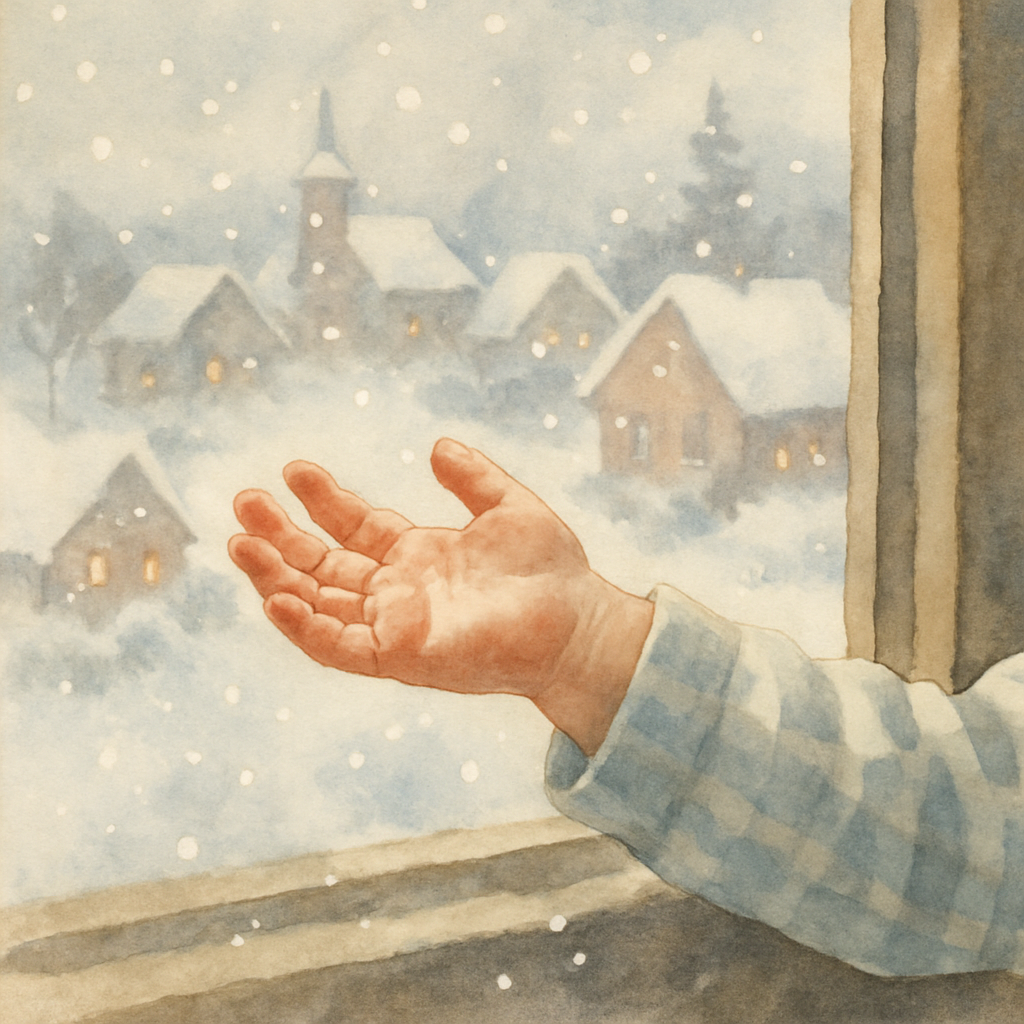
مَدَّ الطِّفْلُ يَدَهُ الصَّغِيرَةَ.
The child stretched out his small hand.
🎨 Illustration prompt
Close-up of the child's small open hand reaching out through the open window into the falling snow. The palm is upturned, fingers gently spread. Snowflakes drift down toward the hand. The child's pajama sleeve is soft cotton. In the soft-focus background, the snowy village. Watercolor style, intimate and tender. No text in the image.
Page 7
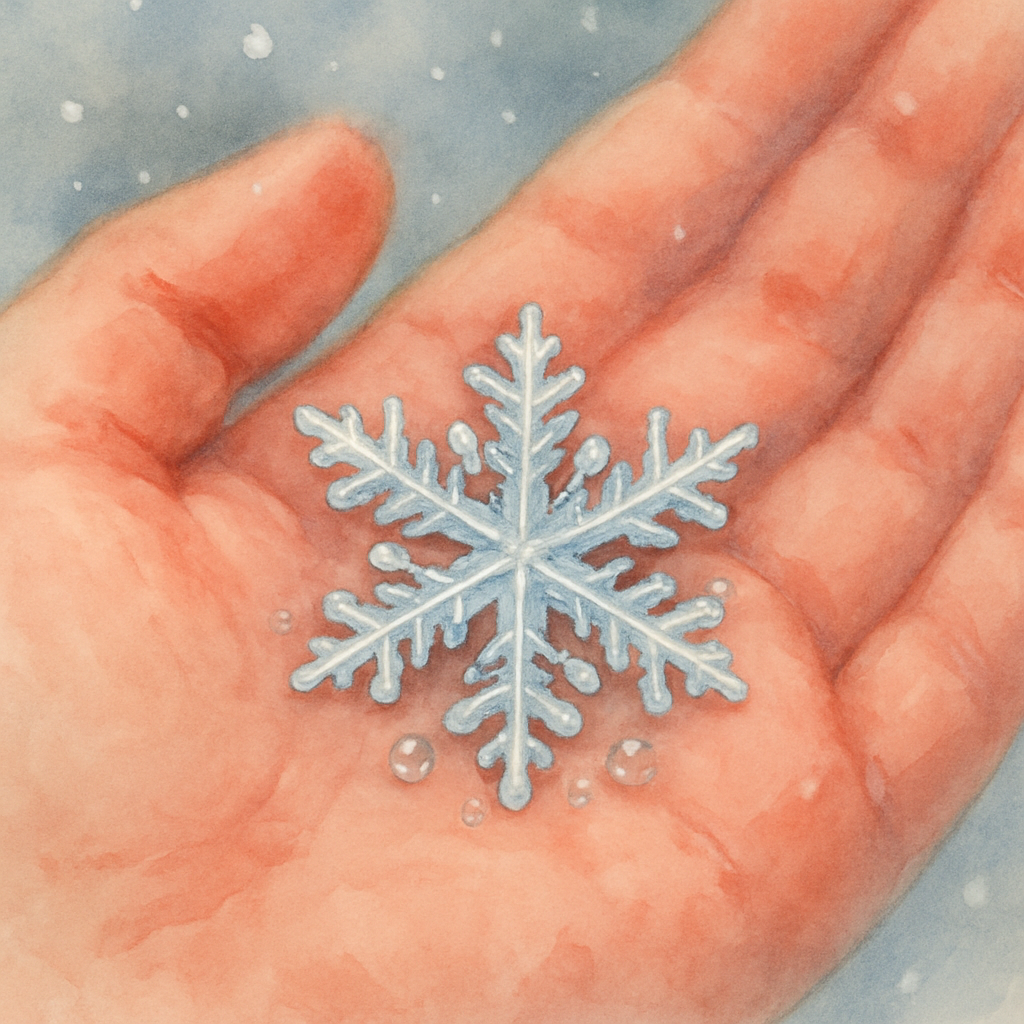
نَزَلَتْ نَدْفَةٌ بَارِدَةٌ، ثُمَّ ذَابَتْ.
A cold snowflake landed, then melted.
🎨 Illustration prompt
An extreme close-up of one perfect snowflake resting on the child's open palm. Tiny droplets of water are already beginning to form around it as it melts. The skin of the palm is warm pink against the cold white. The background is softly blurred — just hints of snow falling. Watercolor style, quiet and magical. No text in the image.
Page 8
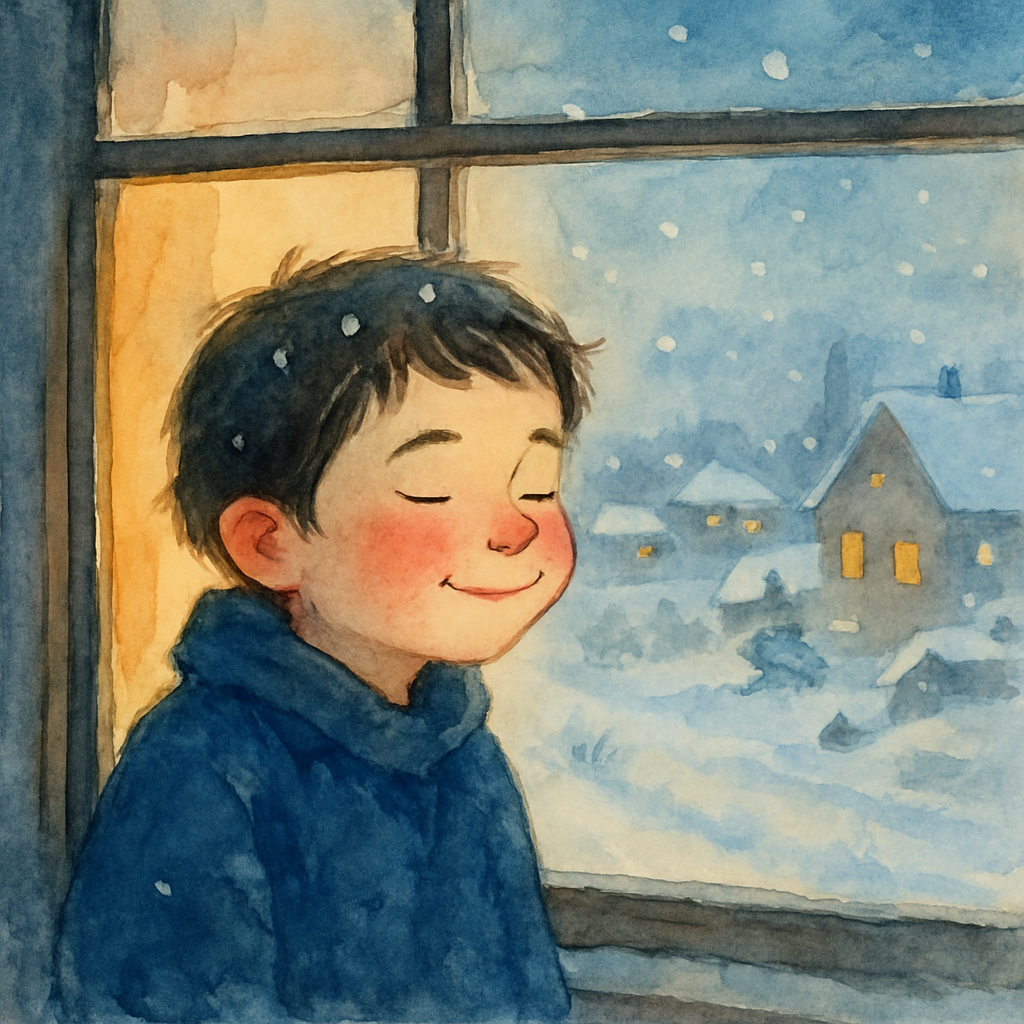
اِبْتَسَمَ الطِّفْلُ فِي الْهُدُوءِ.
The child smiled in the quiet.
🎨 Illustration prompt
The child at the window, face lit with a soft, slow smile. Their cheeks are pink from the cold. A few snowflakes have landed on their dark hair. Behind them, inside the room, the warm yellow glow of home. Outside, the snowy village rests in perfect silence. This is the emotional heart of the book — wonder, calm, and a small private joy. Watercolor style, with a touch of pink on the cheeks and nose. No text in the image.
كَلِمَاتٌ جَدِيدَة · New Words
| Arabic | How to say it | English |
|---|---|---|
ثَلْج |
thalj | snow |
نَافِذَة |
naa-fi-thah | window |
أَبْيَض |
ab-yad | white |
بَارِد |
baa-rid | cold |
يَد |
yad | hand |
هُدُوء |
hu-doo' | quiet |
نَدْفَة |
nad-fah | snowflake |
🗣️ Talk about it (for parent or teacher)
These are not test questions — they're conversation starters. Ask one. Listen.
- Have you ever seen snow? What did it feel like? (If not — what do you think it would feel like on your hand?)
- The child opened the window very quietly. Why do you think snow makes the world feel so quiet?
- The snowflake melted. Has something ever disappeared too fast for you? How did you feel?
✏️ Try it (a tiny activity, 2 minutes)
Pick one:
- Cut a paper snowflake. Fold a square of paper, snip tiny shapes, and open it. Every one is different — just like real snow.
- Stand by a window for one whole minute. Don't say anything. Just look. Tell someone one thing you saw.
- Hold an ice cube in your palm (with a grown-up's help). Watch it melt. That is what the snowflake did in the story.
A note for grown-ups reading along
The Arabic in this story uses full vowel marks (تَشْكِيل) so early readers can sound out each word. As your child gets more comfortable, the vowel marks gradually disappear in higher tiers.
Snow is a real winter event in the mountain villages of Lebanon, Syria, Palestine, and Jordan — places like Faraya, Bsharri, and the hills around Damascus. For many Levantine families, the first snow is a small annual ceremony: someone always runs to the window.
Read the Arabic line first. Then the English. Or the other way around — whatever feels natural. If you don't know Arabic yet, just read the English and point to the Arabic. Your child will start matching the shapes to the sounds.
Read this book again tomorrow. Repetition is the secret. By the third time, your child will start saying thalj with you before you say the English.
— Hayya Beena Naqraa (هَيَّا بِنَا نَقْرَأ)