المِفْتَاحُ المَفْقُود
The Lost Key
A Hayya Beena Naqraa story · Tier 2 · For ages 7–9
Cover page
المِفْتَاحُ المَفْقُود
The Lost Key
🎨 Illustration prompt
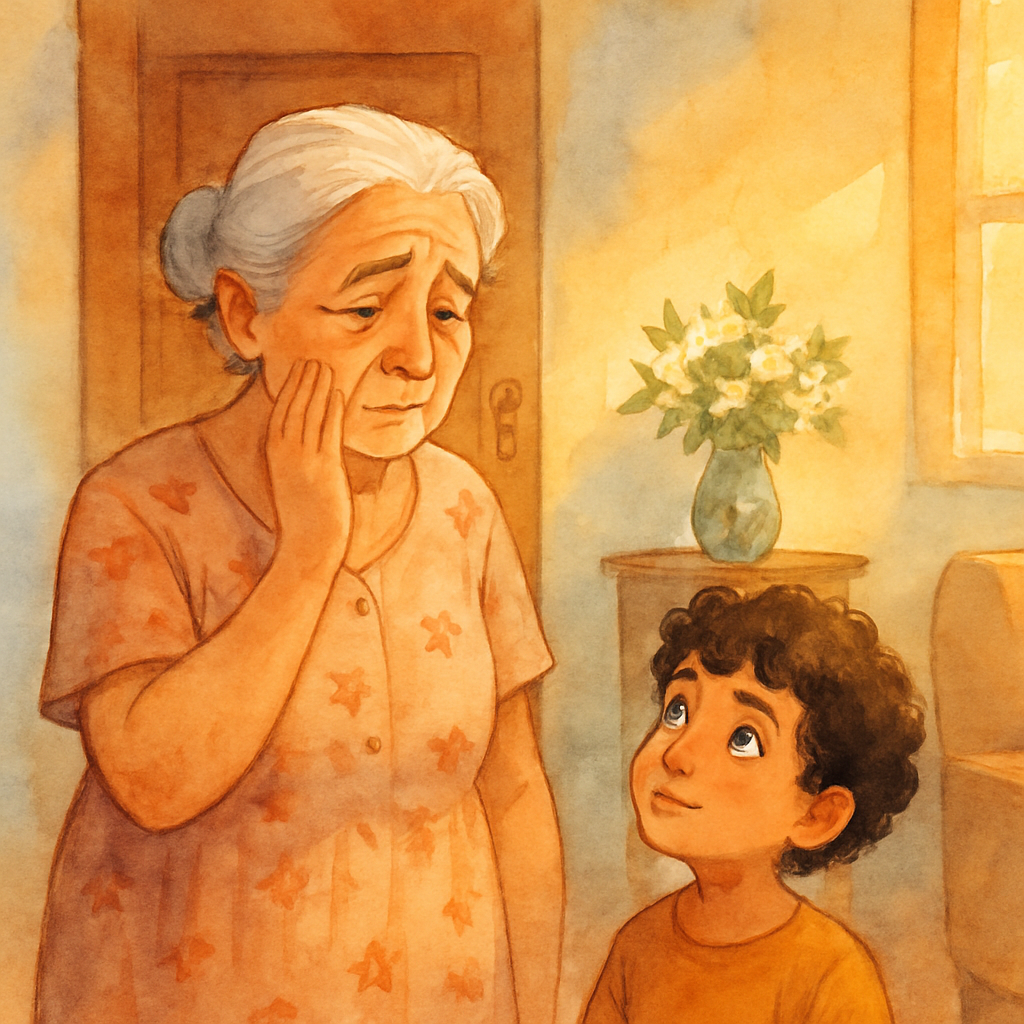
A warm watercolor illustration of a Levantine grandmother (Teta) with silver hair pulled into a soft bun, wearing a simple housedress with small embroidered flowers. She stands in a sunny living room looking puzzled, one hand on her cheek. Beside her, a child of about eight with dark curly hair looks up at her with bright, helpful eyes. Behind them, a wooden door with a brass keyhole, a small side table, and a vase of jasmine. Warm terracotta and soft blue tones, golden afternoon light. Watercolor style. No text in the image.
Page 1
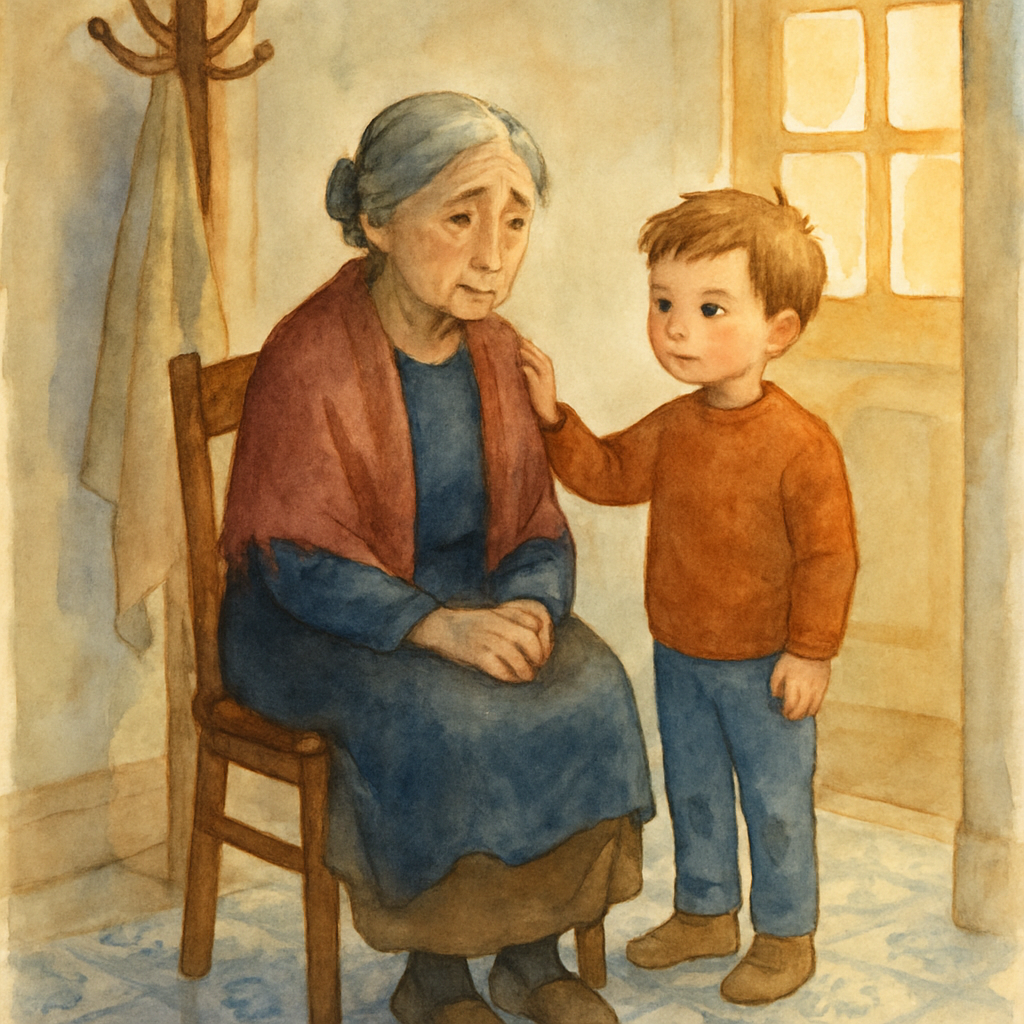
تيتا فَقَدَتْ مِفْتَاحَهَا. هِيَ قَلِقَةٌ جِدًّا. قُلْتُ لَهَا: "لَا تَخَافِي يَا تيتا. أَنَا سَأُسَاعِدُكِ."
Teta has lost her key. She is very worried. I told her, "Don't worry, Teta. I will help you."
🎨 Illustration prompt
Teta sitting on a wooden chair in the entryway of her home, her hands resting in her lap, her face gently worried. The young child stands beside her, one small hand on Teta's shoulder, looking determined and kind. A coat rack with a light shawl in the background, patterned floor tiles in soft blue and white. Warm light through a window. Watercolor style. No text in the image.
Page 2
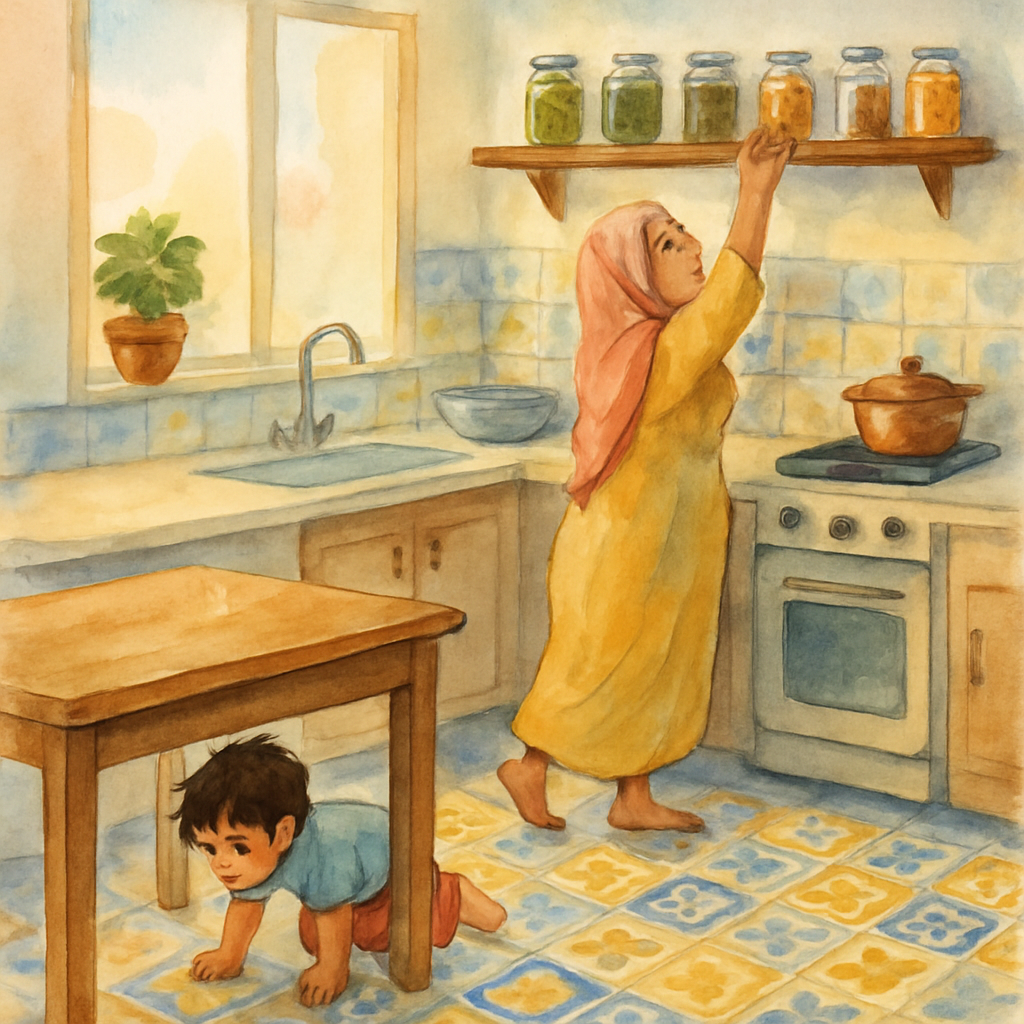
بَدَأْنَا فِي المَطْبَخ. نَظَرْتُ تَحْتَ الطَّاوِلَة. نَظَرَتْ تيتا فَوْقَ الرَّفِّ الكَبِير.
We began in the kitchen. I looked under the table. Teta looked on top of the big shelf.
🎨 Illustration prompt
A bright Levantine kitchen with patterned tiles in blue and yellow. The child is on their hands and knees, peeking under a wooden kitchen table. Teta is standing on her tiptoes, reaching up toward a high shelf lined with jars of olives, za'atar, and lentils. A small clay pot of basil sits on the windowsill. Soft morning light. Watercolor style. No text in the image.
Page 3
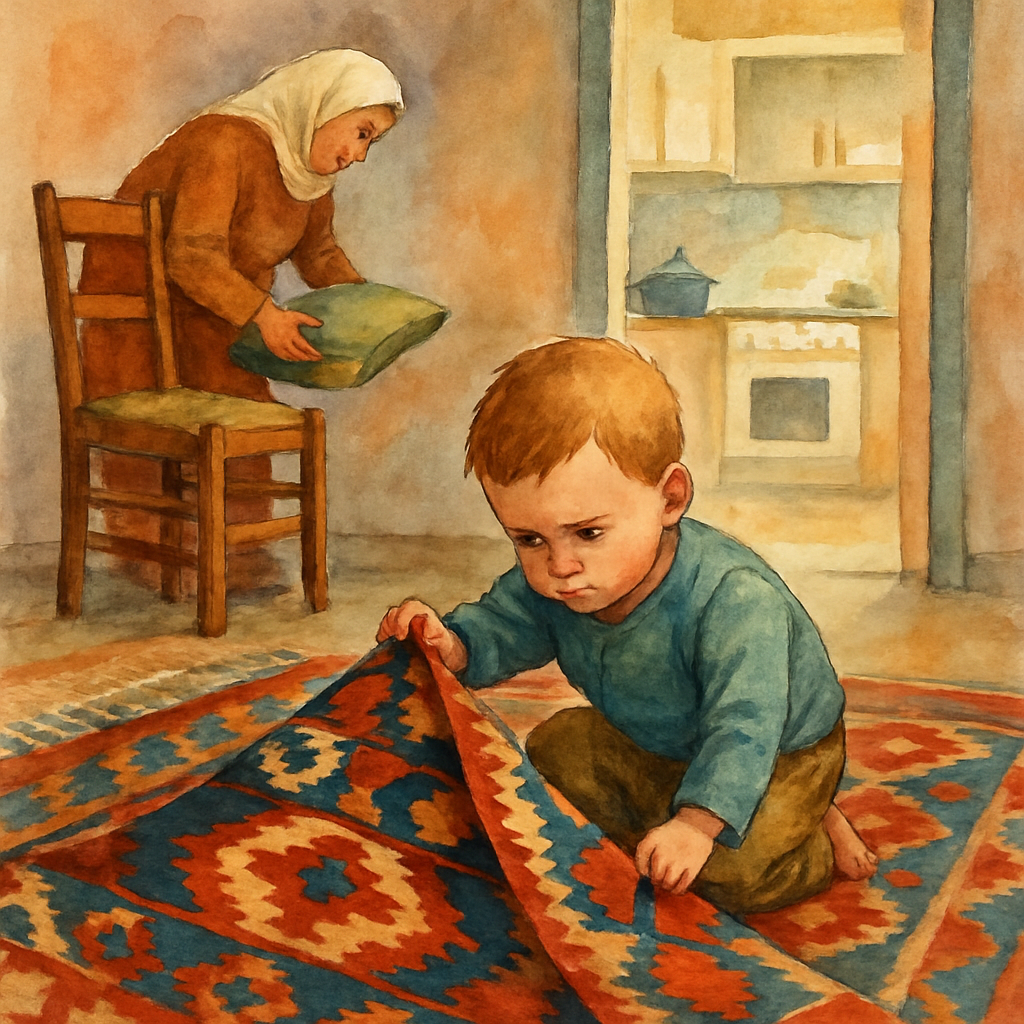
لَا مِفْتَاح فِي المَطْبَخ. بَحَثْنَا فَوْقَ الكُرْسِيّ، وَتَحْتَ السَّجَّادَة. لَا شَيْء.
No key in the kitchen. We searched on top of the chair, and under the rug. Nothing.
🎨 Illustration prompt
The child lifting up the corner of a colorful Levantine kilim rug, looking underneath with a small frown of concentration. Teta in the background lifting a cushion off a wooden chair. The kitchen visible through an open doorway. Earthy reds, deep blues, and soft creams in the rug. Watercolor style. No text in the image.
Page 4
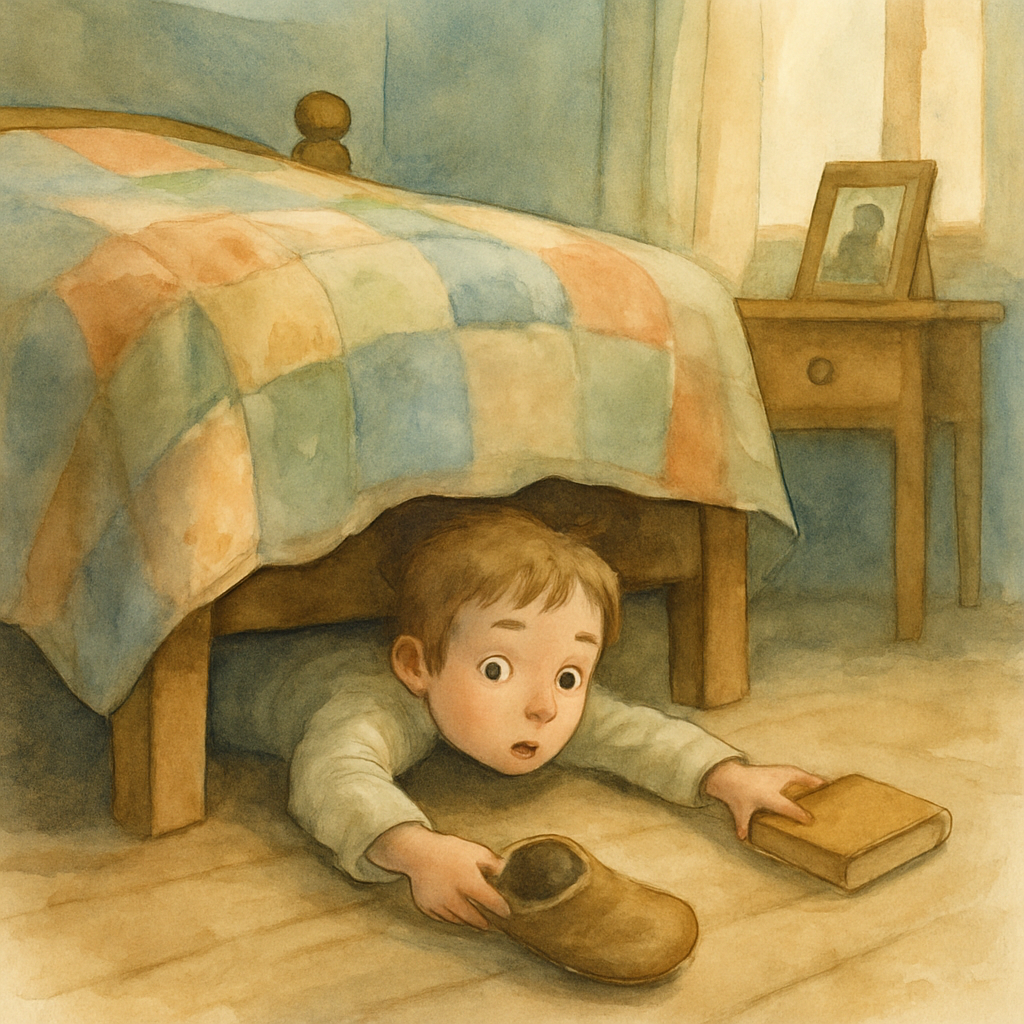
ذَهَبْنَا إِلَى غُرْفَةِ النَّوْم. نَظَرْتُ تَحْتَ السَّرِير. لَمْ أَجِدْ غَيْرَ حِذَاءٍ قَدِيمٍ وَكِتَاب.
We went to the bedroom. I looked under the bed. I found only an old shoe and a book.
🎨 Illustration prompt
The child lying flat on the floor, head and shoulders disappearing under a wooden bed with a quilted blanket hanging down. One hand is reaching out holding an old slipper, the other holding a small book. A look of mild surprise on their face. The bedroom is simple — a small wooden nightstand, a framed photograph, a window with light curtains. Watercolor style. No text in the image.
Page 5
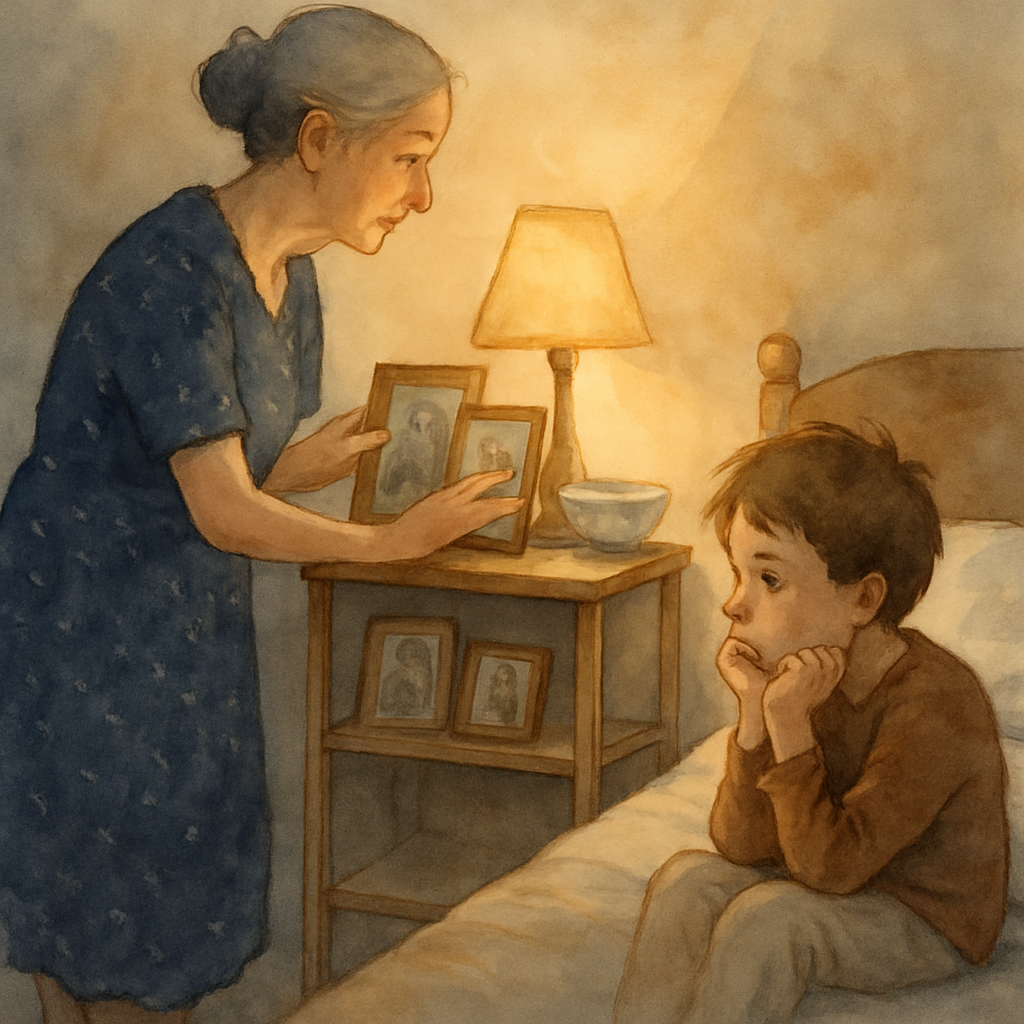
نَظَرَتْ تيتا فَوْقَ الرَّفِّ بِجَانِبِ السَّرِير. لَا مِفْتَاح. تَنَهَّدَتْ وَقَالَتْ: "أَيْنَ يُمْكِنُ أَنْ يَكُون؟"
Teta looked on top of the shelf next to the bed. No key. She sighed and said, "Where could it be?"
🎨 Illustration prompt
Teta standing on her toes near a small wooden shelf beside the bed, her hand moving among framed family photos, a small lamp, and a delicate porcelain bowl. Her expression is gentle but tired. The child sits on the edge of the bed, chin in their hands, thinking hard. Warm lamp light, soft shadows. Watercolor style. No text in the image.
Page 6
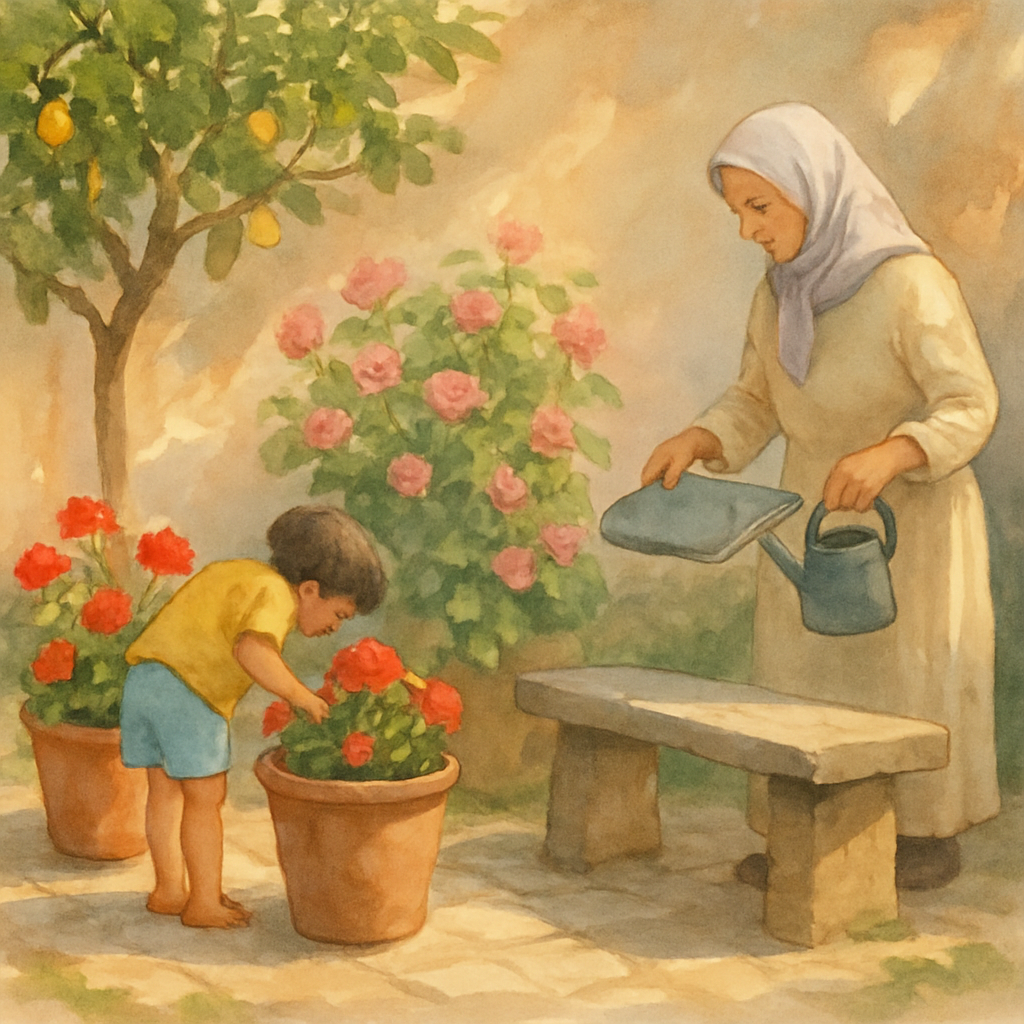
خَرَجْنَا إِلَى الحَدِيقَة الصَّغِيرَة. نَظَرْتُ فِي أَصِيصِ الوَرْد. نَظَرَتْ تيتا فَوْقَ الحَجَرِ الكَبِير.
We went out to the small garden. I looked in the flowerpot. Teta looked on top of the big stone.
🎨 Illustration prompt
A small Levantine garden behind the house — a few clay flowerpots with red geraniums and pink roses, a worn stone bench, a lemon tree in one corner. The child is on tiptoes peering into a tall clay flowerpot. Teta stands by a flat grey stone, lifting a small watering can to look beneath it. Late afternoon sun, dappled shadows. Watercolor style. No text in the image.
Page 7
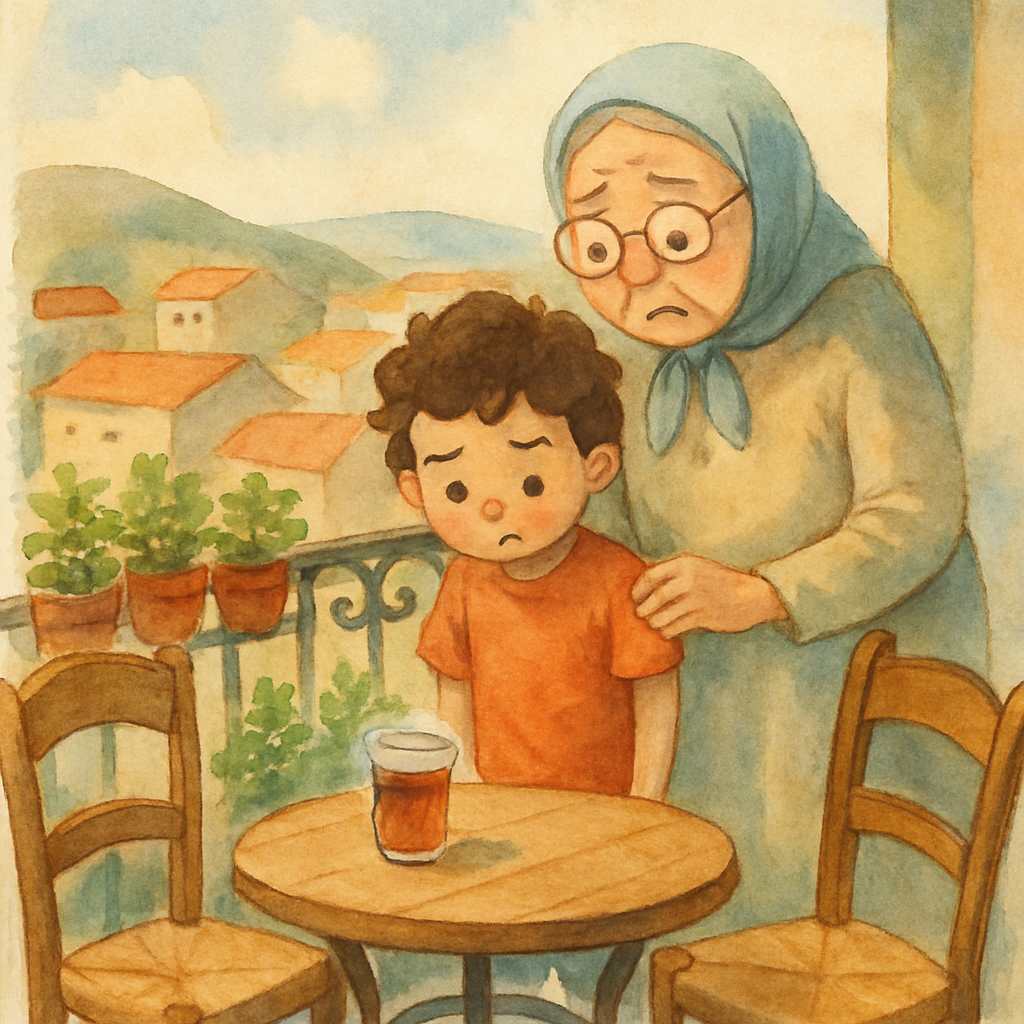
نَظَرْنَا تَحْتَ شَجَرَةِ اللَّيْمُون. نَظَرْنَا فَوْقَ الطَّاوِلَة فِي البَلْكُون. لَا مِفْتَاح فِي البَيْتِ كُلِّه.
We looked under the lemon tree. We looked on top of the table on the balcony. No key in the whole house.
🎨 Illustration prompt
A Levantine balcony with a small round wooden table and two chairs, a glass of tea cooling on the table. Beyond the railing: rooftops of a small town and distant hills. The child and Teta stand together at the balcony, both looking down at the empty table with matching puzzled expressions. A few potted herbs — mint, parsley — on the railing. Watercolor style. No text in the image.
Page 8
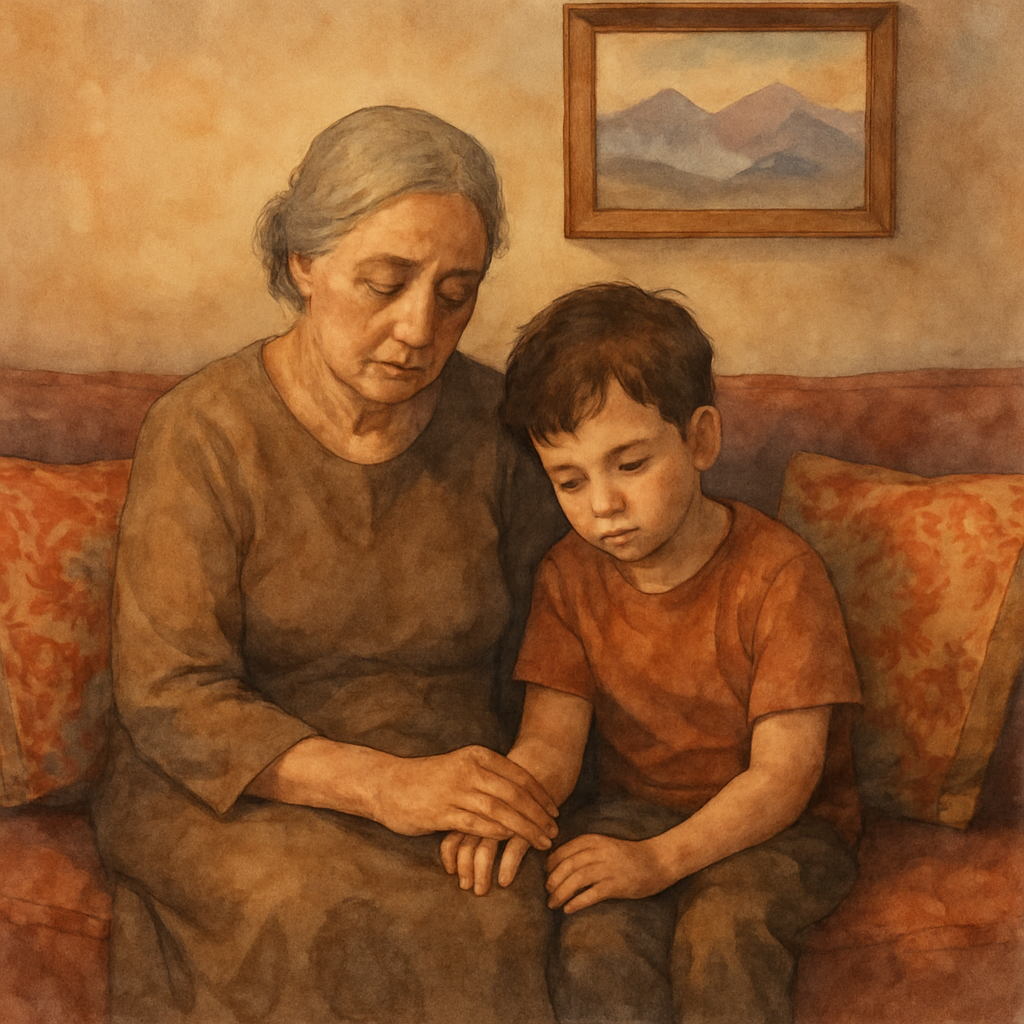
رَجَعْنَا إِلَى الدَّاخِل. جَلَسْنَا عَلَى الكَنَبَة. كُنَّا حَزِينَيْن وَمُتْعَبَيْن.
We came back inside. We sat on the couch. We were sad and tired.
🎨 Illustration prompt
Teta and the child sitting close together on a soft couch with embroidered cushions in warm reds and golds. Both have slumped shoulders and quiet faces. The child's small hand rests on Teta's hand. Behind them, a simple wall with a framed picture of mountains. The afternoon light has turned softer, almost evening. Watercolor style. No text in the image.
Page 9
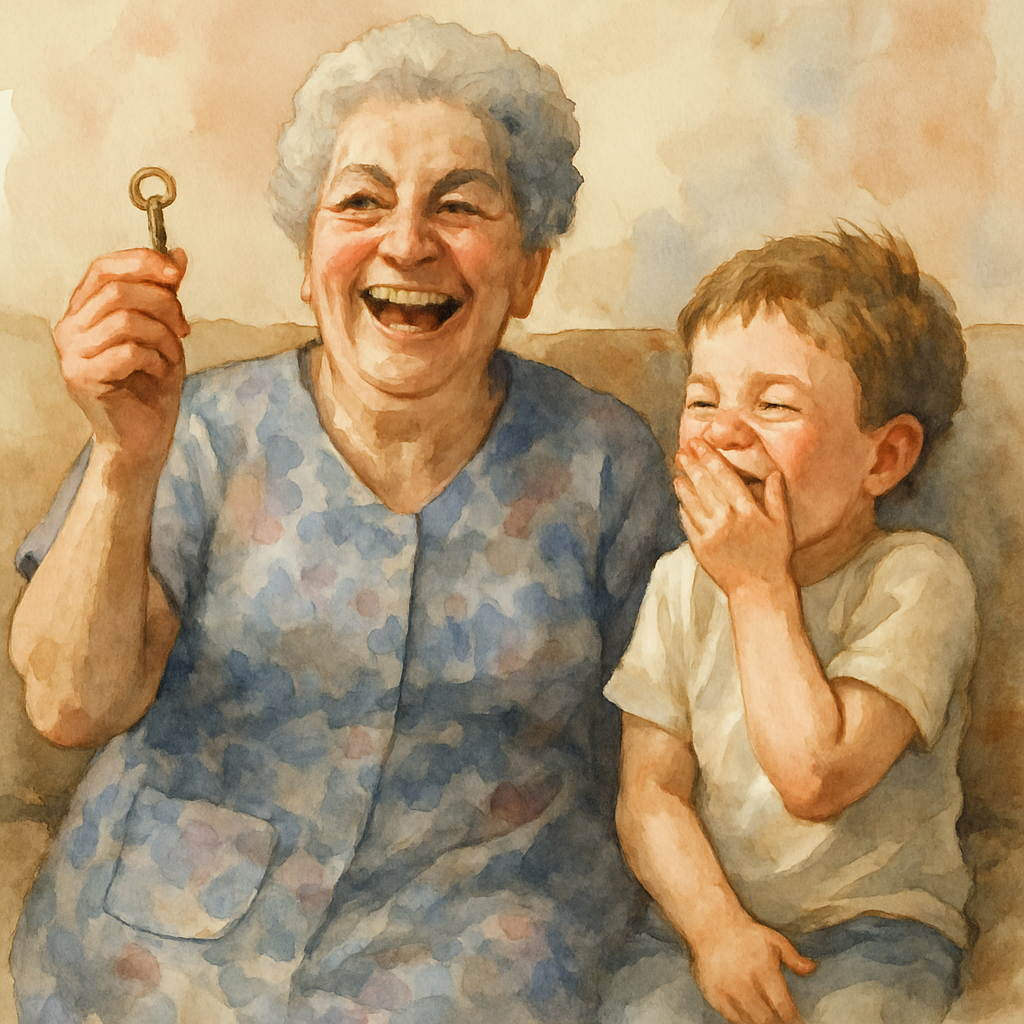
فَجْأَة، وَضَعَتْ تيتا يَدَهَا فِي جَيْبِهَا. ثُمَّ ضَحِكَتْ ضَحْكَةً كَبِيرَة. المِفْتَاحُ كَانَ فِي جَيْبِهَا طُولَ الوَقْت!
Suddenly, Teta put her hand in her pocket. Then she laughed a big laugh. The key was in her pocket the whole time!
🎨 Illustration prompt
Teta sitting up straight on the couch, her eyes wide and a huge warm laugh on her face, holding up a small brass key in her hand. The child beside her bursts into laughter too, one hand covering their mouth, eyes scrunched in joy. The pocket of Teta's housedress is visible, slightly open. Pure delight in the scene. Watercolor style. No text in the image.
Page 10
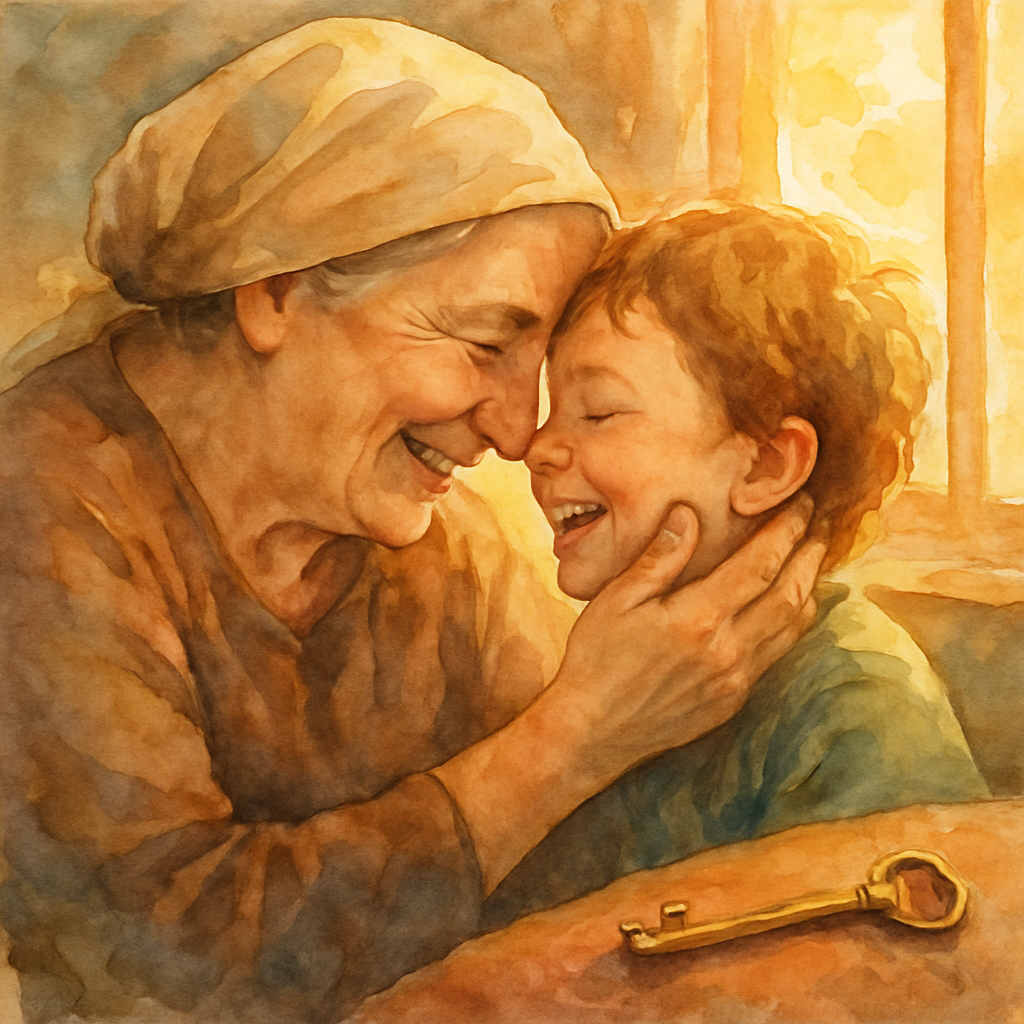
ضَحِكْتُ مَعَهَا حَتَّى آلَمَنِي بَطْنِي. قَالَتْ تيتا: "يَا حَبِيبِي، أَحْيَانًا الشَّيْءُ الَّذِي نَبْحَثُ عَنْهُ قَرِيبٌ جِدًّا."
I laughed with her until my stomach hurt. Teta said, "Habibi, sometimes the thing we are looking for is very close."
🎨 Illustration prompt
A close, tender moment: Teta and the child leaning their foreheads gently together, both still smiling from laughter. Teta's hand cups the side of the child's face. The brass key sits forgotten on the cushion beside them. Warm golden hour light pours through a nearby window. The whole scene feels safe and full of love. Watercolor style. No text in the image.
كَلِمَاتٌ جَدِيدَة · New Words
| Arabic | How to say it | English |
|---|---|---|
مِفْتَاح |
mif-tāḥ | key |
بَيْت |
bayt | house |
غُرْفَة |
ghur-fah | room |
تَحْت |
taḥt | under |
فَوْق |
fawq | above / on top of |
جَيْب |
jayb | |
ضَحِكَ |
ḍa-ḥi-ka | (he/she) laughed |
حَدِيقَة |
ḥa-dī-qah | garden |
تيتا |
te-ta | grandma (Levantine) |
🗣️ Talk about it
These are not test questions — they're conversation starters. Pick one. Ask. Listen.
Has something like this ever happened to you or someone in your family? Looking everywhere for something that was right there the whole time? What was it? Where did you find it?
Why do you think Teta laughed instead of feeling embarrassed? What does that tell us about her?
The child says, "I will help you." When is the last time you helped someone in your family find something — or fix something, or carry something? How did it feel?
✏️ Try it
Pick one:
- Play the "hot and cold" game. Hide a small object somewhere in your home. Have someone in your family search for it. Say "warmer" when they're close and "colder" when they're far. Then switch.
- Learn the words for things in your house. Point to a room and say ghur-fah (room). Point to a key and say mif-tāḥ. Point to your pocket and say jayb. Teach someone in your family one new word.
- Draw a map of your home. Mark all the places someone might lose a key — under the couch, on top of the fridge, in a coat pocket. How many spots can you find?
A note for grown-ups reading along
This story uses full vowel marks (تَشْكِيل) on every Arabic word — your reader can still sound out each syllable carefully. Tier 2 stories have slightly longer sentences than Tier 1, with two or three short sentences per page instead of one. The vocabulary builds on simple location words (taḥt under, fawq on top of) that show up everywhere in daily Arabic. Once your child knows these, they'll start hearing them in songs, in conversations, and in other stories.
The humor in this story — a grandmother searching the whole house for a key that was in her own pocket — is a real, gentle moment of Levantine family life. Grandmothers (and grandfathers, and parents, and all of us) lose things. The point isn't the key. The point is the searching together, and the laughing together at the end.
Read this book more than once. The second time, ask your child to read the Arabic words they remember. By the third time, they'll be reading more than they think.
— Hayya Beena Naqraa (هَيَّا بِنَا نَقْرَأ)