لَيْلَة الانْقِطَاع
The Night of the Power Cut
A Hayya Beena Naqraa story · Tier 3 · For ages 9–11
Cover page
لَيْلَة الانْقِطَاع
The Night of the Power Cut
🎨 Illustration prompt
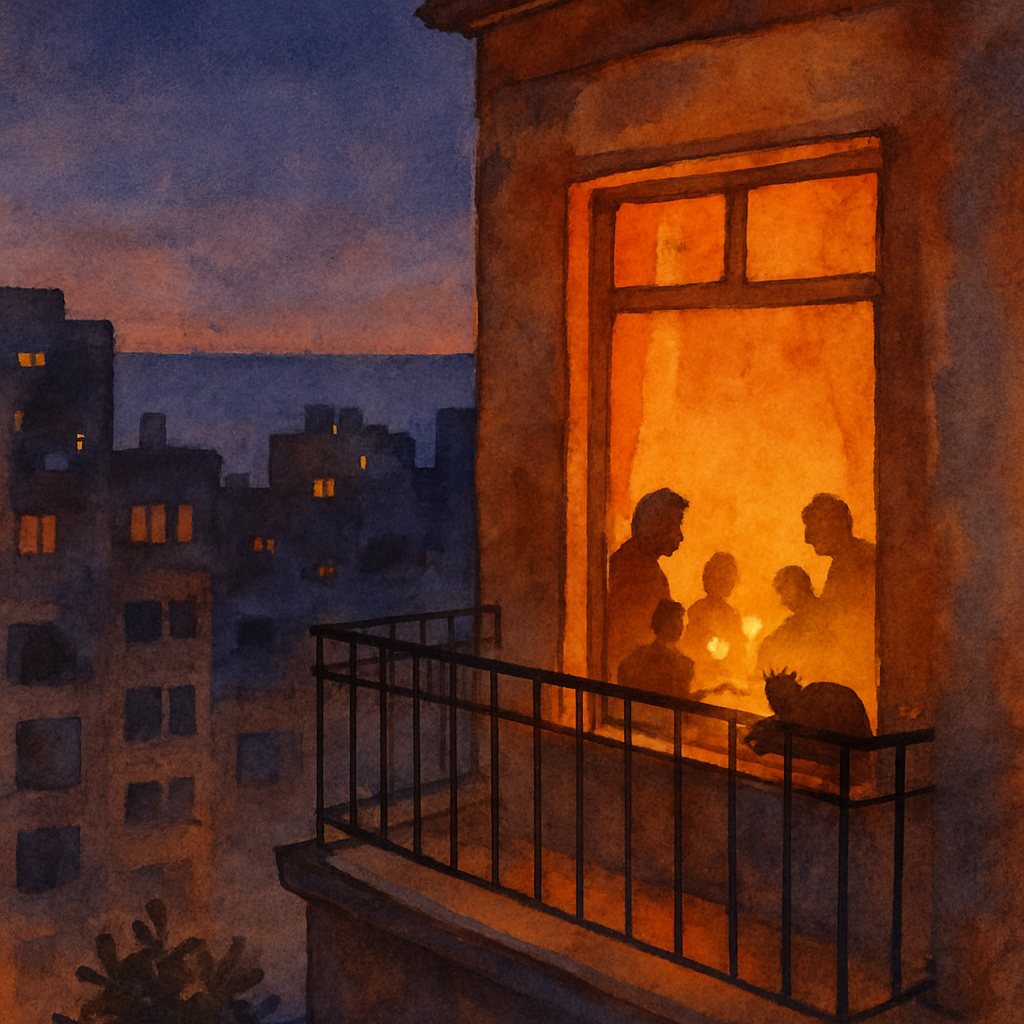
A warm watercolor scene of a Beirut apartment balcony at dusk. The city behind it is dark — windows unlit, the skyline soft and quiet. But inside one apartment, candles glow golden through the window, and you can just make out the silhouettes of a family sitting close together around a low table. A cat curls on the windowsill. The Mediterranean is a thin band of deeper blue in the distance. Warm earth tones, soft golden light against indigo dusk. Watercolor style. No text in the image.
Page 1
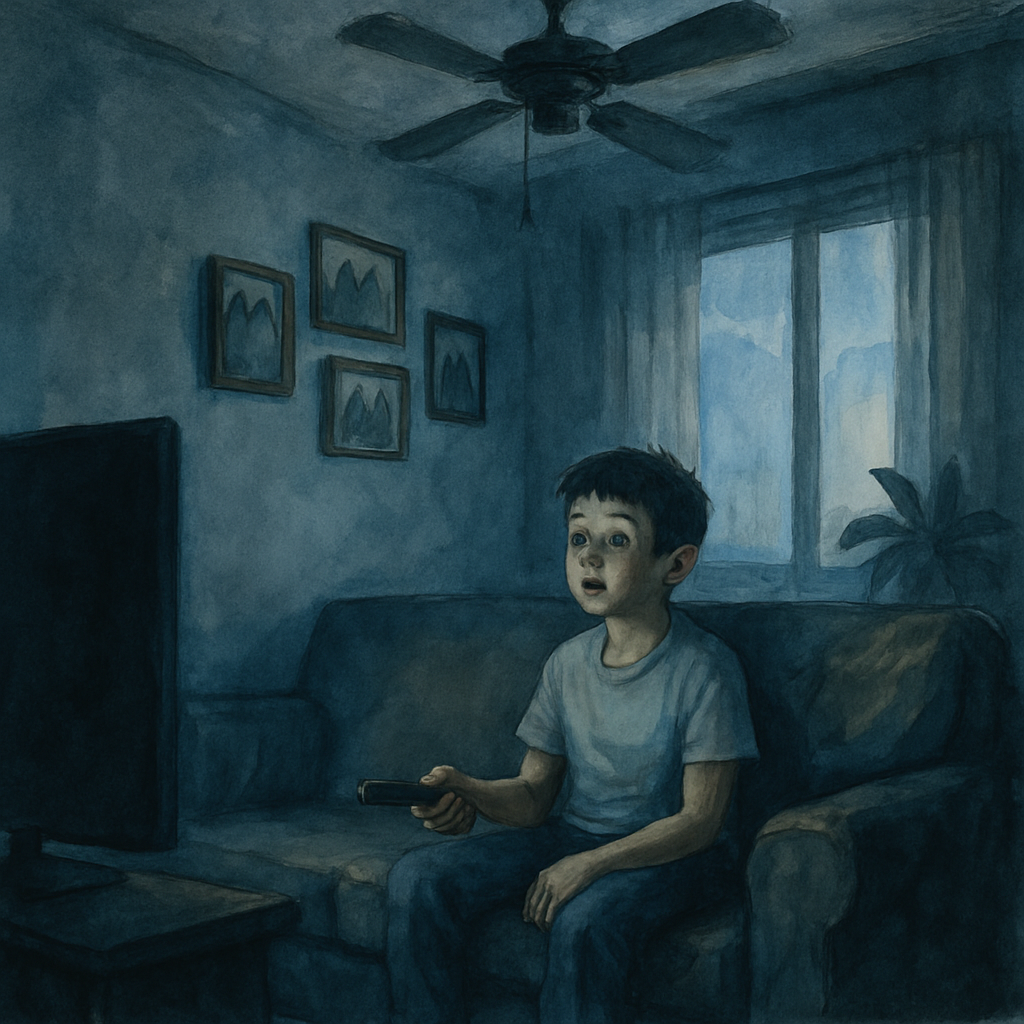
كُنْتُ جالِسًا على الكَنَبَة، والرِّيمُوت في يَدي. الفِيلْم كانَ على وَشْكِ أَنْ يَبْدَأ. ثُمَّ — طَقّ. اِخْتَفَى الضَّوْء. تَوَقَّفَتِ المِرْوَحَة. صَمَتَ كُلُّ شَيْءٍ في البَيْت.
I was sitting on the couch with the remote in my hand. The movie was about to start. Then — click. The light vanished. The fan stopped. Everything in the house went silent.
🎨 Illustration prompt
Inside a modern Beirut living room: a child around 10 sits on a worn but cozy couch, mouth slightly open, remote still pointed at a now-dark TV screen. The ceiling fan blades are mid-spin, slowing. A houseplant in the corner. Family photos on the wall, slightly crooked. The light has just gone out — the room is bathed in the dim grey-blue of late afternoon coming through the window. Watercolor style. No text in the image.
Page 2
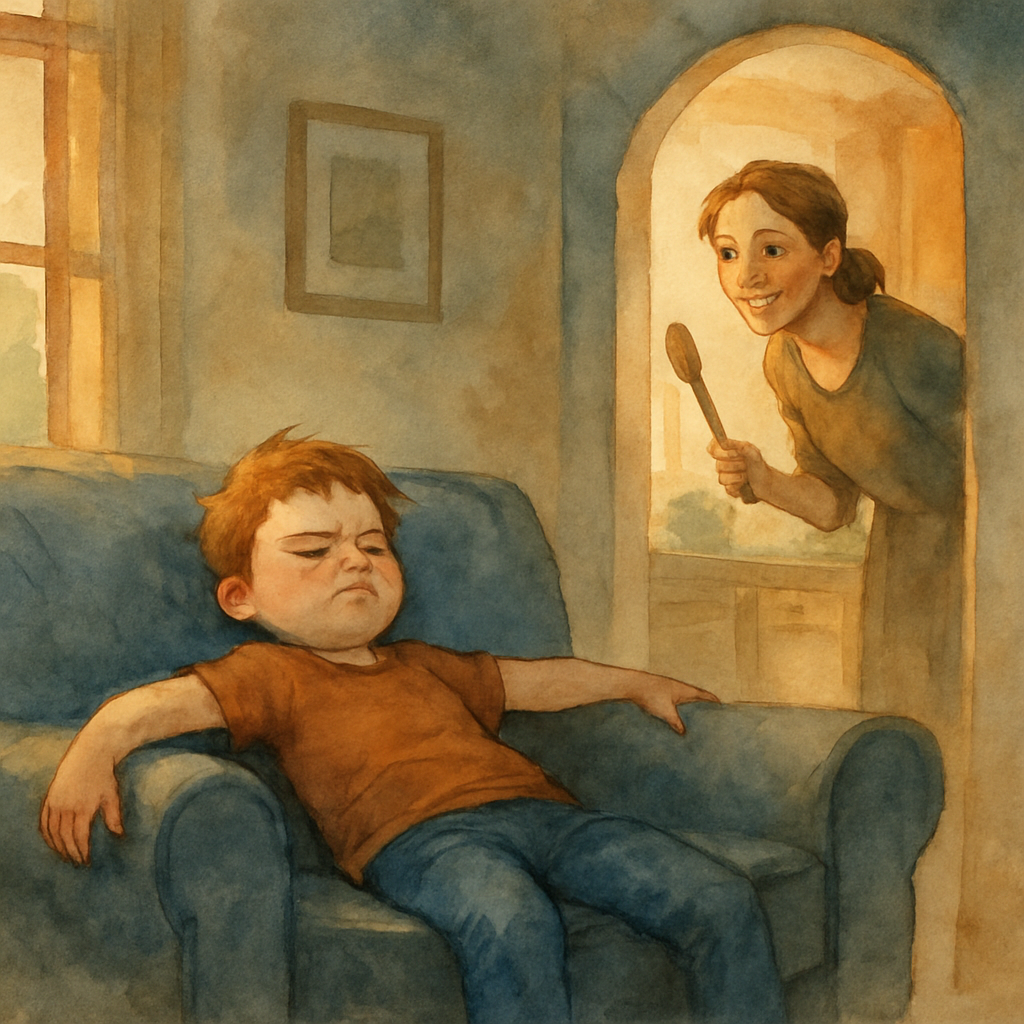
تَنَهَّدْت. "يَا إِلَهي، الكَهْرَبَاء راحَتْ كَمان!" صَرَخْتُ نَحْوَ المَطْبَخ. ضَحِكَتْ ماما. "هَذا طَبِيعِيٌّ يا حَبِيبِي. سَتَعُودُ بَعْدَ ساعات." لَكِنّي كُنْتُ غاضِبًا. كُنْتُ قَدِ انْتَظَرْتُ هَذا الفِيلْمَ طُولَ الأُسْبُوع.
I sighed. "Ugh, the electricity is out again!" I shouted toward the kitchen. Mama laughed. "It's normal, habibi. It'll come back in a few hours." But I was angry. I had waited all week for this movie.
🎨 Illustration prompt
The same child slumped dramatically backward on the couch, arms flopped to the sides, an exaggerated grumpy face. From the kitchen doorway, Mama leans out — a woman in her late thirties with her hair tied back, holding a wooden spoon, smiling kindly at the child's frustration. The afternoon light is fading. Watercolor style. No text in the image.
Page 3
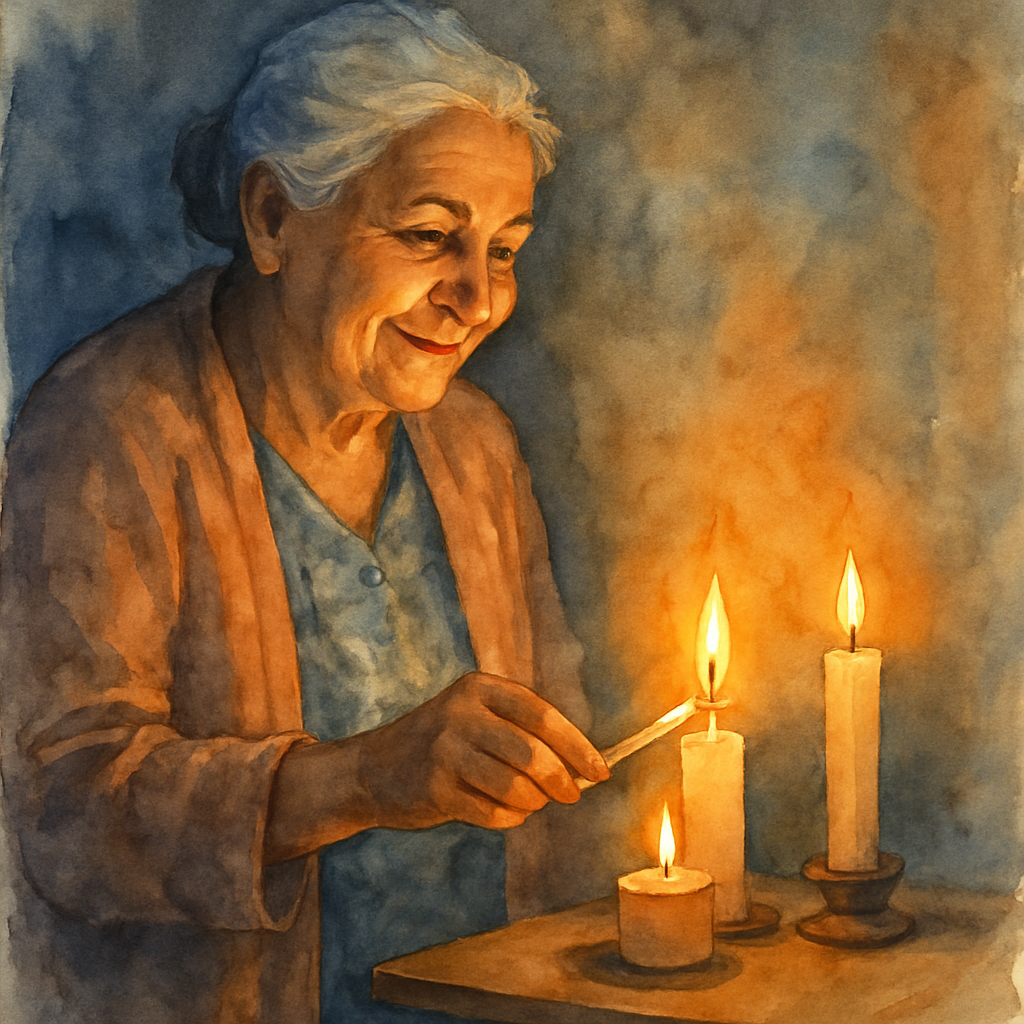
دَخَلَتْ تيتا مِنَ الغُرْفَةِ الأُخْرى وَمَعَها عُلْبَةُ كِبْرِيت. "لا تَقْلَق،" قالَتْ بِهُدُوء. أَشْعَلَتْ شَمْعَةً. ثُمَّ شَمْعَةً ثانِيَة. ثُمَّ ثالِثَة. وَفَجْأَة، صارَ البَيْتُ ذَهَبِيًّا.
Teta came in from the other room with a box of matches. "Don't worry," she said calmly. She lit a candle. Then a second one. Then a third. And suddenly, the whole house turned golden.
🎨 Illustration prompt
Teta — an older Levantine woman with silver hair pulled back and a soft cardigan over her housedress — carefully lighting a candle on a small wooden table. Two candles are already lit nearby. The flames cast warm gold-orange light across her face and across the walls of the room. Her expression is calm, almost amused, as if she has done this a thousand times. Soft watercolor with strong contrast between warm candlelight and dim blue-grey shadow. Watercolor style. No text in the image.
Page 4
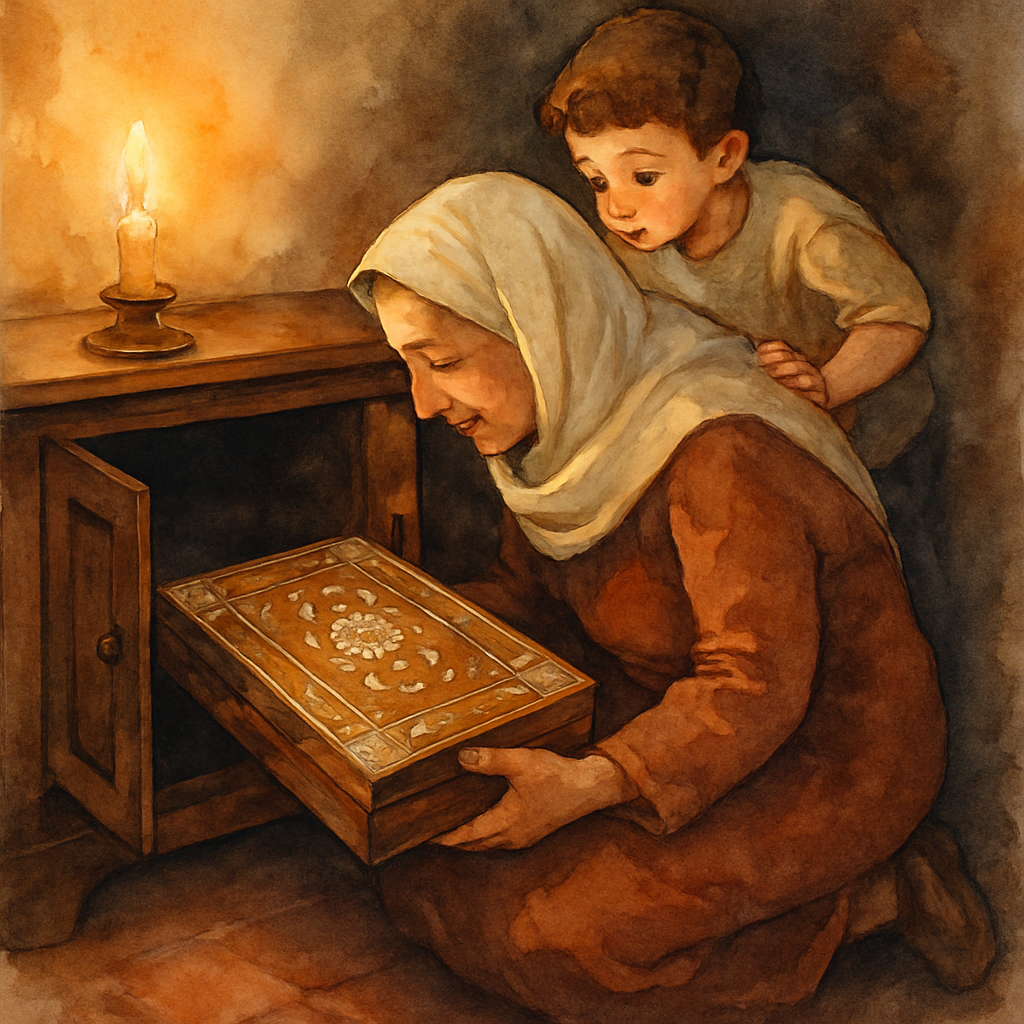
"وَالآن ماذا نَفْعَل؟" سَأَلْتُها بِنِصْفِ غَضَب. ظَنَنْتُ أَنَّ اللَّيْلَةَ سَتَكُونُ مُمِلَّةً جِدًّا. اِبْتَسَمَتْ تيتا. "اِنْتَظِرْ وَسَتَرى." ذَهَبَتْ إِلى الخِزانَةِ القَدِيمَة، وَأَخْرَجَتْ صُنْدُوقًا خَشَبِيًّا.
"So what do we do now?" I asked, half-grumpy. I thought the night was going to be very boring. Teta smiled. "Wait and see." She went to the old cabinet and pulled out a wooden box.
🎨 Illustration prompt
Teta kneeling in front of a dark wooden cabinet, opening its small doors. She is lifting out a beautifully worn wooden box — a backgammon set (طاولة) — with inlaid mother-of-pearl patterns on its top. The child watches from behind, leaning curiously over her shoulder. Candlelight flickers across the polished wood. Watercolor style. No text in the image.
Page 5
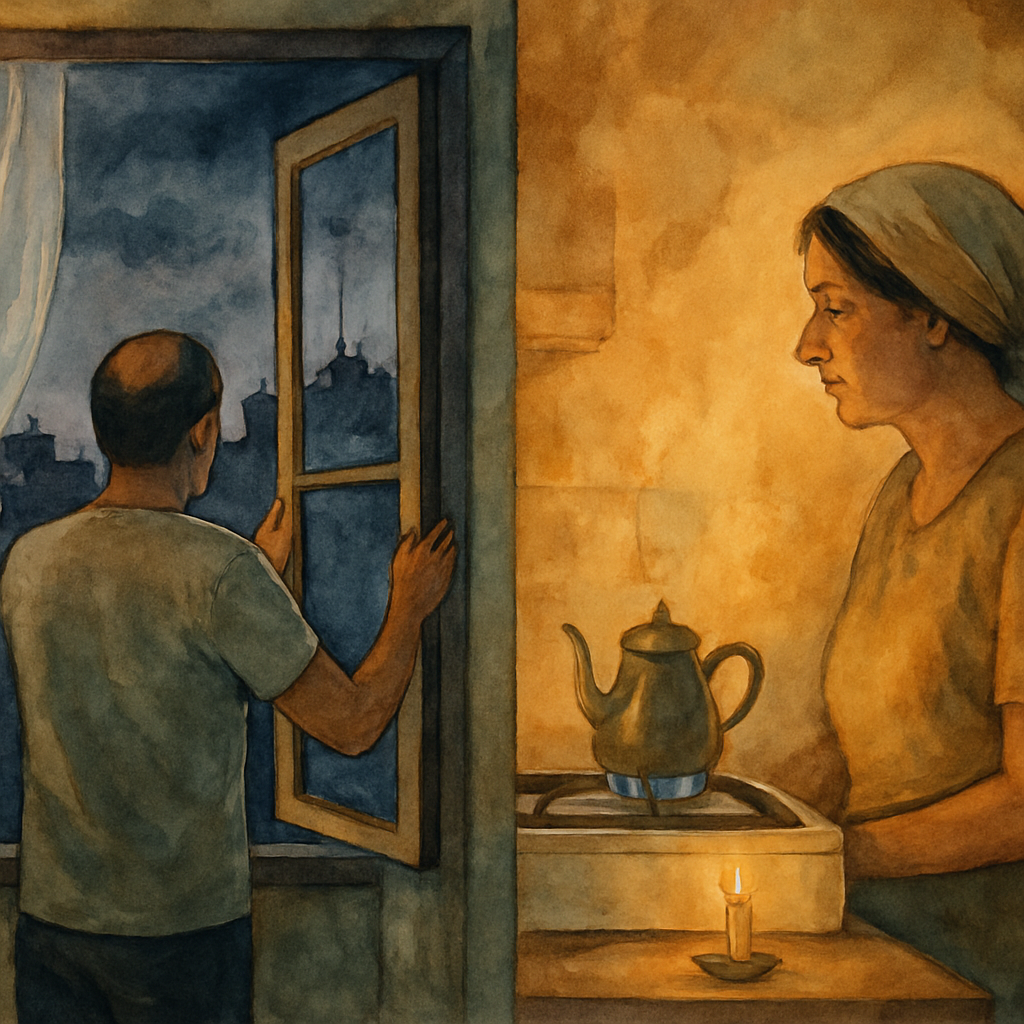
كانَتِ الطاوْلَة. لُعْبَةُ تيتا القَدِيمَة. فَتَحَ بابا النَّافِذَة، فَدَخَلَ هَواءٌ بارِدٌ مِنَ البَحْر. وَضَعَتْ ماما إِبْرِيقَ الشّاي على الغاز. "الغازُ يَعْمَل،" قالَتْ ضاحِكَة، "الكَهْرَبَاءُ فَقَط هي الَّتي نامَتْ."
It was the backgammon set. Teta's old game. Baba opened the window, and cool air drifted in from the sea. Mama put the teapot on the stove. "The gas works," she laughed. "Only the electricity is sleeping."
🎨 Illustration prompt
A split scene inside the apartment: on one side, Baba — a man in a plain t-shirt — pushing open a tall window, letting in a breeze that lifts the curtains; outside, a glimpse of dark Beirut rooftops. On the other side, Mama at the gas stove with a small blue flame heating a metal teapot, candle on the counter beside her. The whole room glows in soft warm light. Watercolor style. No text in the image.
Page 6
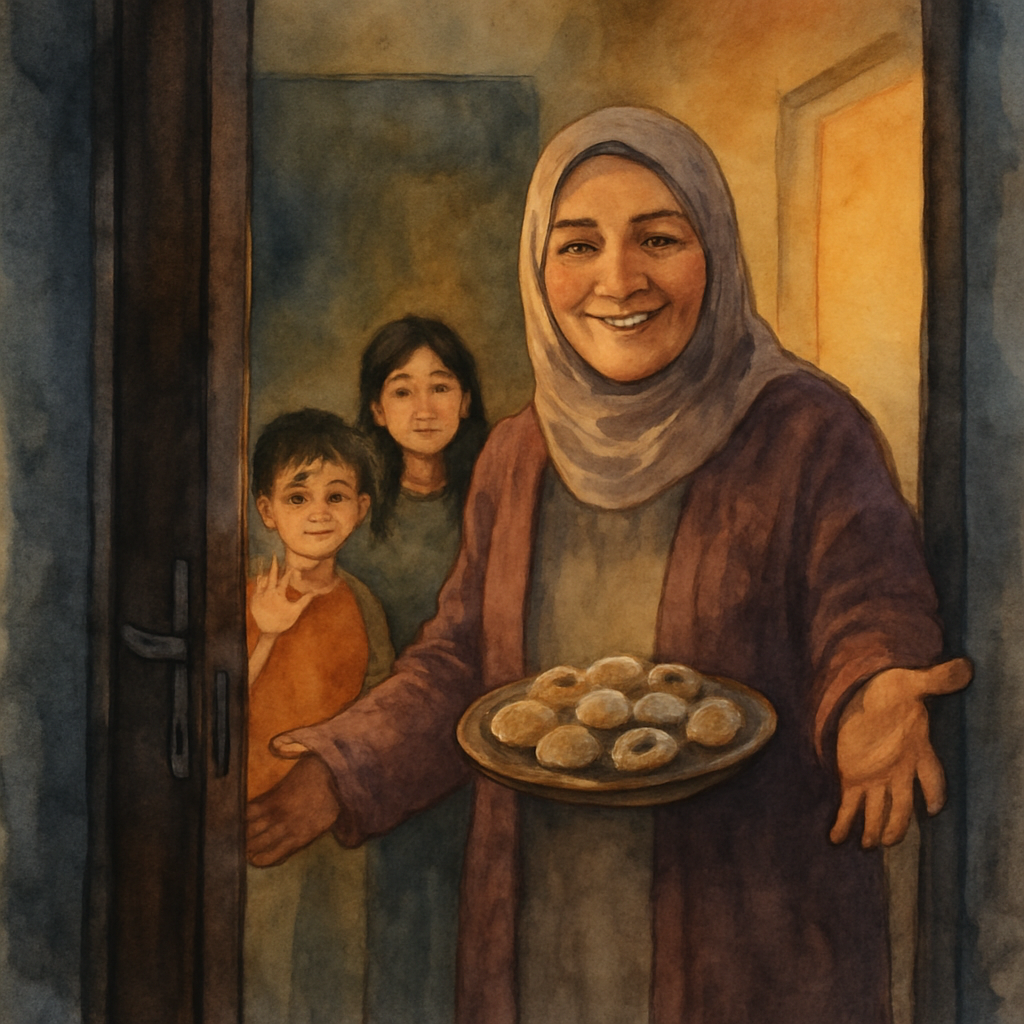
طَرَقَ أَحَدُهُمُ الباب. كانَتْ جارَتُنا أُمّ كَرَم، وَمَعَها وَلَدَيْها. "هَلِ انْقَطَعَتْ عِنْدَكُم أَيْضًا؟" سَأَلَتْ ضاحِكَةً. "تَفَضَّلِي،" قالَتْ ماما. حَمَلَتْ أُمّ كَرَم صَحْنًا فيهِ كَعْكٌ بِالتَّمْر. "لا يُمْكِنُنا أَنْ نَأْكُلَهُ وَحْدَنا في الظَّلَام!"
Someone knocked at the door. It was our neighbor Umm Karam, with her two kids. "Did your power go out too?" she laughed. "Come in," said Mama. Umm Karam carried a plate of date cookies. "We can't eat them alone in the dark!"
🎨 Illustration prompt
The apartment door open. Umm Karam — a friendly woman in a long cardigan — stands in the doorway smiling, holding a plate of round date-filled cookies (ma'amoul). Behind her, two kids around 8 and 11, one shyly waving. Mama opens her arms in welcome. The hallway behind them is dim — power's out everywhere — but warm candlelight pours out from inside the apartment. Watercolor style. No text in the image.
Page 7
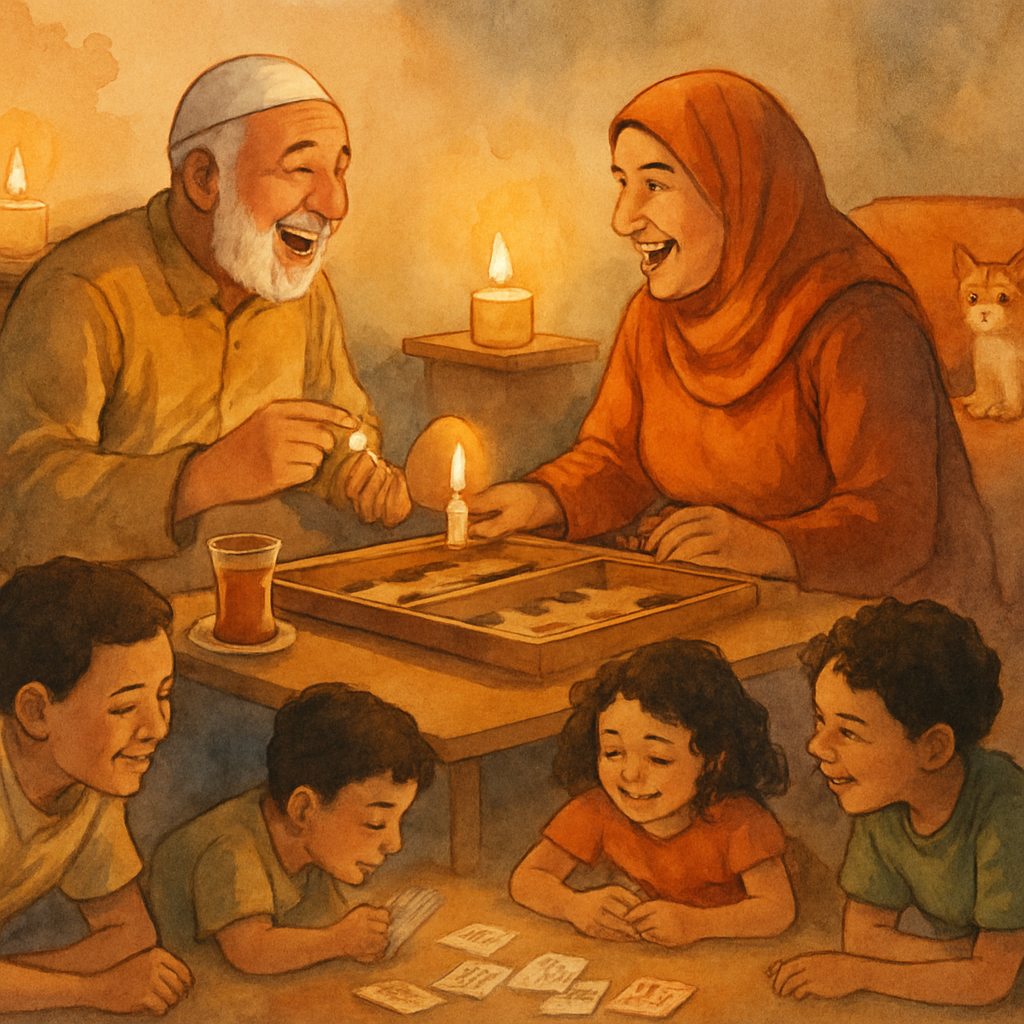
جَلَسْنا جَمِيعًا حَوْلَ الطّاوِلَةِ المُنْخَفِضَة. بابا وَأُمّ كَرَم لَعِبا الطاوْلَة. كانَ بابا يَخْسَر، وَكانَ يَضْحَكُ كَطِفْل. لَعِبْتُ أَنا مَعَ وَلَدَيْها لُعْبَةَ الوَرَق. الشُّمُوع تَرْقُص، وَالضِّحْكَة تَمْلَأُ الغُرْفَة.
We all sat around the low table. Baba and Umm Karam played backgammon. Baba was losing, and he was laughing like a kid. I played cards with her two children. The candles danced, and laughter filled the room.
🎨 Illustration prompt
A wide, warm scene: the family and neighbors gathered around a low coffee table. Baba and Umm Karam face each other across an open backgammon board, mid-laugh, dice in hand. On the floor, the child and the two neighbor kids sprawled with playing cards spread out between them. Four candles on different surfaces cast overlapping pools of golden light. Tea glasses with small spoons. The cat watches from the couch. Watercolor style. No text in the image.
Page 8
ثُمَّ بَدَأَتْ تيتا تَحْكِي. "في زَمَاني، لَمْ يَكُنْ هُناكَ تِلِفِزْيُون. وَلا هَواتِف. كُنّا في كُلِّ لَيْلَة نَجْتَمِعُ كَما نَحْنُ الآن. الجِيرَانُ كانُوا عائِلَة." سَكَتْنا كُلُّنا، وَنَظَرْنا إِلَيْها. حَتّى أَوْلادُ الجِيرَانِ تَرَكُوا الوَرَق.
Then Teta began to tell stories. "In my day, there was no TV. No phones. Every night we would gather just like this. The neighbors were family." We all went quiet and looked at her. Even the neighbor kids put down their cards.
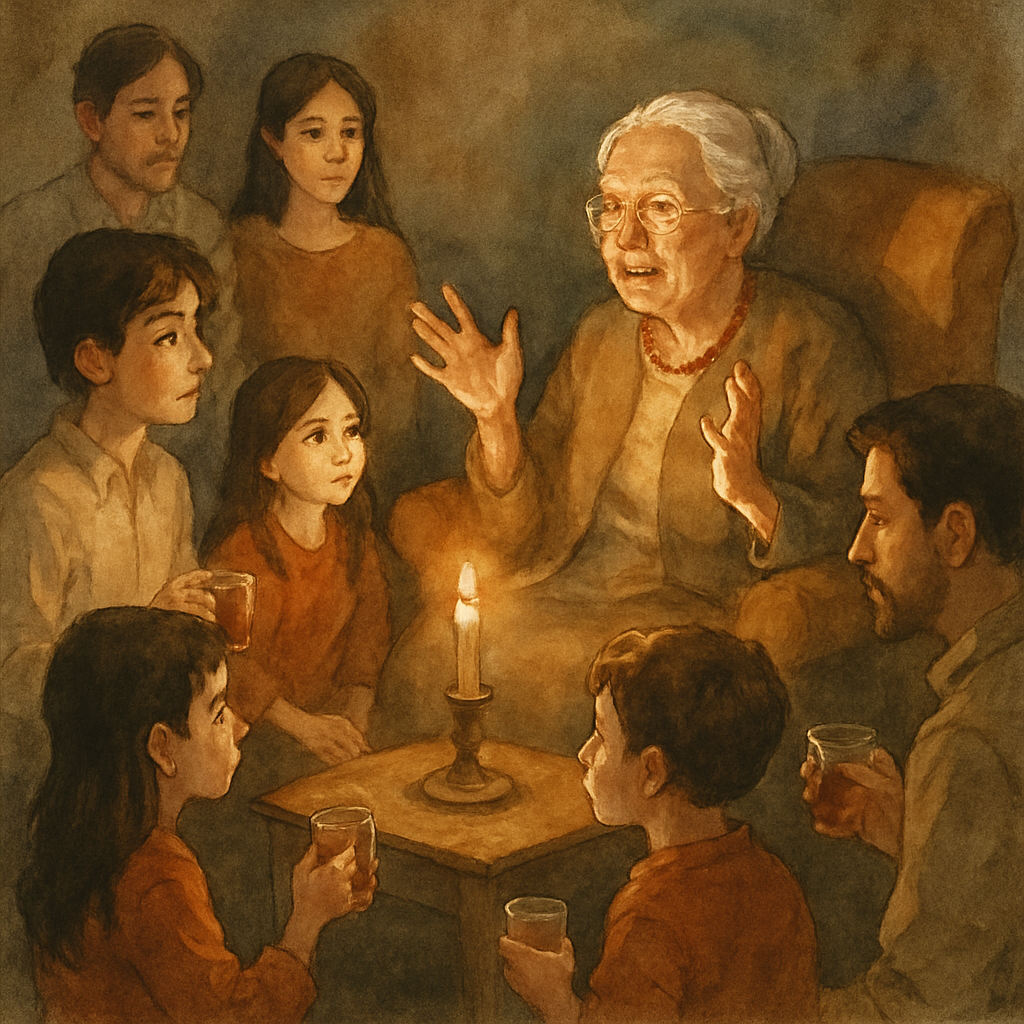
🎨 Illustration prompt
Teta in the center of the frame, seated in an armchair, hands moving slightly as she tells a story. The candlelight catches her face, making her look almost luminous. Around her, all four children and the three adults are still and listening, fully drawn in. Tea glasses paused in mid-air. The whole image feels hushed — the most alive kind of quiet. Watercolor style. No text in the image.
Page 9
حَكَتْ تيتا عَنْ قَرْيَتِها في الجَبَل، وَعَنْ جَدَّتِها الَّتي كانَتْ تَخْبِزُ الخُبْزَ على الصَّاج. حَكَتْ عَنِ السَّهَرَاتِ تَحْتَ القَمَر، وَعَنْ أَوَّلِ مَرَّةٍ رَأَتْ فيها الكَهْرَبَاءَ تَدْخُلُ بَيْتَهُم. "ضَحِكْنا وَبَكَيْنا في نَفْسِ الوَقْت،" قالَتْ. "ظَنَنّا أَنَّها سِحْر."
Teta told us about her mountain village, and about her own grandmother who baked bread on a metal griddle. She told us about evenings under the moon, and about the first time she saw electricity come into their house. "We laughed and cried at the same time," she said. "We thought it was magic."
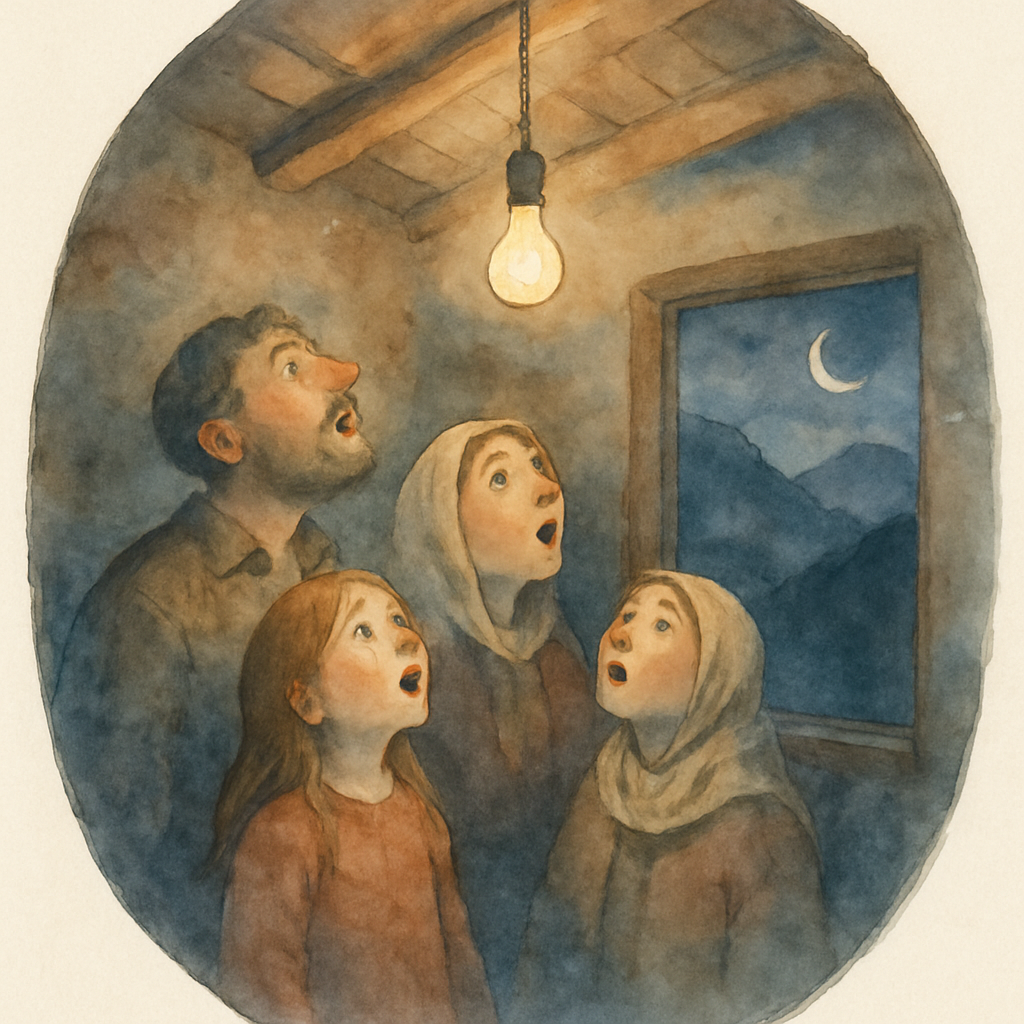
🎨 Illustration prompt
A dreamy, slightly faded watercolor of Teta's memory: a small mountain village house at night with a single bare lightbulb hanging from the ceiling, just turned on for the first time. A young girl (Teta as a child) and her family stand beneath it, faces upturned in wonder, mouths open. Outside the window, dark mountains and a thin moon. This image is set inside a soft oval, as if floating — a memory. Watercolor style. No text in the image.
Page 10
لَمْ أَكُنْ قَدْ سَمِعْتُ تيتا تَضْحَكُ هَكَذا مِنْ قَبْل. ضِحْكَتُها كانَتْ صَغِيرَةً وَدافِئَة، كَأَنَّها هي أَيْضًا عادَتْ طِفْلَةً. نَظَرْتُ إِلى الشُّمُوعِ على الطّاوِلَة، وَإِلى وُجُوهِ الجَمِيع. شَعَرْتُ بِشَيْءٍ غَرِيب: شَعَرْتُ بِالبَرَكَة.
I had never heard Teta laugh like that before. Her laugh was small and warm, as if she too had turned back into a child. I looked at the candles on the table, and at everyone's faces. I felt something strange: I felt a blessing.
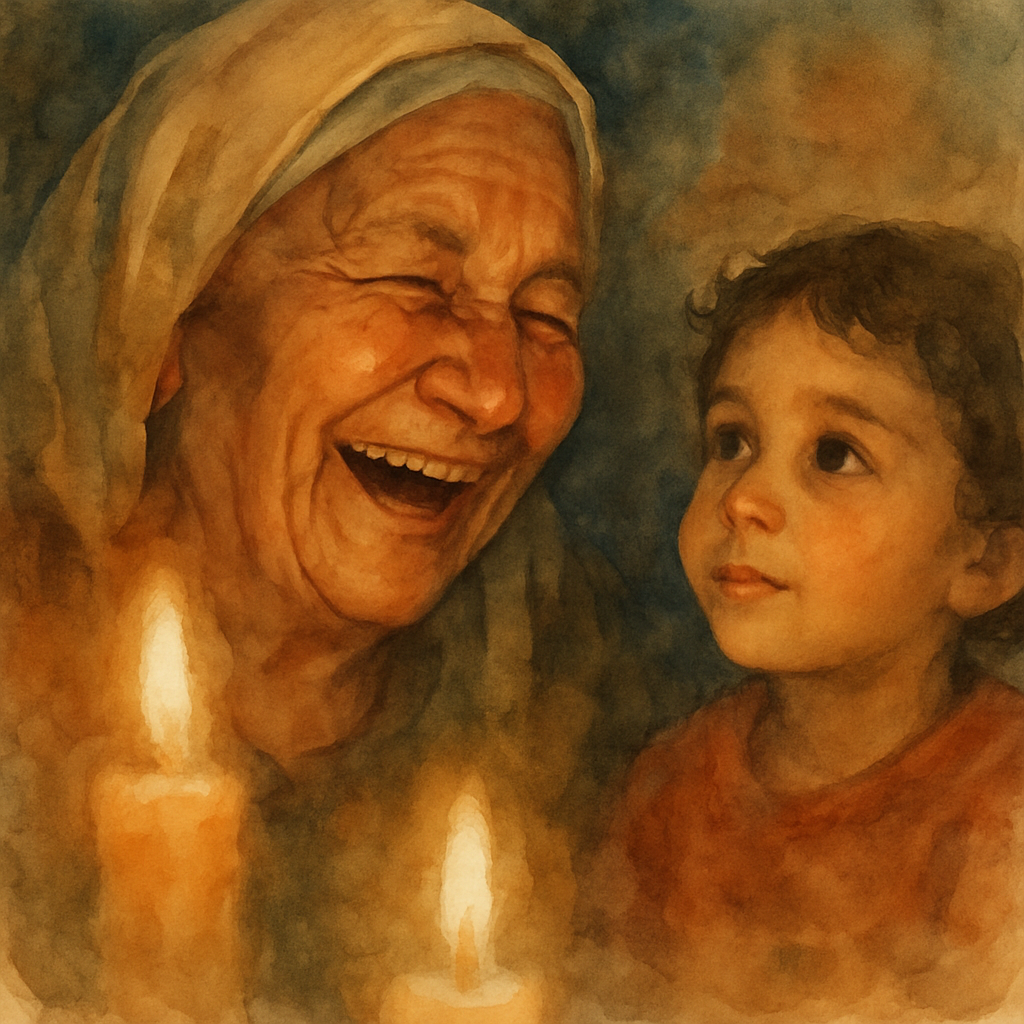
🎨 Illustration prompt
A tender close-up on Teta's face mid-laugh — eyes crinkled, mouth open in a full warm laugh. Beside her, the child watches her with quiet wonder, the kind of look you give someone you suddenly see in a new way. Candle flames blur softly in the foreground. Watercolor style. No text in the image.
Page 11
فَجْأَة — طَقّ. عادَتِ الكَهْرَبَاء. اِشْتَعَلَتِ الأَنْوار. هَدَرَتِ المِرْوَحَة. وَمَضَتْ شاشَةُ التِّلِفِزْيُون. صَمَتْنا كُلُّنا. مَدَّتْ ماما يَدَها وَأَطْفَأَتِ التِّلِفِزْيُون. "خَمْسُ دَقائِقَ أُخْرى،" قُلْنا جَمِيعًا في نَفْسِ اللَّحْظَة. ثُمَّ ضَحِكْنا.
Suddenly — click. The electricity came back. The lights flared on. The fan whirred. The TV screen blinked alive. We all went quiet. Mama reached out and turned off the TV. "Five more minutes," we all said at the same moment. Then we laughed.
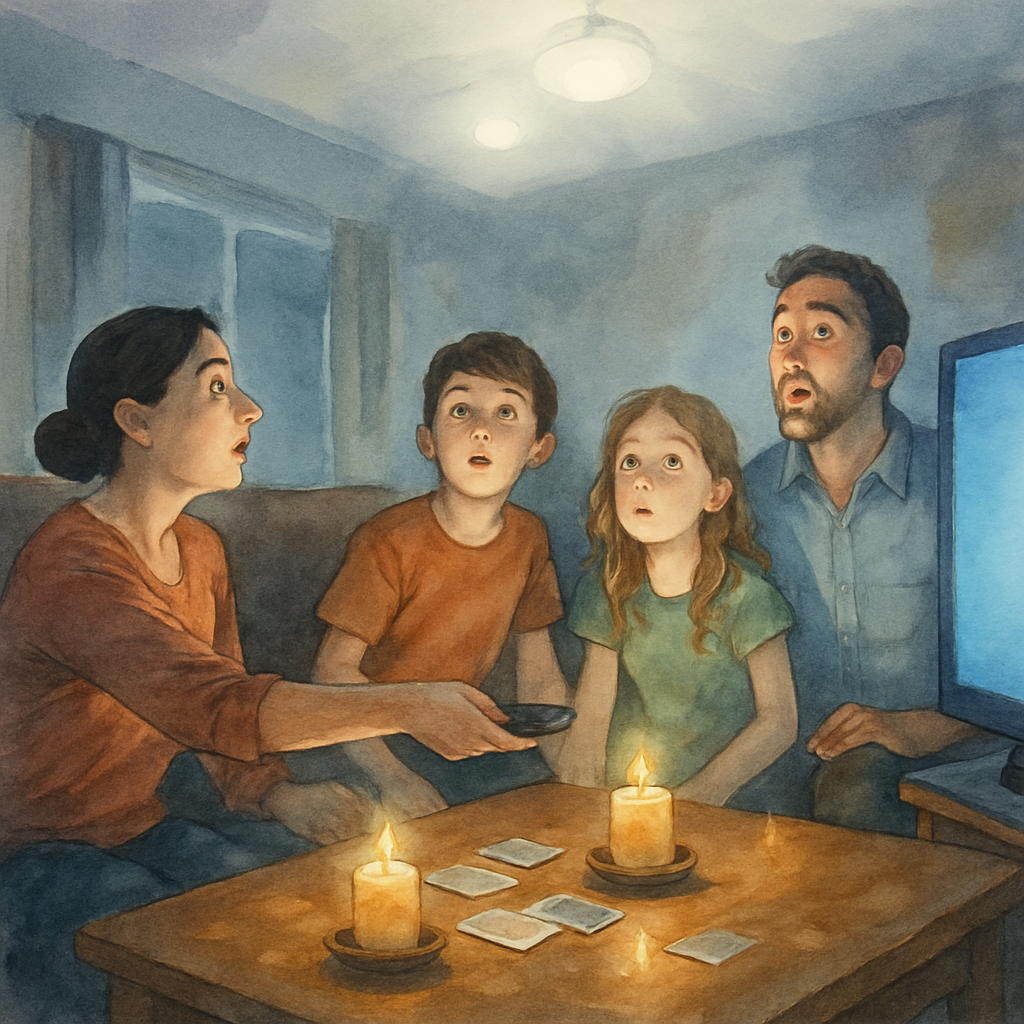
🎨 Illustration prompt
The exact moment the lights come back: the room is suddenly bright with white electric light, slightly harsh after the gentle candlelight. Everyone is frozen mid-game, looking up at the ceiling lights or at the TV screen now glowing blue. Mama's hand reaches for the TV remote. The contrast between the warm candle pools (still flickering) and the cold electric light is the heart of the image. Watercolor style. No text in the image.
Page 12
سَهِرْنا ساعَةً أُخْرى، ثُمَّ ساعَة. أُمّ كَرَم وَأَوْلادُها عادُوا إِلى بَيْتِهِم. قَبَّلَتْنِي تيتا وَقالَتْ: "نامْ يا حَبِيبِي." اِسْتَلْقَيْتُ في سَريري وَأَنا أَنْظُرُ إِلى السَّقْف. كُنْتُ أُفَكِّرُ في الشُّمُوعِ، وَفي ضِحْكَةِ تيتا، وَفي كَعْكِ التَّمْر.
We stayed up another hour, then another. Umm Karam and her kids went back to their apartment. Teta kissed me and said, "Sleep, habibi." I lay in my bed staring at the ceiling. I was thinking about the candles, and about Teta's laugh, and about the date cookies.
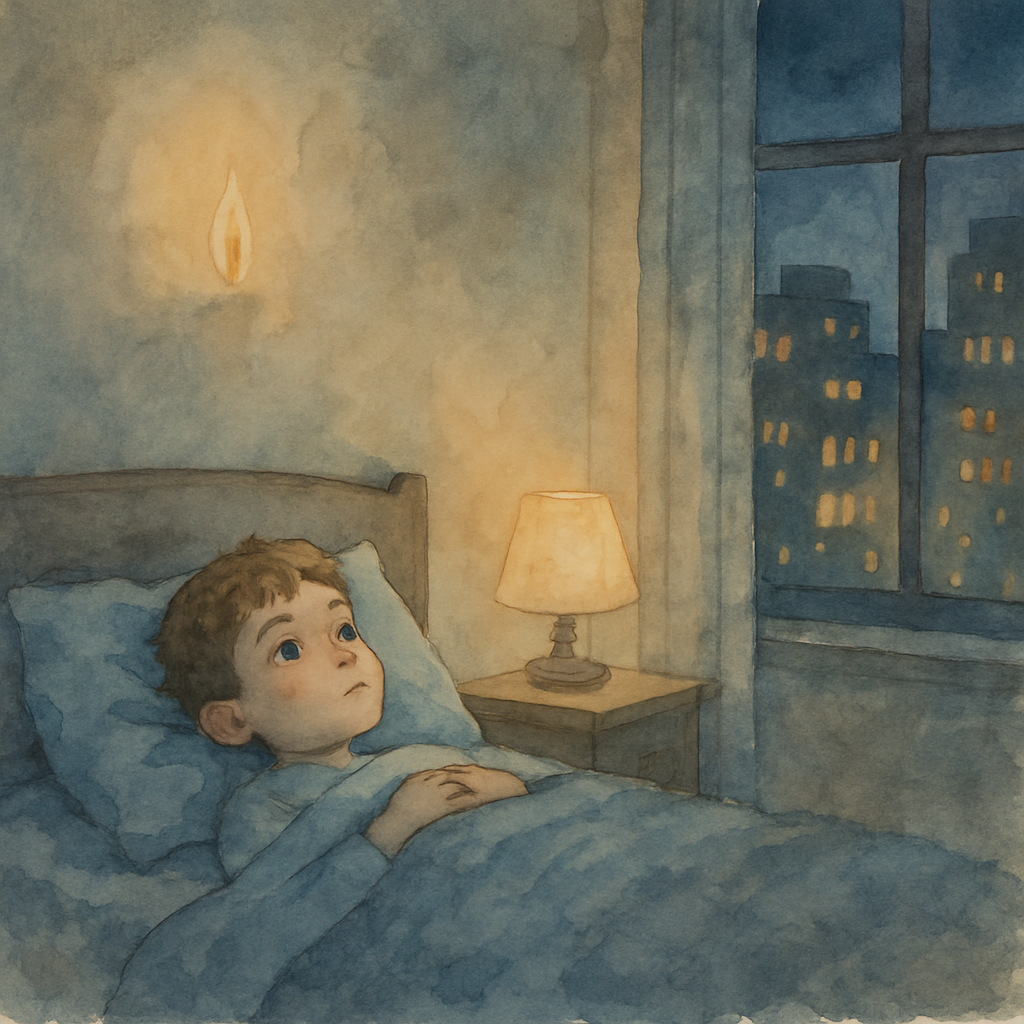
🎨 Illustration prompt
A quiet bedroom scene: the child lying on their back in bed, blanket pulled up to their chest, eyes open and thoughtful, looking up at the ceiling. A small bedside lamp glows softly. On the wall above the bed, a faint reflection or memory-shadow of a candle flame, almost imaginary. The window shows the city outside — now lit up again. Watercolor style. No text in the image.
Page 13
فَكَّرْتُ: رُبَّما الانْقِطَاعُ لَيْسَ سَيِّئًا دائِمًا. رُبَّما عِنْدَما تَنْطَفِئُ الأَنْوار، تَظْهَرُ الأَشْياءُ الَّتي لا نَراها أَبَدًا — ضِحْكَةُ تيتا، وَجْهُ بابا وَهُوَ يَخْسَرُ في الطاوْلَة، طَرْقَةُ الجارَة على الباب. أَغْمَضْتُ عَيْنَيّ وَأَنا أَبْتَسِم. أَحْيانًا، يَكُونُ الظَّلامُ هُوَ الوَقْتُ الَّذي تُضِيءُ فيهِ العائِلَةُ أَكْثَر.
I thought: maybe a power cut isn't always a bad thing. Maybe when the lights go out, the things we never notice come into view — Teta's laugh, Baba's face when he's losing at backgammon, the neighbor's knock at the door. I closed my eyes, smiling. Sometimes the darkness is when the family becomes most bright.
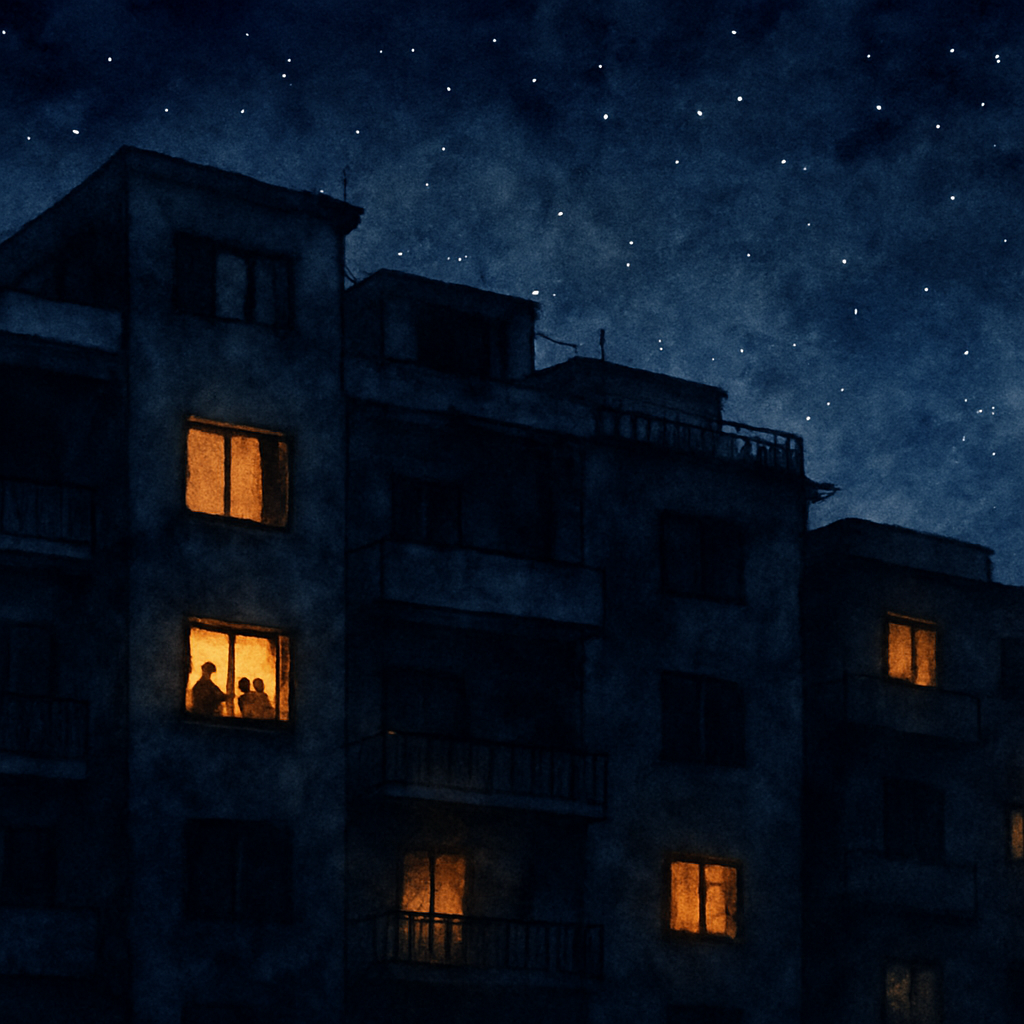
🎨 Illustration prompt
A final wide watercolor: an outside view of the Beirut apartment building at night. Most windows are dark, the city in another power cut. But several windows glow warm gold from candlelight inside, including the family's. Through one window we can see, very small, the silhouettes of people gathered together. Stars above. A feeling of an entire neighborhood holding warmth inside the dark. Watercolor style. No text in the image.
كَلِماتٌ جَدِيدَة · New Words
| Arabic | How to say it | English |
|---|---|---|
كَهْرَبَاء |
kah-ra-bā' | electricity |
انْقِطَاع |
in-qi-ṭāʿ | outage / cut-off |
شُمُوع |
shu-mūʿ | candles |
ظَلَام |
ẓa-lām | darkness |
بَرَكَة |
ba-ra-kah | blessing |
جِيرَان |
jī-rān | neighbors |
قِصَّة |
qiṣ-ṣah | story |
زَمَان |
za-mān | long ago / the old days |
ضِحْكَة |
ḍiḥ-kah | a laugh |
طاوْلَة |
ṭāw-lah | backgammon (also: table) |
جارَة |
jā-rah | (female) neighbor |
حَبِيبِي |
ḥa-bī-bī | my dear / sweetheart |
🗣️ Talk about it
These are not test questions — they're conversation starters. Pick one (or two), ask it, listen.
"Sometimes the darkness is when the family becomes most bright." What does that line mean to you? Has there ever been a time when something went wrong at your house and it turned out to be a really good night?
The child in the story was angry at first because they couldn't watch their movie. By the end, they didn't even want the TV back on. What changed? What made the night feel different than they expected?
Teta said that in her day, "the neighbors were family." Do you know your neighbors? What would it be like if a neighbor knocked on your door tonight with cookies?
✏️ Try it
Pick one:
- Have a candlelight night. Turn off all the lights and screens for one evening. Light some candles (with a grown-up's help). Play a game. See what happens to the conversation.
- Ask the oldest person in your family what evenings were like when they were a kid. What did people do before phones and TV? Listen carefully.
- Learn one game that doesn't need electricity — backgammon (طاولة), cards, dominoes, chess. Teach it to someone younger than you.
A note for grown-ups reading along
In Lebanon, Syria, Jordan, and across much of the Levant, power cuts (انْقِطَاع الكَهْرَبَاء) are an everyday reality — sometimes for a few hours, sometimes much longer. For families living through them, the cuts are simultaneously a hardship and the soil where some of the most loved family rituals grow: candle dinners, backgammon games, balcony conversations, neighbors who knock without warning because everyone's power is out.
This story doesn't pretend the cuts are easy. Frequent outages are a sign of larger struggles, and we honor that. But it also celebrates something real: the way Levantine families — for generations — have turned darkness into closeness. The التِّلِفِزْيُون goes off, the طاوْلَة comes out, the جِيرَان walk in with date cookies, and تيتا starts a story with "في زَماني..." — "in my day..."
If you're reading this with a child who has never lived through this, talk about it together. If you're reading this with a child who has, let them tell you their own version. The story belongs to them too.
— Hayya Beena Naqraa (هَيَّا بِنَا نَقْرَأ)