الوَصْفَة بِلَا مَقَادِير
The Recipe Without Measurements
A Hayya Beena Naqraa story · Tier 3 · For ages 9–11
Cover page
الوَصْفَة بِلَا مَقَادِير
The Recipe Without Measurements
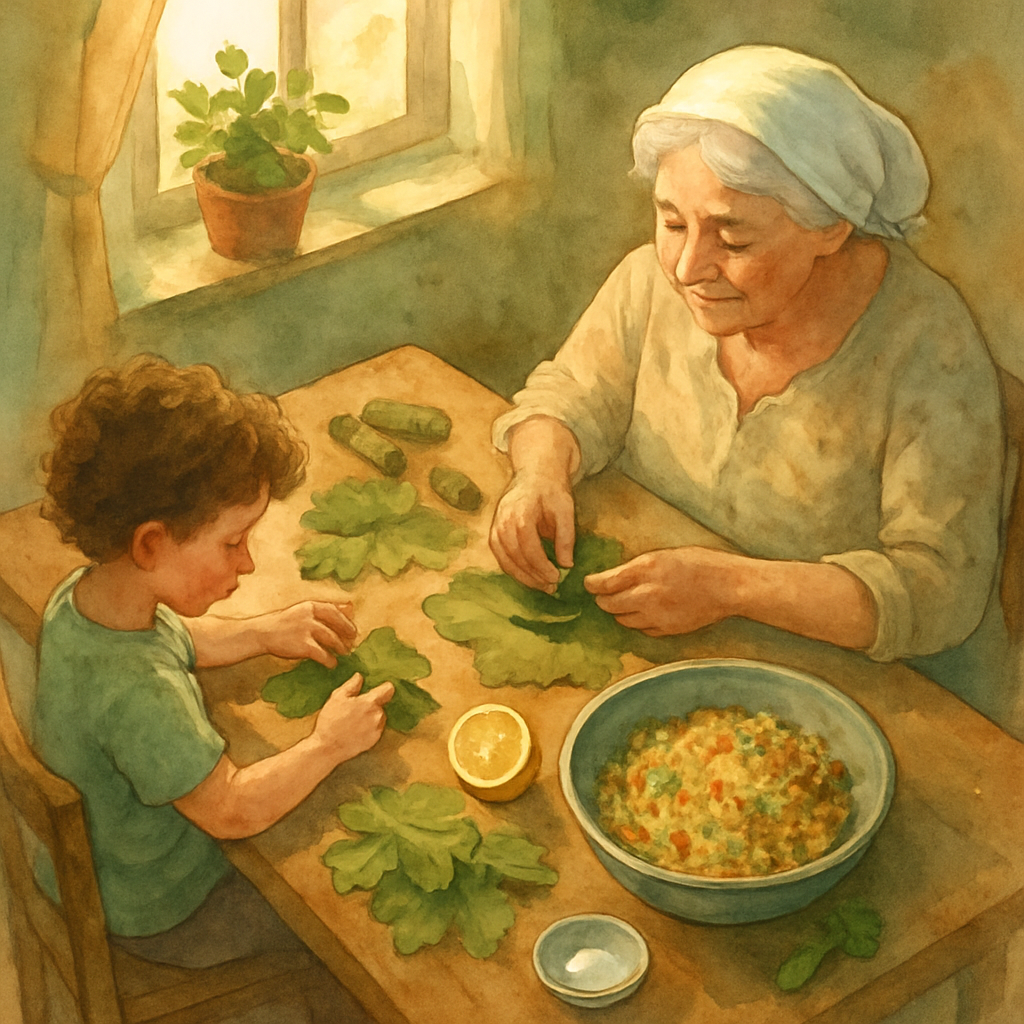
🎨 Illustration prompt
A warm Levantine kitchen seen from above. An elderly grandmother in a soft house-dress and a young child sit across from each other at a worn wooden table covered in fresh grape leaves, a steel bowl of seasoned rice, a halved lemon, and a small dish of salt. The grandmother's hands are rolling a perfect grape leaf; the child's hands are mid-attempt, a little messy. Sunlight comes through a window with a pot of mint on the sill. Warm earth tones, soft greens, gentle light. Watercolor style. No text in the image.
Page 1
تَطْبُخُ تيتا أَحْسَنَ وَرَقِ عِنَبٍ في الدُّنْيا. هَكَذا يَقُولُ بابا، وَهَكَذا تَقُولُ ماما، وَهَكَذا أَقُولُ أَنا. كُلَّ يَوْمِ أَحَد، تَجْلِسُ العائِلَةُ حَوْلَ الطّاوِلَة، وَنَأْكُلُ حَتّى لا يَبْقى شَيْء.
Teta makes the best warak enab in the world. That's what Baba says, and what Mama says, and what I say too. Every Sunday, the whole family sits around the table, and we eat until nothing is left.
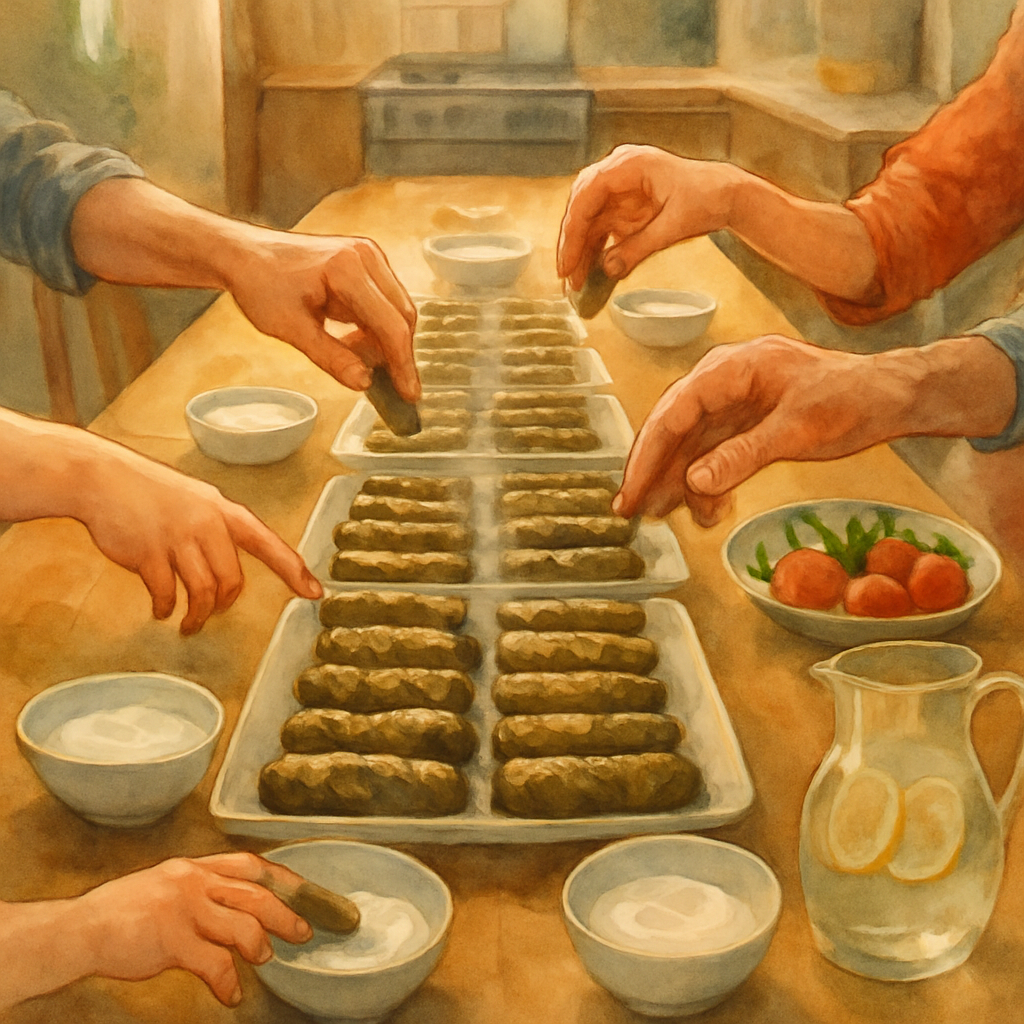
🎨 Illustration prompt
A long family table seen from one end, crowded with plates of stuffed grape leaves arranged in neat rows, bowls of yogurt, a plate of cucumbers and tomatoes, a pitcher of water with lemon slices. Hands of different ages reach in from all sides — a child's, a father's, a mother's, the grandmother's. Steam rises gently. Warm afternoon light, lived-in kitchen. Watercolor style. No text in the image.
Page 2
في يَوْمٍ مِنَ الأَيّام، قَرَّرْتُ أَنْ أَتَعَلَّمَ الوَصْفَة. ذَهَبْتُ إِلى مَطْبَخِ تيتا وَمَعي دَفْتَرٌ صَغِيرٌ وَقَلَم. قُلْتُ لَها: "تيتا، عَلِّمِيني. أُرِيدُ أَنْ أَكْتُبَ كُلَّ شَيْء."
One day, I decided to learn the recipe. I went to Teta's kitchen with a small notebook and a pen. I said to her, "Teta, teach me. I want to write everything down."
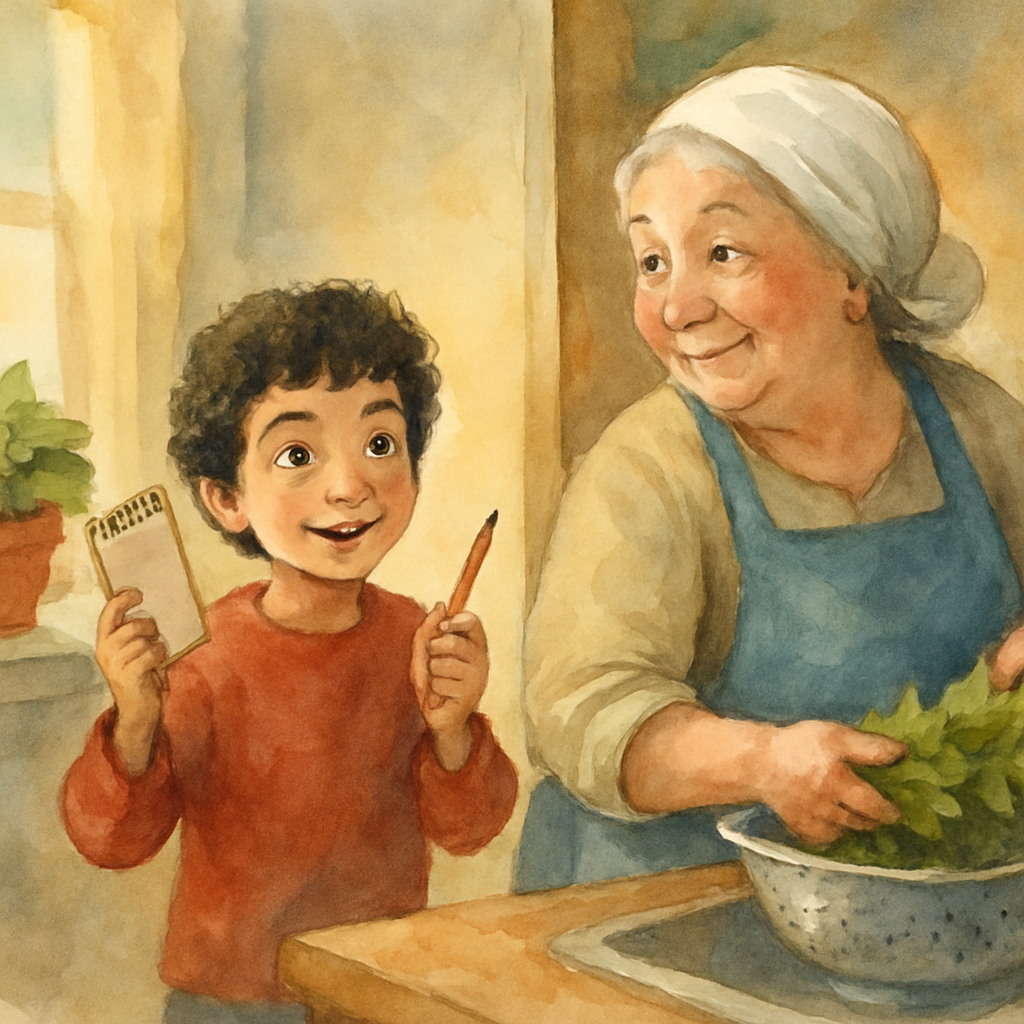
🎨 Illustration prompt
A child around ten years old, dark curly hair, standing in the doorway of a warm kitchen holding up a small spiral notebook and a pencil with bright, eager eyes. The grandmother stands at the counter washing a big pile of fresh grape leaves in a colander, looking over her shoulder with a soft amused smile. A clay pot of basil on the windowsill. Watercolor style. No text in the image.
Page 3
ضَحِكَتْ تيتا. قالَتْ: "وَصْفَة؟ يا حَبِيبَتي، أَنا أَطْبُخُ مِنْ زَمانٍ طَوِيل بِلا وَصْفَة." فَتَحْتُ الدَّفْتَر وَكَتَبْتُ في الأَعْلى: "وَرَقُ العِنَبِ — وَصْفَةُ تيتا." ثُمَّ سَأَلْتُها: "كَمْ أَرُزّ نَحْتاج؟"
Teta laughed. "A recipe? Habibti, I have cooked for a long time without a recipe." I opened the notebook and wrote at the top: Warak Enab — Teta's Recipe. Then I asked her, "How much rice do we need?"
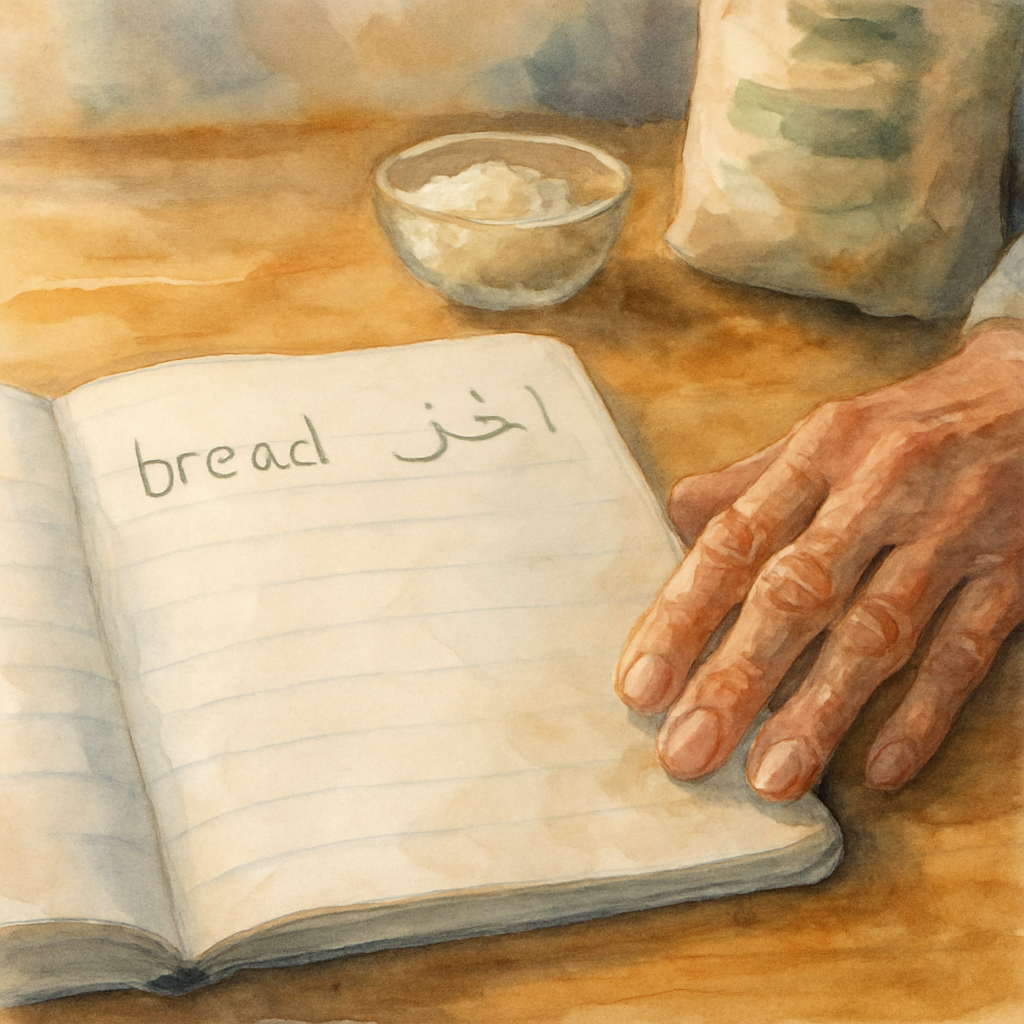
🎨 Illustration prompt
Close-up of the child's notebook open on a wooden counter, the page showing handwritten English and Arabic words at the top in pencil. Beside the notebook, the grandmother's older hand rests gently, fingers slightly floury. A bag of rice and a small glass bowl sit in the background, slightly out of focus. Soft natural light. Watercolor style. No text in the image.
Page 4
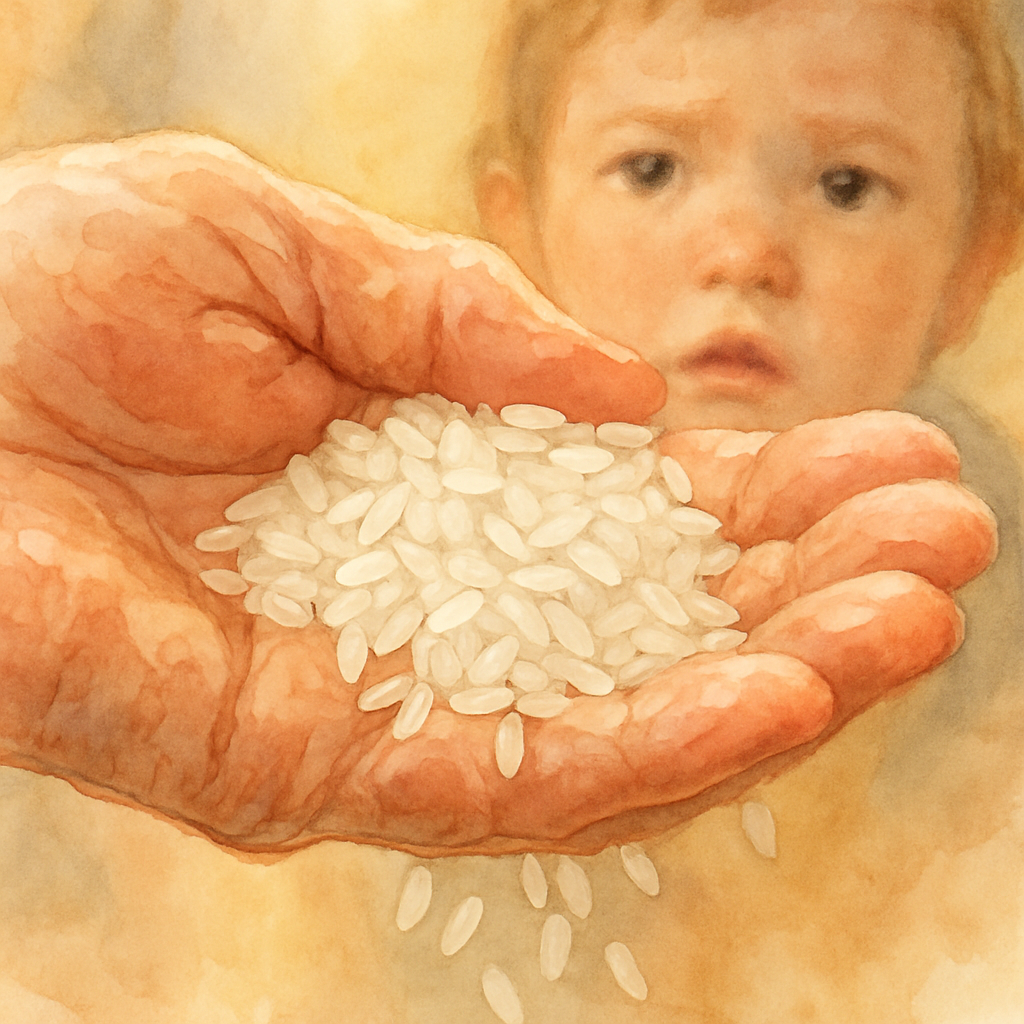
رَفَعَتْ تيتا يَدَها وَجَمَعَتْ أَصابِعَها مِثْلَ كَأْس. قالَتْ: "هَكَذا. مَلْءُ اليَد." سَأَلْتُها: "كَمْ كُوبًا بِالضَّبْط؟" قالَتْ: "مَلْءُ اليَد، يا حَبِيبَتي. لَيْسَ كُوبًا وَلا نِصْفًا. مَلْءُ اليَد."
Teta lifted her hand and cupped her fingers like a little bowl. "Like this," she said. "A handful." I asked, "How many cups exactly?" She said, "A handful, habibti. Not a cup, not a half. A handful."
🎨 Illustration prompt
A very tight close-up of the grandmother's cupped hand filled with raw white rice grains, some spilling between her fingers. The lines and softness of her older hand are visible. In the soft-focus background, the child's face peeks in with a slightly confused expression. Warm light. Watercolor style. No text in the image.
Page 5
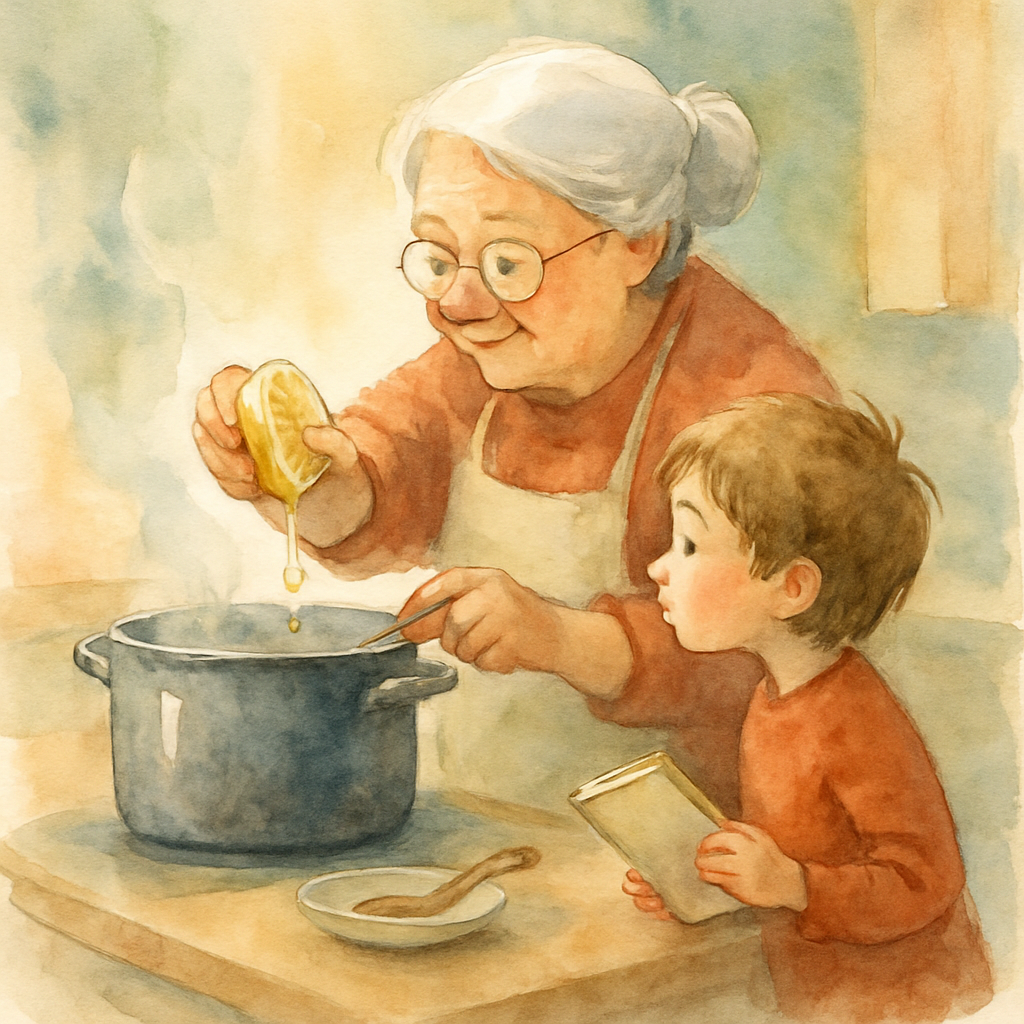
كَتَبْتُ في الدَّفْتَر: "مَلْءُ يَد؟؟" ثُمَّ سَأَلْتُ: "وَاللَّيْمُون؟ كَمْ لَيْمُونَة؟" عَصَرَتْ تيتا نِصْفَ لَيْمُونَة فَوْقَ القِدْر، ذاقَتْ بِمِلْعَقَةٍ صَغِيرَة، وَعَصَرَتْ نِصْفًا آخَر. قالَتْ: "حَتّى يَصِيرَ الطَّعْمُ صَحِيحًا."
I wrote in the notebook: A handful?? Then I asked, "And the lemon? How many lemons?" Teta squeezed half a lemon over the pot, tasted with a small spoon, and squeezed another half. She said, "Until the taste is right."
🎨 Illustration prompt
The grandmother at the stove, squeezing a halved lemon over a large pot. Pale yellow juice drips down. On the counter beside her, a small wooden spoon rests in a saucer. The child stands on tiptoes beside her, leaning in to watch, notebook still in one hand. Steam curls up from the pot. Watercolor style. No text in the image.
Page 6
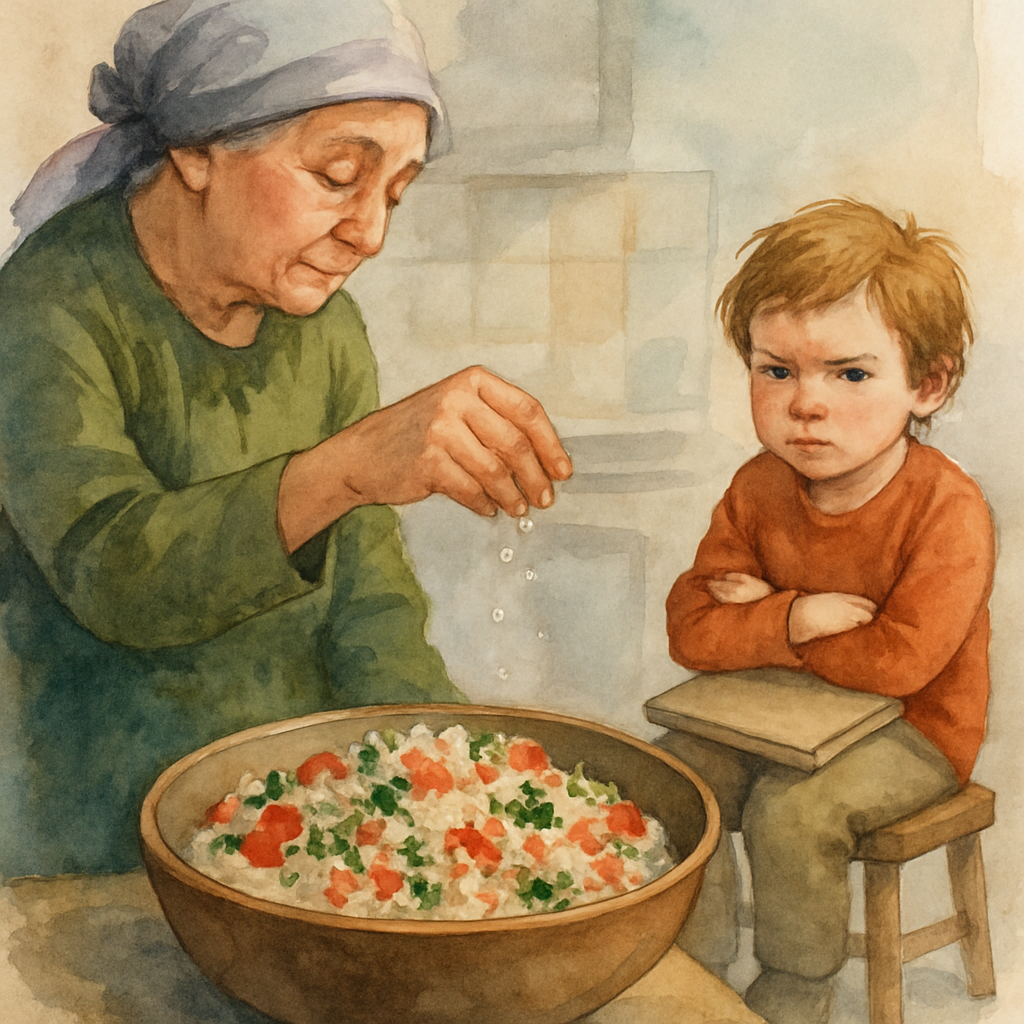
"وَالمِلْح، تيتا؟ كَمْ مِلْح؟" أَخَذَتْ تيتا قَلِيلًا مِنَ المِلْحِ بَيْنَ أَصابِعِها وَرَشَّتْهُ فَوْقَ الأَرُزّ. قالَتْ: "أَقَلَّ مِمّا تَظُنِّين. المِلْحُ الكَثِيرُ يُخْفي طَعْمَ كُلِّ شَيْءٍ آخَر." أَغْلَقْتُ الدَّفْتَر. لَمْ أَكْتُبْ شَيْئًا.
"And the salt, Teta? How much salt?" Teta took a little salt between her fingers and sprinkled it over the rice. She said, "Less than you think. Too much salt hides the taste of everything else." I closed the notebook. I didn't write anything.
🎨 Illustration prompt
The grandmother's fingers pinching white salt grains above a large bowl of rice mixed with chopped tomato, parsley, and spices. A few salt crystals are caught mid-air. The child sits on a small kitchen stool nearby, the closed notebook resting on their lap, looking quietly frustrated. Watercolor style. No text in the image.
Page 7
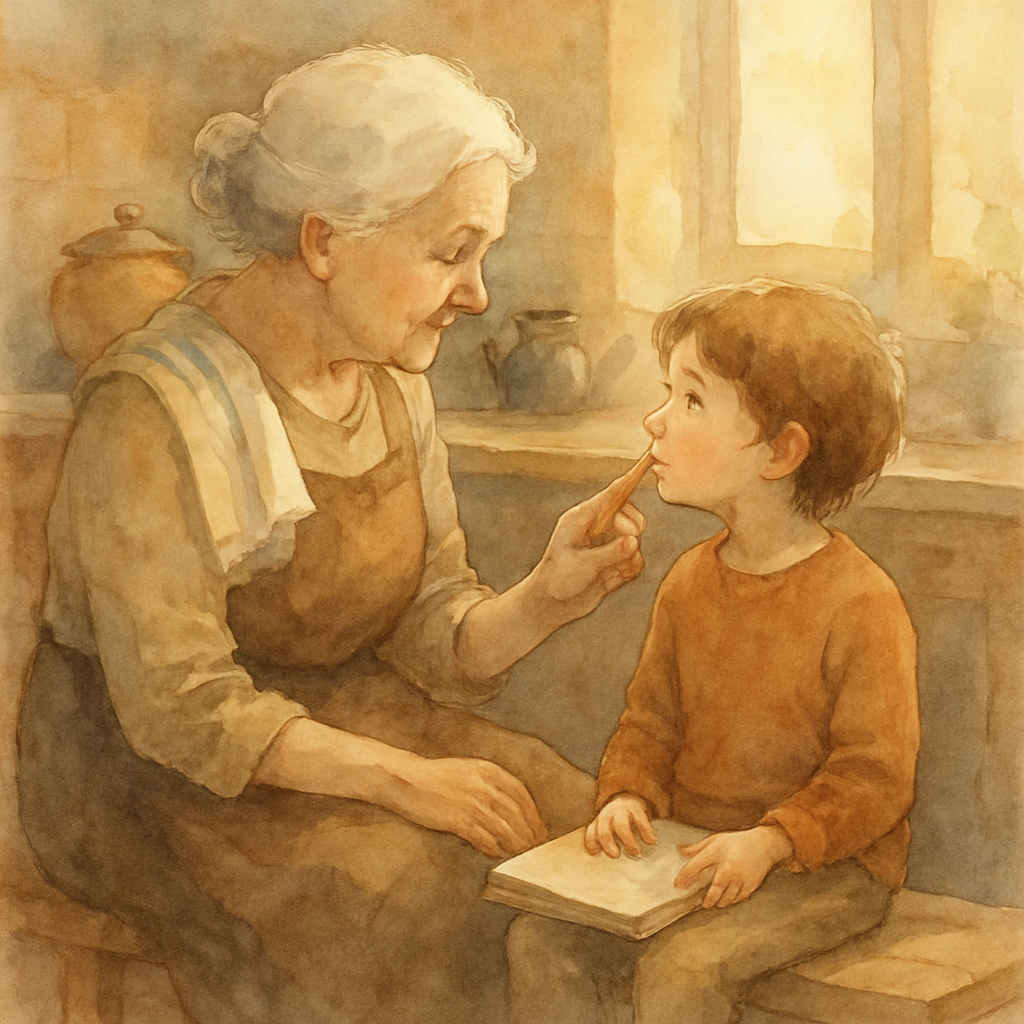
قُلْتُ بِصَوْتٍ مُنْخَفِض: "تيتا، أَنا لا أَفْهَم. أُرِيدُ أَرْقامًا. أُرِيدُ مَقادِير." نَظَرَتْ إِلَيَّ تيتا بِلُطْف. مَسَحَتْ يَدَيْها بِالمَنْشَفَة، وَجَلَسَتْ بِجانِبي. قالَتْ: "اِنْظُري بِعَيْنَيْكِ، يا حَبِيبَتي. لا بِأُذُنَيْكِ."
I said quietly, "Teta, I don't understand. I want numbers. I want measurements." Teta looked at me kindly. She wiped her hands on a towel and sat beside me. She said, "Look with your eyes, habibti. Not with your ears."
🎨 Illustration prompt
The grandmother sitting beside the child on a low wooden bench in the kitchen, gently lifting the child's chin with one finger so their eyes meet. Both faces are soft. The child's notebook is closed in their lap. A folded kitchen towel rests on Teta's shoulder. Quiet afternoon light. Watercolor style. No text in the image.
Page 8
وَضَعَتْ تيتا وَرَقَةَ عِنَبٍ أَمامي. وَضَعَتْ مَلْءَ مِلْعَقَةٍ مِنَ الأَرُزِّ في الوَسَط. ثُمَّ بَدَأَتْ يَداها بِالحَرَكَة. طَوَتْ، وَلَفَّتْ، وَأَغْلَقَتْ. صارَتِ الوَرَقَةُ لُفَّةً صَغِيرَةً جَمِيلَة. كانَتْ يَداها سَرِيعَتَيْنِ مِثْلَ العَصافِير.
Teta placed a grape leaf in front of me. She put a spoonful of rice in the middle. Then her hands began to move. They folded, rolled, and closed. The leaf became a small, beautiful little roll. Her hands were quick like little birds.
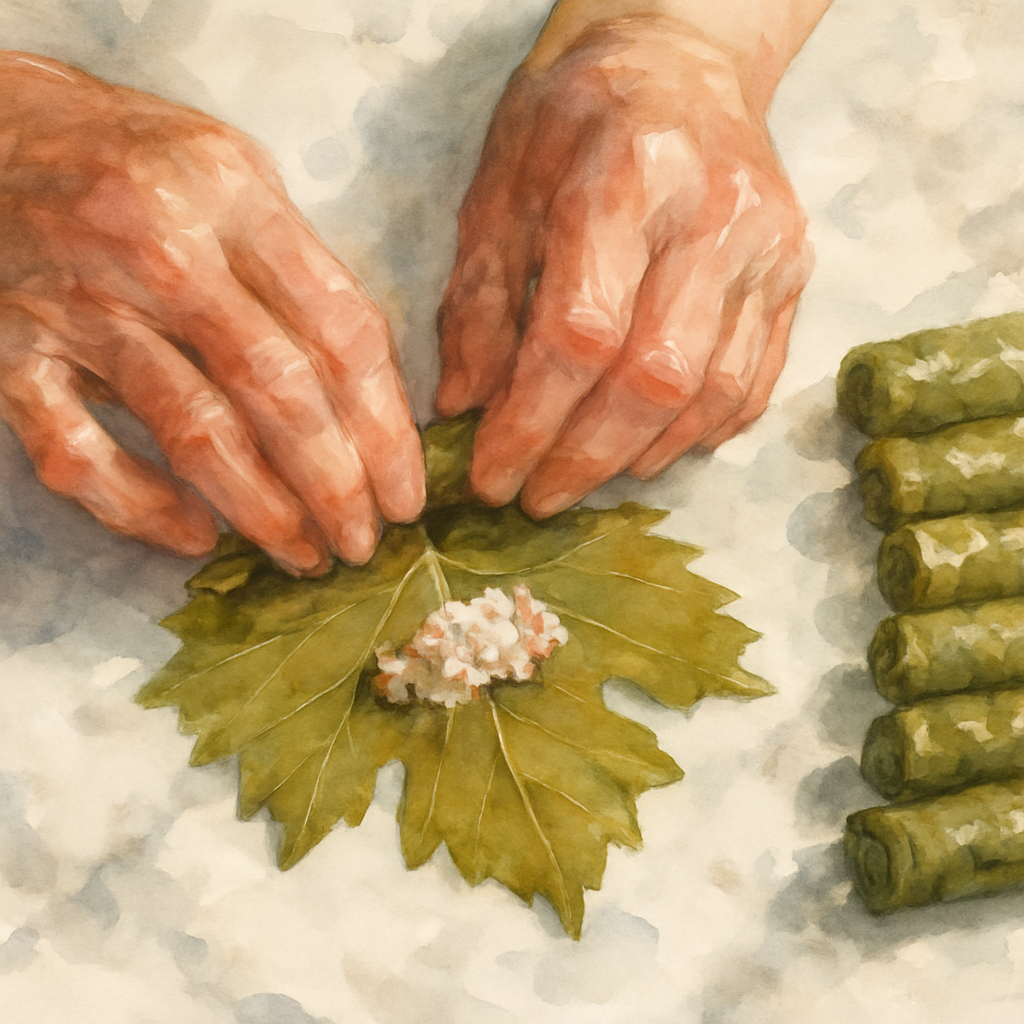
🎨 Illustration prompt
A top-down close-up of the grandmother's wrinkled hands in motion over a flat grape leaf on a marble counter, mid-fold. The leaf is partially rolled with rice peeking out. Several finished rolls are lined up neatly to the side. The motion blur of her fingers suggests speed and ease. Watercolor style. No text in the image.
Page 9
جاءَ دَوْري. أَخَذْتُ وَرَقَة. وَضَعْتُ الأَرُزّ. حاوَلْتُ أَنْ أَلُفَّ. خَرَجَ الأَرُزُّ مِنَ الجانِب. اِنْفَتَحَتِ الوَرَقَة. كانَتْ لُفَّتي طَوِيلَةً وَرَفِيعَةً، وَلَيْسَتْ مِثْلَ لُفَّةِ تيتا أَبَدًا. ضَحِكْنا مَعًا.
It was my turn. I took a leaf. I put the rice. I tried to roll. The rice came out the side. The leaf opened up. My roll was long and thin and nothing like Teta's roll. We laughed together.
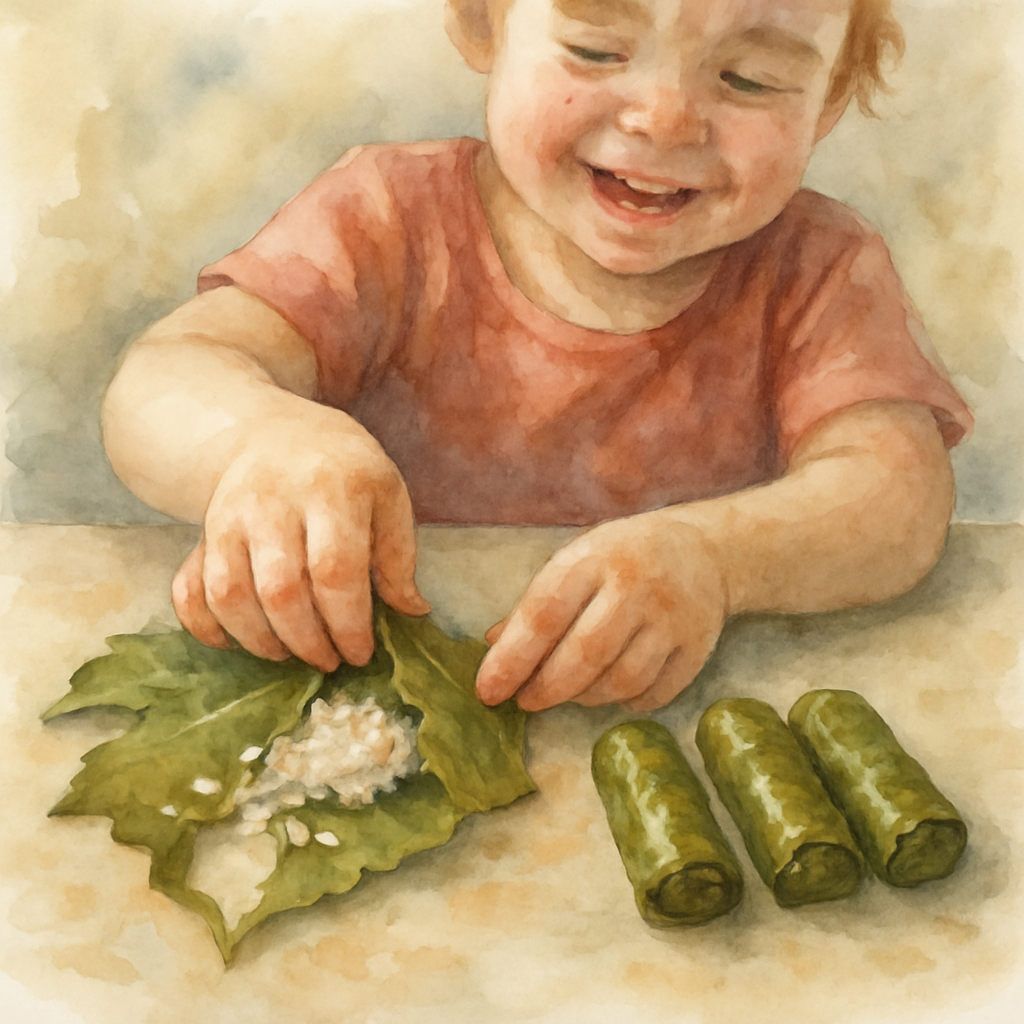
🎨 Illustration prompt
The child's small hands fumbling with a grape leaf on the counter — rice spilling out one end, the leaf partly torn. Beside the messy attempt, three of Teta's perfect tight rolls sit in a row for comparison. The child's face in soft focus shows a half-smile, half-laugh. Watercolor style. No text in the image.
Page 10
قالَتْ تيتا: "لا بَأْس. الأُولى دائِمًا هَكَذا." لَفَفْنا مَعًا. لُفَّة، ثُمَّ لُفَّة، ثُمَّ لُفَّة. بَعْدَ عِشْرِين، صارَتْ يَدايَ أَهْدَأ. قالَتْ تيتا: "بَعْدَ خَمْسِينَ مَرَّة، سَتَعْرِفُ يَداكِ. بَعْدَ مِئَة، سَتُعَلِّمانِ شَخْصًا آخَر."
Teta said, "It's alright. The first one is always like this." We rolled together. One roll, then another, then another. After twenty, my hands grew calmer. Teta said, "After fifty times, your hands will know. After a hundred, they will teach someone else."
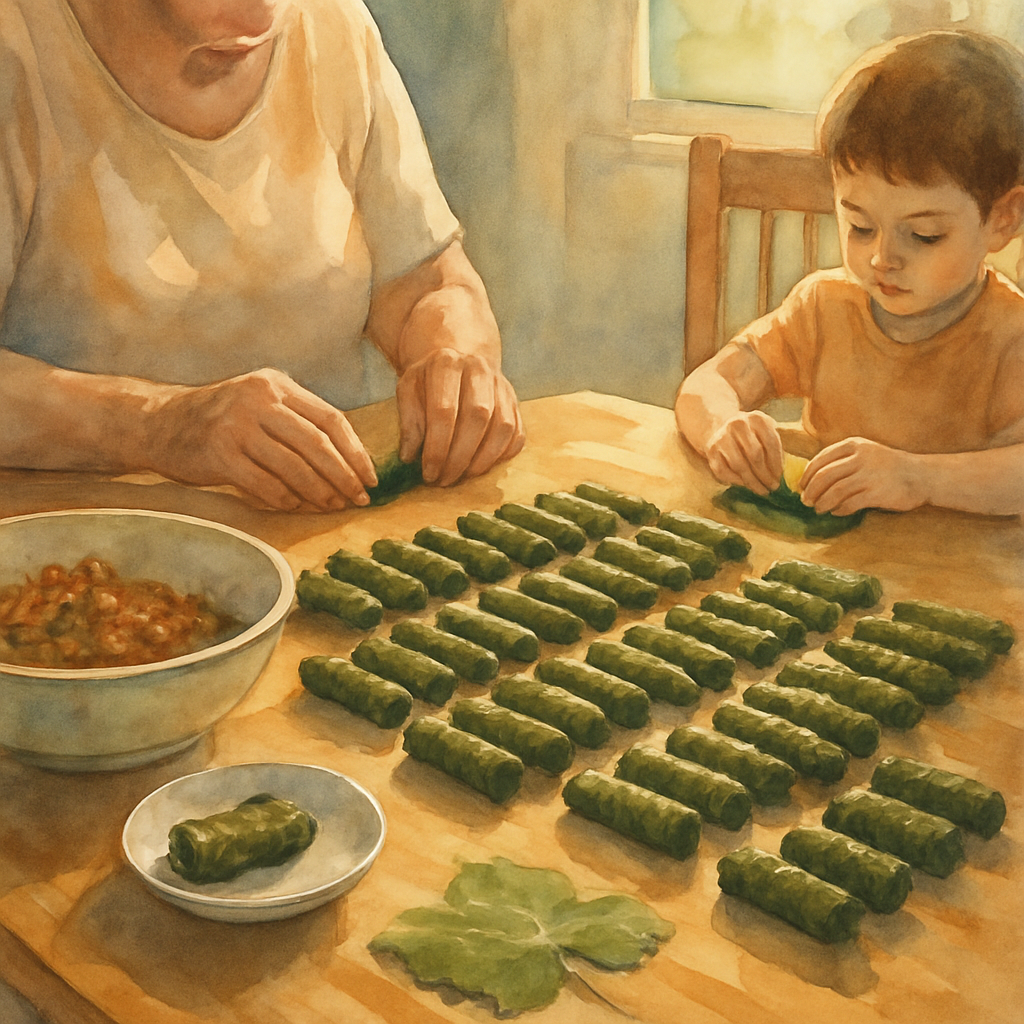
🎨 Illustration prompt
A wider view of the kitchen table now half-covered in neat rows of stuffed grape leaves — most rolled tightly by Teta, a few smaller and more uneven by the child. Both pairs of hands are working side by side, the child's hands now more focused and steady. Afternoon sun crosses the table. Watercolor style. No text in the image.
Page 11
فَهِمْتُ شَيْئًا في تِلْكَ اللَّحْظَة. الوَصْفَةُ لَيْسَتْ في الأَرْقام. الوَصْفَةُ في اليَدَيْن. في التَّجْرِبَة. في المَرَّةِ الأُولى، وَالعاشِرَة، وَالمِئَة. المَهارَةُ تَنْمُو بِبُطْءٍ، مِثْلَ النَّبْتَة.
I understood something in that moment. The recipe is not in the numbers. The recipe is in the hands. In the experience. In the first time, and the tenth, and the hundredth. Skill grows slowly, like a little plant.
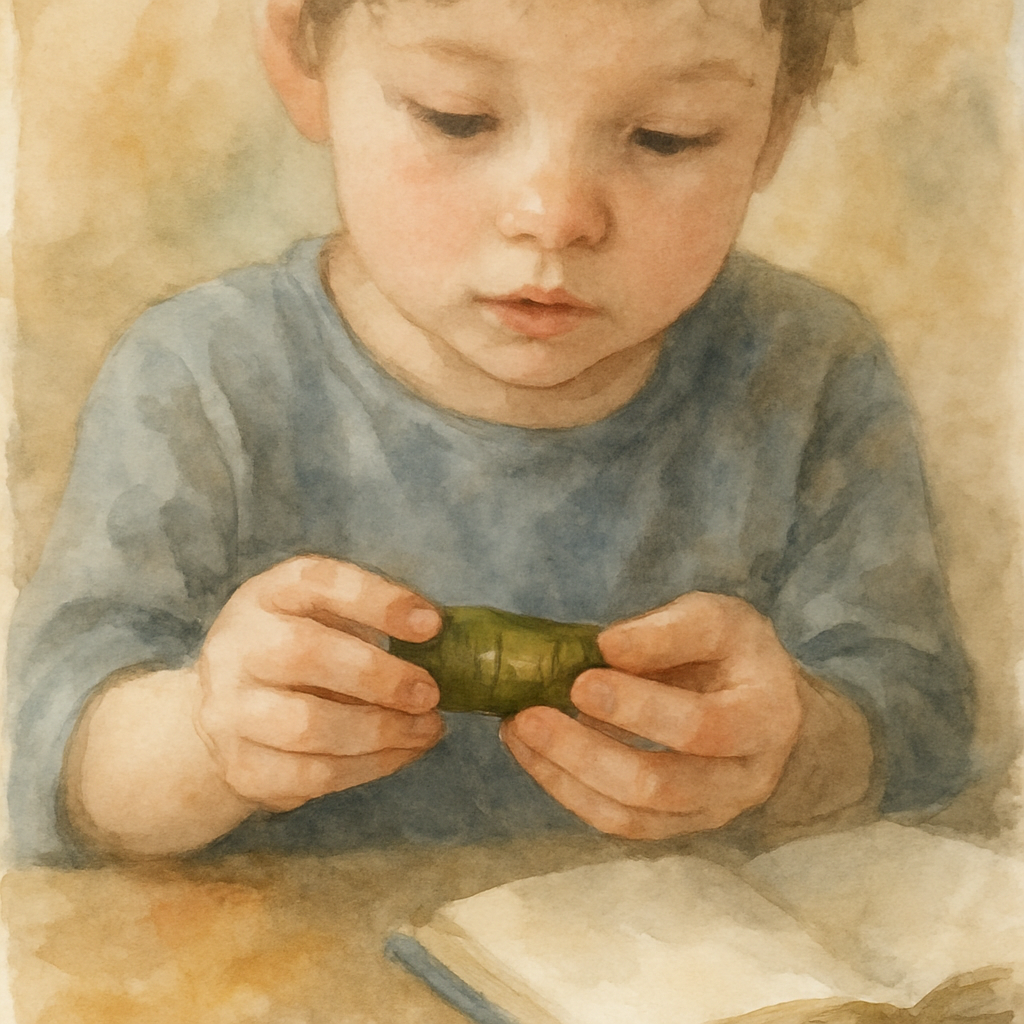
🎨 Illustration prompt
A quiet, contemplative close-up of the child's hands holding one finished grape leaf roll — small but neatly closed. The child's expression in soft focus above is calm, almost surprised by themselves. The notebook is set aside on the counter, partly open but forgotten. Watercolor style. No text in the image.
Page 12
في المَساء، جَلَسَتِ العائِلَةُ حَوْلَ الطّاوِلَة. وَضَعَتْ تيتا الصَّحْنَ الكَبِيرَ في الوَسَط. أَخَذْتُ قَضْمَةً واحِدَة. كانَ الطَّعْمُ كَما هُوَ دائِمًا — لَكِنْ هَذِهِ المَرَّة، عَرَفْتُ شَيْئًا. قُلْتُ في قَلْبي: "صَنَعْتُ هَذا. وَأُرِيدُ أَنْ أَصْنَعَهُ مَرَّةً أُخْرى."
In the evening, the family gathered around the table. Teta placed the big platter in the middle. I took one bite. The taste was the same as always — but this time, I knew something. I said in my heart: I made this. And I want to make it again.
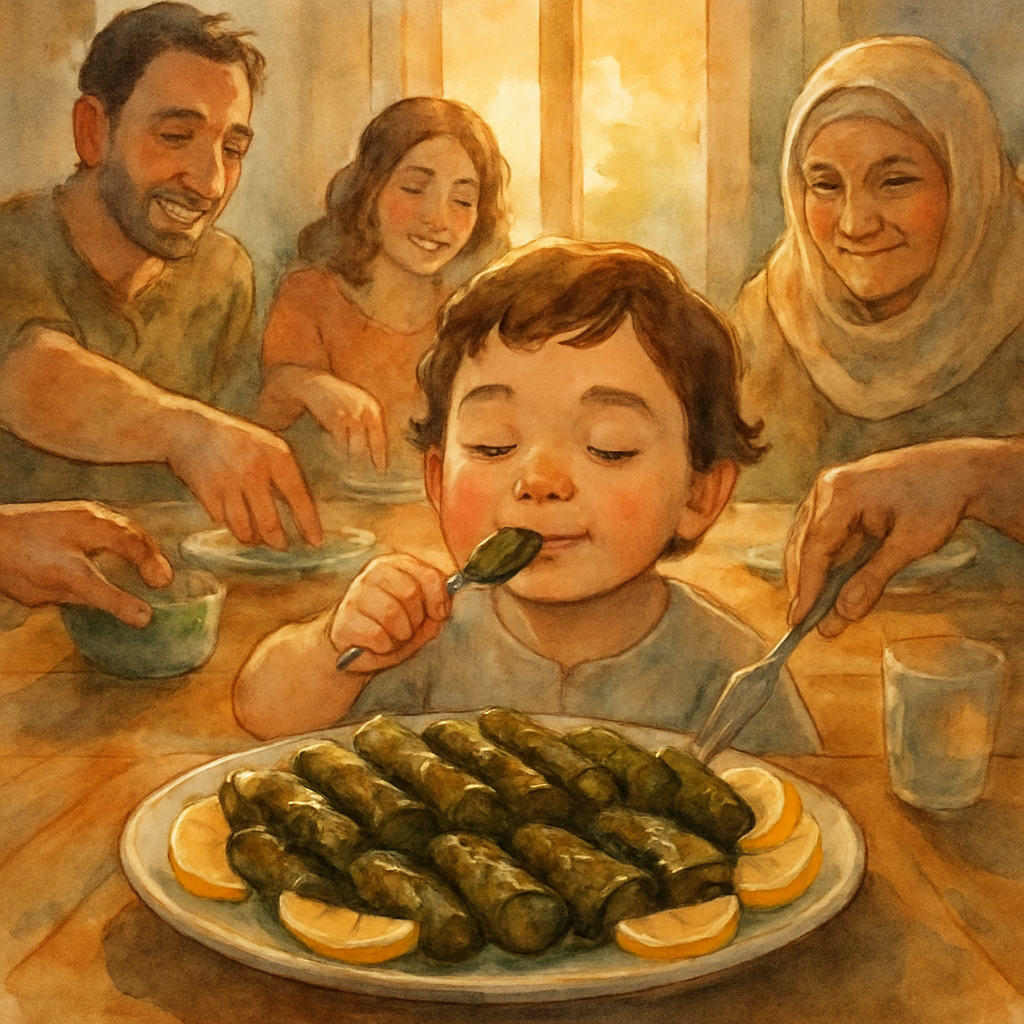
🎨 Illustration prompt
The whole family at the dinner table from the child's point of view — a large platter of stuffed grape leaves in the middle, lemon wedges around the edge. The child is taking the first bite, eyes half-closed in quiet pride. Across the table, Teta watches with a small knowing smile. Other family members reach in to serve themselves. Warm evening light. Watercolor style. No text in the image.
Page 13
بَعْضُ الوَصَفاتِ لا تُكْتَب. تَعِيشُ في اليَدَيْن.
Some recipes can't be written. They live in hands.
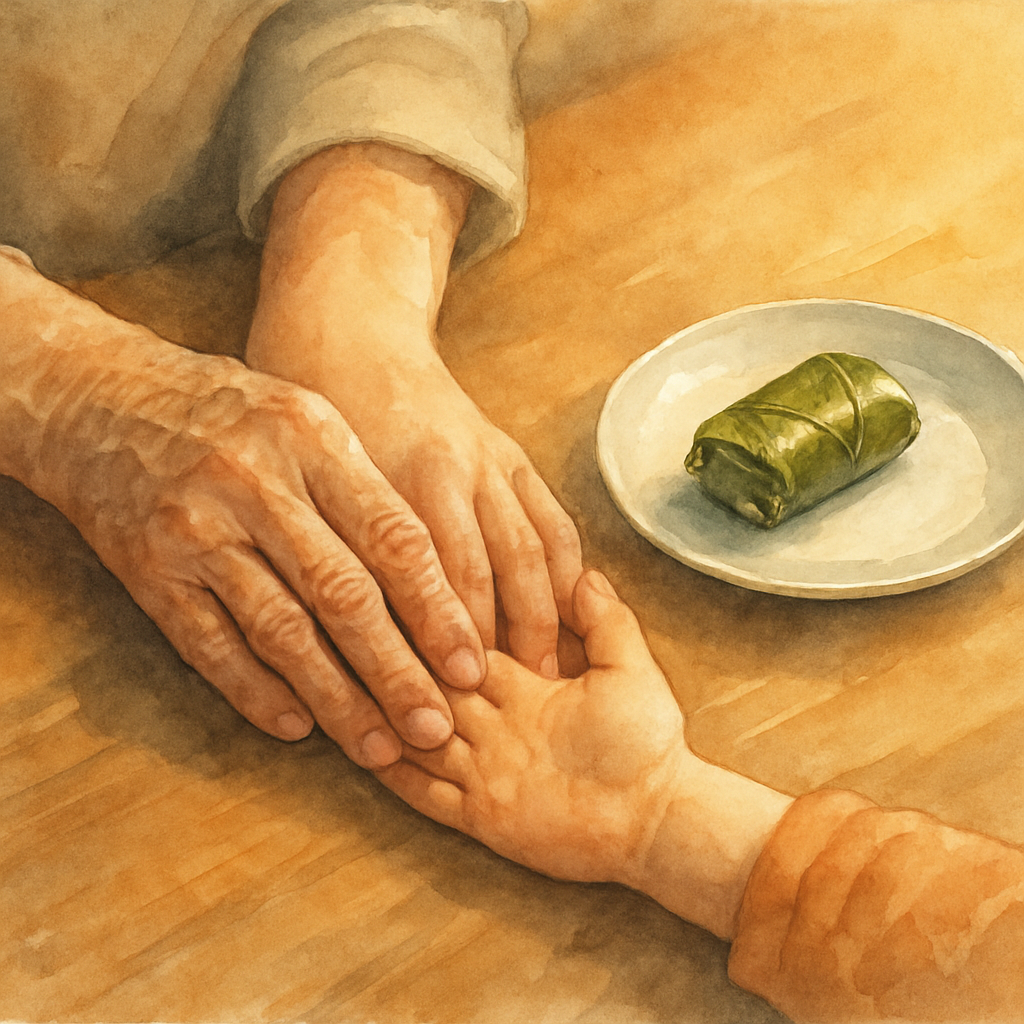
🎨 Illustration prompt
A simple, tender final image: the grandmother's older hand and the child's younger hand resting together on the wooden kitchen table, fingers slightly intertwined. A single stuffed grape leaf sits on a small plate beside them. Soft, glowing light. The whole frame feels like a quiet promise being passed forward. Watercolor style. No text in the image.
كَلِماتٌ جَدِيدَة · New Words
| Arabic | How to say it | English |
|---|---|---|
وَصْفَة |
waṣ-fah | recipe |
مَقادِير |
ma-qā-dīr | measurements / quantities |
وَرَق العِنَب |
wa-raq al-ʿi-nab | grape leaves (stuffed grape leaves) |
أَرُزّ |
a-ruzz | rice |
لَيْمُون |
lay-mūn | lemon |
مِلْح |
milḥ | salt |
مَهارَة |
ma-hā-rah | skill |
يَدَيْن |
ya-dayn | hands (two hands) |
بِالضَّبْط |
bil-ḍabṭ | exactly |
تَجْرِبَة |
taj-ri-bah | experience |
حَبِيبَتي |
ḥa-bī-ba-ti | my dear (to a girl) |
تيتا |
te-ta | grandma (Levantine) |
🗣️ Talk about it
These are not test questions — they're conversation starters. Pick one (or two), ask it, listen.
Teta says, "Look with your eyes, not with your ears." What do you think she means? Have you ever learned something better by watching someone than by being told?
The child wanted exact numbers, but Teta cooked by feel. Are there things you do without numbers — like riding a bike, or knowing when a friend is sad? How did you learn those things?
"After fifty times, your hands will know. After a hundred, they will teach someone else." What is something you've done so many times that your hands or your body just know how to do it now? Could you teach someone else?
✏️ Try it
Pick one:
- Cook something with an older person in your family — no recipe, just watching their hands. Pay attention to how much they put in. Try to do it the same way. Then try once more.
- Write down a recipe from memory — something you eat all the time. See if it has measurements or just "a little of this." Ask the cook in your house if you got it right.
- Practice one small skill ten times in a row — flipping a pancake, tying a knot, drawing a circle. Notice how your hands feel by the tenth time compared to the first.
A note for grown-ups reading along
This story uses partial vowel marks (تَشْكِيل) — only on the harder or less-common words. By Tier 3, your reader should be comfortable enough with the most common words (was, the, and, I, she) to read them without marks. If a word feels hard, the marks are there to help.
Warak enab (وَرَق العِنَب) — stuffed grape leaves — is one of the most beloved dishes across the Levant: Lebanon, Syria, Palestine, Jordan. Every family makes it slightly differently, and almost no one writes the recipe down. The "measurements" are passed from hand to hand: a cupped palm of rice, a squeeze of lemon "until it tastes right," a pinch of salt "less than you think." This is real cultural knowledge — tactile knowledge — that lives in the body and not on paper.
If your child wants to actually try making warak enab, do it together. Don't worry about exact amounts. Let their hands learn. The first few rolls will fall apart. By the twentieth, they'll start to get it. That is the lesson.
And if there's a recipe in your family that has never been written down — write it down together, or better yet, cook it together. Some inheritances can only be passed hand to hand.
— Hayya Beena Naqraa (هَيَّا بِنَا نَقْرَأ)