الشَّجَرَة الَّتِي لَهَا اسْم
The Tree with a Name
A Hayya Beena Naqraa story · Tier 3 · For ages 9–11
Cover page
الشَّجَرَة الَّتِي لَهَا اسْم
The Tree with a Name
🎨 Illustration prompt
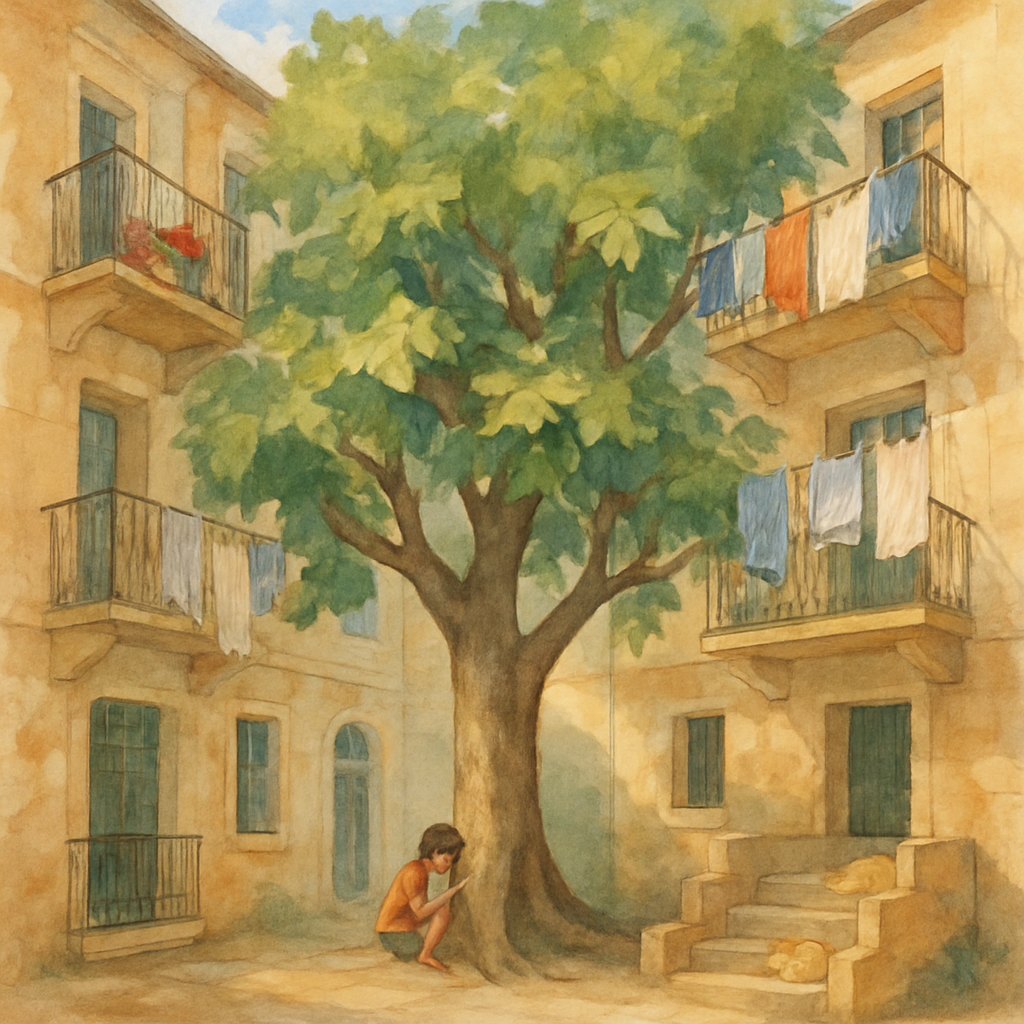
A wide watercolor scene of a Levantine apartment-building courtyard, walls of pale stone and warm cream, balconies with iron railings and hanging laundry. In the center grows a huge old fig tree, its broad green leaves catching the late afternoon light. A child of about ten sits at the base of the trunk, fingers tracing something carved into the bark. Cats nap on stone steps. Geraniums spill from a tin can on a balcony. Watercolor style. No text in the image.
Page 1
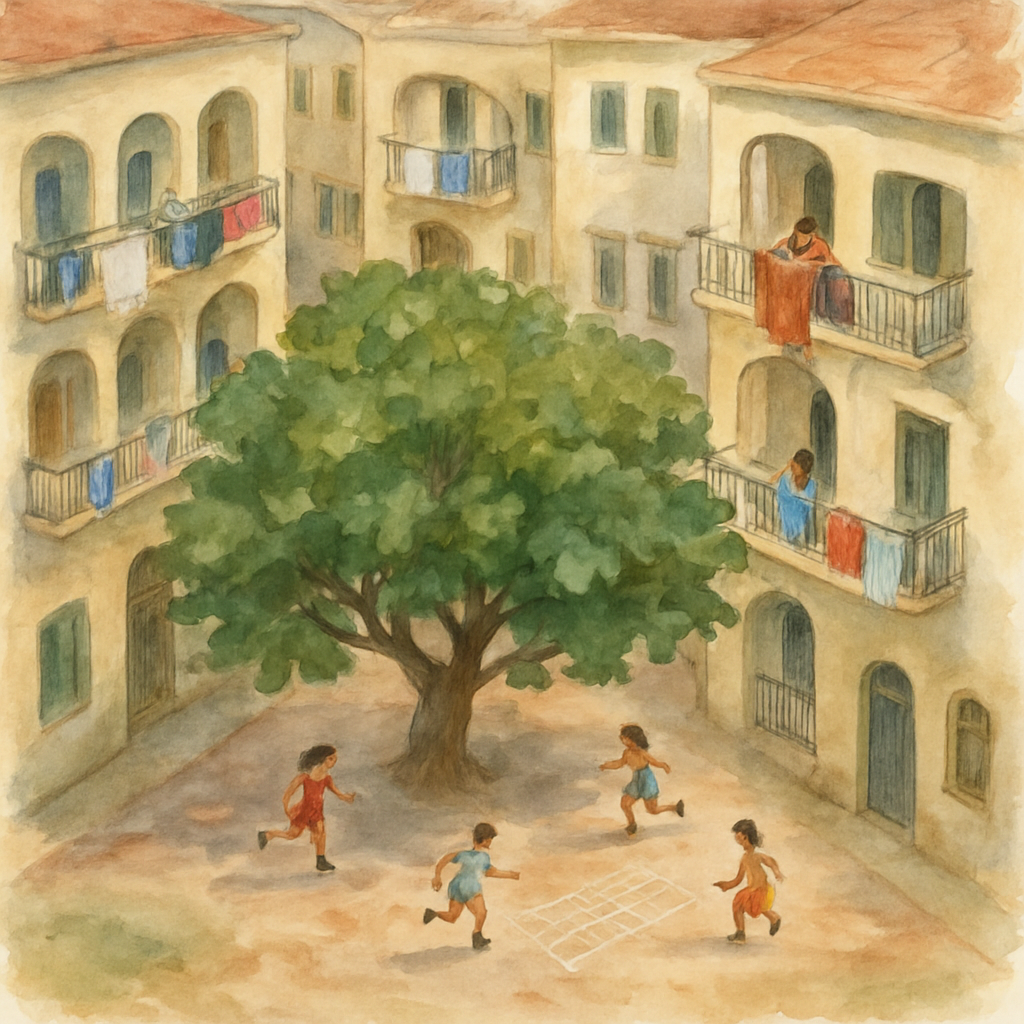
في وَسَطِ السَّاحَة، بَيْنَ البِناياتِ الأَرْبَع، تَقِفُ شَجَرَةُ تِينٍ كَبِيرَة. أَوْرَاقُها واسِعَةٌ كَأَيْدِي الكِبَار. ظِلُّها يُغَطِّي نِصْفَ السَّاحَة. كُلُّ الأَوْلادِ في الحَيِّ يَلْعَبُونَ تَحْتَها.
In the middle of the courtyard, between the four buildings, stands a big fig tree. Its leaves are as wide as grown-ups' hands. Its shade covers half the courtyard. All the kids in the neighborhood play under it.
🎨 Illustration prompt
A bird's-eye view of an apartment courtyard surrounded by four cream-colored Levantine buildings. In the center, a magnificent old fig tree with a wide canopy of broad green leaves. Children playing tag and hopscotch in its shade. A woman shaking out a rug from a third-floor balcony. The whole scene feels lived-in and ordinary. Watercolor style. No text in the image.
Page 2
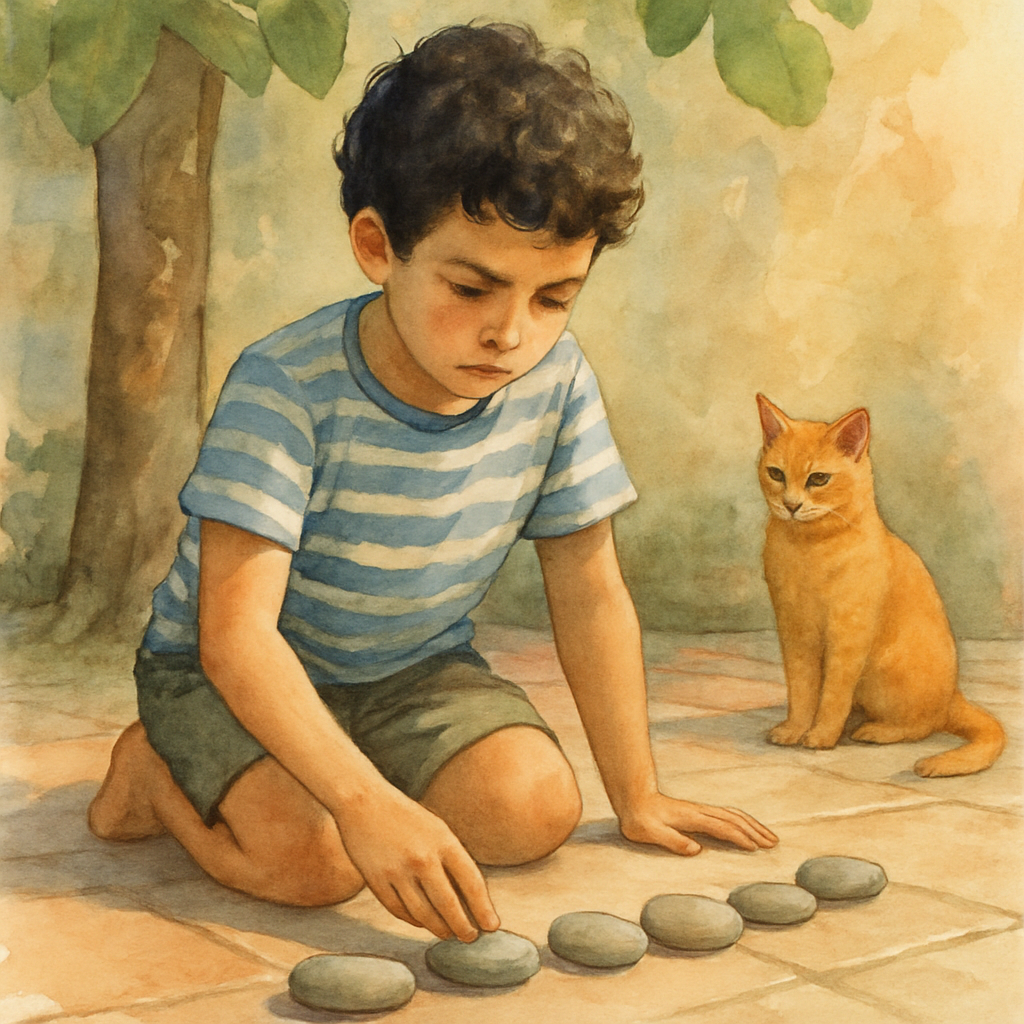
اِسْمي سَامِر. عُمْري عَشْرُ سَنَوات. أَلْعَبُ في السَّاحَةِ كُلَّ يَوْم بَعْدَ المَدْرَسَة. أَعْرِفُ كُلَّ حَجَرٍ فيها. لَكِنِّي لَمْ أَكُنْ أَعْرِفُ أَنَّ الشَّجَرَةَ لَها اسْم.
My name is Samer. I'm ten years old. I play in the courtyard every day after school. I know every stone in it. But I didn't know the tree had a name.
🎨 Illustration prompt
A boy of about ten with dark curly hair and a striped t-shirt, kneeling on the courtyard tiles, lining up smooth stones in a row. His face is concentrated and serious — the look of a child who knows his territory. The fig tree's trunk is just visible behind him. A small ginger cat watches from the side. Watercolor style. No text in the image.
Page 3
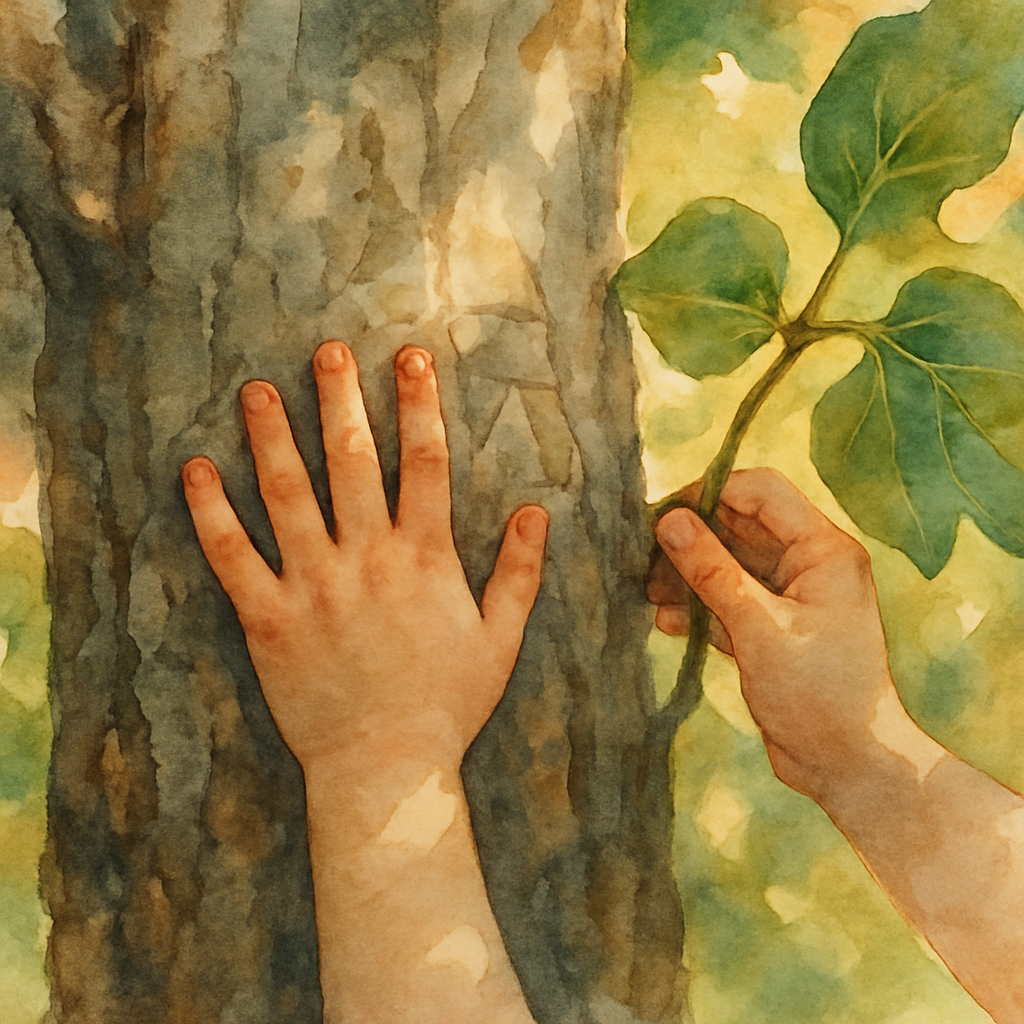
في يَوْمٍ حارٍّ مِنْ أَيّام تَمُّوز، جَلَسْتُ تَحْتَ الشَّجَرَةِ وَحْدي. لَمَسْتُ جِذْعَها لِأَنَّهُ بارِد. وَفَجْأَةً، شَعَرْتُ تَحْتَ أَصابِعي بِشَيْءٍ غَرِيب — خُطُوطٌ مَحْفُورَةٌ في الخَشَب.
On a hot July day, I sat under the tree by myself. I touched the trunk because it felt cool. And suddenly, under my fingers, I felt something strange — lines carved into the wood.
🎨 Illustration prompt
A close-up watercolor of a child's hand pressed against the rough grey-brown bark of an old fig tree. Faint carved lines are visible under the fingers — half-hidden, weathered. The child's other hand brushes a leaf aside. Warm sunlight filters through the canopy, making dappled spots. The mood is one of quiet discovery. Watercolor style. No text in the image.
Page 4
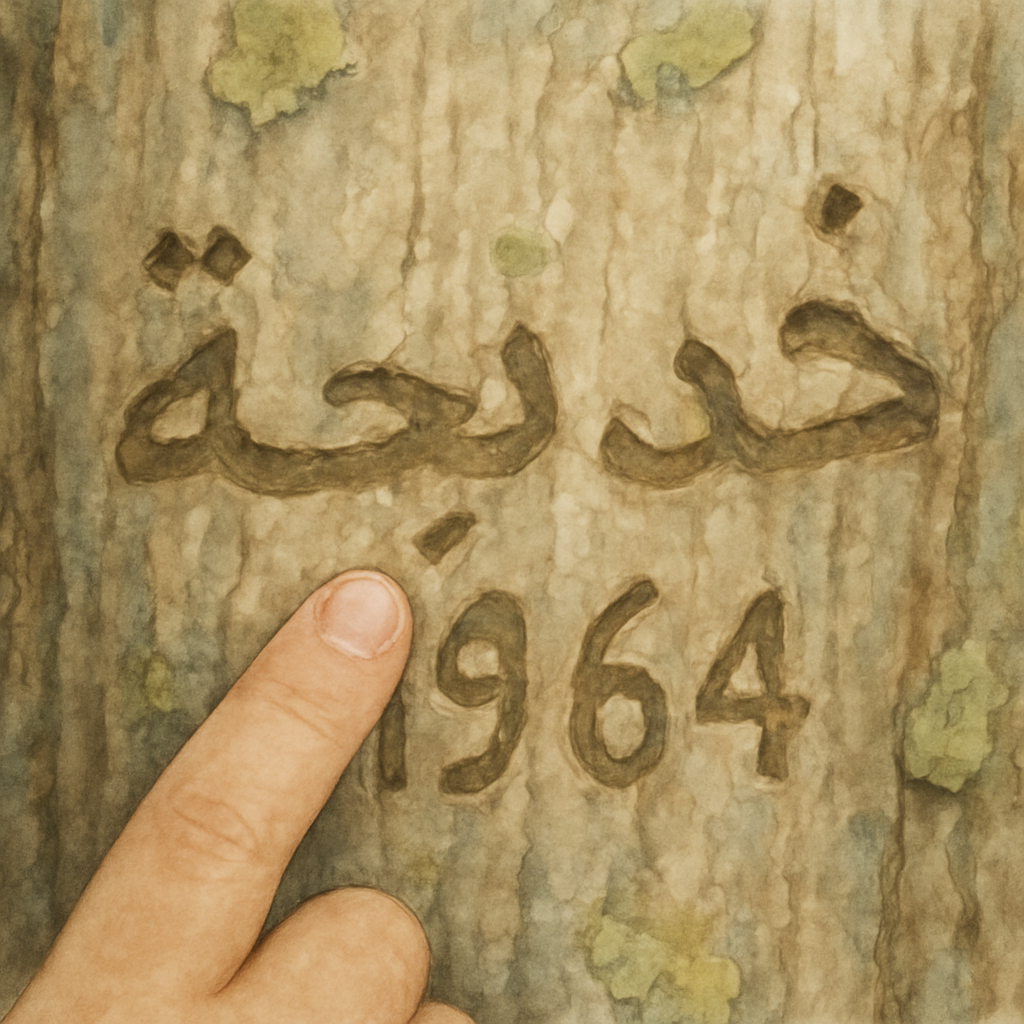
أَزَحْتُ الأَوْرَاقَ بِيَدي. كانَ هُناكَ كَلِمَةٌ مَحْفُورَةٌ في الجِذْع، نِصْفُها مَخْفِيٌّ وَنِصْفُها بَاهِت: خَدِيجَة ١٩٦٤. مَنْ خَدِيجَة؟ وَلِماذا اسْمُها عَلى شَجَرَتِنا؟
I pushed the leaves aside with my hand. There was a word carved into the trunk, half hidden and half faded: Khadija 1964. Who was Khadija? And why was her name on our tree?
🎨 Illustration prompt
A tighter close-up of weathered fig bark. Carved into it, in old hand-cut Arabic letters partly grown over by the wood: "خَدِيجَة ١٩٦٤". The letters are visible but softened by sixty years of bark growth. The boy's fingertip traces one of the letters. Lichen patches and the rough texture of fig bark are rendered carefully. Watercolor style. No text in the image.
Page 5
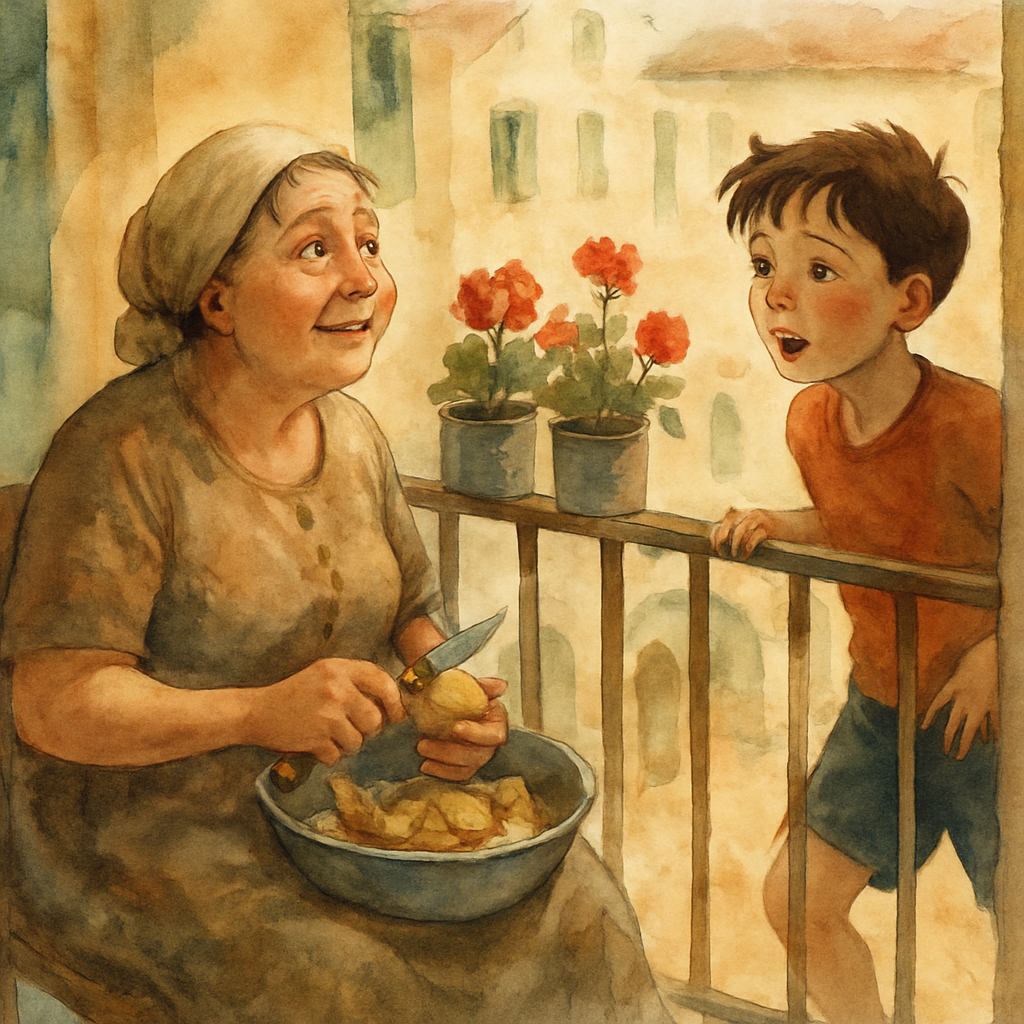
رَكَضْتُ إِلى البَيْت. تيتا تَجْلِسُ عَلى الشُّرْفَةِ تُقَشِّرُ البَطاطا. سَأَلْتُها: "تيتا، مَنْ خَدِيجَة؟" تَوَقَّفَتْ يَدُها. نَظَرَتْ إِلَيَّ طَوِيلًا. ثُمَّ ابْتَسَمَتْ بِبُطْء.
I ran home. Teta was sitting on the balcony, peeling potatoes. I asked her: "Teta, who is Khadija?" Her hand stopped. She looked at me for a long time. Then she smiled slowly.
🎨 Illustration prompt
A warm-faced older woman in a soft housedress sitting on a small Levantine balcony, a metal bowl of potato peels in her lap. Her hand has paused mid-peel. She is looking up with surprise and tenderness at a boy who has just burst onto the balcony, out of breath. Geraniums in tin cans on the railing. The courtyard visible below. Watercolor style. No text in the image.
Page 6
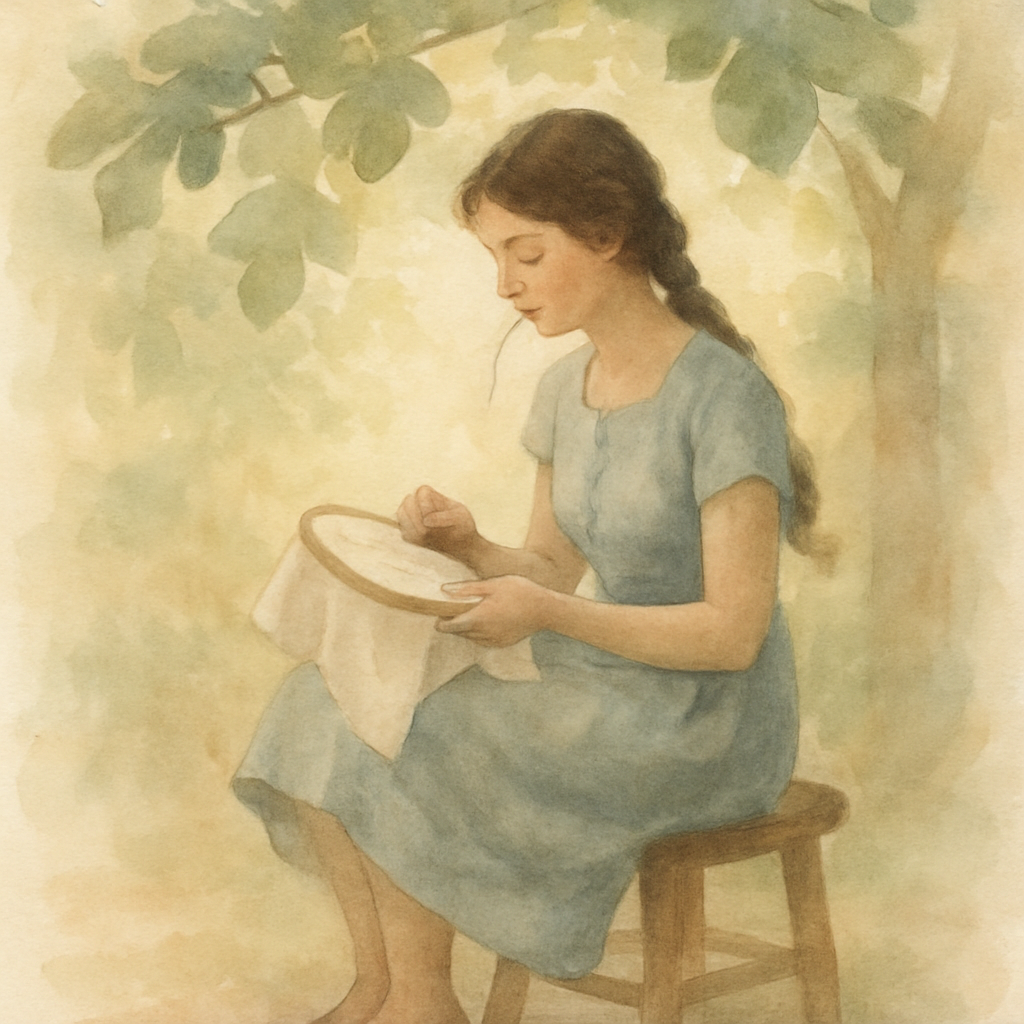
"خَدِيجَة،" قالَتْ تيتا. "كَانَتْ جارَتَنا عِنْدَما كُنْتُ صَغِيرَة. كَانَتْ تَجْلِسُ تَحْتَ شَجَرَةِ التِّينِ كُلَّ بَعْدَ ظُهْر، وَمَعَها خِياطَتُها. كَانَتْ تُحِبُّ تِلْكَ الشَّجَرَةَ أَكْثَرَ مِنْ أَيِّ شَيْءٍ في الدُّنْيا."
"Khadija," Teta said. "She was our neighbor when I was young. She used to sit under the fig tree every afternoon with her sewing. She loved that tree more than anything in the world."
🎨 Illustration prompt
A soft, memory-toned watercolor — slightly faded, slightly dreamlike. A woman from the 1960s in a simple cotton dress, hair in a loose braid, sitting on a low wooden stool beneath the fig tree, embroidery hoop in her lap, a thread between her teeth. Light filters through the leaves. She has a quiet, content expression. The image feels like a remembered photograph. Watercolor style. No text in the image.
Page 7
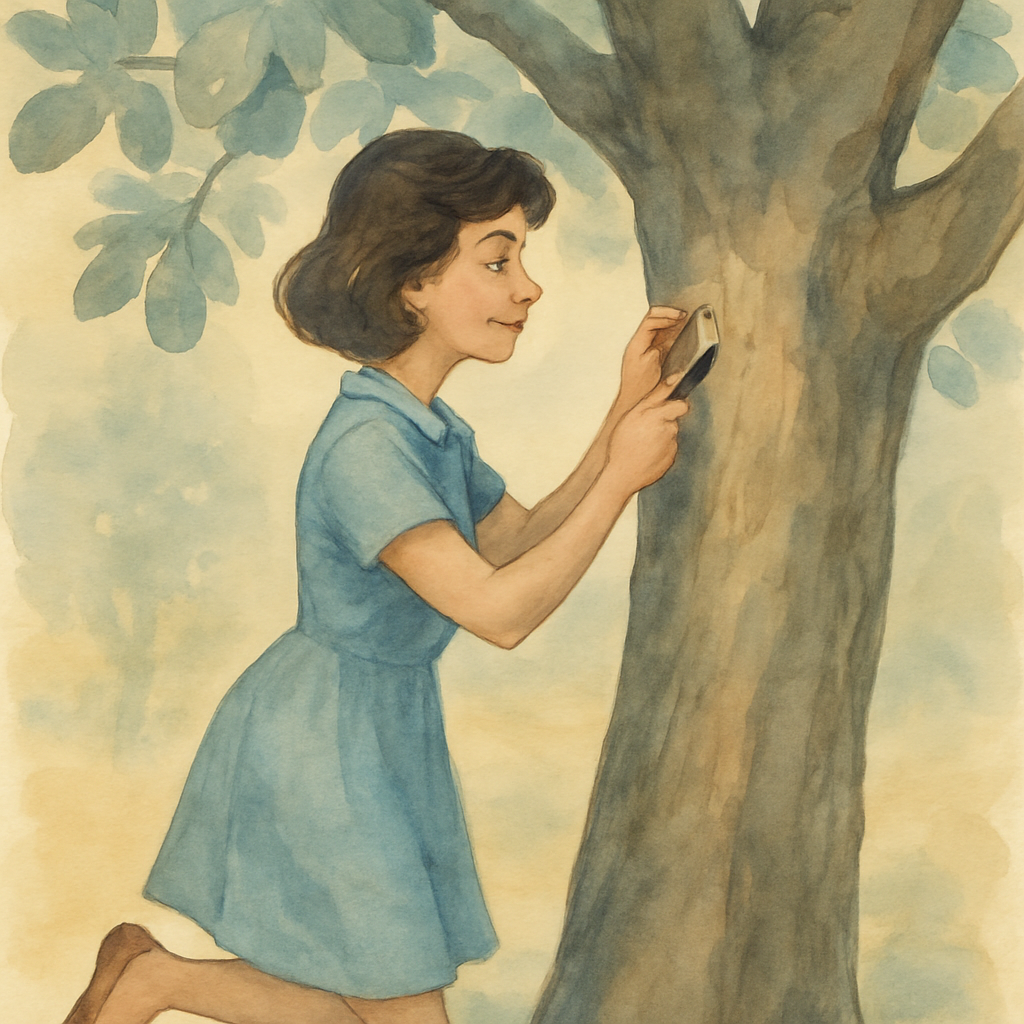
"وَلِماذا اسْمُها عَلى الشَّجَرَة؟" سَأَلْت. ضَحِكَتْ تيتا قَلِيلًا. "لَمْ يَكُنْ اسْمَها فَقَط. لَقَدْ أَعْطَتِ الشَّجَرَةَ اسْمَها هي. قالَتْ إِنَّ الشَّجَرَةَ أَكْبَرُ مِنْها، وَسَتَعِيشُ بَعْدَها. فَحَفَرَتْ اسْمَها فيها."
"And why is her name on the tree?" I asked. Teta laughed a little. "It wasn't only her name. She gave the tree her own name. She said the tree was older than her, and would live on after her. So she carved her name into it."
🎨 Illustration prompt
A memory scene: the same young woman from the previous page, now standing on her toes beside the fig tree, carefully carving letters into the bark with a small pocket knife. Her expression is concentrated and a little playful — like someone making a secret. The tree is already large around her. Soft 1960s palette: muted blues and warm beiges. Watercolor style. No text in the image.
Page 8
سَأَلْتُ بِصَوْتٍ هادِئ: "هَلْ عاشَتِ الشَّجَرَةُ بَعْدَها؟" نَظَرَتْ تيتا إِلى السَّاحَة. "نَعَم يا حَبِيبي. ماتَتْ خَدِيجَة قَبْلَ ثَلاثِينَ سَنَة. لا أَحَدَ في الحَيِّ يَتَذَكَّرُها الآن. لا أَحَدَ إِلَّا الشَّجَرَة."
I asked quietly: "Did the tree outlive her?" Teta looked out at the courtyard. "Yes, habibi. Khadija passed away thirty years ago. Nobody in the neighborhood remembers her now. Nobody — except the tree."
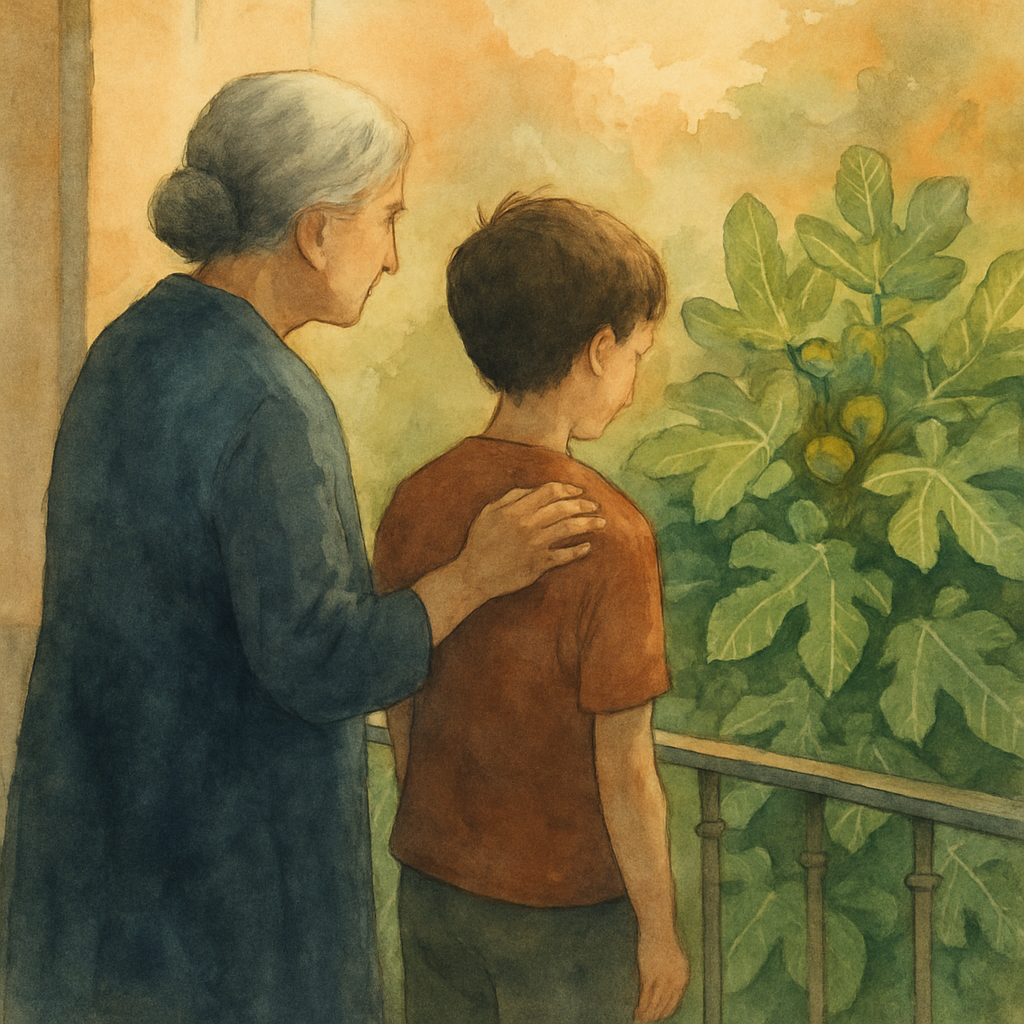
🎨 Illustration prompt
Teta and the boy on the balcony, both looking out at the fig tree below. Teta's hand rests gently on the boy's shoulder. Neither is smiling — it's a quiet, thoughtful moment. The fig tree below is rendered with extra care, almost as if it itself is a character. Late afternoon light. Watercolor style. No text in the image.
Page 9
في تِلْكَ اللَّيْلَة، لَمْ أَنَمْ بِسُرْعَة. فَكَّرْتُ في خَدِيجَة. اِمْرَأَةٌ جَلَسَتْ تَحْتَ شَجَرَتي قَبْلَ سِتِّينَ سَنَة. خِياطَتُها في حِجْرِها. اسْمُها لا يَعْرِفُهُ أَحَد. فَقَطِ الخَشَب يَتَذَكَّر.
That night, I didn't fall asleep quickly. I thought about Khadija. A woman who sat under my tree sixty years ago. Her sewing in her lap. Her name known to no one. Only the wood remembered.
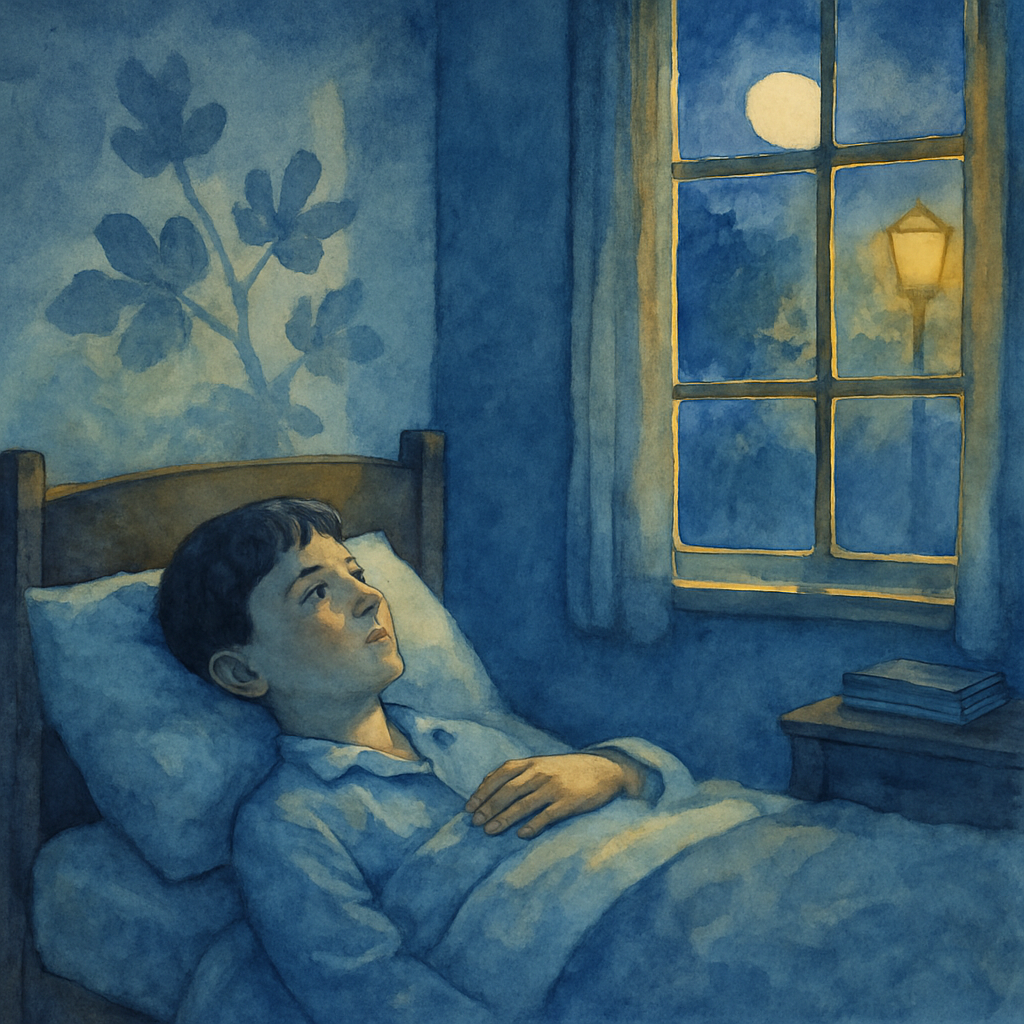
🎨 Illustration prompt
The boy lying in bed in a small bedroom, eyes open, looking at the ceiling. Moonlight comes through a window. On the wall behind his bed, a faint shadow of fig leaves dances. He has one hand resting on his chest. The scene is calm and contemplative, deep blues and soft yellows from a streetlamp. Watercolor style. No text in the image.
Page 10
في الصَّباح، نَزَلْتُ إِلى السَّاحَة قَبْلَ الفُطُور. وَقَفْتُ أَمامَ الشَّجَرَة. وَضَعْتُ يَدي عَلى الجِذْعِ، فَوْقَ الاسْمِ المَحْفُور. هَمَسْتُ بِصَوْتٍ خافِت: "مَرْحَبًا يا خَدِيجَة."
In the morning, I went down to the courtyard before breakfast. I stood in front of the tree. I placed my hand on the trunk, over the carved name. I whispered softly: "Hello, Khadija."
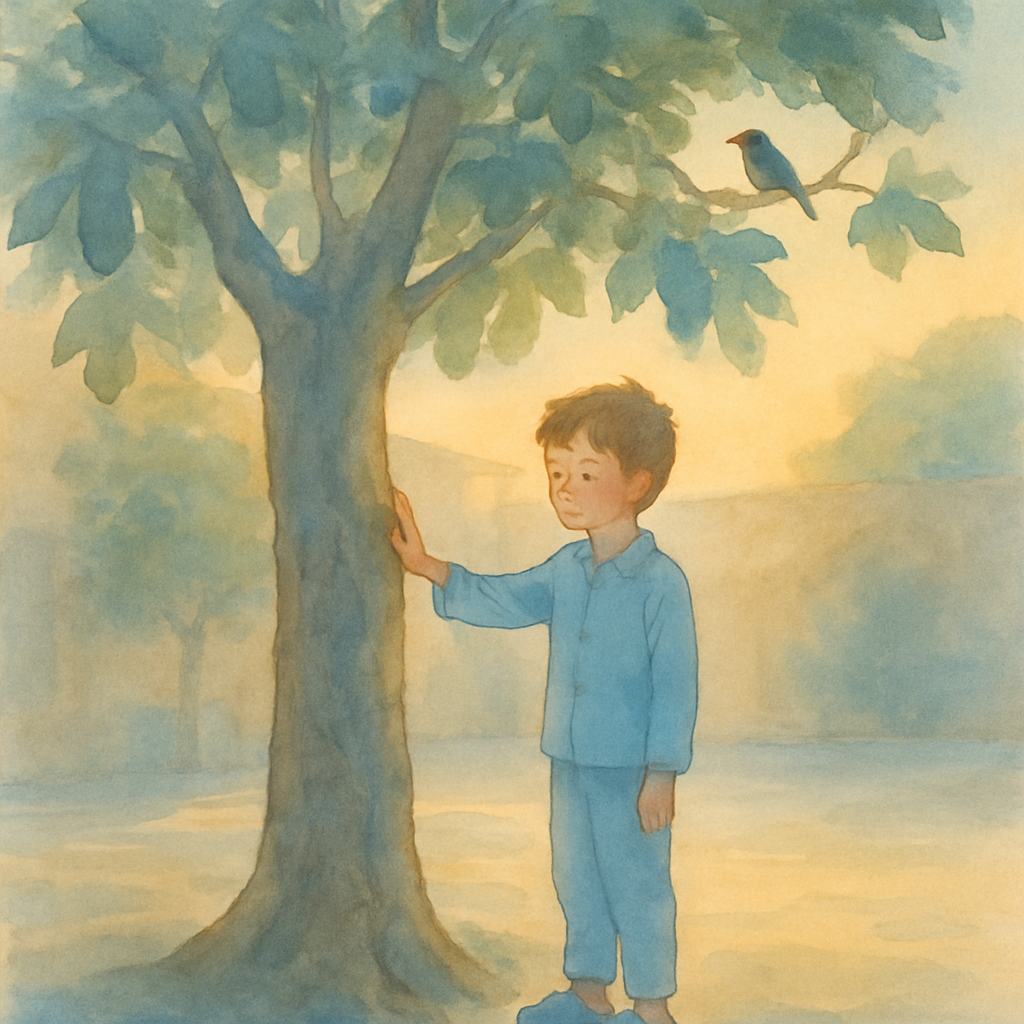
🎨 Illustration prompt
Early morning light, blue and pale gold. The boy stands alone beside the fig tree in his pajamas and slippers, his small hand pressed flat against the bark. His eyes are closed. The courtyard is empty and quiet — the world has not yet woken up. A bird perches on a branch above. The moment feels sacred without being heavy. Watercolor style. No text in the image.
Page 11
صِرْتُ أَقُولُها كُلَّ يَوْم. كُلَّ صَباحٍ قَبْلَ المَدْرَسَة، وَكُلَّ مَساءٍ بَعْدَ اللَّعِب. "مَرْحَبًا يا خَدِيجَة." شَيْءٌ صَغِير. كَلِمَتانِ فَقَط. لَكِنْ شَعَرْتُ أَنَّ شَيْئًا في السَّاحَةِ صارَ حَيًّا.
I started saying it every day. Every morning before school, and every evening after playing. "Hello, Khadija." A small thing. Just two words. But I felt that something in the courtyard had come alive.
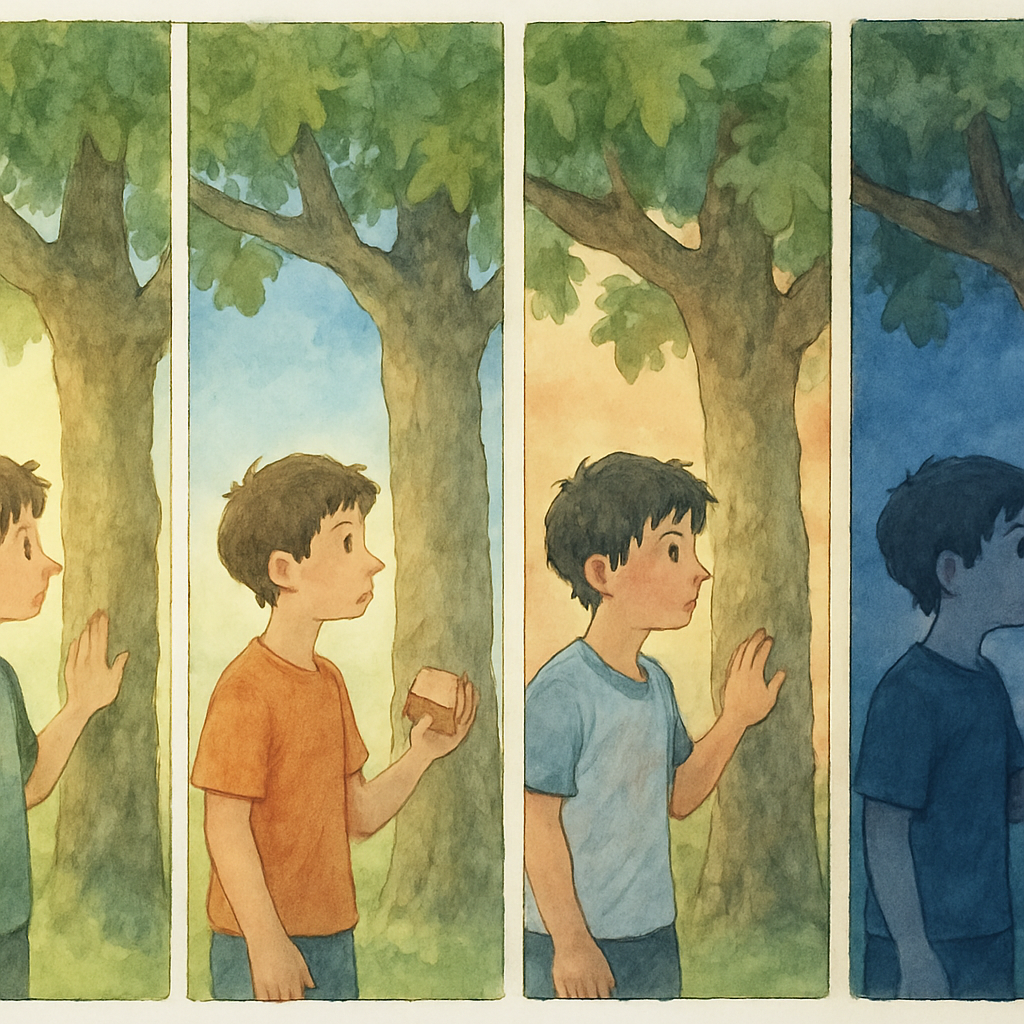
🎨 Illustration prompt
A four-panel sequence in a single watercolor frame, showing the boy at the tree at different times of day: morning with backpack, midday with a sandwich, afternoon sweaty from soccer, evening in the blue dusk. In each panel his hand is on the bark. The fig tree itself doesn't change — but the boy is the constant. Soft watercolor with gentle dividing lines. Watercolor style. No text in the image.
Page 12
في يَوْمٍ مِنَ الأَيّام، رَآني ابْنُ عَمِّي لَيْث. سَأَلَ: "ماذا تَفْعَل؟" قُلْتُ لَهُ القِصَّةَ كُلَّها. عَنْ خَدِيجَة، وَالخِياطَة، وَالاسْمِ المَحْفُور. فَكَّرَ قَلِيلًا. ثُمَّ وَضَعَ يَدَهُ عَلى الجِذْعِ بِجانِبِ يَدي. "مَرْحَبًا يا خَدِيجَة."
One day, my cousin Layth saw me. He asked: "What are you doing?" I told him the whole story. About Khadija, the sewing, the carved name. He thought for a moment. Then he put his hand on the trunk next to mine. "Hello, Khadija."
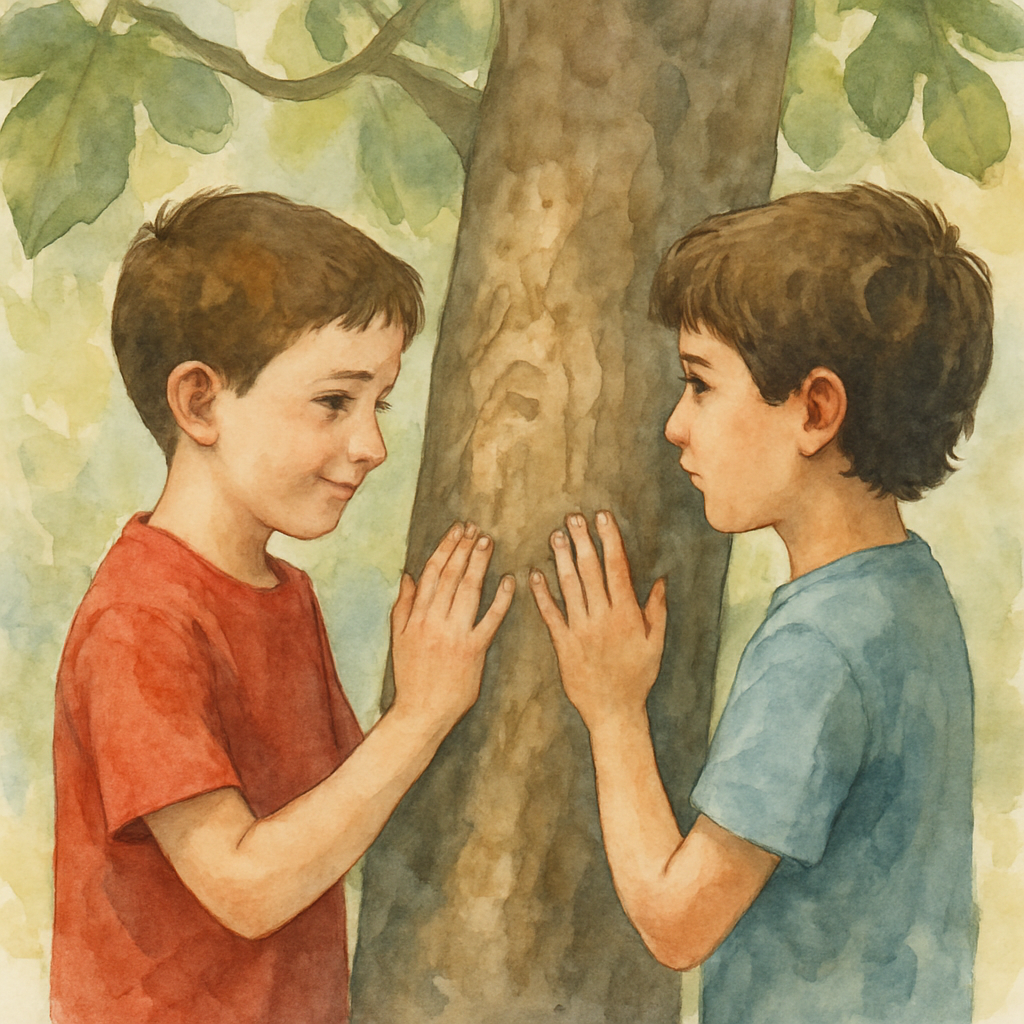
🎨 Illustration prompt
Two boys of similar age standing side by side at the fig tree, both with their hands pressed against the bark. Layth wears a red t-shirt and has slightly shorter hair than Samer. They are not looking at each other but at the carved name. There's a small smile on Layth's face — the smile of someone who has just been let in on something. Watercolor style. No text in the image.
Page 13
ثُمَّ صارَتْ بِنْتُ الجِيرانِ تَقُولُها. ثُمَّ صَدِيقُها. ثُمَّ ثَلاثَةُ أَوْلادٍ مِنَ البِنايَةِ المُقابِلَة. الآنَ، كُلُّ أَوْلادِ الحَيِّ يَعْرِفُونَ اسْمَها. اسْمٌ كادَ يُنْسى — حَفِظَتْهُ شَجَرَةٌ، وَأَطْفالٌ أَرادُوا أَنْ يُكْمِلُوا الطَّيِّبَة.
Then the neighbor's daughter started saying it. Then her friend. Then three kids from the building across the way. Now, all the kids in the neighborhood know her name. A name almost forgotten — kept alive by a tree, and by children who wanted to keep the kindness going.
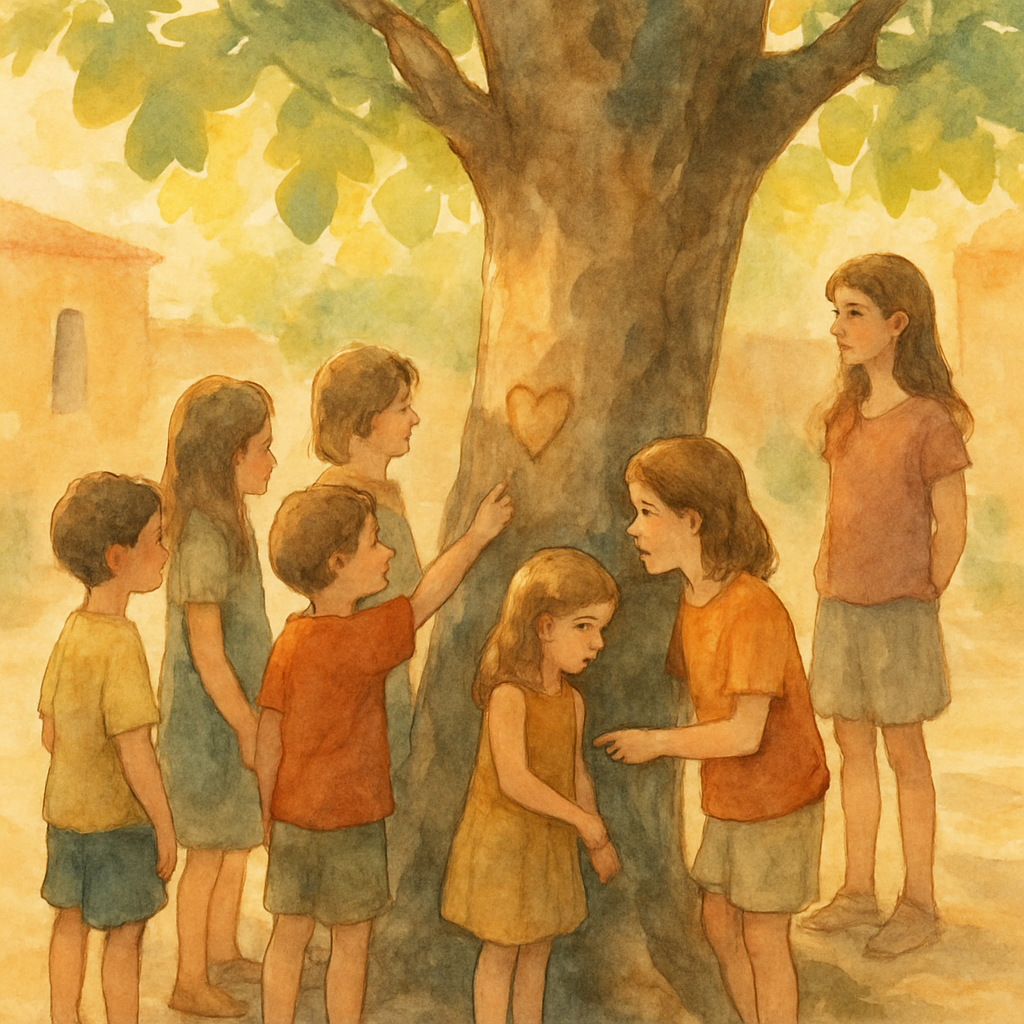
🎨 Illustration prompt
A small crowd of six or seven neighborhood children of mixed ages around the fig tree. Some have hands on the bark; one girl is showing a younger child where the carving is; two older kids are simply standing nearby, watching. The mood is warm and casual, not ceremonial — this has become a normal, daily thing. Late afternoon golden light fills the courtyard. Watercolor style. No text in the image.
Page 14
بَعْضُ الأَسْماء تَحْفَظُها الأَشْجار. وَبَعْضُها يَحْفَظُها الأَطْفال.
Some names are kept alive by trees. Some are kept alive by children.
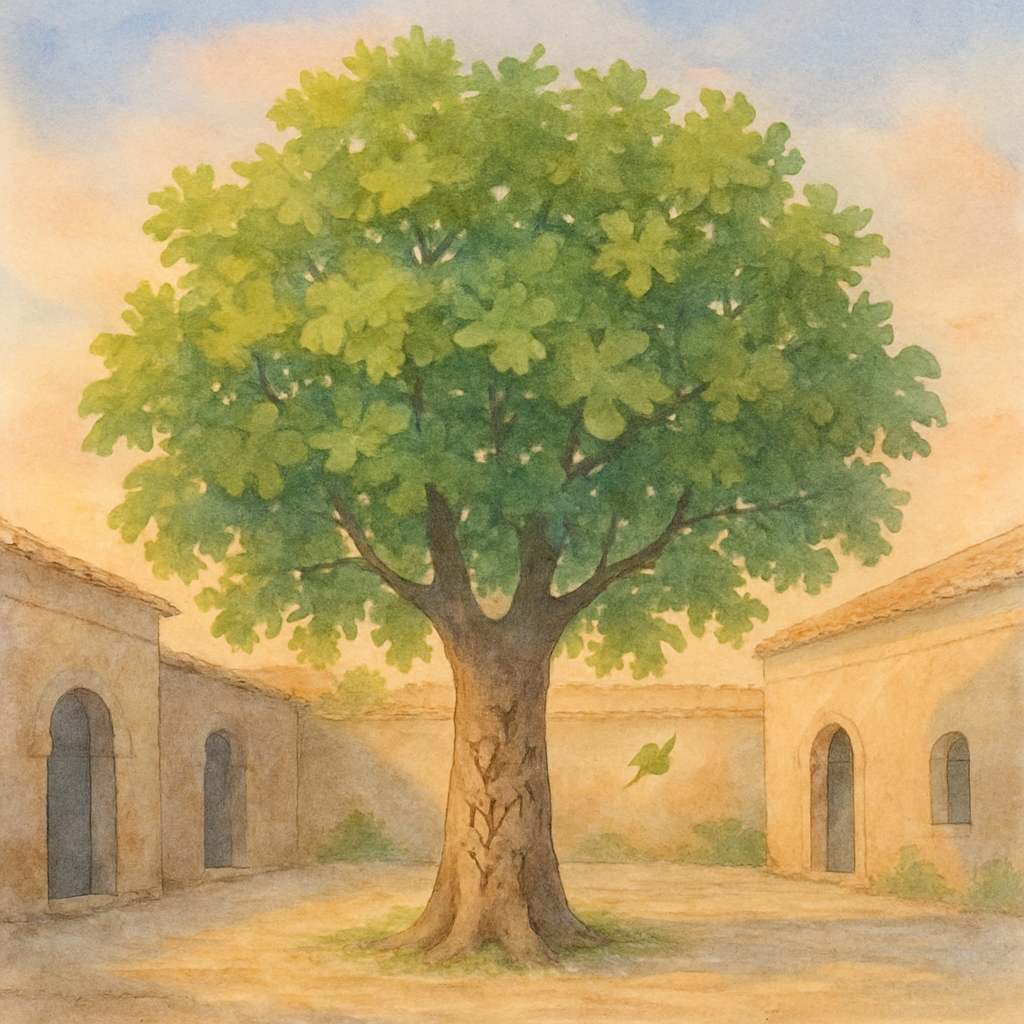
🎨 Illustration prompt
A wide, peaceful final scene. The fig tree at the center of the courtyard, full and green. At its base, the carved name "خَدِيجَة ١٩٦٤" is visible, with a few new small carved hearts and initials around it from the children — gentle additions, not vandalism. The courtyard is empty of people but full of evening light. A single fig leaf drifts down through the air. Watercolor style. No text in the image.
كَلِماتٌ جَدِيدَة · New Words
| Arabic | How to say it | English |
|---|---|---|
شَجَرَة |
sha-ja-rah | tree |
تِين |
tīn | figs |
سَاحَة |
sā-ḥah | courtyard |
اسْم |
ism | name |
جَار |
jār | neighbor |
ذِكْرَى |
dhik-rā | memory |
حَفَر |
ḥa-fa-ra | carved / engraved |
أَجْيَال |
aj-yāl | generations |
حَيّ |
ḥayy | alive / neighborhood |
جِذْع |
jidhʿ | trunk (of a tree) |
خِياطَة |
khi-yā-ṭah | sewing |
هَمَسَ |
ha-ma-sa | whispered |
🗣️ Talk about it
These are not test questions — they're conversation starters. Pick one (or two), ask it, listen.
Khadija gave the fig tree her own name because she knew it would live longer than her. If you could give your name to something in the world — a tree, a rock, a bench, a river — what would you choose, and why?
Samer didn't have to keep saying hello to the tree. Nobody asked him to. Why do you think he did it anyway? Have you ever done a small kind thing that nobody knew about?
In our families and neighborhoods, there are sometimes people who are no longer with us but who still matter. Is there someone in your family's stories — a great-aunt, an old friend, a neighbor from long ago — whose name you've heard? What do you know about them?
✏️ Try it
Pick one:
- Find an old thing in your neighborhood — a tree, a bench, a stone wall, a fountain. Imagine someone who used it a long time ago. Draw them. Give them a name.
- Ask the oldest person you know about a neighbor from their childhood who is no longer alive. Listen to the story. Repeat the person's name out loud when they are finished. That's how names stay alive.
- Write your own name somewhere it will last — on the inside cover of a favorite book, on the back of a drawing you'll keep, on a stone you'll put in a garden. Not to show off. Just to say: I was here.
A note for grown-ups reading along
This story uses partial vowel marks (تَشْكِيل) — only on the harder or less-common words. By Tier 3, your reader should be comfortable enough with the most common words (was, the, and, I, she) to read them without marks. If a word feels hard, the marks are there to help.
The practice of giving names to inanimate things — trees, cars, cooking pots, sewing machines, even teacups — runs deep in Levantine and broader Arab culture. It's not superstition. It's a way of saying: this object has been part of my life long enough to be a person to me. Children often understand this instantly. Adults sometimes have to relearn it.
The fig tree in a Levantine apartment-building courtyard is a very real thing — a gathering place, a calendar (the figs come in late summer), a shared inheritance among unrelated neighbors. If you have a tree, a stoop, a corner store, or a stairwell that has played that role in your child's life, tell them so. Name it out loud.
And if there is someone in your family whose name has begun to be forgotten — say it tonight at dinner. That's all it takes.
— Hayya Beena Naqraa (هَيَّا بِنَا نَقْرَأ)