الحِمَار الحَكِيم
The Wise Donkey
A Hayya Beena Naqraa story · Tier 3 · For ages 9–11
Cover page
الحِمَار الحَكِيم
The Wise Donkey
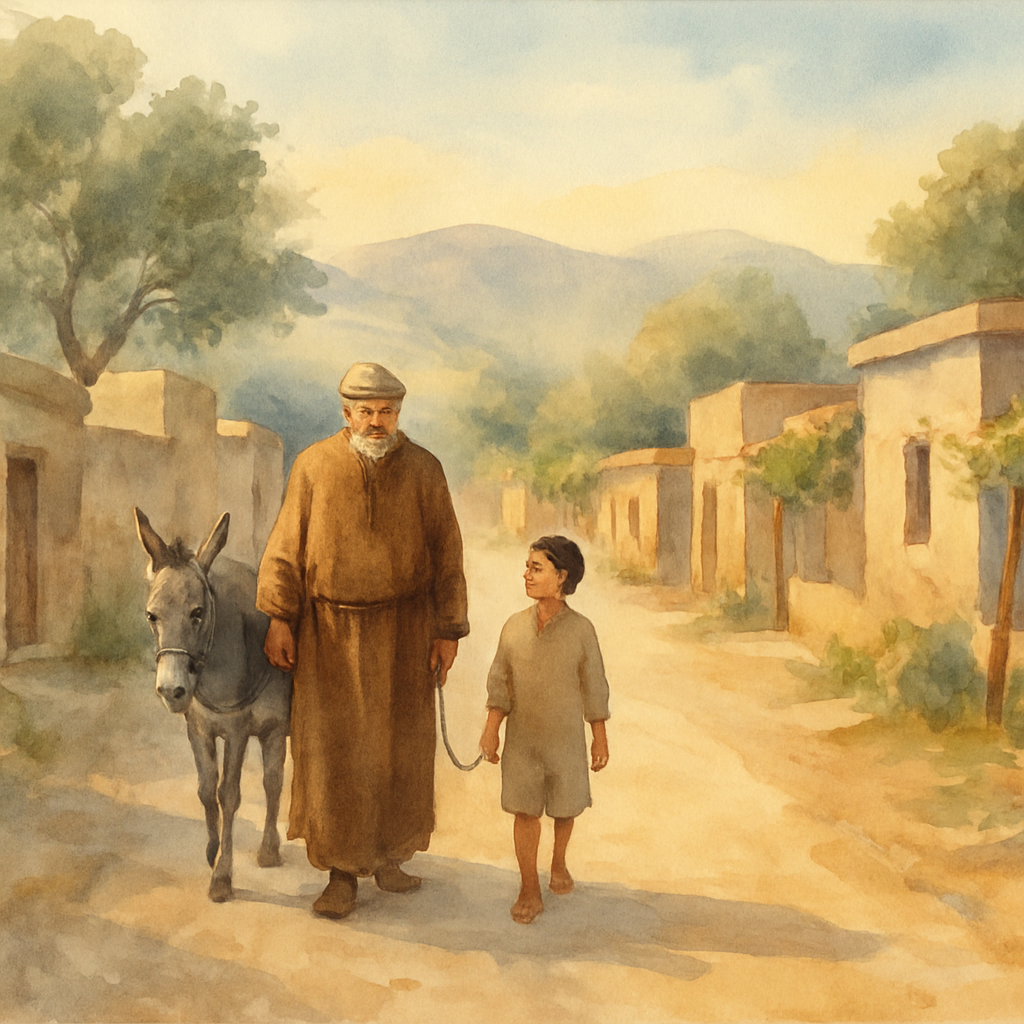
🎨 Illustration prompt
A wide watercolor scene of a dusty village road winding between low stone houses with flat roofs and grapevines. An older man in a simple brown robe and a soft cloth cap walks beside a small grey donkey. A boy of about ten walks on the other side, smiling up at his father. Olive trees and low hills in the distance under a soft morning sky. Warm earth tones, dappled light. Watercolor style. No text in the image.
Page 1
في قَرْيَةٍ صَغِيرَةٍ بَيْنَ التِّلال، عاشَ رَجُلٌ اسْمُهُ جُحا. كانَ جُحا مَعْرُوفًا في كُلِّ القُرى بِكَلامِهِ الغَرِيب وَحِكْمَتِهِ الهادِئَة. وَكانَ لَهُ ابْنٌ صَغِير، وَحِمَارٌ قَدِيمٌ يُحِبُّهُ كَثِيرًا.
In a small village among the hills, there lived a man named Juha. Juha was known in all the villages for his strange talk and his quiet wisdom. He had a young son, and an old donkey he loved very much.
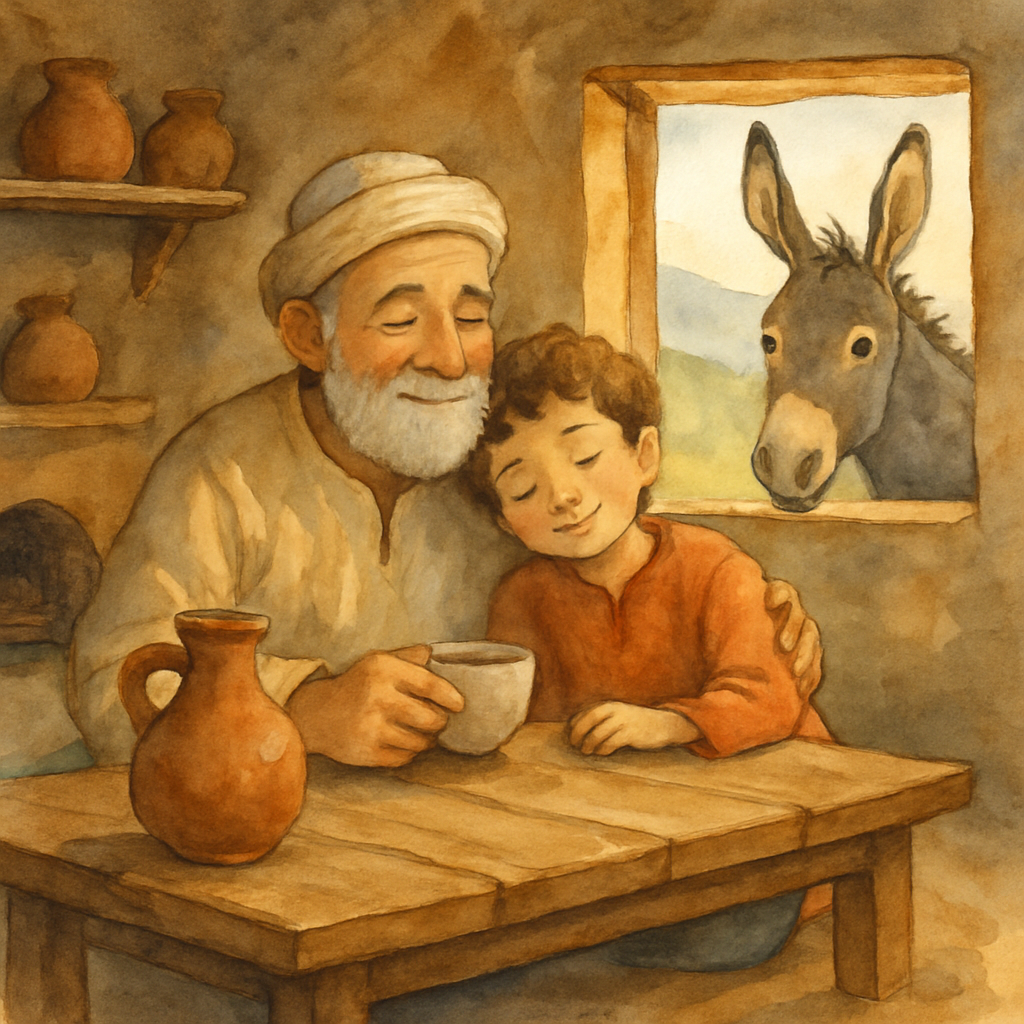
🎨 Illustration prompt
A warm interior scene of a simple village kitchen with a low wooden table, a clay water jug, and a small window looking out at hills. Juha — a kind-faced older man with a soft grey beard — sits drinking tea while his son, a curly-haired boy, leans against his shoulder. Through the window, the donkey peeks in curiously. Watercolor style. No text in the image.
Page 2
في صَباحٍ مُشْمِس، قالَ جُحا لِابْنِه: "اليَوْمَ نَذْهَبُ إِلى السُّوق. سَنَبِيعُ بَعْضَ التِّينِ وَنَشْتَري دَقِيقًا." فَرِحَ الوَلَدُ كَثِيرًا. أَخْرَجا الحِمارَ مِنَ الحَظِيرَة، وَوَضَعا عَلَيْهِ سَلَّةَ التِّين.
One sunny morning, Juha said to his son: "Today we are going to the market. We'll sell some figs and buy flour." The boy was very happy. They led the donkey out of the stable and placed the basket of figs on his back.
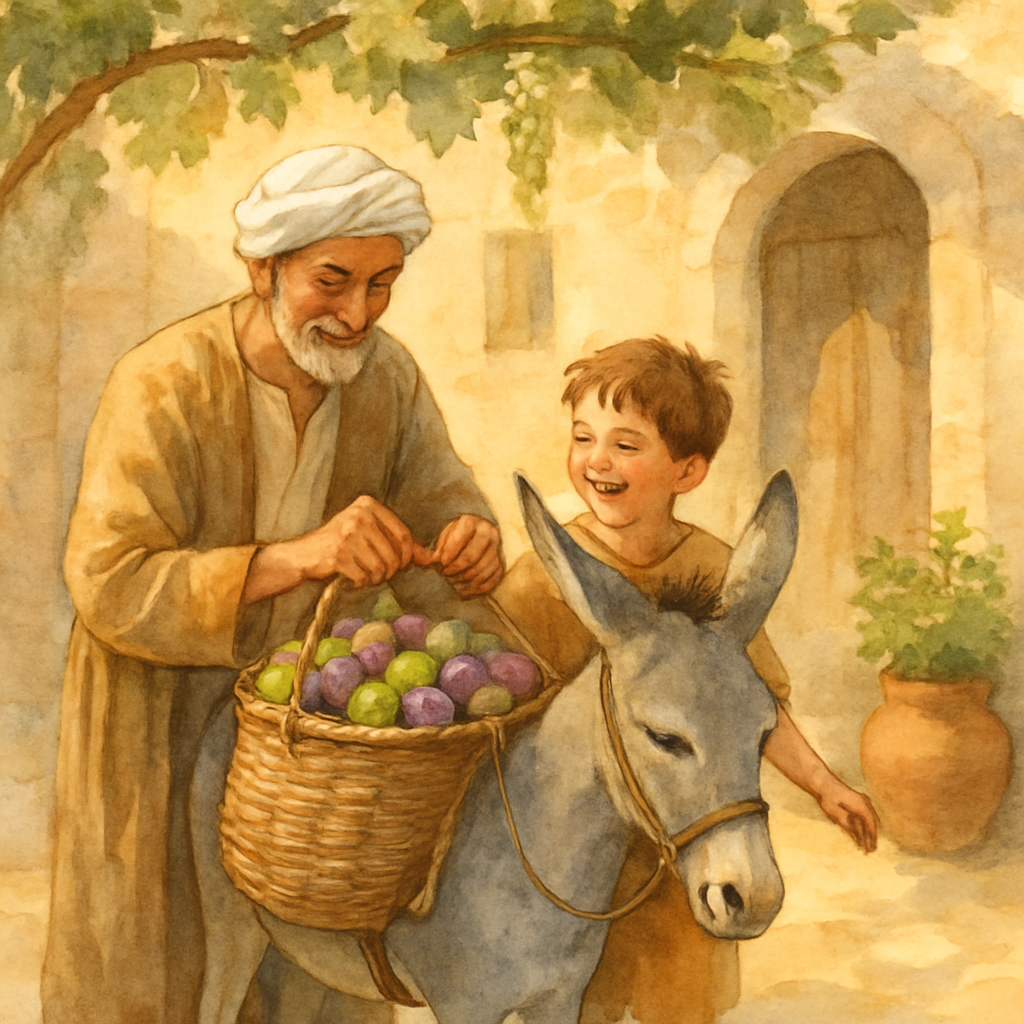
🎨 Illustration prompt
Early morning in a Levantine courtyard. Juha and his son strap a woven basket full of green and purple figs onto the small grey donkey. The boy giggles as the donkey twitches his ear. Stone walls, a grapevine arching overhead, a clay pot of mint near the door. Soft golden light. Watercolor style. No text in the image.
Page 3
قالَ جُحا لِابْنِه: "اِرْكَبْ أَنْتَ يا حَبِيبي. أَنا أَمْشي بِجانِبِك." ابْتَسَمَ الوَلَدُ وَصَعِدَ عَلى ظَهْرِ الحِمار. وَهَكَذا بَدَأَتْ رِحْلَتُهُم: الوَلَدُ راكِب، وَالأَبُ يَمْشي، وَالحِمارُ يَخْطو بِبُطْءٍ عَلى الطَّريق.
Juha said to his son, "You ride, habibi. I'll walk beside you." The boy smiled and climbed onto the donkey's back. And so their journey began: the boy riding, the father walking, and the donkey stepping slowly along the road.
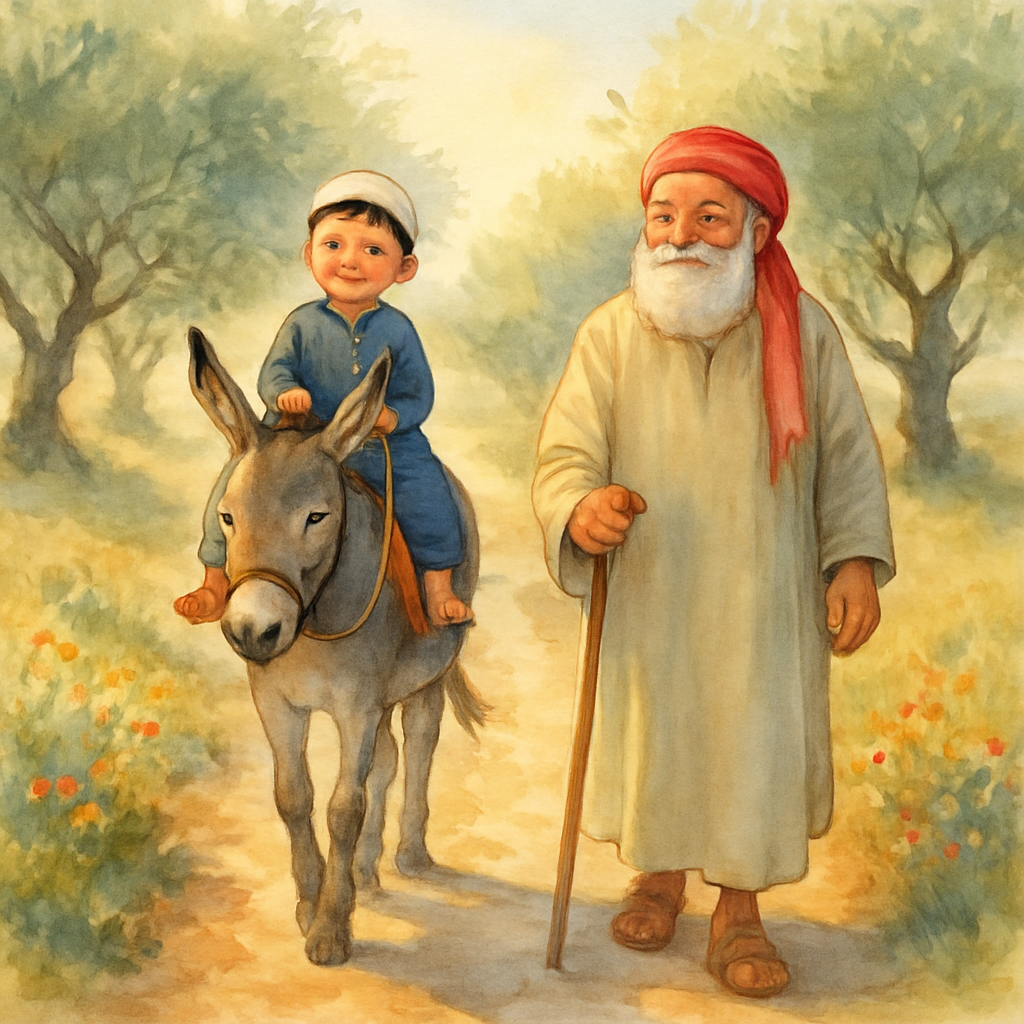
🎨 Illustration prompt
A dirt road between olive groves. The small boy sits proudly on the donkey, gripping a rope. Juha walks beside them with a walking stick, looking content. Wildflowers grow at the edges of the path. The morning sun casts long, soft shadows. Watercolor style. No text in the image.
Page 4
بَعْدَ قَلِيل، وَصَلوا إِلى قَرْيَةٍ صَغِيرَة. كانَ النّاسُ جالِسينَ أَمامَ بُيوتِهِم يَشْرَبونَ القَهْوَة. نَظَرَ إِلَيْهِم رَجُلٌ كَبيرٌ في السِّنِّ، وَهَزَّ رَأْسَه. قالَ بِصَوْتٍ عالٍ: "اُنْظُروا! وَلَدٌ صَغيرٌ يَرْكَبُ، وَأَبوهُ المِسْكينُ يَمْشي! أَيْنَ الاحْتِرام؟"
After a while, they came to a small village. The people were sitting in front of their houses, drinking coffee. An old man looked at them and shook his head. He said in a loud voice: "Look at that! A small boy riding, and his poor father walking! Where is the respect?"
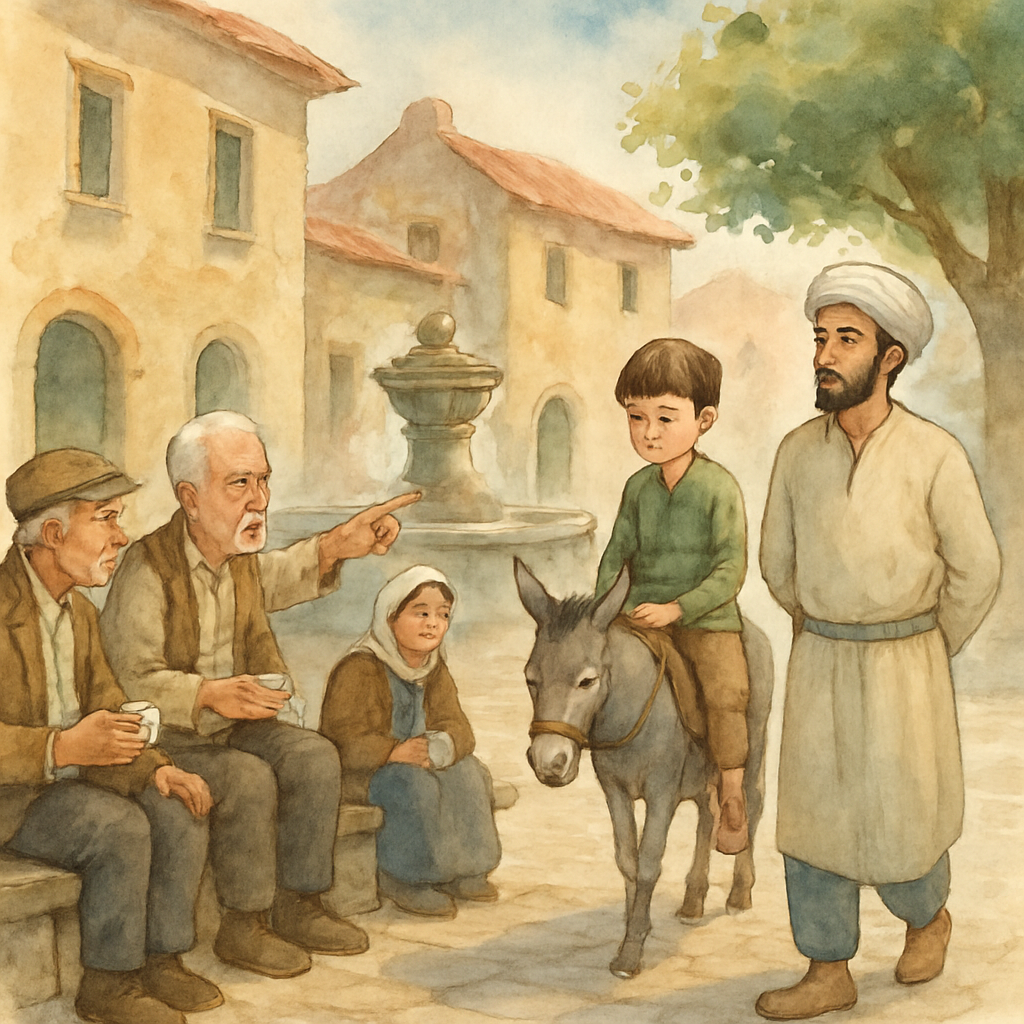
🎨 Illustration prompt
A small village square with stone benches and a fountain. Several villagers in simple clothes sit with tiny coffee cups. One older man with white hair points at the passing trio, his eyebrows raised in disapproval. The boy on the donkey looks down, uncertain. Juha keeps walking calmly. Watercolor style. No text in the image.
Page 5
شَعَرَ الوَلَدُ بِالخَجَل. قالَ لِأَبيه: "يا أَبي، انْزِلْني. اِرْكَبْ أَنْتَ مَكاني." فَكَّرَ جُحا قَليلًا، ثُمَّ ابْتَسَمَ وَقال: "حَسَنًا يا بُنَيّ." نَزَلَ الوَلَدُ، وَصَعِدَ جُحا عَلى الحِمار. تابَعوا طَريقَهُم.
The boy felt embarrassed. He said to his father, "Father, let me down. You ride in my place." Juha thought for a moment, then smiled and said, "All right, my son." The boy climbed down, and Juha climbed onto the donkey. They continued on their way.
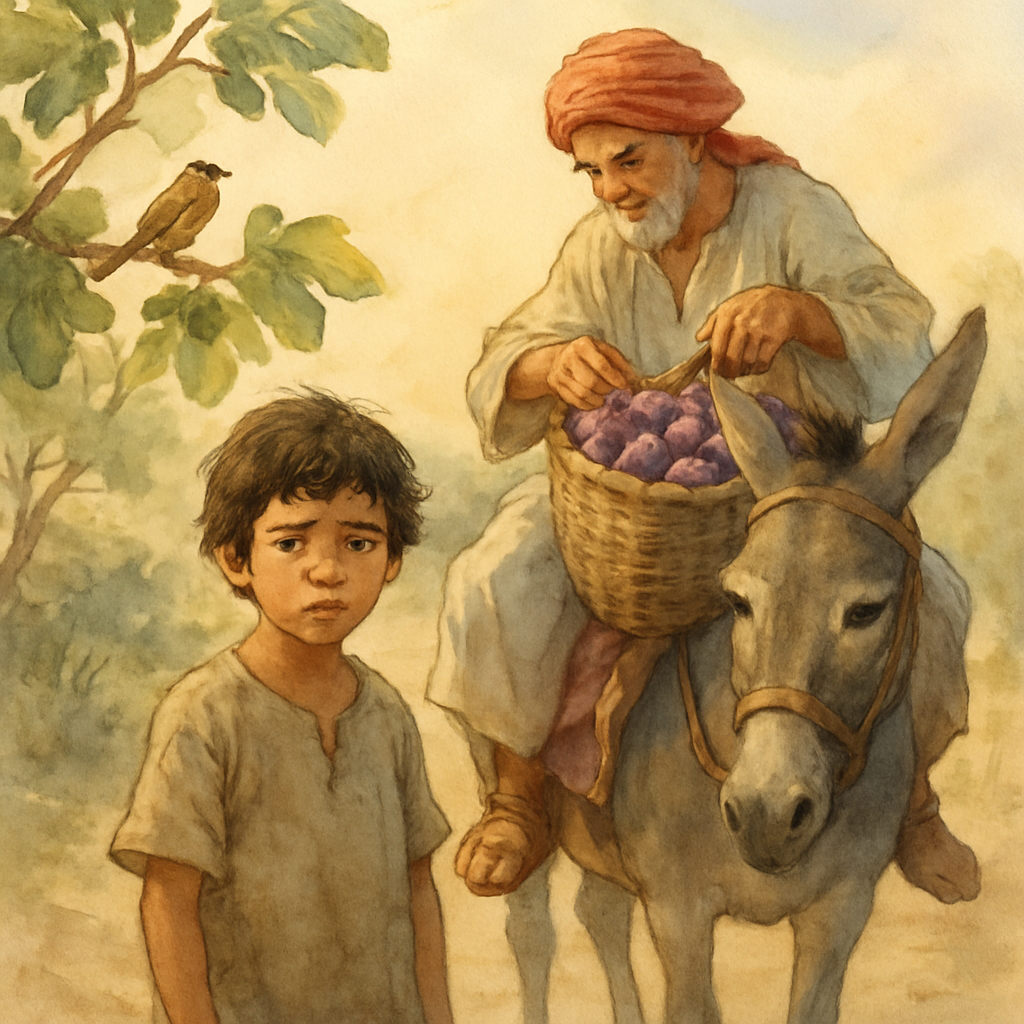
🎨 Illustration prompt
A quiet moment on the path. The boy stands on the dusty ground while Juha settles onto the donkey's back, adjusting the basket of figs. The boy looks a little sad but determined. A small bird watches from a nearby fig tree. Soft afternoon light. Watercolor style. No text in the image.
Page 6
بَعْدَ ساعَةٍ مِنَ المَشْي، دَخَلوا قَرْيَةً أُخْرى. كانَتْ امْرَأَةٌ تَغْسِلُ المَلابِسَ عِنْدَ النَّبْع. نَظَرَتْ إِلَيْهِم، وَضَحِكَتْ ضِحْكَةً قَصيرَة. قالَتْ لِجارَتِها بِصَوْتٍ عالٍ: "اُنْظُري! رَجُلٌ كَبيرٌ يَرْكَبُ الحِمار، وَطِفْلٌ صَغيرٌ يَمْشي خَلْفَه! يا لَهُ مِنْ أَبٍ قاسٍ!"
After an hour of walking, they entered another village. A woman was washing clothes at the spring. She looked at them, and she laughed a short laugh. She said to her neighbor in a loud voice: "Look! A grown man riding the donkey, and a little child walking behind him! What a cruel father!"
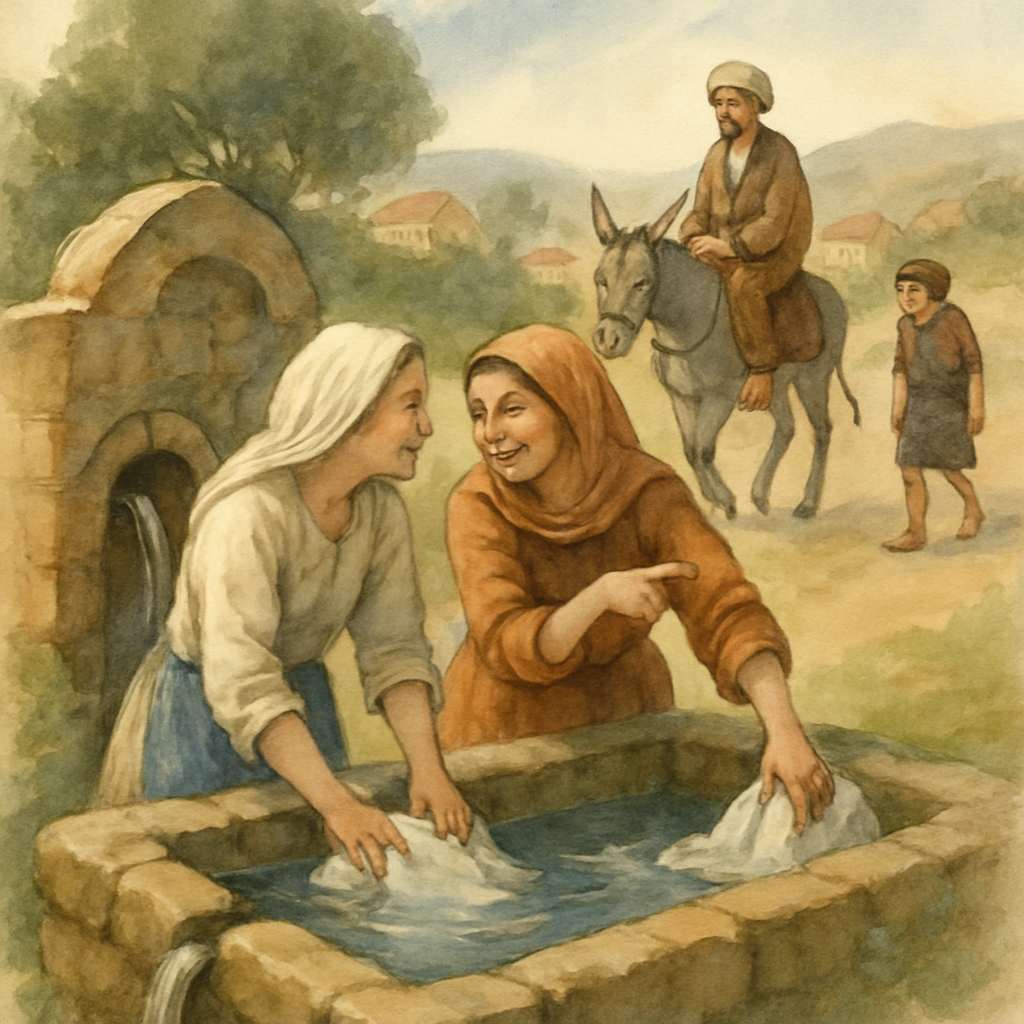
🎨 Illustration prompt
A village spring with a stone basin. Two women in long simple dresses and headscarves wash clothes in the cool water. One of them turns to whisper to the other, half-laughing, pointing toward the road. Juha sits on the donkey looking thoughtful; the boy trudges behind, dust on his sandals. Watercolor style. No text in the image.
Page 7
تَوَقَّفَ جُحا. قالَ لِابْنِه: "تَعالَ يا حَبيبي. اِرْكَبْ مَعي. الحِمارُ قَوِيٌّ، وَيَسْتَطيعُ أَنْ يَحْمِلَنا نَحْنُ الاثْنَيْن." صَعِدَ الوَلَدُ خَلْفَ أَبيه، وَأَمْسَكَ بِهِ بِيَدَيْهِ الصَّغيرَتَيْن. تابَعَ الحِمارُ المَشْيَ بِبُطْءٍ أَكْثَر.
Juha stopped. He said to his son, "Come, habibi. Ride with me. The donkey is strong, and he can carry both of us." The boy climbed up behind his father and held on with his small hands. The donkey kept walking, more slowly now.
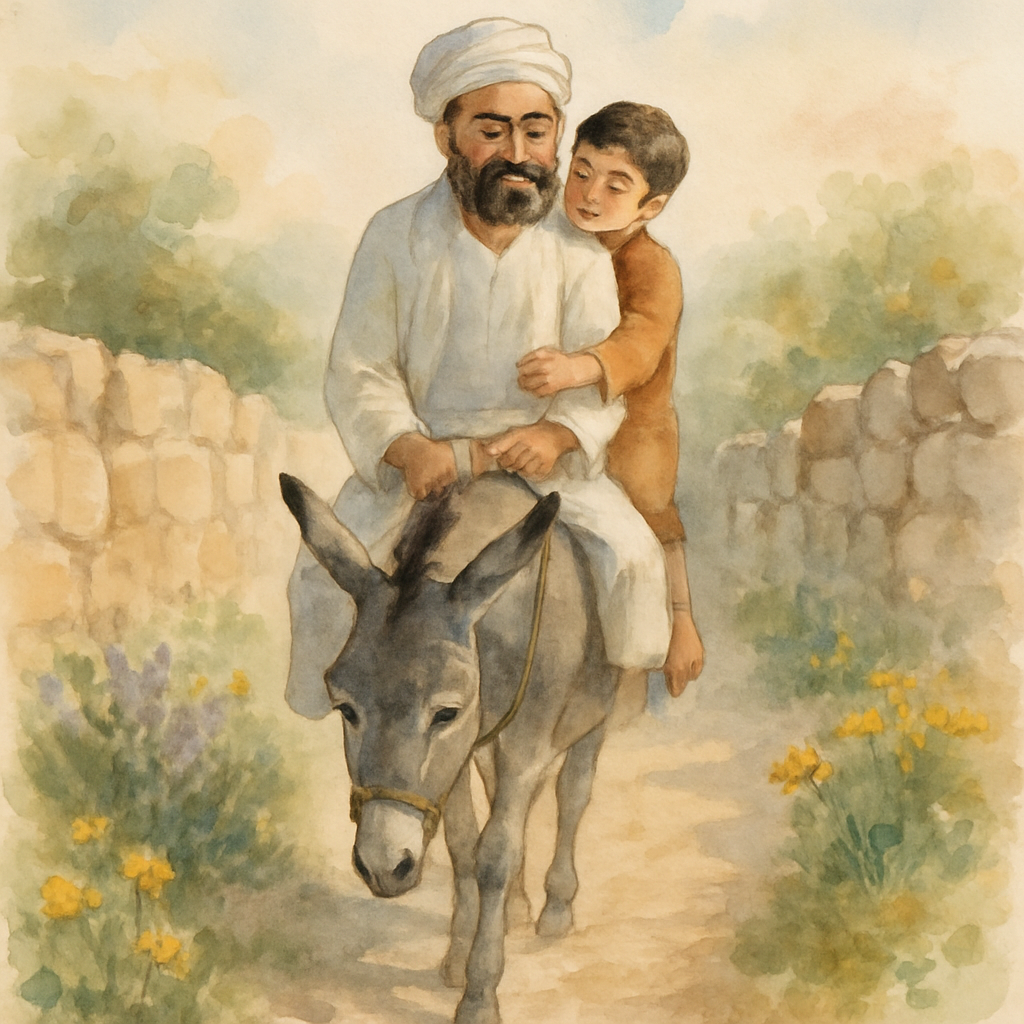
🎨 Illustration prompt
The donkey walks along a dirt path between low stone walls. Juha sits in front, the boy behind him with his arms wrapped around his father's waist. The donkey's head is lowered slightly, ears flicking. Wild thyme and yellow flowers grow along the path. Watercolor style. No text in the image.
Page 8
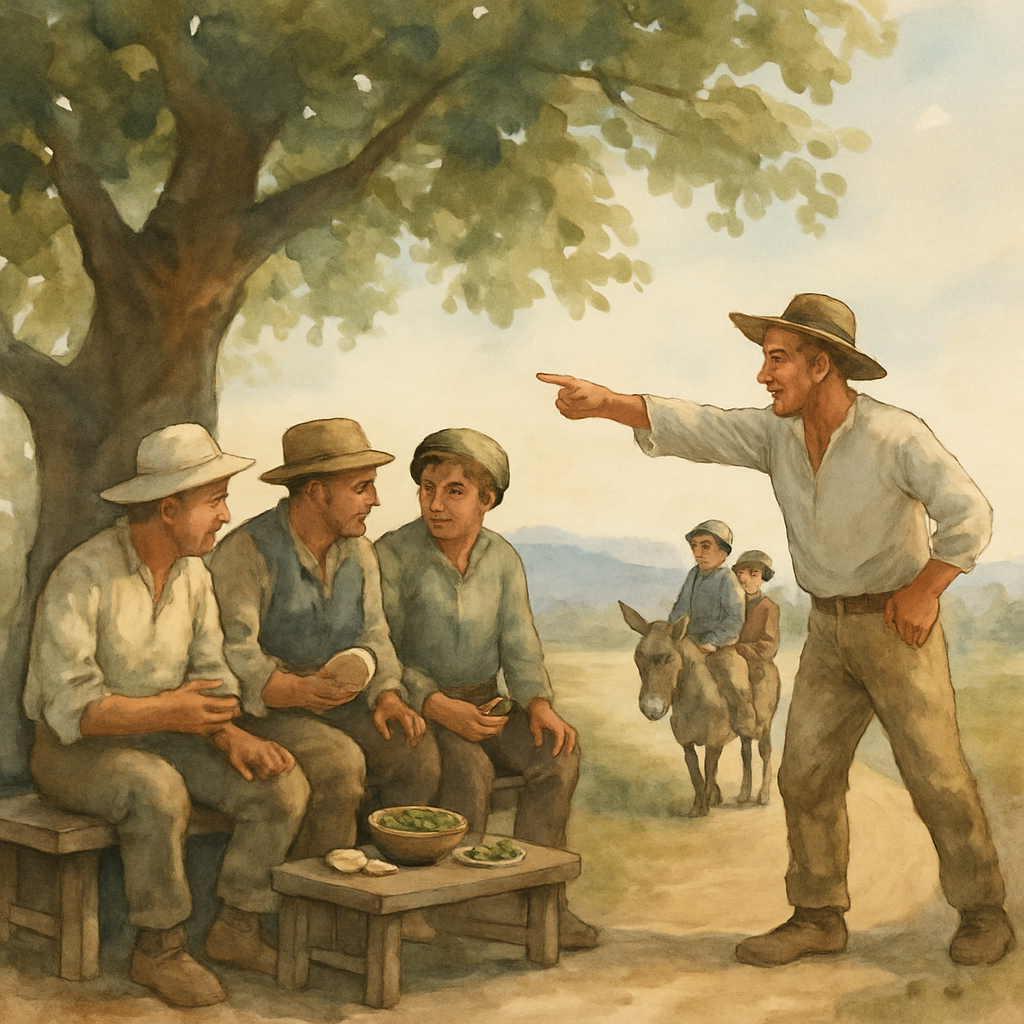
دَخَلوا قَرْيَةً ثالِثَة. كانَ مَجْموعَةٌ مِنَ الفَلّاحينَ يَجْلِسونَ تَحْتَ شَجَرَةِ جَوْز. عِنْدَما رَأَوْهُم، صاحَ أَحَدُهُم: "يا لَلْمِسْكينِ هذا الحِمار! رَجُلٌ وَوَلَدٌ عَلى ظَهْرِهِ مَعًا؟ هذا ظُلْمٌ! أَلَيْسَ لَكُم قَلْب؟"
They entered a third village. A group of farmers was sitting under a walnut tree. When they saw them, one of them shouted: "Poor donkey! A man and a boy on his back together? This is cruelty! Have you no heart?"
🎨 Illustration prompt
Under a large walnut tree, three or four farmers in work clothes sit on a rough wooden bench, eating bread and olives. One of them stands and gestures angrily toward the road. The donkey on the path looks small and tired with two riders. Juha and the boy exchange a worried glance. Watercolor style. No text in the image.
Page 9
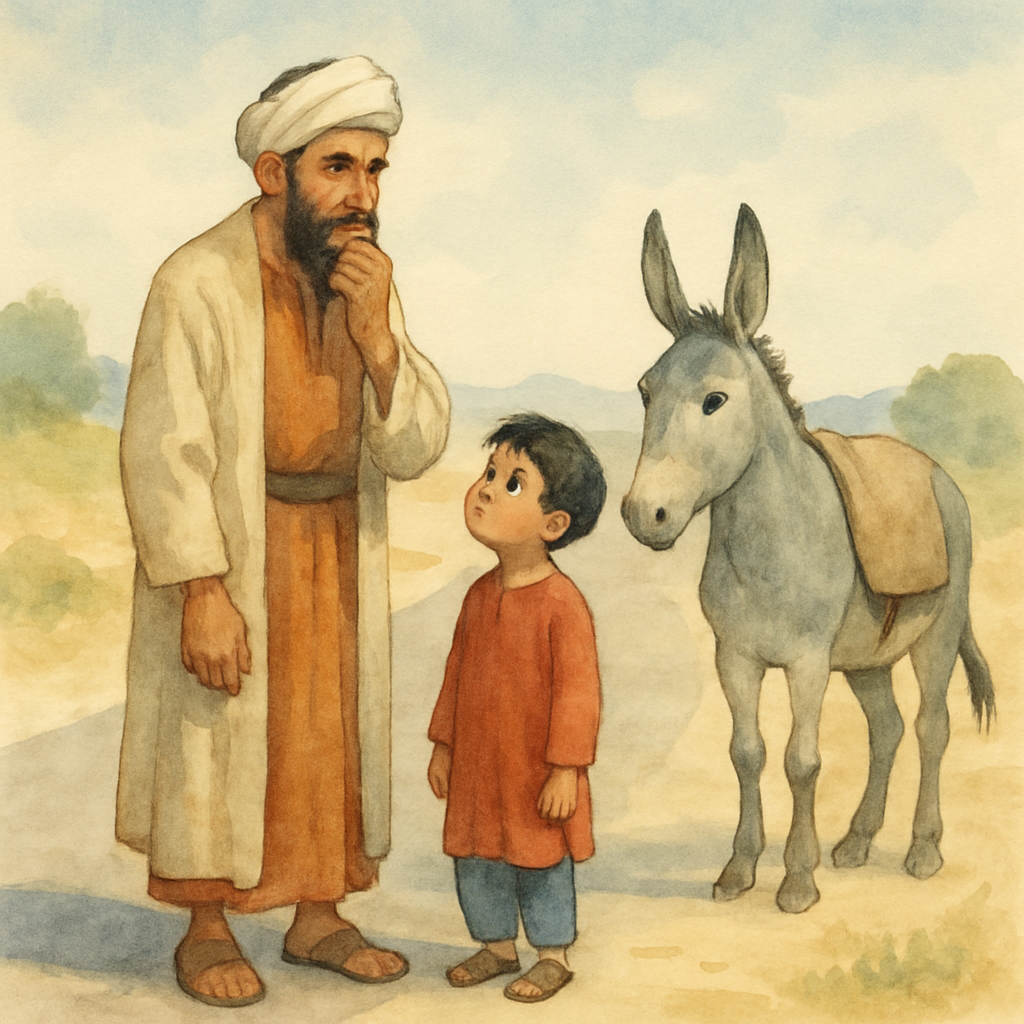
نَزَلَ جُحا عَنِ الحِمار. نَزَلَ ابْنُهُ أَيْضًا. وَقَفا في وَسَطِ الطَّريق، وَنَظَرا إِلى بَعْضِهِما البَعْض. قالَ الوَلَد: "يا أَبي، كُلَّما فَعَلْنا شَيْئًا، قالَ النّاسُ شَيْئًا آخَر. ماذا نَفْعَلُ الآن؟"
Juha climbed down from the donkey. His son climbed down too. They stood in the middle of the road and looked at each other. The boy said, "Father, whenever we do something, the people say something different. What do we do now?"
🎨 Illustration prompt
A simple, quiet moment on an empty stretch of road. Father and son stand facing each other beside the donkey. The boy looks up with big questioning eyes. Juha has one hand on his beard, thinking. The donkey watches them, ears perked. Late morning light, soft shadows. Watercolor style. No text in the image.
Page 10
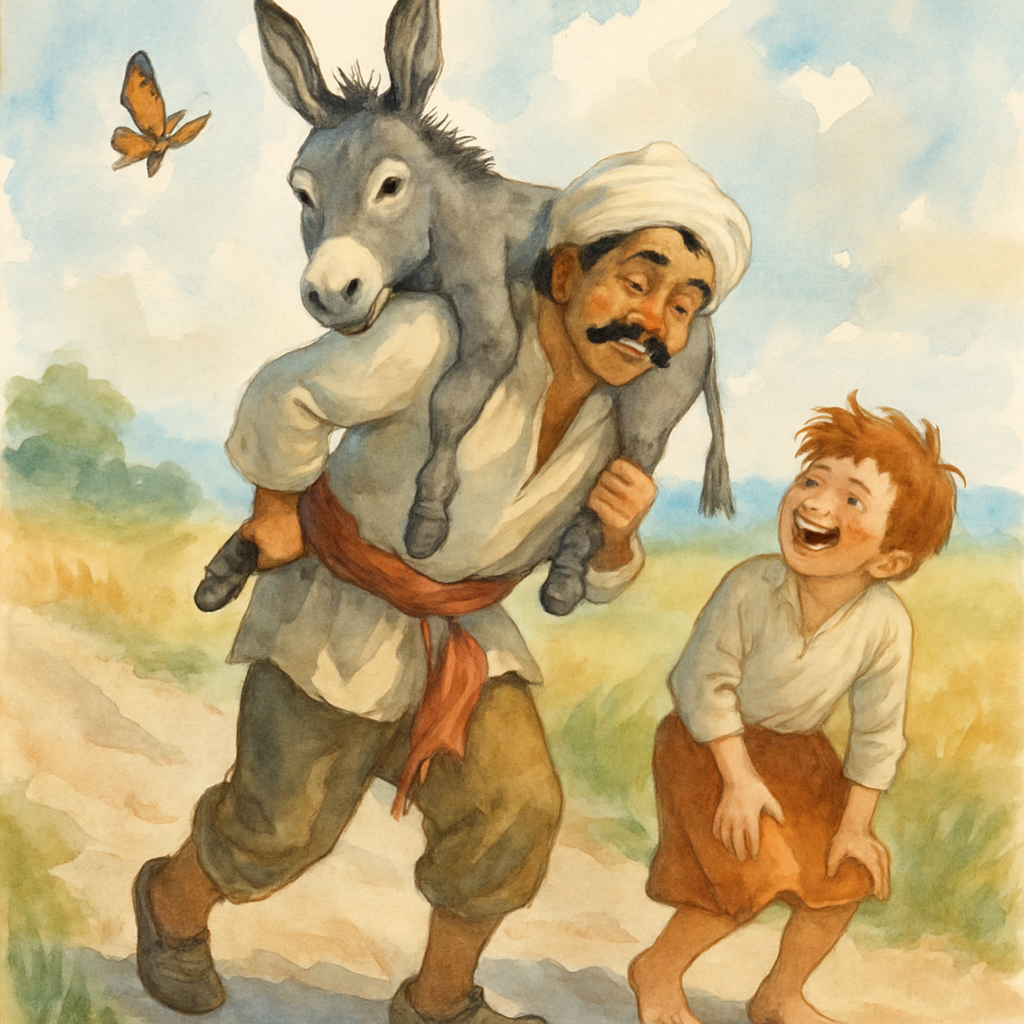
ابْتَسَمَ جُحا ابْتِسامَةً واسِعَة. قال: "عِنْدي فِكْرَة!" انْحَنى تَحْتَ الحِمار، وَرَفَعَهُ عَلى كَتِفَيْه! الحِمارُ المِسْكينُ صارَ يَنْظُرُ إِلى العالَمِ مِنْ فَوْق، وَأُذُناهُ تَتَحَرَّكانِ في الهَواء. ضَحِكَ الوَلَدُ حَتّى كادَ يَقَعُ عَلى الأَرْض.
Juha smiled a wide smile. He said, "I have an idea!" He bent down under the donkey and lifted him onto his shoulders! The poor donkey was now looking at the world from above, his ears moving in the air. The boy laughed until he almost fell to the ground.
🎨 Illustration prompt
A funny, gentle scene: Juha staggers a little on the road carrying a small grey donkey across his shoulders. The donkey looks startled but not unhappy, his ears sticking up comically. The boy doubles over laughing. A butterfly flutters past. Bright midday light. Watercolor style. No text in the image.
Page 11
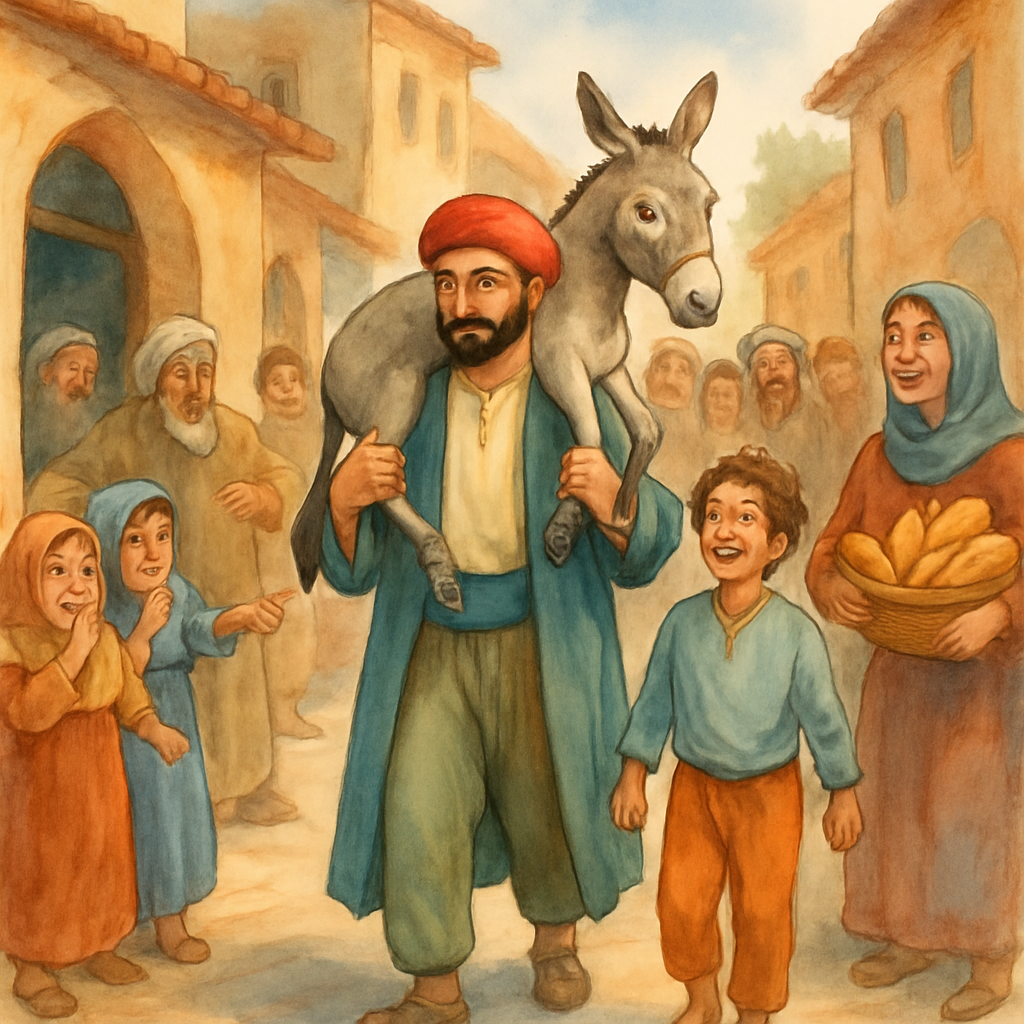
عِنْدَما دَخَلوا القَرْيَةَ التّالِيَة، تَوَقَّفَ النّاسُ في الشّارِع. فَتَحوا أَفْواهَهُم مِنَ الدَّهْشَة. ثُمَّ بَدَأوا يَضْحَكون. قالَ أَحَدُهُم: "يا لَهُ مِنْ أَحْمَق! رَجُلٌ يَحْمِلُ حِمارَهُ عَلى كَتِفَيْه! هَلْ رَأَيْتُم شَيْئًا أَغْرَبَ مِنْ هذا في حَياتِكُم؟"
When they entered the next village, the people stopped in the street. Their mouths fell open in surprise. Then they began to laugh. One of them said: "What a fool! A man carrying his donkey on his shoulders! Have you ever seen anything stranger in your life?"
🎨 Illustration prompt
A busy little village street. Shopkeepers, children, and a woman with a basket of bread all stop and stare. Some point, some cover their mouths, some laugh openly. Juha walks down the middle of the street carrying the donkey, calm and unbothered. The boy walks beside him, grinning. Watercolor style. No text in the image.
Page 12
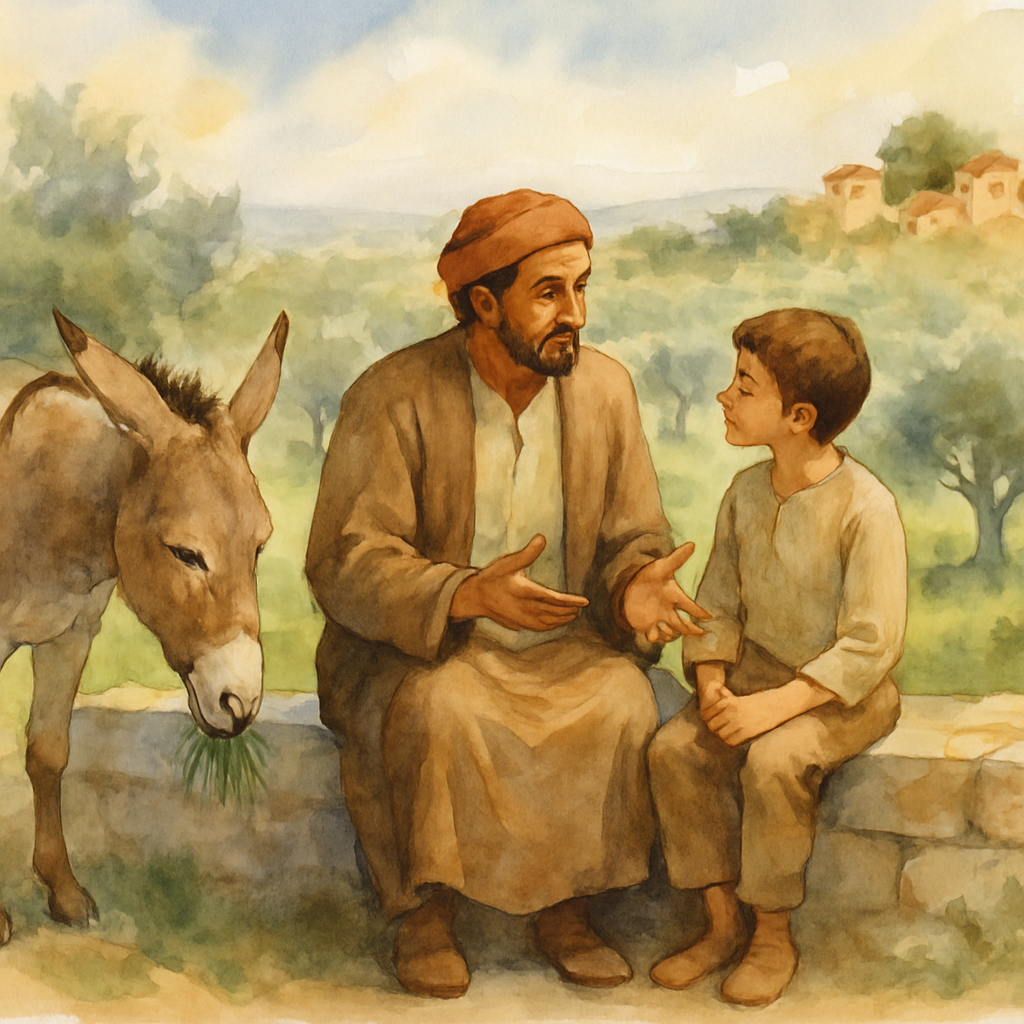
وَضَعَ جُحا الحِمارَ عَلى الأَرْضِ بِرِفْق. التَفَتَ إِلى ابْنِه، وَابْتَسَمَ ابْتِسامَةً هادِئَة. قال: "يا بُنَيّ، رَأَيْتَ بِعَيْنَيْك. رَكِبْتَ أَنْت، فَتَكَلَّمَ النّاس. رَكِبْتُ أَنا، فَتَكَلَّمَ النّاس. رَكِبْنا مَعًا، فَتَكَلَّموا. وَحَمَلْتُ الحِمار، فَتَكَلَّموا أَيْضًا."
Juha set the donkey down gently. He turned to his son and smiled a quiet smile. He said, "My son, you saw with your own eyes. You rode, and people spoke. I rode, and people spoke. We rode together, and they spoke. I carried the donkey, and they spoke too."
🎨 Illustration prompt
Father and son sit on a low stone wall at the edge of the village. The donkey stands quietly beside them, nibbling a tuft of grass. Juha gestures gently with his hands as he speaks. The boy listens carefully, his head tilted. Olive groves stretch to the horizon. Watercolor style. No text in the image.
Page 13
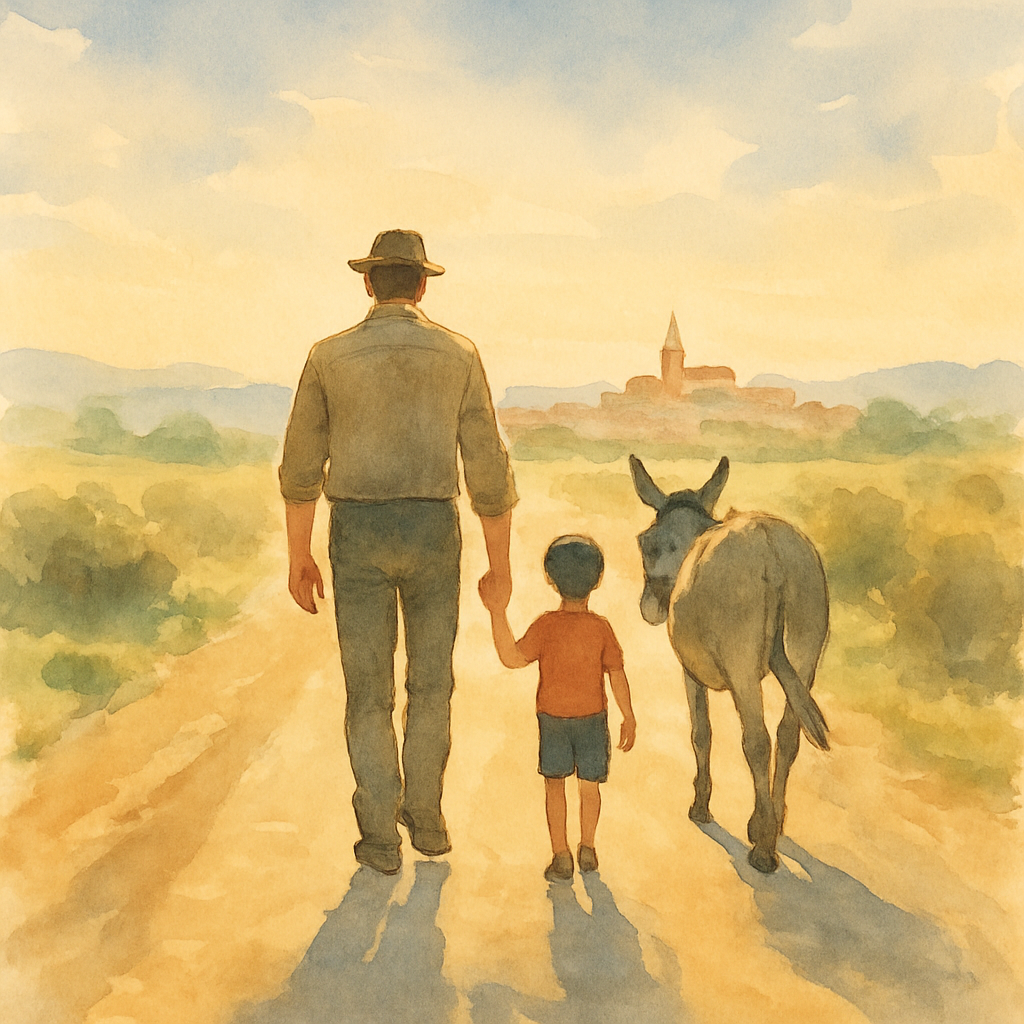
ثُمَّ قالَ جُحا بِصَوْتٍ هادِئ: "مَهْما فَعَلْنا، سَيَتَكَلَّمُ النّاس. لِذلِك نَفْعَلُ ما هُوَ جَيِّد، وَنُكْمِلُ طَريقَنا إِلى السُّوق." أَخَذَ يَدَ ابْنِه، وَأَخَذا الحِمارَ مَعَهُما. مَشَوُا الثَّلاثَةُ مَعًا تَحْتَ الشَّمْس. وَهذِهِ هِيَ حِكْمَةُ جُحا.
Then Juha said in a quiet voice: "No matter what we do, people will speak. So we do what is good — and we keep walking to the market." He took his son's hand, and they took the donkey with them. The three walked together under the sun. And this is the wisdom of Juha.
🎨 Illustration prompt
A wide, peaceful view from behind: Juha, the boy, and the donkey walking together down a sunlit road toward a distant town. The boy holds his father's hand. Long shadows stretch behind them. The sky is wide and gentle. A feeling of forward motion, of peace. Watercolor style. No text in the image.
كَلِماتٌ جَدِيدَة · New Words
| Arabic | How to say it | English |
|---|---|---|
حِمَار |
ḥi-mār | donkey |
سُوق |
sūq | market |
قَرْيَة |
qar-yah | village |
نَاس |
nās | people |
حِكْمَة |
ḥik-mah | wisdom |
ضَحِكَ |
ḍa-ḥi-ka | (he) laughed |
ابْتَسَمَ |
ib-ta-sa-ma | (he) smiled |
كُلَّمَا |
kul-la-mā | whenever |
حَبِيبِي |
ḥa-bī-bī | my dear (term of endearment) |
ظُلْم |
ẓulm | cruelty / injustice |
أَحْمَق |
aḥ-maq | fool / foolish |
طَرِيق |
ṭa-rīq | road / way |
🗣️ Talk about it
These are not test questions — they're conversation starters. Pick one (or two), ask it, listen.
"No matter what we do, people will speak. So we do what is good — and we keep walking." Has someone ever said something about you that made you want to change what you were doing? What happened? Looking back, do you wish you'd kept going?
Juha doesn't get angry at the people who criticize him. He doesn't even argue with them. Why do you think he tries each suggestion before showing his son the lesson? What kind of teacher is he?
The story is funny — a man carrying a donkey on his shoulders! Why do you think Juha stories are told with humor instead of just saying "Here is the lesson"? Does laughing help us remember things better?
✏️ Try it
Pick one:
- Tell the story out loud to someone in your family who has never heard it. (Juha stories are meant to be told, not just read.) Watch their face at the part where Juha lifts the donkey. See if they laugh.
- Ask an older relative if they know a Juha story (he's also called Goha, Nasreddin, or Mulla Nasruddin). Listen carefully. Write down or draw your favorite part.
- Draw the four pictures from this story — the boy riding, Juha riding, both riding, and Juha carrying the donkey. Underneath, write what the people in each village said. Notice how nobody is ever happy.
A note for grown-ups reading along
This story uses selective vowel marks (تَشْكِيل) — only on the harder or less-common words. By Tier 3, your reader should be comfortable enough with the most common words (was, the, and, he, they) to read them without marks. If a word feels hard, the marks are there to help.
Juha (also known as Nasreddin Hodja, Mulla Nasruddin, or Goha depending on the region) is one of the most beloved figures in Levantine, Turkish, Persian, North African, and Central Asian folklore. His stories have been told for at least 800 years. They are short, funny, and almost always carry a quiet wisdom — never preached, just shown. Children often laugh first and understand later. That's the point.
The lesson here — that you cannot please everyone, and that trying to will leave you carrying a donkey on your shoulders — is one your child will need their whole life. It is worth telling more than once. Tell it again next year. They'll hear something new.
If you and your child enjoyed this, ask around the family for more Juha stories. Almost every Arab grandparent knows at least three.
— Hayya Beena Naqraa (هَيَّا بِنَا نَقْرَأ)