الصَّحْن الفَارِغ
The Empty Plate
A Hayya Beena Naqraa story · Tier 4 (Novella · رِوَايَة) · For ages 10–12
A short chapter book in three chapters. Heritage learners and intermediate Arabic readers. Vowel marks appear only on harder or less-common words.
Cover page
الصَّحْن الفَارِغ
The Empty Plate
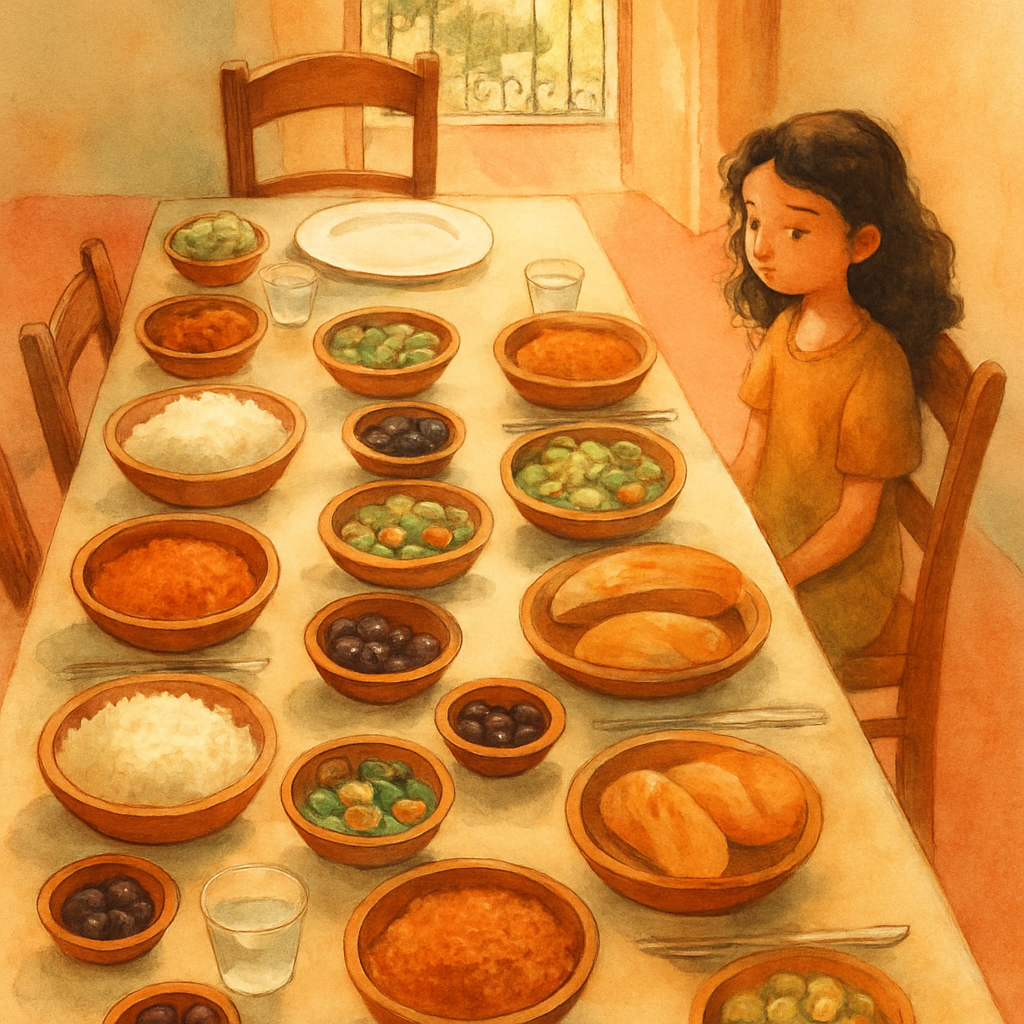
🎨 Illustration prompt
A soft watercolor illustration of a long family lunch table seen from above, set for many people. Bowls of rice, lentils, cucumber salad, bread, and small dishes of olives crowd the table. At the head of the table, between two empty chairs (one slightly larger), sits a single white plate — empty, clean, untouched, with no food on it. A 12-year-old girl with dark wavy hair sits along one side, looking quietly at the empty plate. Warm Mediterranean afternoon light through a balcony door. Watercolor style, warm Levantine palette — terracotta, ochre, soft green. No text in the image. Aspect ratio: 4:5 portrait.
A note before we begin
This book is told in three short chapters. You don't have to read it all at once. After each chapter, there's a small "بَيْنَ الفُصُول · Between the Chapters" moment — a question or a small thing to notice.
The Arabic uses selective vowel marks — only on harder or less common words. Common words go without. This is closer to how grown-up Arabic books are written, and it's a good challenge for readers who are growing.
الفَصْلُ الأَوَّل · Chapter One
A Question Long Held
كُلَّ يَوم أَحَد، تَجتَمِع عائِلَة سارة على الغَداء في بَيت تيتا وجِدّو.
خَمسَة عَشرَ شَخصًا حَول طاوِلَة طَويلة: تيتا، جِدّو، أَب سارة وأُمُّها، عَمَّاتها وأَعمامُها، وأَولاد العَمَّات. الطَّاوِلَة مَملوءَة دائمًا — أَرُزّ بِالشَّعِريَّة، عَدَس بِحَامِض، سَلَطَة خِيار ولَبَن، خُبز سَاخِن، زَيتون.
وفي رَأس الطَّاوِلَة، بَين تيتا وجِدّو، صَحنٌ واحِدٌ فَارِغ.
دائمًا فَارِغ. كُلَّ أَحَد. مُنذُ أَن وُلِدَت سارة.
Every Sunday, Sara's family gathered for lunch at Teta and Jiddo's house.
Fifteen people around a long table: Teta, Jiddo, Sara's father and mother, her aunts and uncles, and her cousins. The table was always full — rice with vermicelli, lentils with lemon, cucumber-and-yogurt salad, warm bread, olives.
And at the head of the table, between Teta and Jiddo, a single empty plate.
Always empty. Every Sunday. Since before Sara was born.
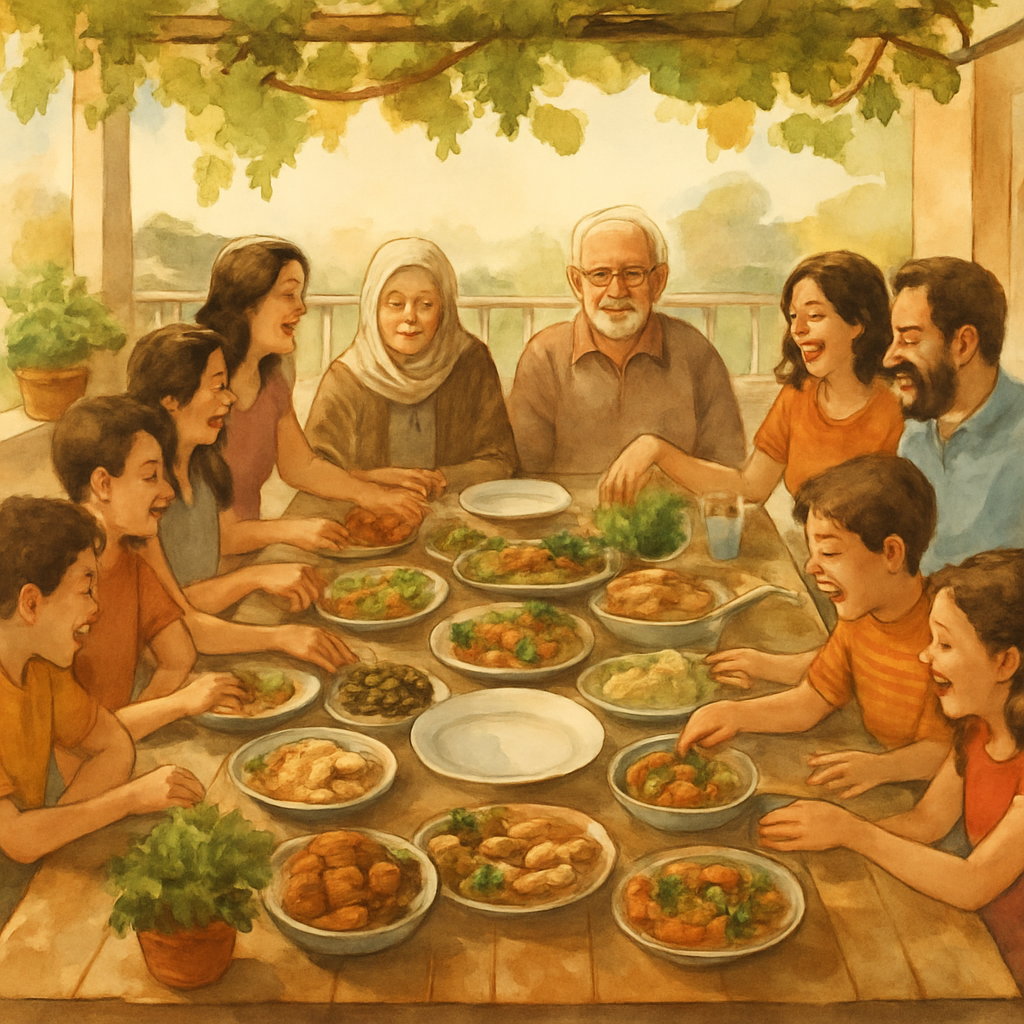
🎨 Illustration prompt
A wide shot of a Levantine family Sunday lunch — fifteen people around a long wooden table on a sun-warmed balcony, with potted basil and a grapevine overhead. The food fills the center of the table. At one end sit Teta and Jiddo, an older couple, with one untouched white plate between them. Children, aunts, and uncles laugh and pass dishes. The empty plate is the quiet center of the image. Watercolor style, warm afternoon light. No text in the image.
عِندَما كانَت سارة صَغيرَة، سَأَلَت مَرَّة عن الصَّحن. ضَحِكَت تيتا قَليلًا وقالَت: "هذا مَكانٌ لِشَخصٍ عَزيز." لَم تَقُل أَكثَر من ذلك. وسارة، في ذلك اليَوم، لَم تَسأَل أَكثَر.
السَّنَوات مَرَّت. سارة كَبِرَت. صارَت في الثَّانِيَة عَشرَة من عُمرِها. وفي كُلِّ أَحَد، كانت تَرى الصَّحن الفَارِغ، وتَتَذَكَّر كَلِمات تيتا، وتَفهَم أَنَّ خَلف الصَّحن قِصَّةً ما — قِصَّة لا أَحَد يَتَكَلَّم عَنها.
عَمَّتُها لا تَتَكَلَّم عَنها. عَمُّها لا. أَبوها لا. حَتَّى أُمُّها، عِندَما تَجلِس إلى جانِب الصَّحن، تَنظُر إلَيه لَحظَة ثُمَّ تُحَوِّل عَينَيها.
When Sara was little, she once asked about the plate. Teta laughed softly and said, "This is a place for someone dear." She didn't say more than that. And Sara, that day, didn't ask more.
The years passed. Sara grew up. She turned twelve. And every Sunday, she would see the empty plate, remember Teta's words, and understand that behind the plate there was a story — a story no one spoke about.
Her aunt didn't speak about it. Her uncle didn't. Her father didn't. Even her mother, when she sat beside the plate, would glance at it for a moment and then look away.
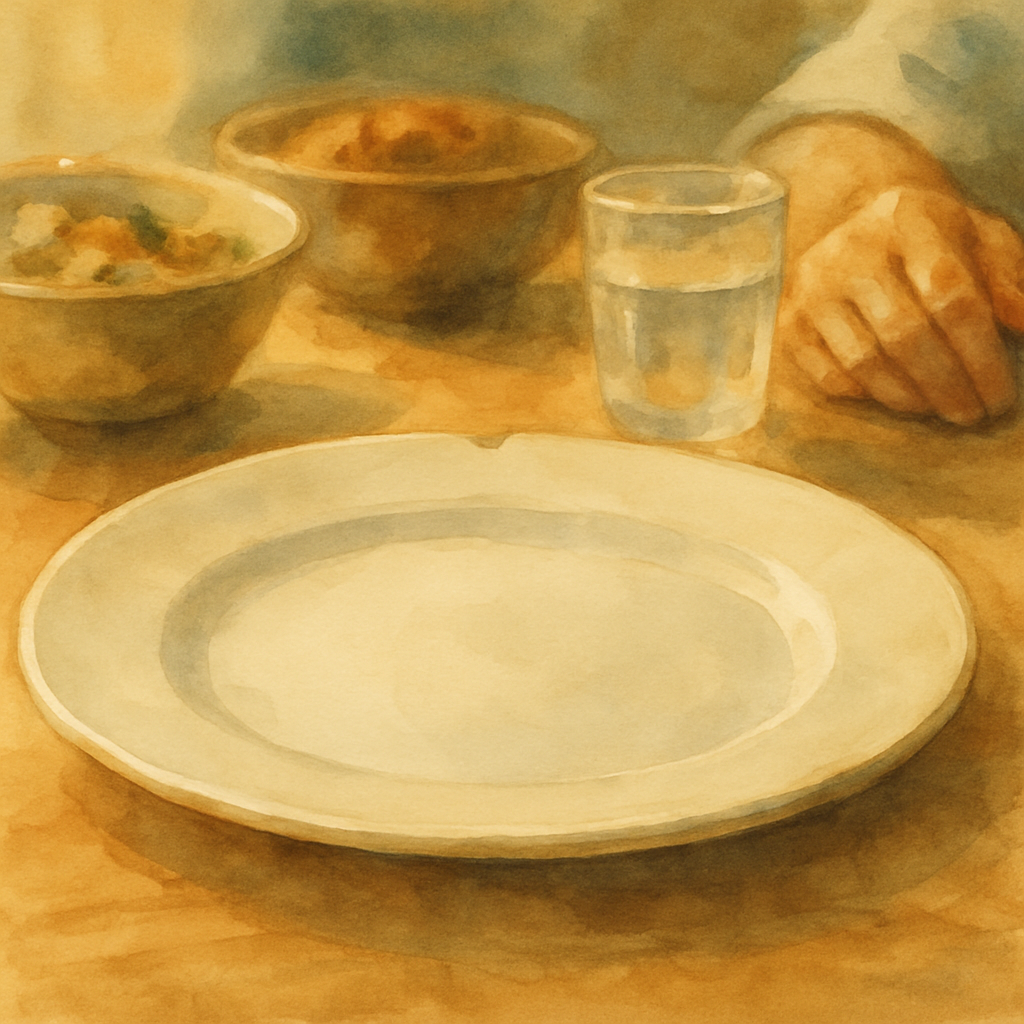
🎨 Illustration prompt
A close-up of the empty white plate on the table from a child's eye-level view. Around it, slightly out of focus, are bowls of food, a glass of water, and the edge of Teta's hand resting near it. The plate has a tiny chip on the rim, suggesting it has been there a long time. Warm light, watercolor style, soft tones. No text in the image.
في ذلك الأَحَد، قَرَّرَت سارة أن تَسأَل.
كانوا قَد انتَهَوا من الأَكل. الكِبار يَشرَبون القَهوَة على الشُّرفَة. الأَولاد يَلعَبون في الغُرفَة الأُخرى. تيتا كانت تَجمَع الصُّحون ببُطء.
اقتَرَبَت سارة من تيتا. "تيتا،" قالَت، "الصَّحن الفَارِغ... لِمَن هو؟"
تَوَقَّفَت يَد تيتا. لَحظَة طَويلَة. ثُمَّ وَضَعَت الصُّحون بِهُدوء، ونَظَرَت إلى سارة نَظرَة لَم تَرَها سارة من قَبل — نَظرَةً فيها شَيءٌ قَديم، شَيءٌ كانَ في انتِظار.
"تَعالَي مَعي بَعد الغَداء،" قالَت تيتا. "نَمشي قَليلًا. سأَحكي لكِ."
That Sunday, Sara decided to ask.
They had finished eating. The grown-ups were drinking coffee on the balcony. The children were playing in the other room. Teta was slowly gathering the plates.
Sara came close to Teta. "Teta," she said, "the empty plate… who is it for?"
Teta's hand paused. A long moment. Then she set the plates down quietly, and looked at Sara with a look Sara had never seen before — a look with something old in it, something that had been waiting.
"Come with me after lunch," Teta said. "Let's walk a little. I'll tell you."
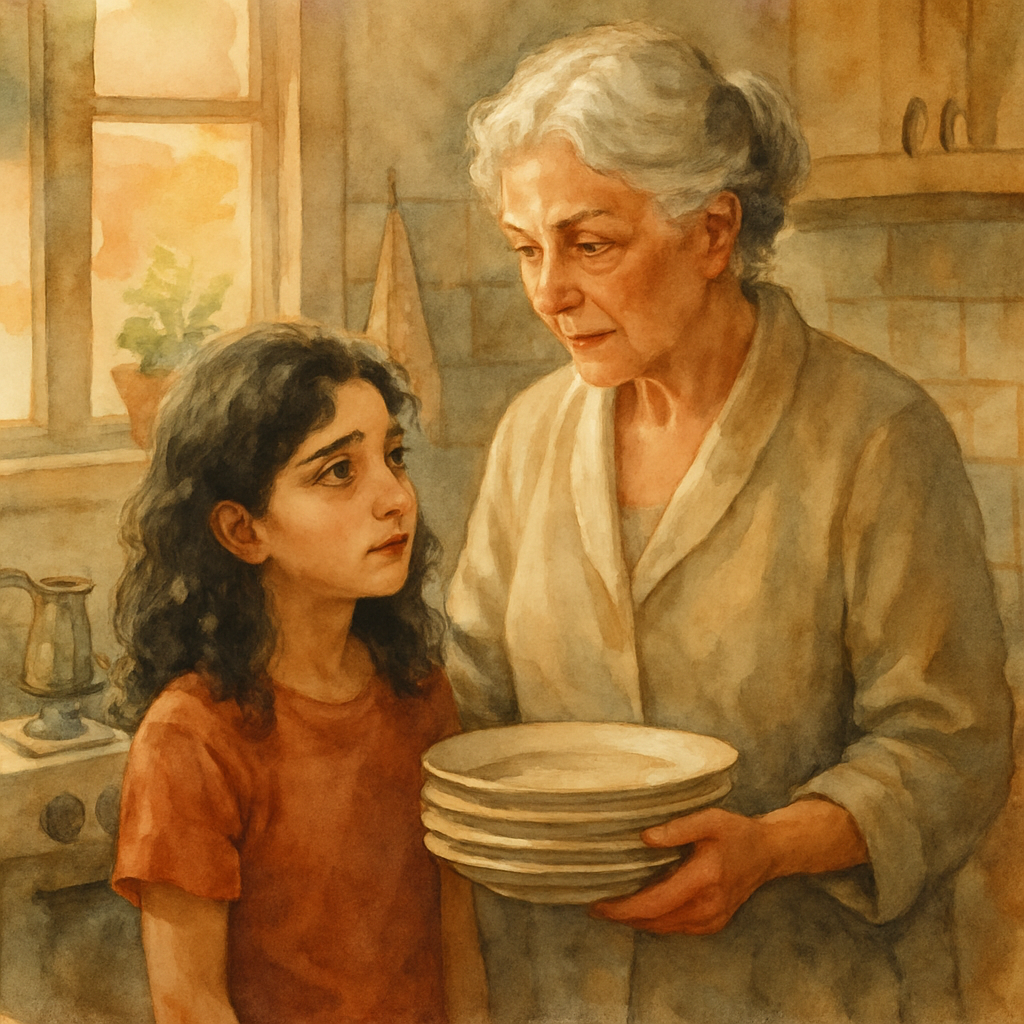
🎨 Illustration prompt
Sara, a 12-year-old girl with dark wavy hair, standing close to Teta in a warm Levantine kitchen. Teta — silver-haired, wearing a soft housecoat — holds a stack of plates but has paused mid-motion. She is looking down at Sara with a tender, serious expression. Late afternoon light through a window. The kitchen is full of small details: a coffee pot on the stove, a hanging dishcloth, a small plant on the sill. Watercolor style. No text in the image.
بَيْنَ الفُصُول · Between the Chapters
Stop for a moment.
Are there things you've always noticed in your family — a habit, an object, a small ritual — but never asked about? What do you think might be behind them?
الفَصْلُ الثَّاني · Chapter Two
Mariam
مَشَت سارة وتيتا بِبُطء في شَوارِع القَريَة. الشَّمس كانَت تَميل نَحو الغُروب. الحَجَر القَديم في الجُدران كان دافِئًا تَحت أَصابِع تيتا.
"كُنّا خَمس أَخَوات،" بَدأَت تيتا. "أَنا، ونَجلاء، وثُرَيّا، وسَلوى — ومَريَم. مَريَم كانَت الأَصغَر."
ابتَسَمَت تيتا قَليلًا.
"مَريَم كانت تُحِبّ الكُتُب. كانت طالِبَة جامِعِيَّة. في سَنَة 1976، كان عُمرُها تِسعَ عَشرَة سَنَة. كانت تَدرُس الأَدَب في بَيروت."
سارة كانَت تَستَمِع، لا تَتَكَلَّم.
"وفي تِلكَ السَّنَة،" قالَت تيتا، "كانَت الحَرب قَد بَدَأَت."
Sara and Teta walked slowly through the village streets. The sun was tilting toward the horizon. The old stone in the walls was warm under Teta's fingers.
"We were five sisters," Teta began. "Me, and Najlaa, and Thurayya, and Salwa — and Mariam. Mariam was the youngest."
Teta smiled a little.
"Mariam loved books. She was a university student. In 1976, she was nineteen. She was studying literature in Beirut."
Sara listened, not speaking.
"And that year," Teta said, "the war had begun."
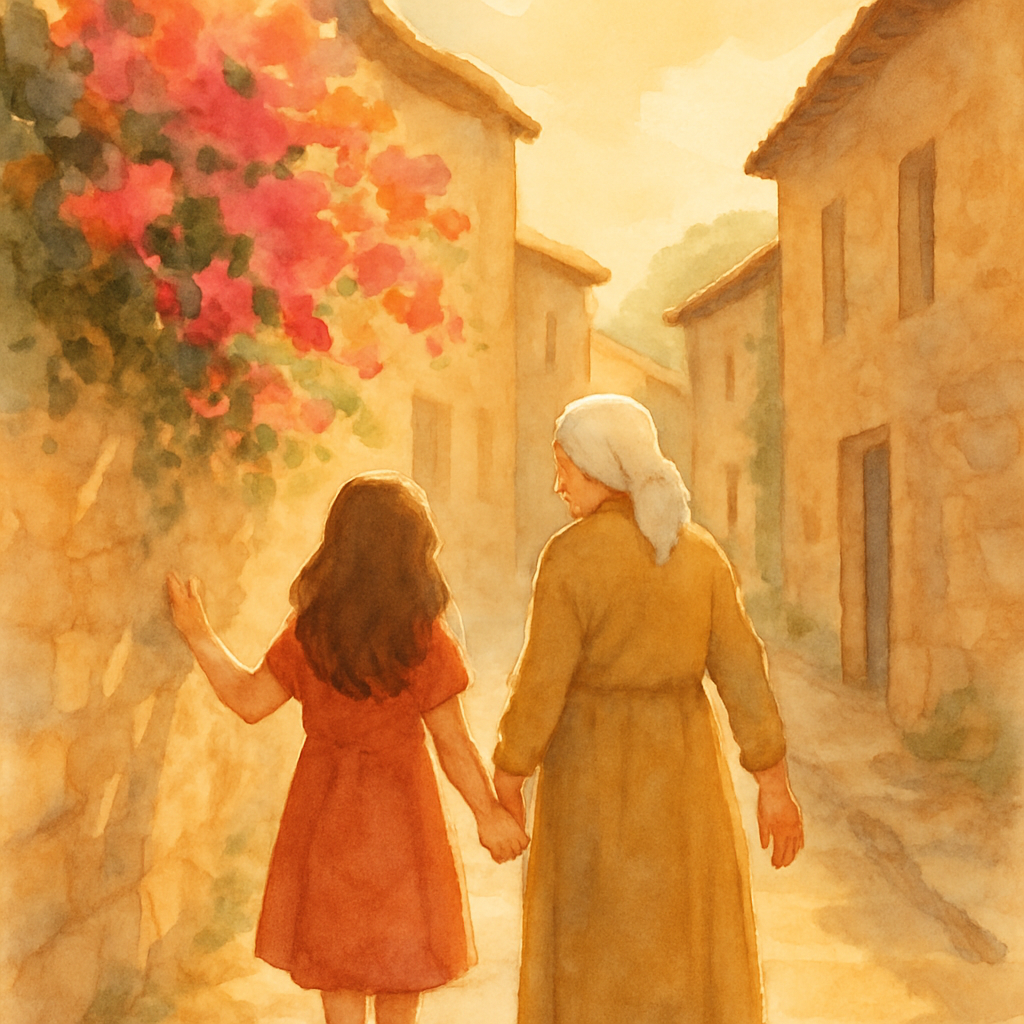
🎨 Illustration prompt
Sara and Teta walking together down a narrow village street with old stone houses on either side. Bougainvillea spills over a wall. The late afternoon sun makes everything golden. Teta has one hand trailing along the stone wall, the other linked gently with Sara's. They are seen from slightly behind. Watercolor style, soft warm Mediterranean palette. No text in the image.
تَوَقَّفَت تيتا أَمام شَجَرَة زَيتون قَديمَة. جَلَسَت على حَجَر تَحتها. سارة جَلَسَت بِجَانِبها.
"في مَساءٍ من شَهر تِشرين، خَرَجَت مَريَم لِتَزور صَديقَتها في الجِهَة الأُخرى من بَيروت. قالَت إنَّها سَتَعود قَبل اللَّيل. كانت تَلبَس مِعطَفًا أَزرَق، وتَحمِل حَقيبَة فيها كِتاب."
سَكَتَت تيتا. النَّسيم حَرَّك أَوراق الزَّيتون فَوقَهما.
"لَم تَعُد، يا سارة. لا في تِلكَ اللَّيلَة، ولا في اليَوم التَّالي، ولا بَعدَه. بَحَثنا في كُلِّ مَكان. ذَهَبَ أَبوها — جِدُّ جِدِّك — إلى كُلِّ مُستَشفى، إلى كُلِّ مَركَز، إلى كُلِّ شَخص قد يَعرِف شَيئًا. سَأَلَت أُمُّها كُلَّ جارَة. صَلَّينا. اِنتَظَرنا."
"بَعد سَنَتَين، قالوا لنا: 'رُبَّما ماتَت.' رُبَّما. ولكن لا جَسَد. لا قَبر. لا خَتْم."
Teta stopped in front of an old olive tree. She sat on a stone beneath it. Sara sat beside her.
"On an evening in October, Mariam went out to visit her friend on the other side of Beirut. She said she'd be back before night. She was wearing a blue coat and carrying a bag with a book in it."
Teta was quiet. The breeze moved the olive leaves above them.
"She didn't come back, Sara. Not that night, not the next day, not after. We searched everywhere. Her father — your great-grandfather — went to every hospital, every center, every person who might know something. Her mother asked every neighbor. We prayed. We waited."
"After two years, they told us: 'She probably died.' Probably. But no body. No grave. No closure."
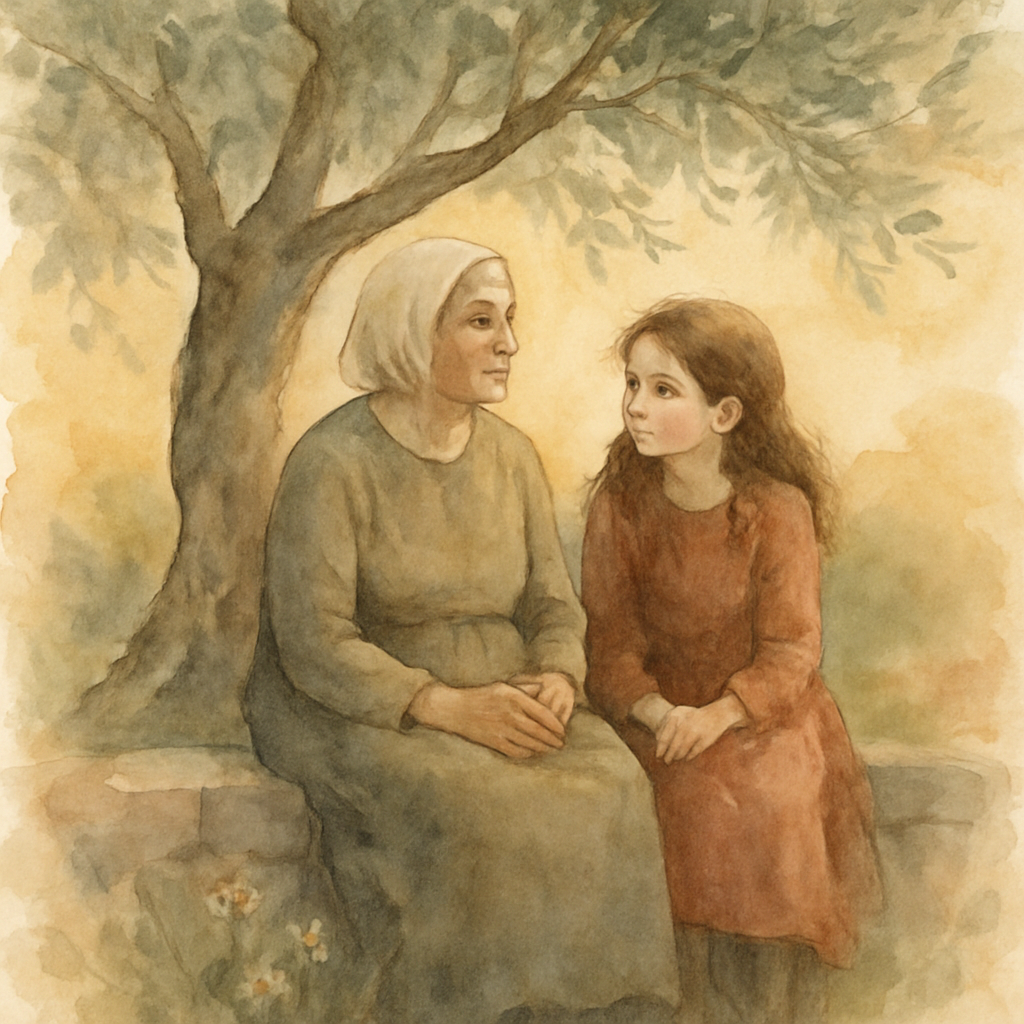
🎨 Illustration prompt
Teta and Sara sitting together on a low stone wall beneath an old olive tree. Teta is looking off into the distance, her hands folded in her lap. Sara watches her face carefully, leaning slightly toward her. The olive leaves are silver-green, the light low and golden. A few small wildflowers grow near the base of the tree. The mood is tender and quiet, not dramatic. Watercolor style. No text in the image.
نَظَرَت سارة إلى تيتا. عَينا تيتا كانَتا لامِعَتَين، ولكنَّها لَم تَبكِ.
"تيتا..." قالَت سارة بِصَوت صَغير. "والصَّحن؟"
تيتا أَخَذَت نَفَسًا طَويلًا.
"الصَّحن لِمَريَم. مُنذُ سَنَة 1978 ونَحنُ نَضَعُهُ على الطَّاوِلَة كُلَّ أَحَد. لِأَنَّنا لا نَعرِف. لِأَنَّ أَحَدًا لَم يَقُل لنا بِالتَّأكيد. لِأَنَّ الفَقْد بِلا خَتْم — هذا أَصعَب أَنواع الفَقْد."
"الصَّحن لها، يا سارة. في حال عادَت يَومًا ما. في حال فَتَحَت الباب ودَخَلَت. في حال كان العالَم أَكبَر مِمّا نَعرِف."
سَكَتَت سارة طَويلًا. ثُمَّ سَأَلَت: "هَل ما زِلتِ تَنتَظِرين، تيتا؟"
ابتَسَمَت تيتا اِبتِسامَةً صَغيرَة، حَزينَة.
"الانْتِظار والحَنين والأَمَل — كُلُّها تَعيشُ في نَفسِ المَكان، يا حَبيبَتي. لا أَعرِف اسمَ ما أَشعُر بِه. أَعرِف فَقَط أَنَّ صَحنَها يَجِب أن يَكون هُناك."
Sara looked at Teta. Teta's eyes were shining, but she didn't cry.
"Teta…" Sara said in a small voice. "And the plate?"
Teta took a long breath.
"The plate is for Mariam. Since 1978 we have set it on the table every Sunday. Because we don't know. Because no one ever told us for certain. Because loss without closure — that is the hardest kind of loss."
"The plate is for her, Sara. In case she comes back one day. In case she opens the door and walks in. In case the world is bigger than we know."
Sara was quiet for a long time. Then she asked, "Are you still waiting, Teta?"
Teta smiled a small, sad smile.
"Waiting and longing and hope — they all live in the same place, my dear. I don't know the name of what I feel. I only know that her plate has to be there."
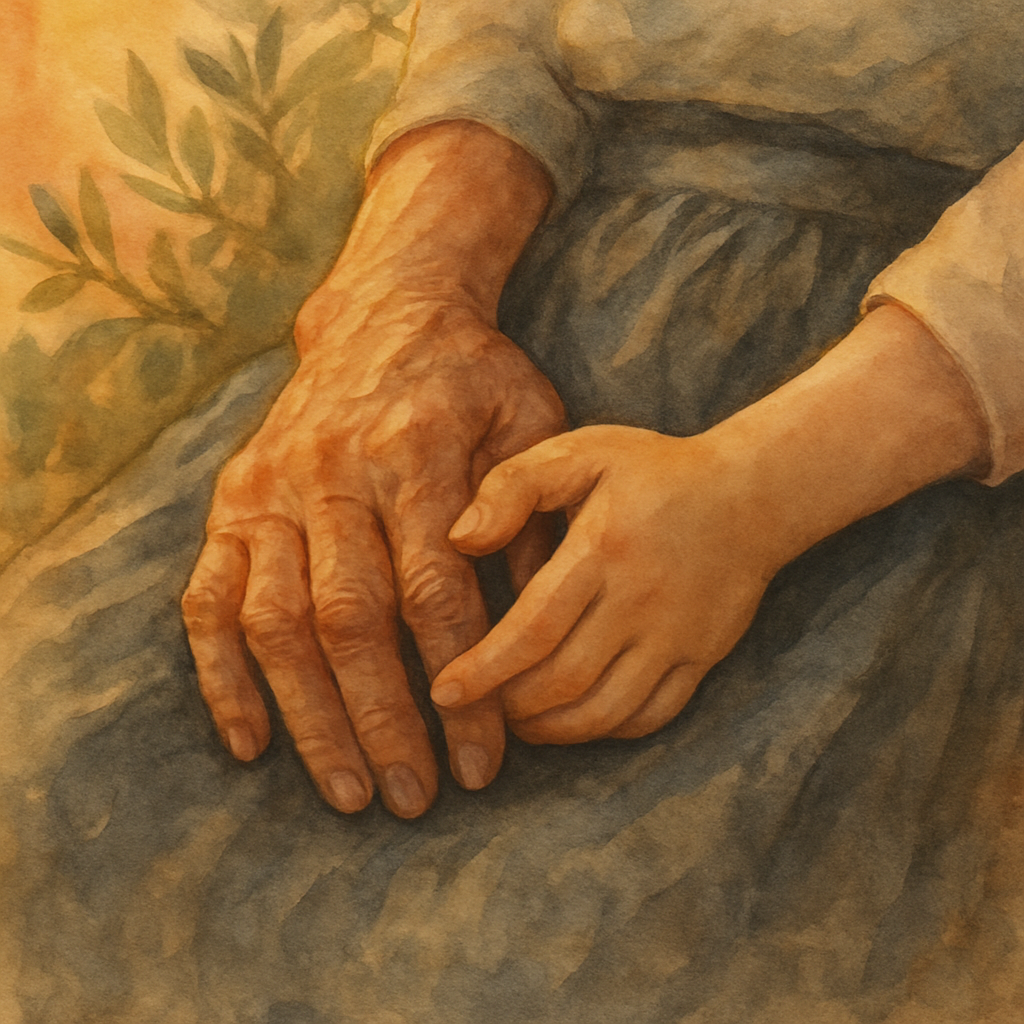
🎨 Illustration prompt
A close-up of Teta's weathered hand and Sara's smaller hand clasped together on the rough fabric of Teta's grey skirt. The light is the last golden light before dusk. In the background, very softly out of focus, the olive tree's silver leaves. The image is intimate and still. Watercolor style, warm and gentle. No text in the image.
بَيْنَ الفُصُول · Between the Chapters
Stop again.
Teta said: "Waiting and longing and hope all live in the same place." Hope and grief sometimes share one room in our hearts. Have you ever held both at the same time — missing someone, but also hoping?
الفَصْلُ الثَّالِث · Chapter Three
A Plate of Her Own
في الطَّريق إلى البَيت تِلكَ اللَّيلَة، لَم تَتَكَلَّم سارة كَثيرًا. كانت تُفَكِّر في مَريَم. في مِعطَفِها الأَزرَق. في الكِتاب في حَقيبَتها. في صَحنِها الَّذي ظَلَّ فَارِغًا ثَمانِيًا وأَربَعين سَنَة.
ثَمانِيَة وأَربَعون أَحَدًا في السَّنَة. مَضروبَة في ثَمانِيَة وأَربَعين سَنَة. أَكثَر من أَلفَين من الأَحَد. وفي كُلِّ مَرَّة، صَحنٌ نَظيف، فَارِغ، يَنتَظِر.
لَم تَنَم سارة جَيِّدًا تِلكَ اللَّيلَة. كانت تَرى في خَيالها الصَّحن، والطَّاوِلَة، وتيتا.
في الصَّباح، عَرَفَت ما سَتَفعَل.
On the way home that night, Sara didn't talk much. She was thinking about Mariam. About her blue coat. About the book in her bag. About her plate that had stayed empty for forty-eight years.
Forty-eight Sundays a year. Multiplied by forty-eight years. More than two thousand Sundays. And every time, a clean, empty plate, waiting.
Sara didn't sleep well that night. She kept seeing in her mind the plate, the table, and Teta.
In the morning, she knew what she would do.
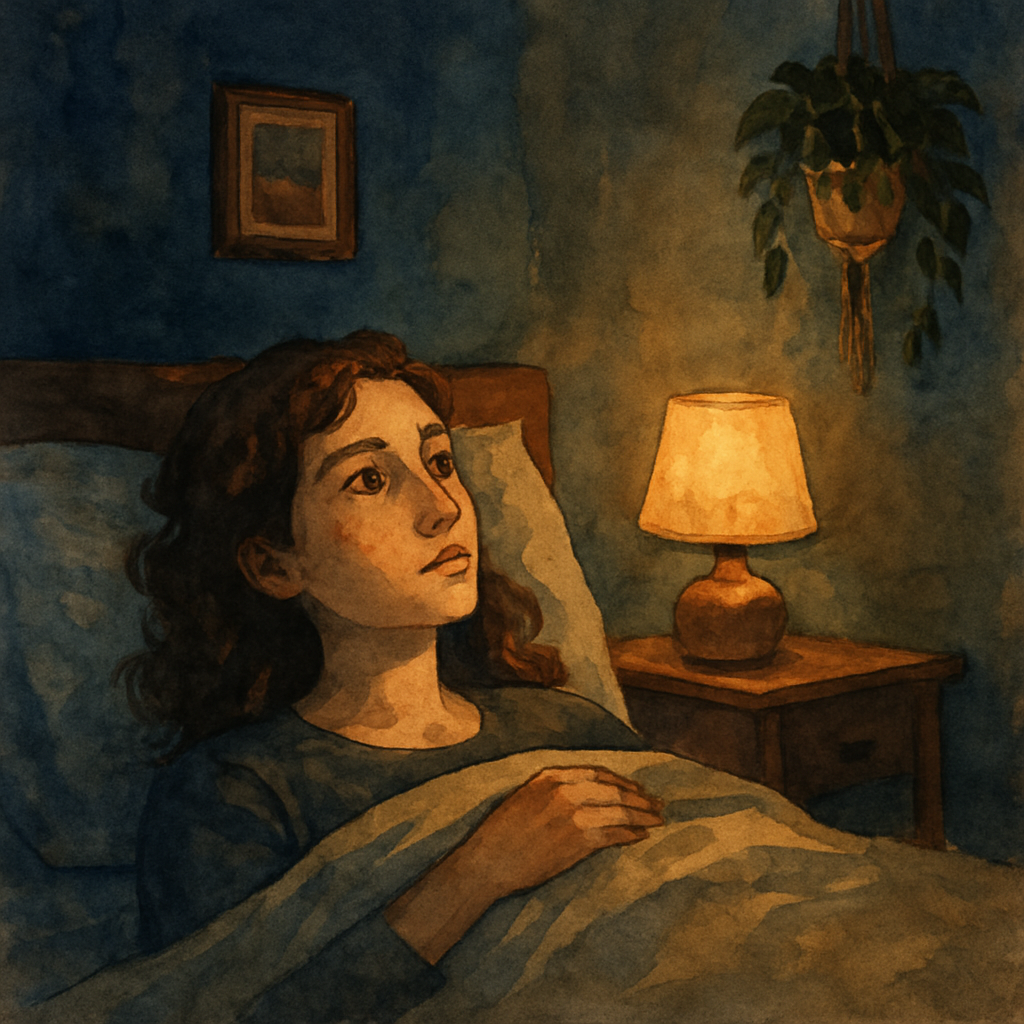
🎨 Illustration prompt
Sara lying awake in her bed at night, looking up at the ceiling, the blanket pulled up to her chest. A small lamp on her bedside table glows softly. On the wall, a small framed photograph (not legible) and a hanging plant. Her expression is thoughtful, not sad — like someone solving a quiet problem. Watercolor style, deep warm night tones. No text in the image.
الأَحَد التَّالي، اجتَمَعَت العائِلَة كَالعادَة. الطَّاوِلَة مَملوءَة. الضَّحِك يَملأ الغُرفَة. تيتا كانَت تَضَع آخِرَ طَبَق على الطَّاوِلَة — صَحن العَدَس بِالحامِض.
جَلَسوا. بَدَأَ جِدّو يُقَطِّع الخُبز.
ثُمَّ، بِهُدوء، مَدَّت سارة يَدَها إلى صَحن مَريَم.
أَخَذَت مِلعَقَة صَغيرَة من الأَرُزّ، ووَضَعَتها في الصَّحن. ثُمَّ مِلعَقَة من العَدَس. قِطعَة صَغيرَة من سَلَطَة الخِيار. وَرَقَة نَعنَع. قِطعَة من الخُبز السَّاخِن.
الطَّاوِلَة سَكَتَت.
عَمُّها تَوَقَّفَ عَن الكَلام في مُنتَصَف الجُملَة. أُمُّها وَضَعَت كَأسَها بِبُطء. عَمَّتها نَظَرَت إلى تيتا.
The next Sunday, the family gathered as usual. The table was full. Laughter filled the room. Teta was setting down the last dish — the lentils with lemon.
They sat. Jiddo began cutting the bread.
Then, quietly, Sara reached toward Mariam's plate.
She took a small spoonful of rice and placed it on the plate. Then a spoonful of lentils. A small piece of cucumber salad. A mint leaf. A piece of warm bread.
The table went silent.
Her uncle stopped speaking in the middle of his sentence. Her mother set her glass down slowly. Her aunt looked at Teta.
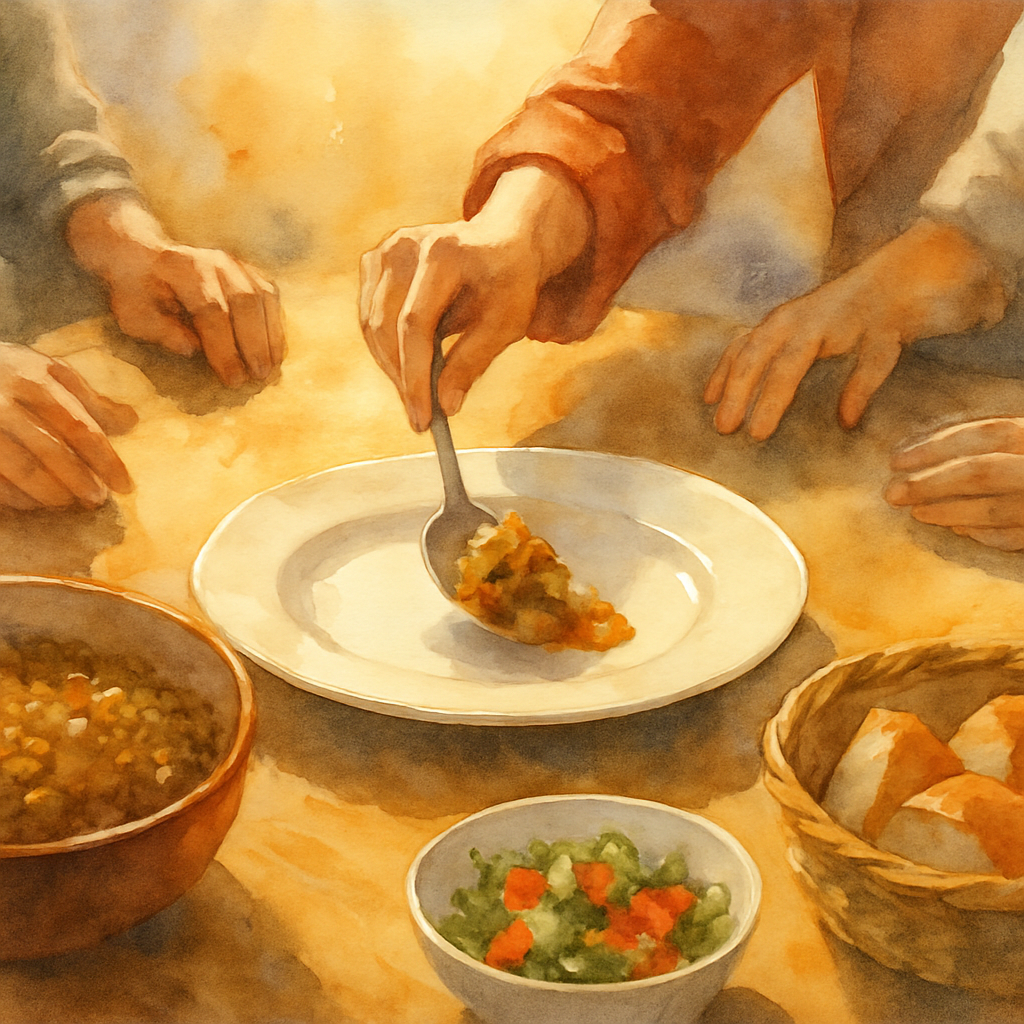
🎨 Illustration prompt
A close-up of Sara's hand carefully placing a spoonful of food onto the previously empty white plate. The other family members' hands and arms are visible around the edges of the frame — all paused, mid-motion. A bowl of lentils, a basket of bread, a small dish of salad on the table. The light is bright and warm. The mood is suspended, breath-held. Watercolor style. No text in the image.
تيتا لَم تَتَحَرَّك في البِدايَة. كانت تَنظُر إلى الصَّحن. إلى الأَرُزّ. إلى وَرَقَة النَّعنَع.
ثُمَّ بَدَأَت تَبكي. لا بُكاءَ صاخِبًا. بُكاء العَجائِز — هادِئ، بَطيء، الدُّموع تَأتي من جانِب العَين، تَنزِل بِبُطء.
قامَت تيتا من كُرسِيِّها. مَشَت حَول الطَّاوِلَة إلى سارة. اِنحَنَت، وقَبَّلَت رَأسَها.
"يا حَبيبَتي،" قالَت تيتا، وصَوتُها صَغير. "أَربَعَة وثَمانون عامًا عِشتُ. ثَمانِيَة وأَربَعون عامًا وأَنا أَضَع هذا الصَّحن فَارِغًا. كُنتُ أَنتَظِرها. كَأَنَّ تَركَه فَارِغًا يَترُك لها مَكانًا تَعود إلَيه."
سَكَتَت لَحظَة، ثُمَّ قالَت:
"رُبَّما حانَ الوَقت. رُبَّما حانَ الوَقت أن نُطعِمَها أَيضًا."
Teta didn't move at first. She was looking at the plate. At the rice. At the mint leaf.
Then she began to cry. Not a loud cry. The crying of old people — quiet, slow, the tears coming sideways from the eye, falling slowly.
Teta stood up from her chair. She walked around the table to Sara. She bent down and kissed the top of her head.
"My dear," Teta said, her voice small. "I have lived eighty-four years. Forty-eight of them I have set this plate empty. I was waiting for her. As if leaving it empty kept a space for her to come back to."
She paused, then said:
"Maybe it's time. Maybe it's time we fed her too."
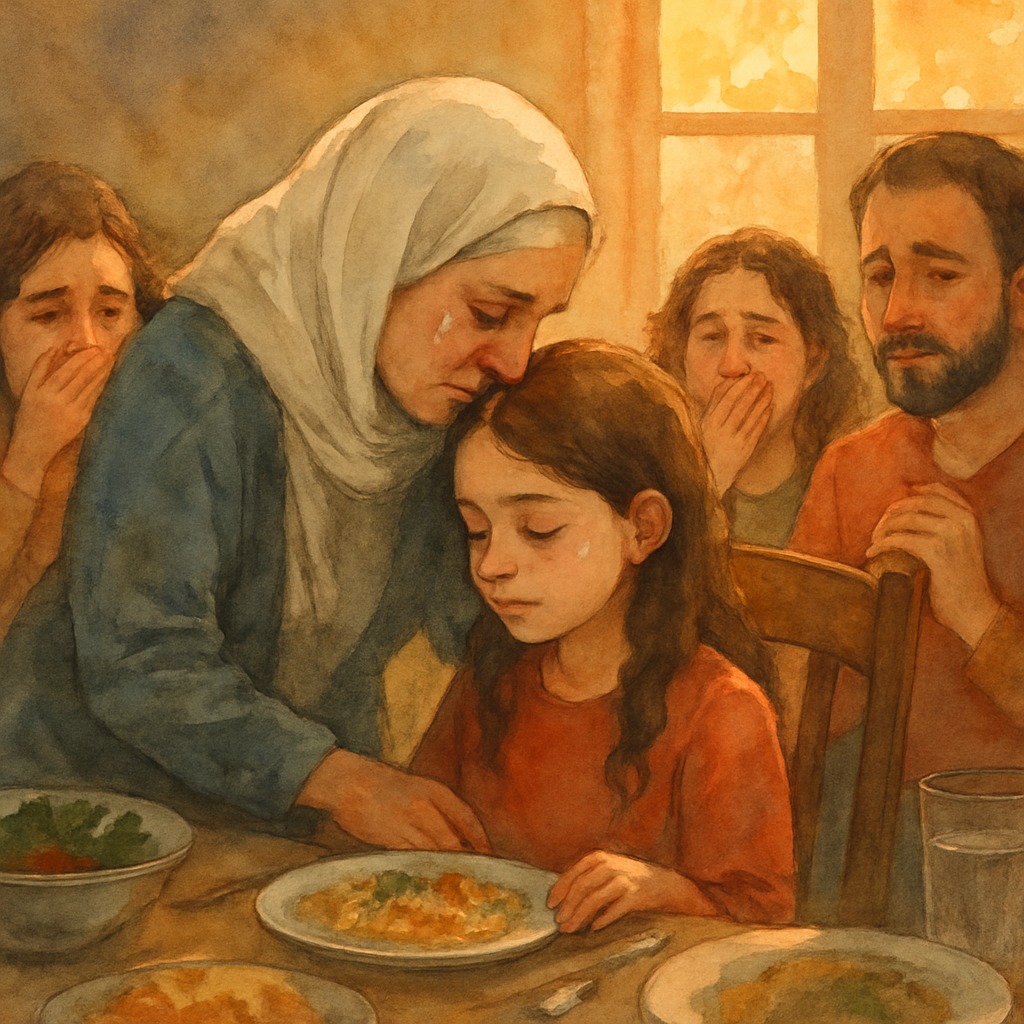
🎨 Illustration prompt
Teta standing beside Sara's chair at the family table, bending down to kiss the top of Sara's head. Teta's eyes are closed, a few quiet tears on her cheek. Sara sits very still, her hand still near Mariam's now-filled plate. The other family members watch — some with hands over their mouths, some with tears, all gentle. The light is warm and golden through a window. Watercolor style, deeply tender. No text in the image.
مِن ذلك اليَوم، صارَ صَحن مَريَم يَمتَلِئ كُلَّ أَحَد. مِلعَقَة من كُلِّ طَبَق. وَرَقَة نَعنَع. قِطعَة خُبز.
لَم تَعُد العائِلَة تَنتَظِر عَودَتَها. مَريَم لَن تَدخُل من الباب. هذا صَار واضِحًا، حَتَّى لِتيتا.
ولكنَّهُم يَتَذَكَّرونَها — كُلَّ أَحَد، بِالطَّعام، بِالمَكان، بِالاسم. عَمُّها بَدَأَ يَحكي قِصَصًا عَنها — كَيفَ كانَت تُحِبّ التِّين، كَيفَ كانَت تَقرَأ بِصَوتٍ عالٍ في الشُّرفَة، كَيفَ كانَت تَغَنّي وهي تَغسِل الصُّحون. قِصَص لَم تَسمَعها سارة من قَبل.
في عُمر الثَّانِيَة عَشرَة، فَعَلَت سارة لِعائِلَتها شَيئًا لَم يَكُن أَحَدٌ يَعرِف أَنَّهُ ناقِص.
الصَّحن لَم يَعُد فَارِغًا. صارَ مَملوءًا بِالذِّكرى.
From that day, Mariam's plate filled every Sunday. A spoonful of each dish. A mint leaf. A piece of bread.
The family no longer waited for her to come back. Mariam was not going to walk through the door. That had become clear, even to Teta.
But they remembered her — every Sunday, with food, with a place, with a name. Her uncle began telling stories about her — how she loved figs, how she read aloud on the balcony, how she sang while washing dishes. Stories Sara had never heard before.
At twelve years old, Sara had done something for her family that no one knew was missing.
The plate was no longer empty. It was full of remembering.
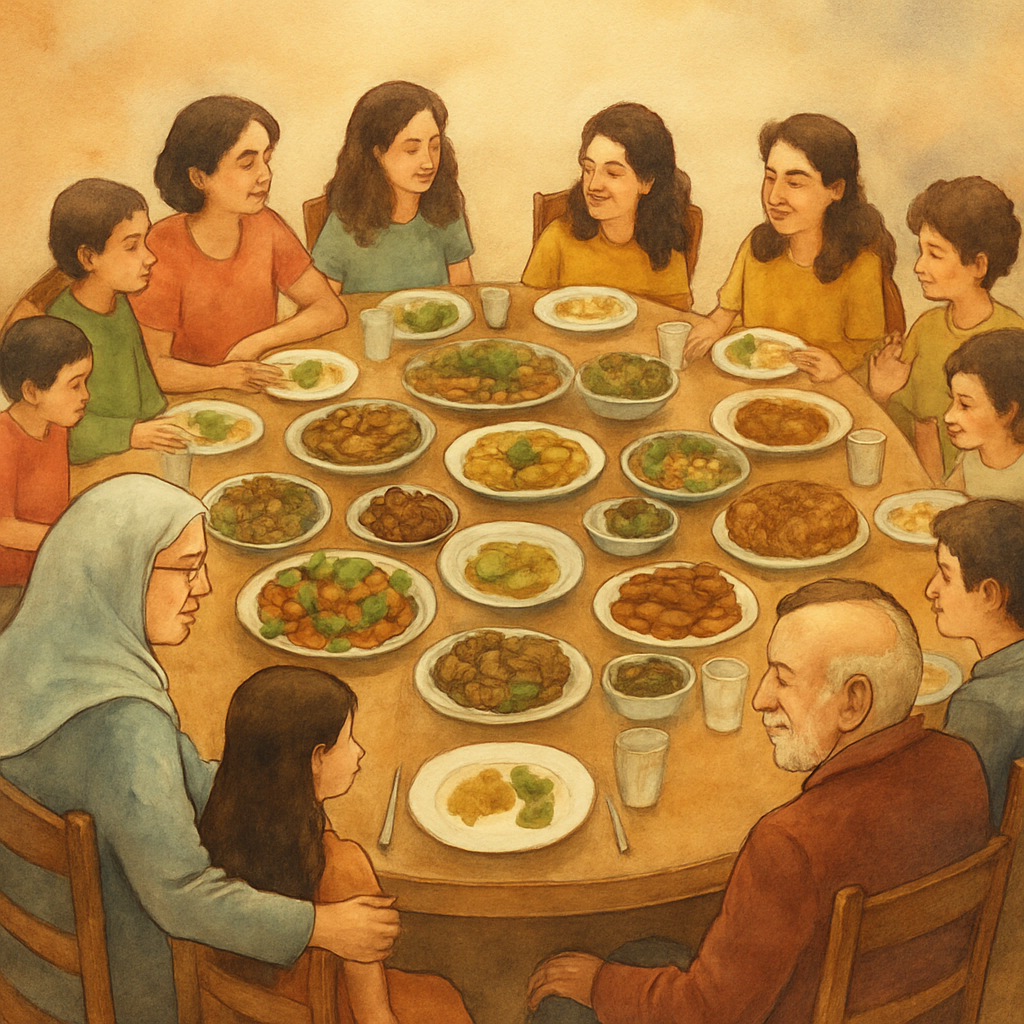
🎨 Illustration prompt
A wide overhead view of the same family Sunday table from the cover — fifteen people, food everywhere — but now the plate at the head of the table, between Teta and Jiddo, has a small portion of food on it: a spoonful of rice, a spoonful of lentils, a piece of cucumber, a mint leaf, a piece of bread. The family is mid-meal, talking softly. Teta has one hand resting on the back of Sara's chair. The light is warm and the mood is full, complete, peaceful. Watercolor style. No text in the image.
الأَمَل والفَقْد أَحيانًا يَعيشانِ في نَفس المَكان.
Hope and grief sometimes live in the same place.
كَلِمَاتٌ جَدِيدَة · New Words
| Arabic | How to say it | English |
|---|---|---|
صَحْن |
sahn | plate |
فَارِغ |
fā-righ | empty |
مَكَان |
ma-kān | place / spot |
عَائِلَة |
'ā-'i-lah | family |
أَخَوَات |
a-kha-wāt | sisters |
حَرْب |
harb | war |
اِنْتِظَار |
in-ti-zār | waiting |
أَمَل |
a-mal | hope |
فَقْد |
faqd | loss |
غَيْبَة |
ghay-bah | absence |
حَنِين |
ha-nīn | longing |
خَتْم |
khatm | closure / sealing |
ذِكْرَى |
dhik-rā | memory / remembering |
جَامِعَة |
jā-mi-'ah | university |
🗣️ Talk about it
These are not test questions. They are conversation starters — ideal for a quiet kitchen table chat, or in the car.
- Sara noticed the empty plate for years before she asked about it. Why do you think she waited so long? And why do you think she asked when she did?
- Teta said: "Waiting and longing and hope all live in the same place." Can you think of a time in your life — or in someone you love's life — when two opposite feelings lived in the same heart?
- Sara filled the plate without asking permission. Was that the right thing to do? What gave her the courage? What might have happened if Teta had been angry instead?
- The family kept hoping for a long time — even when it became less and less likely. Is hoping for something that may never happen a brave thing or a sad thing? Could it be both?
✏️ Try it (one of these, your choice)
- Set the family table with your own family this week, and notice who is there and who isn't. Is there anyone you miss? What might it look like to make a small space for them?
- Ask an elder in your family about someone they knew who isn't with you anymore. Just listen. Don't take notes unless they ask you to.
- Draw a family meal — your real family, around your real table. Add everyone. If there is anyone you want to remember who isn't here, you can add them too, in whatever way feels right.
- Learn one new word in Arabic from the table above and use it three times this week with someone in your family.
A note for grown-ups reading along
This story touches on the Lebanese Civil War (1975–1990) and the still-open wound of the disappeared (المَفقودون) — an estimated 17,000 Lebanese people who vanished during the war and whose families, decades later, are still without answers, without bodies, without graves. The pain of loss without closure is unlike other grief, and many Lebanese families have carried it quietly across generations.
The story handles this gently. There is no violence on the page. Mariam simply doesn't come home. What the story is really about is the ritual of remembering — the small, weekly gestures by which families hold on to people the world has taken away from them.
If your family carries a similar loss — Lebanese, Palestinian, Syrian, Iraqi, Sudanese, or any family touched by war, displacement, or disappearance — this story may open a door. Read it with your child, not just at them. Pause at the Between the Chapters moments. Let them ask. Let them sit in silence if they need to.
On the Arabic: Tier 4 stories use selective vowel marks — only on harder words. This is closer to grown-up Arabic, and a good challenge for readers who already handle Tier 3 comfortably. If your child stumbles, sit with them. Repetition is still the curriculum.
On the dialect: This story is in Modern Standard Arabic, with Levantine cultural and emotional sensibility. Words like teta (grandma) and jiddo (grandpa) are Levantine spoken Arabic — they appear in dialogue but not in the narration.
— Hayya Beena Naqraa (هَيَّا بِنَا نَقْرَأ)