الشَّرِيط الأَخِير
The Last Cassette
A Hayya Beena Naqraa story · Tier 4 (Novella · رِوَايَة) · For ages 10–12
A short chapter book in three chapters. Heritage learners and intermediate Arabic readers. Vowel marks appear only on harder or less-common words.
Cover page
الشَّرِيط الأَخِير
The Last Cassette
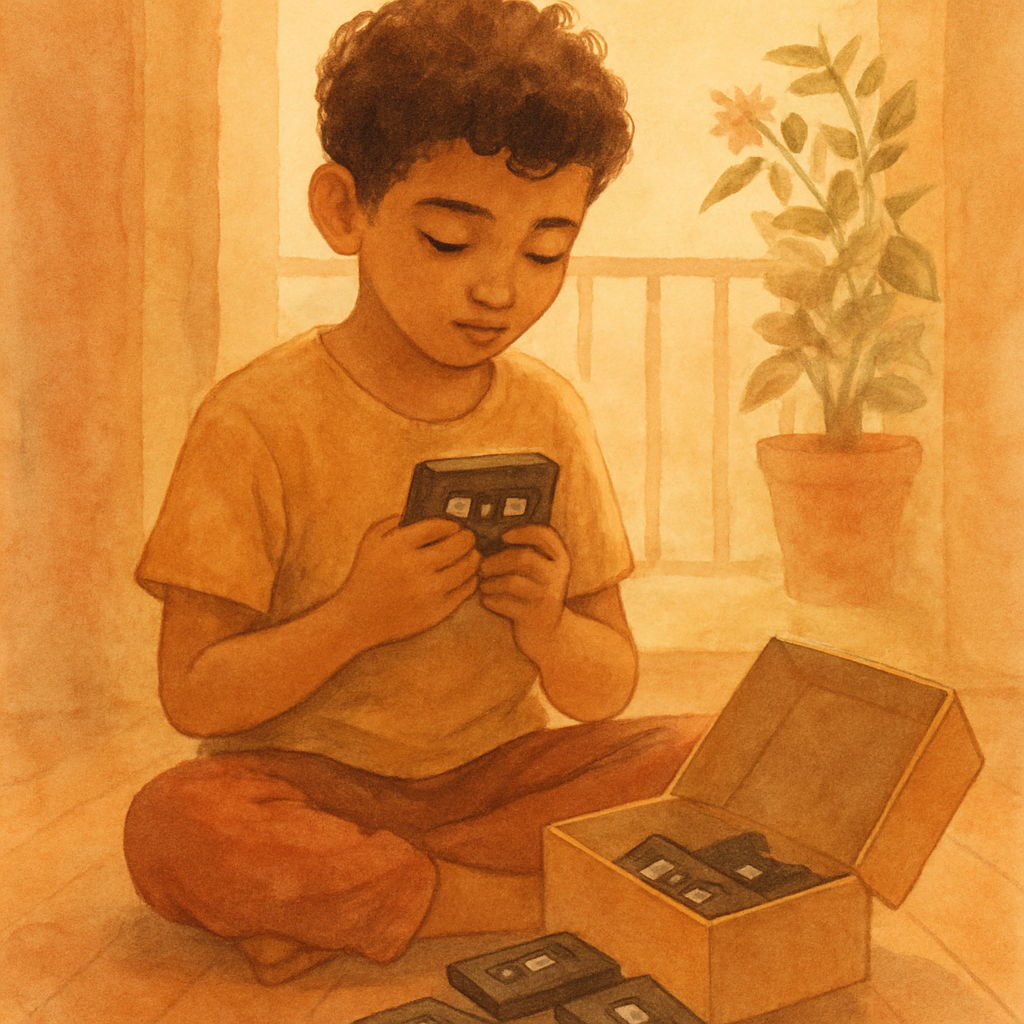
🎨 Illustration prompt
A soft watercolor illustration of a 12-year-old boy with short dark curly hair and warm brown skin, sitting cross-legged on a wooden floor. In front of him, an open shoebox tilted on its side, with several small black cassette tapes spilling gently out. He is holding one cassette close to his chest, looking down at it with quiet curiosity, not sadness. Late afternoon light from a balcony window behind him, with the silhouette of a potted jasmine plant. Watercolor style, warm Levantine palette — terracotta, ochre, soft brown, pale gold. No text in the image. Aspect ratio: 4:5 portrait.
A note before we begin
This book is told in three short chapters. You don't have to read it all at once. After each chapter, there's a small "بَيْنَ الفُصُول · Between the Chapters" moment — a question or a small thing to notice.
The Arabic uses selective vowel marks — only on harder or less common words. Common words go without. This is closer to how grown-up Arabic books are written, and it's a good challenge for readers who are growing.
الفَصْلُ الأَوَّل · Chapter One
The Discovery
في مَساء يَومِ خَميس، طَلَبَت المُعَلِّمَة من كَريم أن يَجلِبَ صورَةً قَديمَةً لِعَائِلَتِه إلى المَدرَسَة.
"أَيَّ صورة؟" سَأَل كَريم أُمَّه.
"اِبحَث في خِزانَتي،" قالَت الأُمّ، وهي تَطبُخ. "هُناك صُندوقٌ قَديم على الرَّفِّ العُلوي. فيه صور كَثيرَة من أَيَّامِ جَدِّك."
كَريم في الثانِيَة عَشرَة من عُمرِه. جَدُّه تُوُفِّيَ قَبل ثَلاث سَنَوات. كَريم يَتَذَكَّرُه قَليلًا — يَدَيه الكَبيرَتَين، ضِحكَتَه، رائِحَة القَهوَة في مَطبَخِه. ولكن صَوتَه — صَوتَه بَدَأ يَختَفي من ذَاكِرَتِه.
On a Thursday evening, Karim's teacher asked him to bring an old family photograph to school.
"Which photo?" Karim asked his mother.
"Look in my closet," his mother said, while she cooked. "There's an old box on the top shelf. It has lots of photos from your grandfather's days."
Karim is twelve years old. His grandfather passed away three years ago. Karim remembers him a little — his big hands, his laugh, the smell of coffee in his kitchen. But his voice — his voice had started to fade from his memory.
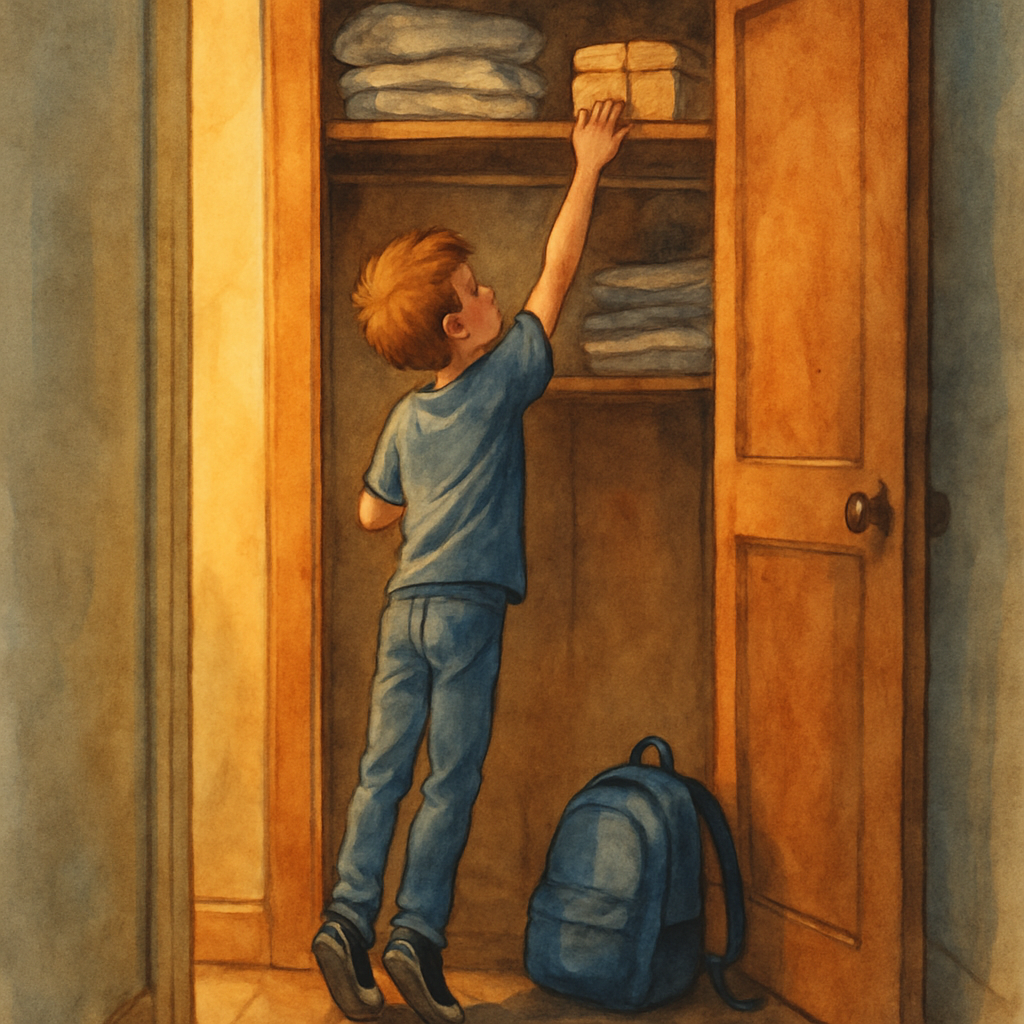
🎨 Illustration prompt
A boy of twelve standing on his toes in a narrow hallway, reaching up toward the top shelf of a wooden closet. The closet door is half open. On the shelf above him are folded blankets, a small wooden box, and a dusty shoebox tied with twine. Soft yellow lamplight from the hallway. The boy's school backpack is slumped on the floor behind him. Watercolor style, warm interior tones. No text in the image.
وَجَدَ كَريم الصُّندوق بِسُهولَة. ولكن خَلفَه، في زاوِيَة الرَّف، رَأَى شَيئًا آخَر — عُلبَة أَحذِيَةٍ قَديمَة، مَربوطَةً بِخَيط.
أَخرَجَها كَريم. كانت ثَقيلَة. فَتَحَها على الأَرض.
في داخِلِها — أَشرِطَة. اِثنا عَشَر شَريطًا صَغيرًا، أَسوَد، كَأَشرِطَة المُوسيقى القَديمَة. كُلُّ شَريطٍ كَتَبَ عَلَيه اسم بِخَطِّ جَدِّه — الخَطّ الَّذي يَعرِفُه كَريم من البِطاقَات الَّتي كان جَدُّه يَكتُبُها في أَعياد الميلاد.
"طُفولَتي في حَلَب." "كَيف قابَلتُ جَدَّتَك." "السَّنَة الَّتي اِنتَقَلتُ فيها إلى لُبنان." "ما أُريدُ أن تَعرِفَه."
Karim found the box easily. But behind it, in the corner of the shelf, he saw something else — an old shoebox, tied with string.
He pulled it out. It was heavy. He opened it on the floor.
Inside — cassette tapes. Twelve small black tapes, like old music cassettes. Each one had a title written on it in his grandfather's handwriting — the handwriting Karim knew from the birthday cards his grandfather used to write.
"My Childhood in Aleppo." "How I Met Your Grandmother." "The Year I Moved to Lebanon." "What I Want You to Know."
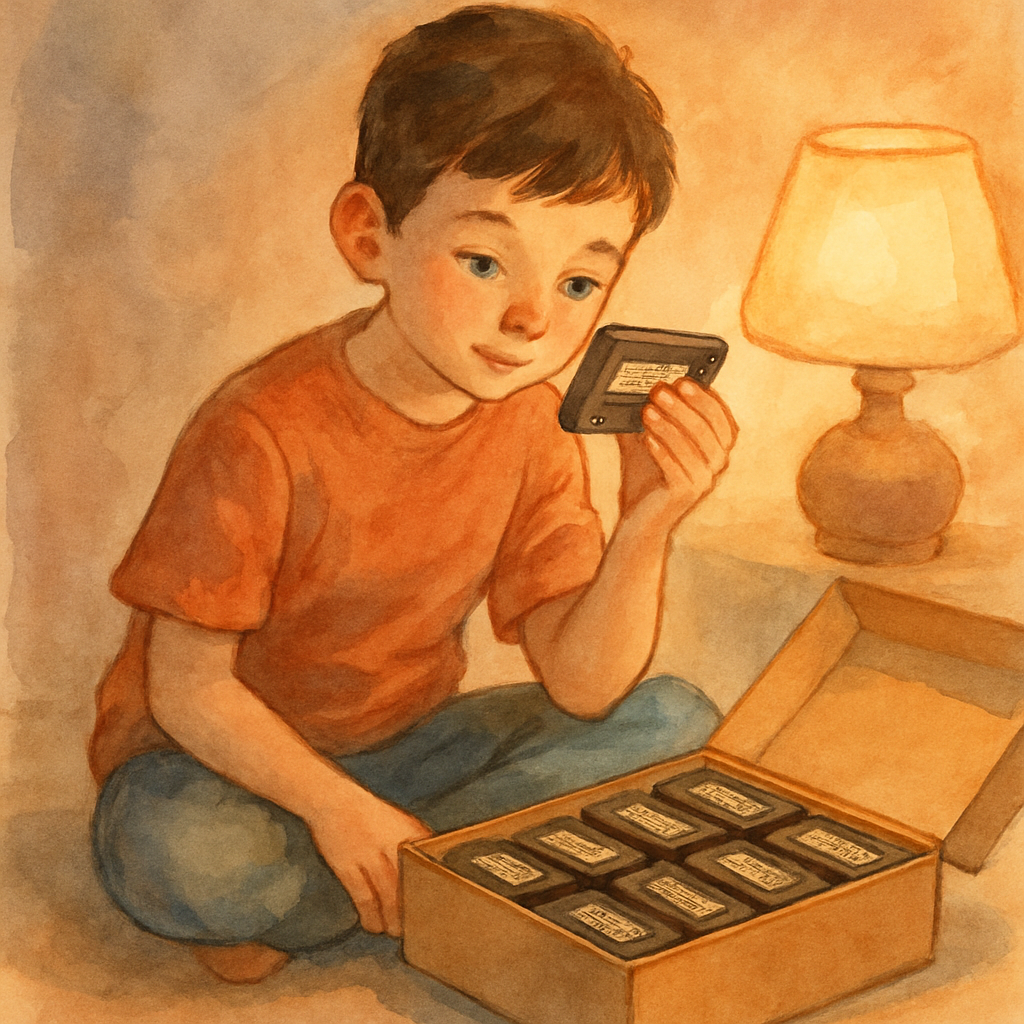
🎨 Illustration prompt
A boy sitting on the floor with an open shoebox in front of him. Inside the box, twelve small black cassette tapes arranged in neat rows, each with a handwritten label in Arabic script (suggested, not legible). The boy holds one cassette up close to his face, reading the label. His expression is one of careful surprise — not shock, but something tender opening. Watercolor style, soft warm tones, light from a nearby lamp. No text legible in the image.
نَزَلَ كَريم إلى المَطبَخ ومَعَه عُلبَة الأَشرِطَة. وَضَعَها على الطاوِلَة.
أُمُّه نَظَرَت إلى العُلبَة. ثُمَّ أَطفَأَت النَّار تَحت الطَّنجَرَة.
"مِن أَين أَتَيتَ بِهذا؟" سَأَلَت بِصَوتٍ هادِئ.
"من خِزانَتِك. خَلفَ صُندوق الصُّوَر."
جَلَسَت أُمُّه. لَمَسَت أَحَدَ الأَشرِطَة بِأَصابِعِها.
"اِكتَشَفتَ شَيئًا لَم أَكُن أَعرِف أَنَّه ما زال هُناك،" قالَت. "جَدُّك سَجَّلَ هذِه الأَشرِطَة في السَّنَة الأَخيرَة من حَياتِه. قال لي مَرَّة: 'سَأَترُك لِكَريم صَوتي. حَتَّى لا يَنساني.' ولكِنَّني... لَم أَستَطِع أن أَسمَعَها بَعدَه. كانت ثَقيلَة عَلَيَّ."
Karim went down to the kitchen with the box of tapes. He set it on the table.
His mother looked at the box. Then she turned off the heat under the pot.
"Where did you get this?" she asked quietly.
"From your closet. Behind the photo box."
His mother sat down. She touched one of the tapes with her fingers.
"You discovered something I didn't know was still there," she said. "Your grandfather recorded these tapes in the last year of his life. He told me once: 'I'll leave Karim my voice. So he doesn't forget me.' But I… I couldn't listen to them after he was gone. They were too heavy for me."
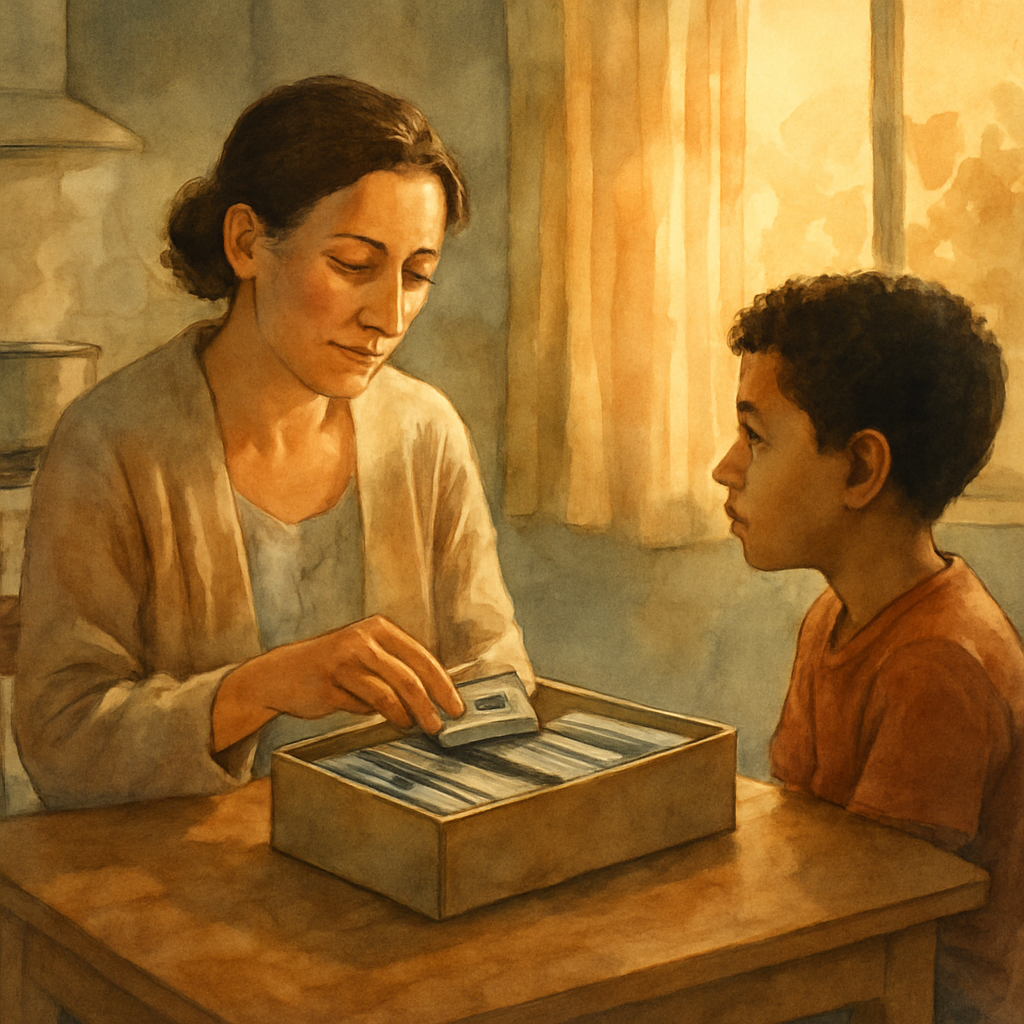
🎨 Illustration prompt
A mother and son at a small wooden kitchen table. Between them, the open shoebox of cassettes. The mother — a woman in her forties with hair tied back, wearing a soft beige cardigan — is touching one of the tapes with two fingers, her eyes on it. Karim sits across from her, watching her face, not the tape. A pot on the stove behind, steam rising gently. Evening light through a window. Watercolor style, intimate composition. No text in the image.
بَيْنَ الفُصُول · Between the Chapters
Stop for a moment.
Karim's grandfather left him his voice on cassette tapes. If you could record your own grandparent for a grandchild you might have one day, what questions would you ask? Write three of them down somewhere — on a piece of paper, in a notebook, on the back of your hand. Keep them.
الفَصْلُ الثَّاني · Chapter Two
The Listening
في اليَوم التَّالي، فَتَّشَت الأُمّ في الصَّندوق الَّذي تَحت السَّرير. أَخرَجَت مُسَجِّلَةً قَديمَة، رَماديَّة اللَّون، عَلَيها غُبارٌ كَثيف. مَسَحَتها بِقِطعَة قُماش.
"كانت لِجَدِّك. ما زالَت تَعمَل، إن شاء الحَظّ."
وَضَعَت بَطَّاريَّاتٍ جَديدَة. ضَغَطَت زِرّ التَّشغيل. صَوتُ طَنينٍ صَغير — ثُمَّ صَمت.
أَدخَلَت الأُمّ أَوَّل شَريط: "طُفولَتي في حَلَب." جَلَسَ كَريم بِجانِبِها على الأَريكَة.
ضَغَطَت الزِّرّ. صَمتٌ لِثانِيَتَين. ثُمَّ — صَوتُ جَدِّه.
The next day, his mother searched in the box under the bed. She pulled out an old cassette player, grey, with thick dust on it. She wiped it with a cloth.
"It was your grandfather's. It still works, if we're lucky."
She put in new batteries. She pressed the play button. A small humming sound — then silence.
His mother put in the first tape: "My Childhood in Aleppo." Karim sat next to her on the couch.
She pressed the button. Two seconds of silence. Then — his grandfather's voice.
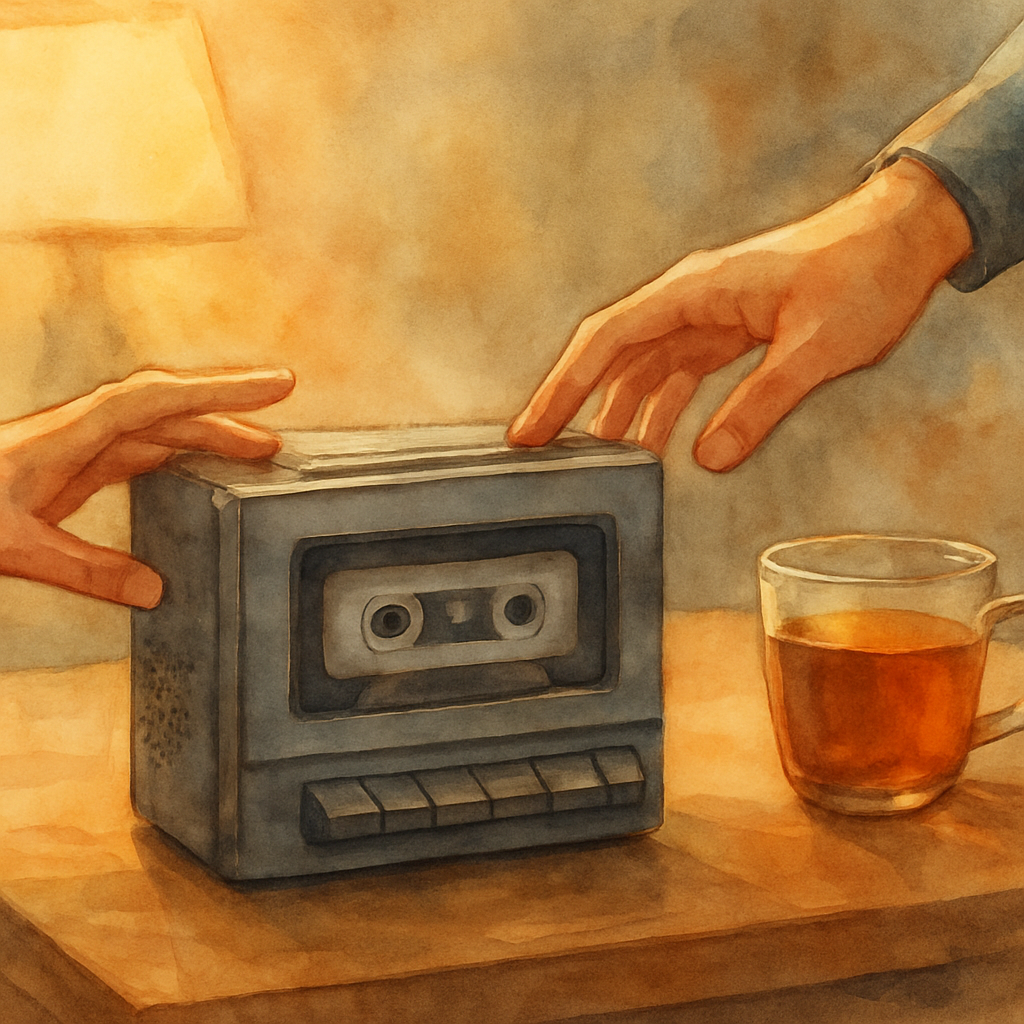
🎨 Illustration prompt
A close-up of a vintage grey cassette player on a low coffee table, a tape inside it, the wheels of the cassette turning. A mother's hand and a boy's hand are both reaching toward it from different sides, almost touching but not quite. A glass of tea sits beside the player. Soft lamplight. The mood is one of quiet anticipation. Watercolor style, warm tones. No text in the image.
"مَرحَبًا، يا كَريم. أَنا جَدُّك. إن كُنتَ تَسمَعُ هذا، فَأَنتَ كَبير الآن. وأَنا — أَنا غَيرُ مَوجود."
ضَحِكَ الجَدّ في الشَّريط، ضِحكَةً صَغيرَة. كَأَنَّه يَتَكَلَّم مَع شَخصٍ في الغُرفَة.
"سَأَحكي لك بِتَفصيل. لا أُريدُ قِصَّةً قَصيرَة. أُريدُ قِصَّةً شَفَهيَّة — مِثل ما كان أَبي يَحكي لي. اِجلِس، اِشرَب الشاي، واسمَع."
سَمِعَ كَريم وأُمُّه الشَّريط الأَوَّل بِكامِلِه. ساعَة كامِلَة. جَدُّه يَحكي عن حَلَب — عن الأَزِقَّة الضَّيِّقَة، عن صَوت الباعَة في الصَّباح، عن البَيت الَّذي كان فيه شَجَرَةُ تُوتٍ في الحَديقَة.
ولِأَوَّلِ مَرَّة مُنذ ثَلاثِ سَنَوات، سَمِعَ كَريم صَوتَ جَدِّه يَضحَك. صَوتٌ شابّ، أَكبَر مِمّا كان يَتَذَكَّر. صَوتٌ مَليءٌ بِالحَياة.
"Hello, Karim. This is your grandfather. If you're listening to this, you're grown up now. And I — I'm no longer here."
The grandfather laughed in the tape, a small laugh. As if he were talking to someone in the room.
"I'll tell you in detail. I don't want a short story. I want an oral story — like the ones my father used to tell me. Sit down, drink some tea, and listen."
Karim and his mother listened to the whole first tape. A full hour. His grandfather talked about Aleppo — about the narrow alleys, the morning sound of the street vendors, the house with a mulberry tree in the garden.
And for the first time in three years, Karim heard his grandfather laugh. A younger voice, fuller than he remembered. A voice full of life.
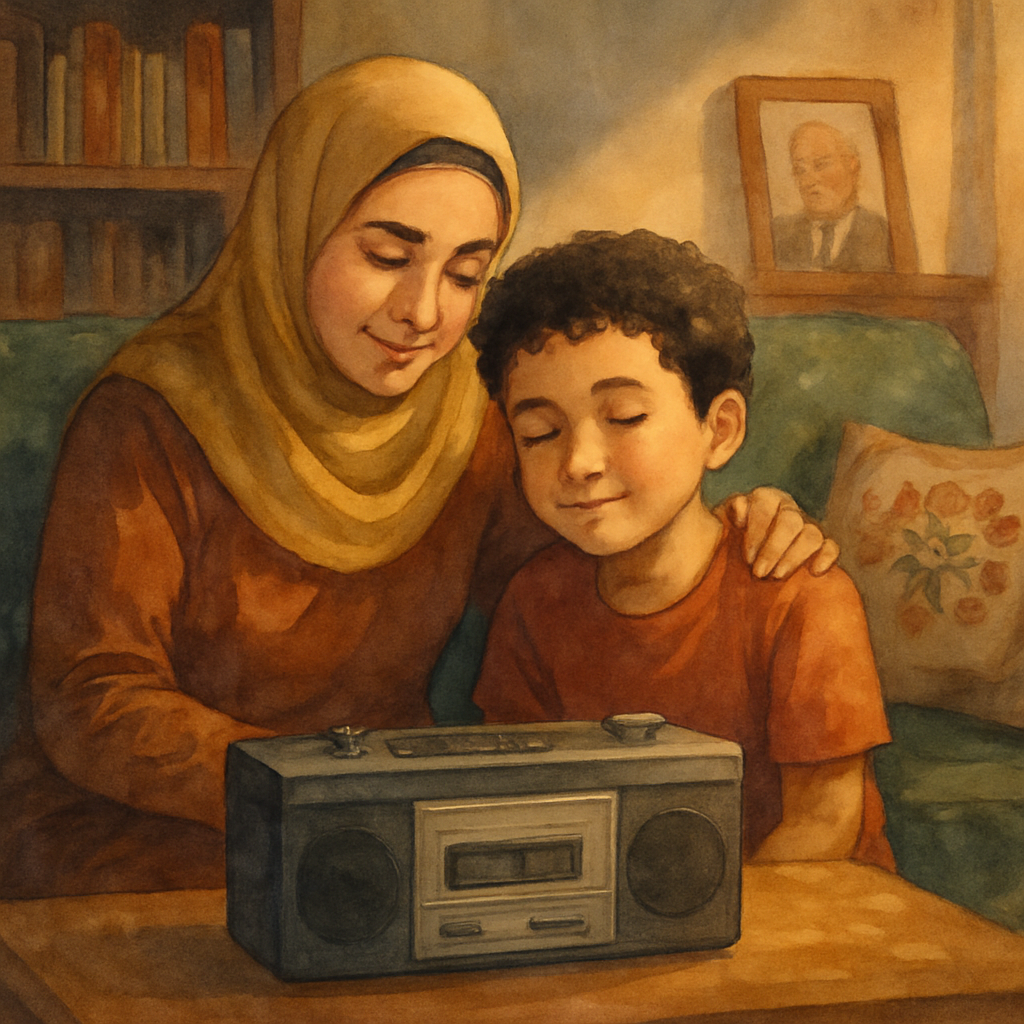
🎨 Illustration prompt
A mother and son sitting close together on a worn green couch, both leaning slightly toward an old cassette player on the table in front of them. The mother has one hand on her son's shoulder. Karim's eyes are closed, listening intently, the smallest smile on his face. Around them, a softly-lit living room with a bookshelf, a framed photo of an older man in soft focus, and an embroidered cushion. Watercolor style, warm evening light. No text in the image.
في كُلِّ مَساء، شَريطٌ واحِد. هذا كان الاتِّفاق.
في اللَّيلَة الثانِيَة، عَرَفَ كَريم أَنَّ جَدَّه كان خَبَّازًا في شَبابِه. كان يَستَيقِظ كُلَّ يَومٍ قَبل الفَجر، ويَخبِز الخُبز بِيَدَيه لِكُلِّ القَريَة. "كانت يَدايَ بَيضاوَتَين من الطَّحين دائِمًا،" قال الجَدّ. "والقَريَة كُلُّها كانت تَعرِف رائِحَة فُرني."
في اللَّيلَة الرابِعَة، عَرَفَ كَريم أَنَّ جَدَّه كان يَعزِفُ على الكَمَنجَة. "كُنتُ أَعزِف في الأَعراس. لَم أَكُن مُحتَرِفًا، ولكِنَّ النَّاس كانوا يَرقُصون."
في اللَّيلَة السابِعَة، صَمَتَت الأُمّ. كانت تَسمَع شَيئًا لَم تَكُن تَعرِفُه عن أَبيها.
"جَدُّك فَقَدَ والِدَه وعُمرُه أَربَعَ عَشرَةَ سَنَة،" هَمَسَت الأُمّ. "ورَبَّى إِخوَتَه الأَربَعَة. لَم يَقُل لي هذا أَبدًا. كانَ دائِمًا يَقول: 'الحَياة كانت عاديَّة.' ولكِنَّها لَم تَكُن عاديَّة. لَم تَكُن أَبدًا."
Each evening, one tape. That was the agreement.
On the second night, Karim learned that his grandfather had been a baker in his youth. He used to wake up every day before dawn and bake bread by hand for the whole village. "My hands were always white with flour," the grandfather said. "And the whole village knew the smell of my oven."
On the fourth night, Karim learned that his grandfather had played the violin. "I played at weddings. I wasn't a professional, but the people danced."
On the seventh night, his mother fell silent. She was hearing something she hadn't known about her father.
"Your grandfather lost his own father when he was fourteen," his mother whispered. "And he raised his four siblings. He never told me this. He always said: 'Life was ordinary.' But it wasn't ordinary. It never was."
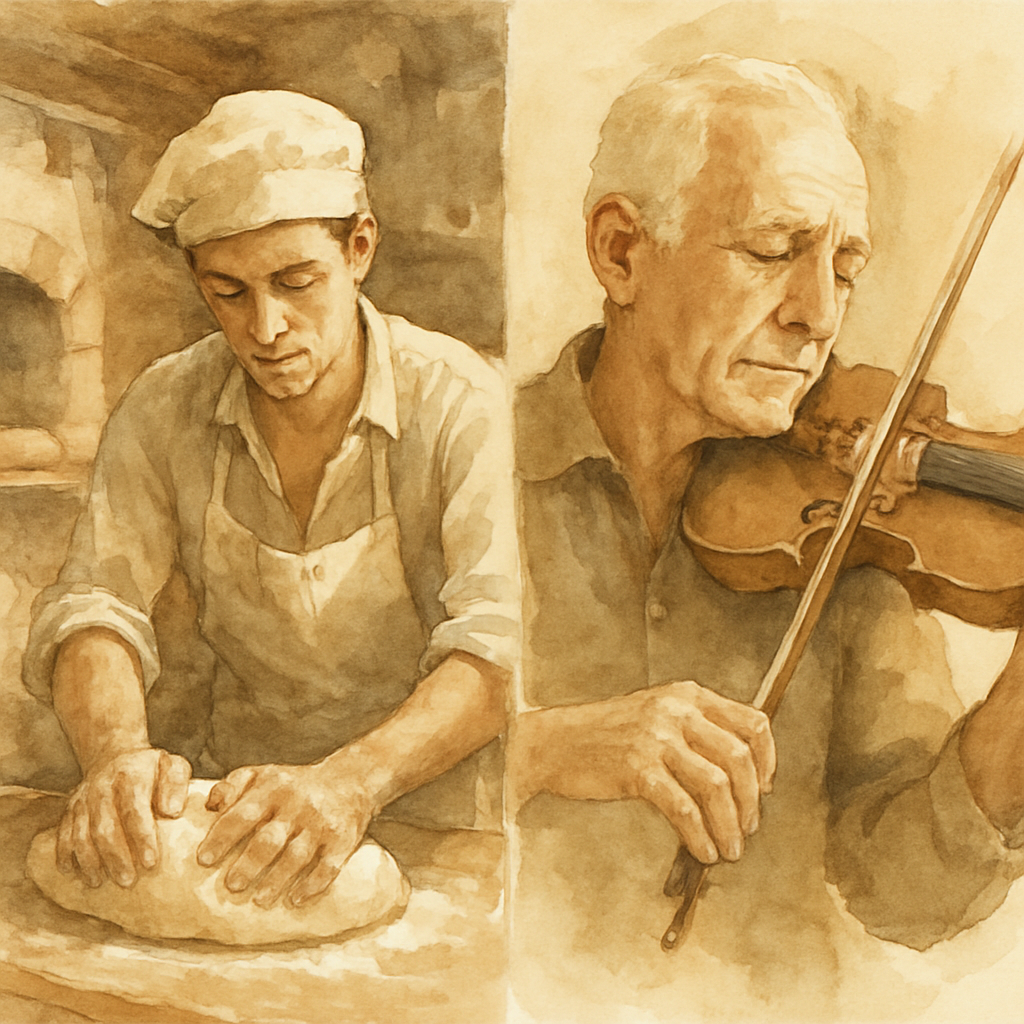
🎨 Illustration prompt
A split-style watercolor image — on one side, a younger version of the grandfather as a young man, hands dusted with flour, kneading dough at a wooden table in a rustic village bakery. On the other side, the same man slightly older, holding a violin under his chin, eyes closed. The two images blend softly in the middle. Watercolor style, soft sepia and warm cream tones. No text in the image.
بَيْنَ الفُصُول · Between the Chapters
Stop again.
Karim learned that his grandfather had been a baker, a violin player, an older brother who raised four children. None of this was in the family stories he had grown up hearing. What might surprise your future grandchildren about you? Not the small things — the big ones. What part of yourself, if you don't write it down or record it, might be lost?
الفَصْلُ الثَّالِث · Chapter Three
The Twelfth Tape
مَرَّ أَحَدَ عَشَر مَساءً. أَحَدَ عَشَر شَريطًا. كَريم عَرَفَ أَكثَر عن جَدِّه في أَسبوعَين مِمَّا عَرَفَ في كُلِّ حَياتِه.
عَرَفَ أَنَّ جَدَّه اِنتَقَلَ من حَلَب إلى لُبنان في سَنَة ١٩٨٠. تَرَكَ بَيتَه، فُرنَه، كَمَنجَتَه — كُلَّ شَيء. حَمَلَ حَقيبَتَين فَقَط، وزَوجَتَه، وطِفلَتَه الصَّغيرَة (أُمّ كَريم، الَّتي لَم تَكُن تَتَذَكَّر شَيئًا).
"كان البَدء صَعبًا،" قال الجَدّ في الشَّريط العاشِر. "ولكِنَّ لُبنان فَتَحَ لَنا بابَه. وَجَدتُ عَمَلًا في مَخبَزٍ في طَرابُلُس. ثُمَّ في بَيروت. الخُبز هو الخُبز، يا كَريم، في أَيِّ بَلَد."
بَقِيَ شَريطٌ واحِد. الشَّريط الثاني عَشَر. عَلى وَجهِه، بِخَطِّ الجَدّ:
"لِأَحفادي."
Eleven evenings passed. Eleven tapes. Karim had learned more about his grandfather in two weeks than he had in his entire life.
He learned that his grandfather moved from Aleppo to Lebanon in 1980. He left his house, his oven, his violin — everything. He carried only two suitcases, his wife, and his little daughter (Karim's mother, who didn't remember any of it).
"The beginning was hard," the grandfather said on the tenth tape. "But Lebanon opened its door to us. I found work at a bakery in Tripoli. Then in Beirut. Bread is bread, Karim, in any country."
One tape remained. The twelfth tape. On its face, in the grandfather's handwriting:
"For my grandchildren."
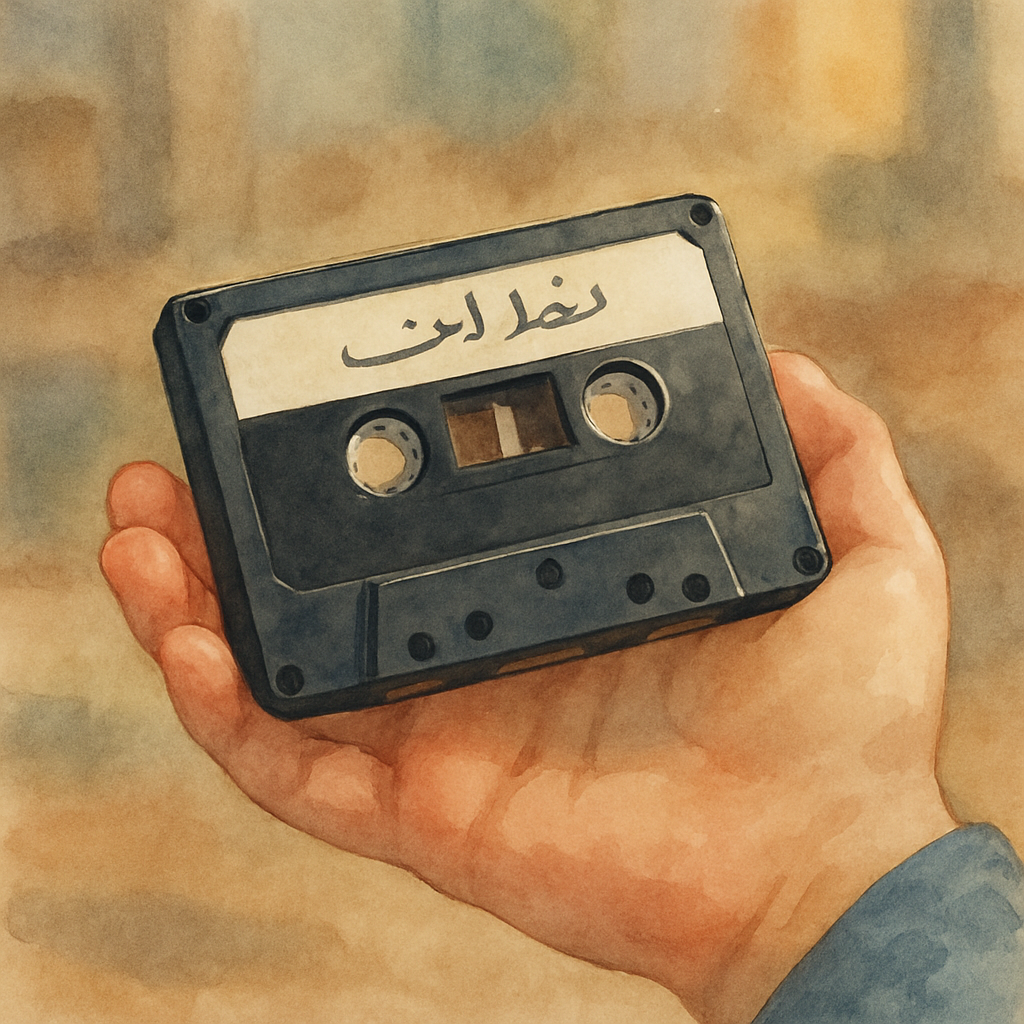
🎨 Illustration prompt
A close-up of a single black cassette tape resting on an open palm. The handwritten label is visible, the Arabic script suggested but not fully legible. The hand holding it is the boy's — small, careful. The background is softly blurred, hinting at a living room at evening. The single tape is the entire focus. Watercolor style, gentle highlight on the tape. No text legible in the image.
في تِلكَ اللَّيلَة، جَلَسَ كَريم وأُمُّه على الأَريكَة. وَضَعَت الأُمّ الشَّريط في المُسَجِّلَة. ضَغَطَت الزِّرّ.
"كَريم. إن كُنتَ تَسمَعُ هذا، فَأَنا قَد رَحَلت."
تَوَقَّفَ قَلب كَريم لِلَحظَة. مَدَّ يَدَه نَحو زِرّ الإيقاف.
"اُترُكه،" قالَت أُمُّه بِهُدوء، وأَخَذَت يَدَه. "لا بَأس. اِستَمِع."
تَكَلَّمَ الجَدّ خَمسَ عَشرَةَ دَقيقَة. لَم تَكُن مَوعِظَة. لَم تَكُن خُطبَة. كانت مُحادَثَة — كَأَنَّ الجَدّ كان جالِسًا في الغُرفَة، يَشرَب الشاي.
"لَن أَكون مَوجودًا في عُرسِك، يا كَريم. لَن أَكون مَوجودًا في يَومِ عَمَلِك الأَوَّل. لَن أَكون مَوجودًا في أَصعَب يَومٍ في حَياتِك. هذا يُحزِنُني. لا أُريدُ أن أَكذِبَ عَلَيك."
That night, Karim and his mother sat on the couch. His mother put the tape into the player. She pressed the button.
"Karim. If you're listening to this, I have already gone."
Karim's heart stopped for a moment. He reached toward the stop button.
"Leave it," his mother said gently, taking his hand. "It's okay. Listen."
The grandfather spoke for fifteen minutes. It wasn't a lecture. It wasn't a sermon. It was a conversation — as if the grandfather were sitting in the room, drinking tea.
"I won't be at your wedding, Karim. I won't be there on your first day of work. I won't be there on the hardest day of your life. This makes me sad. I don't want to lie to you."
🎨 Illustration prompt
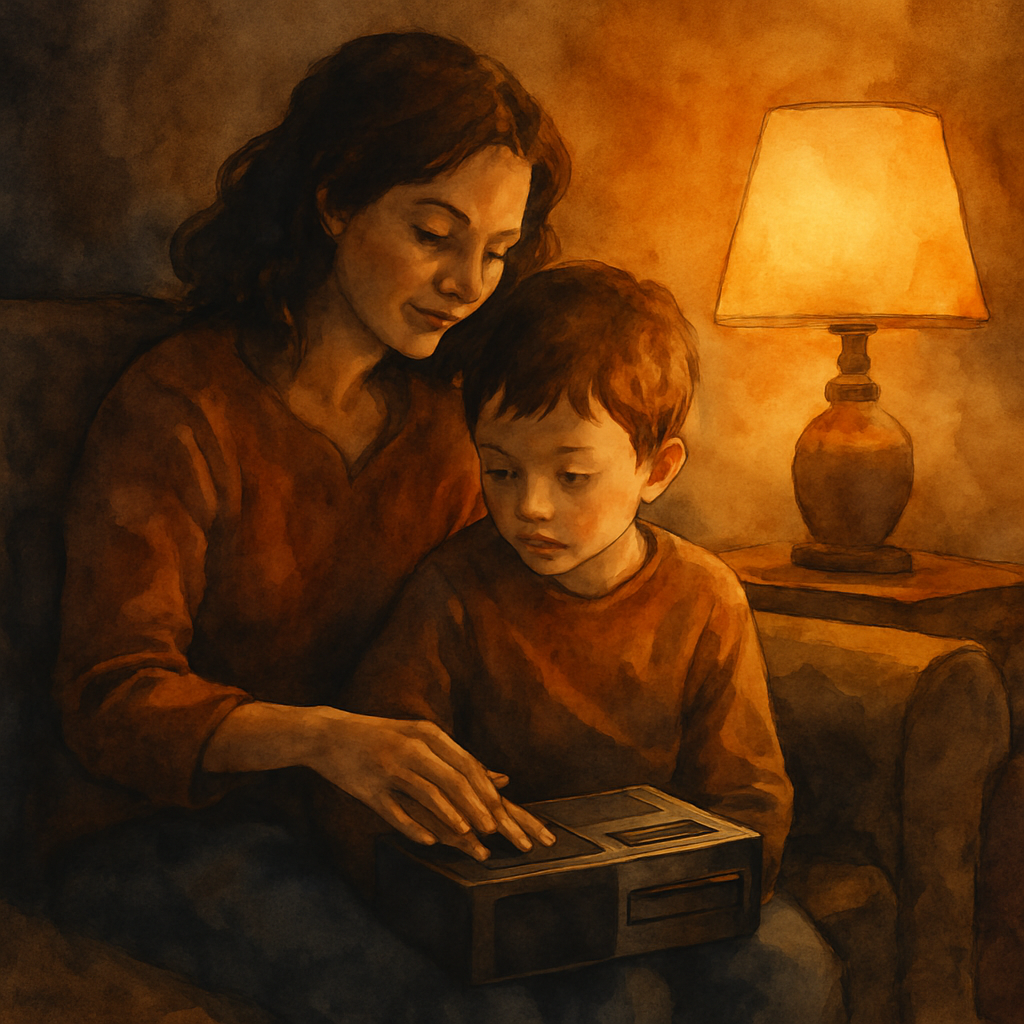
A boy and his mother on a couch, lit by a single warm lamp. The boy's hand rests on the cassette player, his fingers hovering near a button. The mother's hand is over his, gentle and steady. The boy's face is turned toward the player, listening hard. The room is dim around them — just the two of them in a small circle of light. Watercolor style, deep warm tones with one focal point of light. No text in the image.
"ولكِنِّي تَرَكتُ هذِه الأَشرِطَة. هذِه وَصِيَّتي لَك — ليست وَصِيَّةَ مال أو بَيت. وَصِيَّةُ صَوت. وَصِيَّةُ قِصَص.
"الصَّوت لا يَموت، يا كَريم. القِصَّة لا تَموت. والحُبّ لا يَموت.
"اِحكِ هذِه القِصَص لِأَحفادي — أَحفادي الَّذين لَن أَراهُم. اِصنَع أَشرِطَة جَديدَة. سَجِّل صَوتَك. كُلُّ جيلٍ يُسَلِّم الجيلَ التالي. هذا هو الإِرث الحَقيقي. ليست الفُلوس. ليست البُيوت. الذَّاكِرَة. الذَّاكِرَة الَّتي تَعبُر."
صَمَتَ الجَدّ لِثَوانٍ. ثُمَّ، بِصَوتٍ أَهدَأ:
"أُحِبُّك يا كَريم. كُنتُ أُحِبُّكَ قَبل أن أَراك. وسَأُحِبُّكَ بَعدَ أن أَرحَل. هذا كُلُّ شَيء. هذا هو الشَّريط الأَخير."
ثُمَّ — صَمت. صَوتُ الشَّريط الفارِغ، يَدور.
"But I left these tapes. This is my will for you — not a will of money or a house. A will of voice. A will of stories.
"The voice doesn't die, Karim. The story doesn't die. And the love doesn't die.
"Tell these stories to my great-grandchildren — the ones I'll never see. Make new tapes. Record your own voice. Each generation hands it to the next. This is the real inheritance. Not money. Not houses. The memory. The memory that crosses over."
The grandfather was silent for a few seconds. Then, in a softer voice:
"I love you, Karim. I loved you before I ever saw you. And I'll love you after I'm gone. That's everything. This is the last tape."
Then — silence. The sound of an empty tape, spinning.
🎨 Illustration prompt
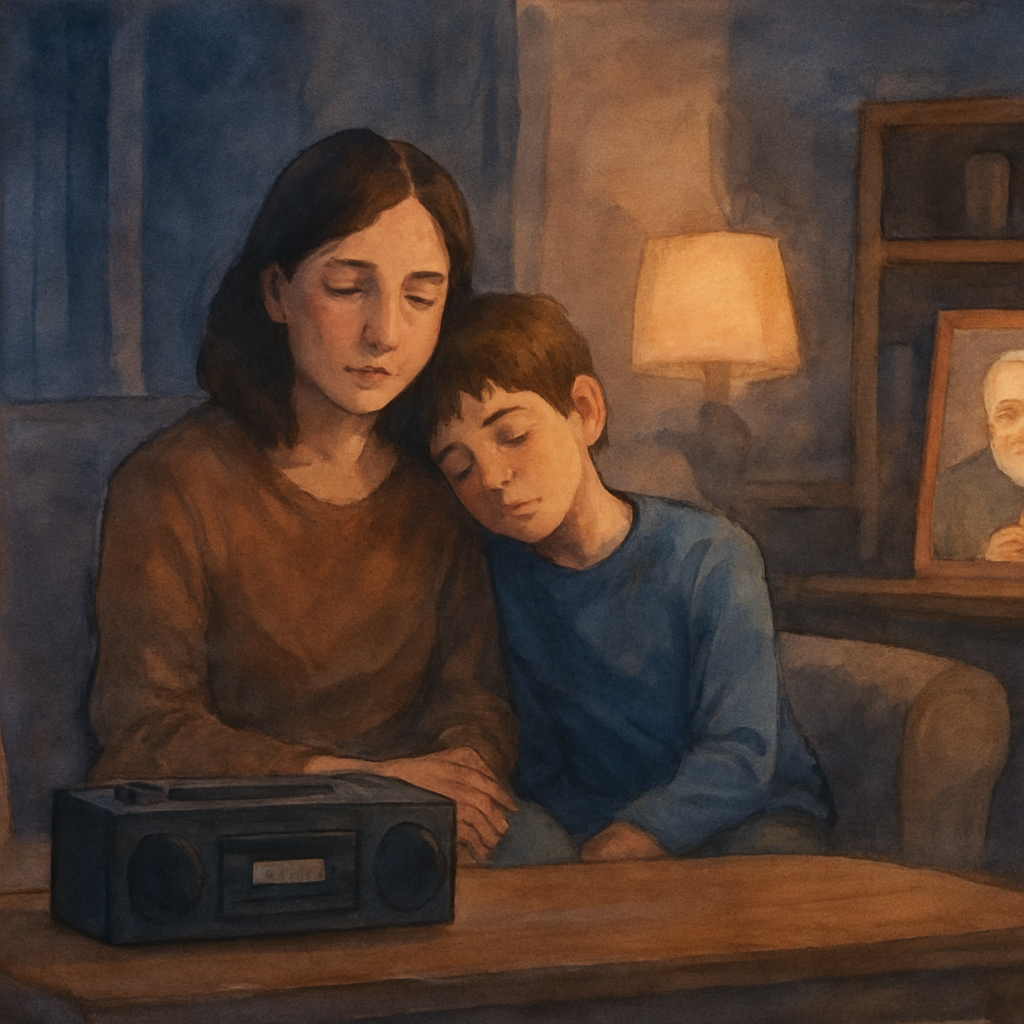
A wide soft view of the same living room, but now the boy is leaning against his mother's shoulder, both quiet, both with eyes a little wet but calm. The cassette player still sits on the table, the tape inside now finished. A photograph of the grandfather as an older man — kind eyes, white beard, holding a small loaf of bread — sits framed on a shelf, glowing gently. Watercolor style, deep evening tones, the warmth of held grief. No text in the image.
أَطفَأَت الأُمّ المُسَجِّلَة. لَم يَتَكَلَّما لِوَقتٍ طَويل.
ثُمَّ نَهَضَ كَريم. ذَهَبَ إلى غُرفَتِه. أَخرَجَ دَفترًا جَديدًا من حَقيبَة المَدرَسَة. فَتَحَ الصَّفحَة الأولى.
كَتَبَ، بِخَطٍّ صَغيرٍ مائِل، عَناوينَ الأَشرِطَة الاثني عَشَر — وَاحِدًا وَاحِدًا. كَأَنَّه يَخاف أن يَنساها.
ثُمَّ، في أَسفَل الصَّفحَة، كَتَبَ:
"أَشرِطَتي أَنا — يَومًا ما: ١. أُمّي وكَيف كانت تَطبُخ. ٢. مَدرَسَتي في بَيروت. ٣. جَدّي — كُلُّ ما أَتَذَكَّرُه عَنه. ٤. ..."
تَوَقَّفَ كَريم عِندَ الرَّقم أَربَعَة. اِبتَسَمَ. هُناك وَقت. سَيُكمِل لاحِقًا.
في تِلكَ اللَّيلَة، قَبل النَّوم، فَكَّرَ كَريم في جَدِّه. لَم يَكُن حَزينًا — لا تَمامًا. كان شَيئًا آخَر. شَيءٌ كَالاِمتِنان.
الصَّوت لا يَموت. القِصَّة لا تَموت. والحُبّ لا يَموت.
His mother turned off the recorder. They didn't speak for a long time.
Then Karim got up. He went to his room. He pulled a new notebook out of his school bag. He opened the first page.
He wrote, in small slanted handwriting, the titles of all twelve tapes — one by one. As if he were afraid of forgetting them.
Then, at the bottom of the page, he wrote:
"My own tapes — one day:
- My mother and how she used to cook.
- My school in Beirut.
- My grandfather — everything I remember about him.
- …"
Karim stopped at number four. He smiled. There was time. He would finish later.
That night, before sleep, Karim thought about his grandfather. He wasn't sad — not exactly. It was something else. Something like gratitude.
The voice doesn't die. The story doesn't die. And the love doesn't die.
🎨 Illustration prompt
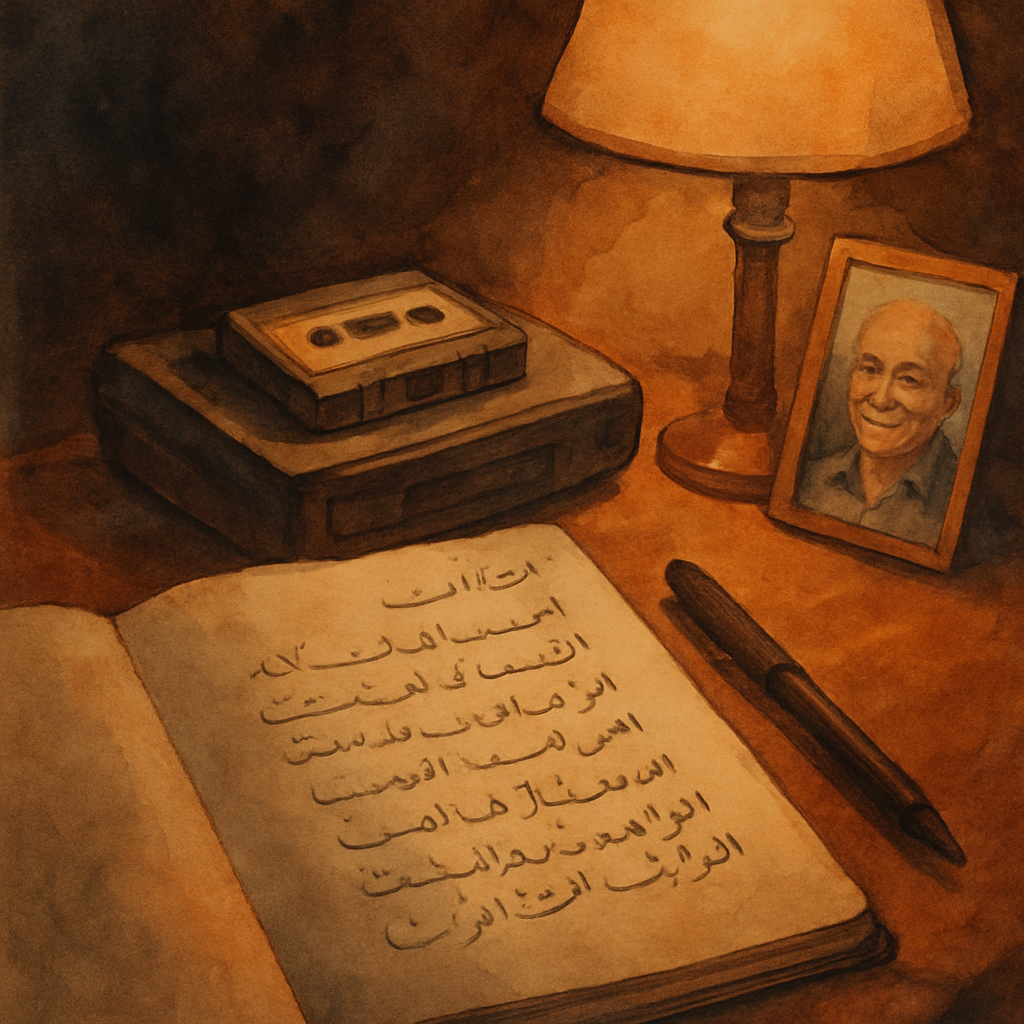
A close-up of an open notebook on a desk lamp-lit bedside table at night. A list of titles in Arabic handwriting fills most of the page (suggested, graceful lines, not fully legible). A pen rests beside the notebook. Next to it, the old cassette player sits closed, with one cassette on top of it. A small framed photograph leans against the lamp — an older man smiling. The lamp's warm glow spills over everything. This is the emotional anchor of the book. Watercolor style, deep warm tones. No text legible in the image.
كَلِمَاتٌ جَدِيدَة · New Words
| Arabic | How to say it | English |
|---|---|---|
شَرِيط |
sha-rīt | cassette tape |
صَوْت |
sawt | voice |
تَسْجِيل |
tas-jīl | recording |
قِصَّة |
qis-sah | story |
ذَاكِرَة |
dhā-ki-rah | memory |
جِيل |
jīl | generation |
وَصِيَّة |
wa-siy-yah | will / parting words |
اِكْتَشَفَ |
ik-ta-sha-fa | discovered |
إِرْث |
irth | inheritance |
قِصَّة شَفَهِيَّة |
qis-sah sha-fa-hiy-yah | oral story |
بِتَفْصِيل |
bi-taf-sīl | in detail |
تَفَكُّر |
ta-fak-kur | reflection |
مُسَجِّلَة |
mu-saj-ji-lah | recorder / cassette player |
خَبَّاز |
khab-bāz | baker |
كَمَنْجَة |
ka-man-jah | violin |
🗣️ Talk about it
These are not test questions. They are conversation starters — ideal for a quiet kitchen table chat, or in the car.
- Karim's grandfather said: "The voice doesn't die. The story doesn't die. The love doesn't die." What do you think he meant? In what ways can a voice keep going, even after a person is gone?
- Karim learned that his grandfather had been a baker, a violin player, an older brother who raised four children. Is there someone in your family whose full story you don't know? What would you ask them — if they were ready to tell you?
- Karim's mother couldn't listen to the tapes for three years. Why do you think she waited? Have you ever held onto something — a letter, a photo, a memory — that was too heavy to look at right away?
- At the end, Karim starts a list of his own tapes. What would you put on your first tape, if you made one?
✏️ Try it (one of these, your choice)
- Record a short audio message on a phone — not for now, but for someone who might listen in twenty years. Your future self. A future cousin. A future child. One minute is enough. Just say what you want them to know about today.
- Ask one grandparent or older relative to tell you a story you have never heard before. Don't ask "tell me your life." That's too big. Ask: "What did your kitchen smell like when you were ten?" or "Who was your best friend at fifteen?"
- Make a list of titles like Karim's twelve tapes. Twelve topics you might want to record one day — about your own life. You don't have to make the tapes. Just write the list.
- Bake bread with someone in your family — even simple flatbread. Notice what their hands do. Ask them who taught them.
A note for grown-ups reading along
This story touches on grief, death of a grandparent, and family displacement — specifically the migration of Syrian families to Lebanon, a common Levantine experience from the 1970s through today. It does so gently. There is no graphic detail of the grandfather's death; he is simply "no longer here," and the story is about what he left behind, not how he left.
For children who have lost a grandparent, this story may bring up real feelings. Read it with them, not just at them. Pause at the Between the Chapters moments. Let them sit in silence if they need to. Sometimes that's the whole conversation.
The story also gently introduces the idea of oral history — that family memory is something we make, on purpose, and that it doesn't survive by accident. If your family has elders, this is a good age to start asking. Bring a phone. Press record. You won't regret it.
On the Arabic: Tier 4 stories use selective vowel marks — only on harder words. This is closer to grown-up Arabic, and a good challenge for readers who already handle Tier 3 comfortably. If your child stumbles, sit with them. Repetition is still the curriculum.
On the dialect: This story is in Modern Standard Arabic, with Levantine cultural sensibility. Some words (like kamanjah for violin) are common across Arab dialects; others reflect Levantine usage. The bakery, the mulberry tree, the move from Aleppo to Beirut — these are specific to the Syrian-Lebanese story, but the shape of the grief, and the shape of the love, will feel familiar to any family that has carried memory across a border.
— Hayya Beena Naqraa (هَيَّا بِنَا نَقْرَأ)