الاسْمُ عَلَى البَاب
The Name on the Door
A Hayya Beena Naqraa story · Tier 4 (Novella · رِوَايَة) · For ages 10–12
A short chapter book in three chapters. Heritage learners and intermediate Arabic readers. Vowel marks appear only on harder or less-common words.
Cover page
الاسْمُ عَلَى البَاب
The Name on the Door
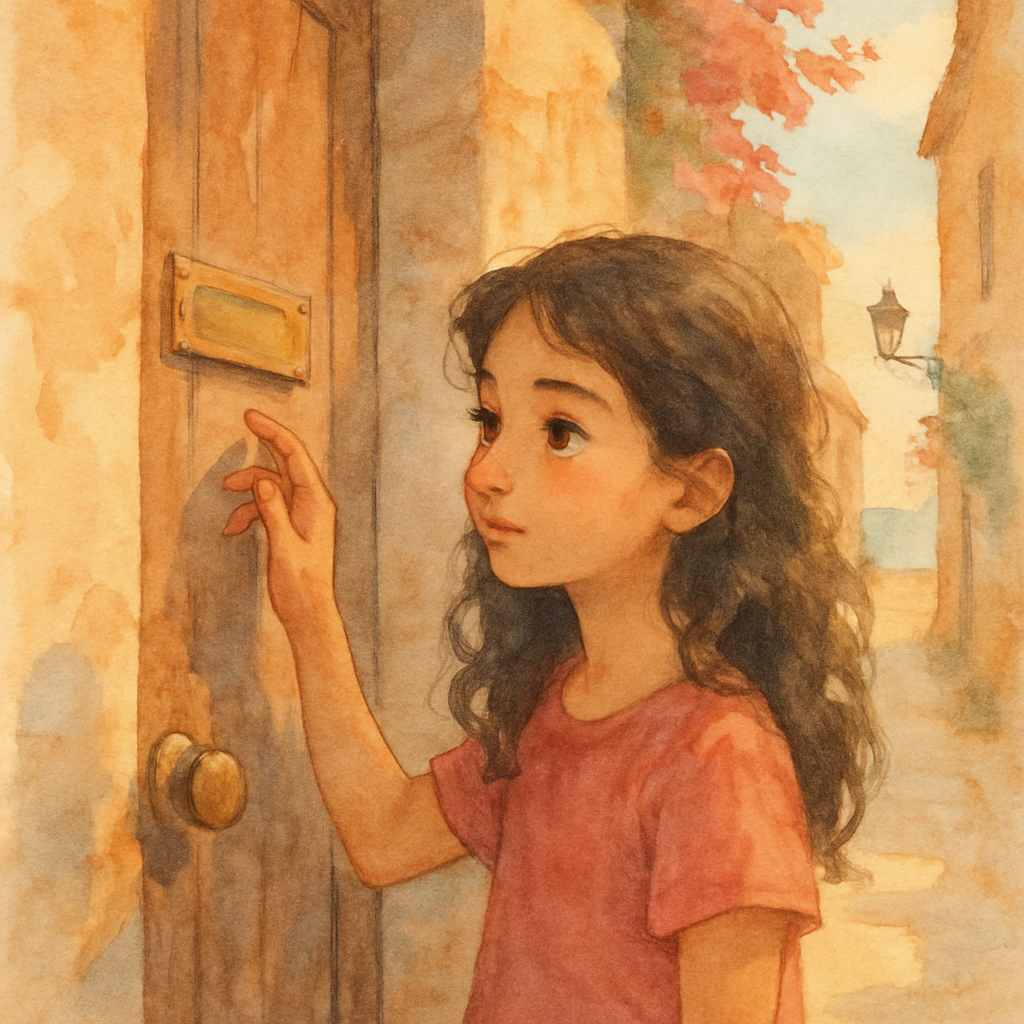
🎨 Illustration prompt
A soft watercolor illustration of an 11-year-old girl with dark wavy hair and warm brown eyes, standing in front of an old wooden door in a stone building. The door has a small brass nameplate at eye level, slightly tarnished. The girl is reaching toward it, but not yet touching — her fingers are mid-air, almost shy. Late afternoon Mediterranean light. The street behind her is narrow, with bougainvillea climbing one wall, a small lamp post, and the suggestion of the sea at the far end. Watercolor style, warm Levantine palette — terracotta, ochre, pale blue. No text in the image. Aspect ratio: 4:5 portrait.
A note before we begin
This book is told in three short chapters. You don't have to read it all at once. After each chapter, there's a small "بَيْنَ الفُصُول · Between the Chapters" moment — a question or a small thing to notice.
The Arabic uses selective vowel marks — only on harder or less common words. Common words go without. This is closer to how grown-up Arabic books are written, and it's a good challenge for readers who are growing.
الفَصْلُ الأَوَّل · Chapter One
The Letter
في صَبَاحٍ هَادِئ من شَهْرِ أَيْلُول، وَجَدَت لَيلى رِسَالَةً على طاوِلَةِ المَطْبَخ.
كانت الرِّسَالَة مَكتوبةً بِخَطِّ جَدَّتها — خَطٌّ صَغير، مائِلٌ قَليلًا، يُشبِه خَطَّها هي.
"حَبيبَتي لَيلى،" كَتَبَت الجَدّة. "غَدًا نَذهَبُ مَعًا إلى بَيتٍ قَديم. بَيتٌ لم تَري ه من قَبل. سَأَحكي لك القِصَّة هُناك، لا هُنا. لِمَ؟ لِأَنَّ القِصَص الصَّعبَة تَحتاج إلى المَكان الصَّحيح."
تَحت الكَلِمات، رَسَمَت الجَدَّة قَلبًا صَغيرًا.
On a quiet morning in September, Layla found a letter on the kitchen table.
The letter was written in her grandmother's handwriting — small, slightly slanted, almost like her own.
"My beloved Layla," her grandmother had written. "Tomorrow we will go together to an old house. A house you have never seen. I will tell you the story there, not here. Why? Because hard stories need the right place."
Below the words, her grandmother had drawn a tiny heart.
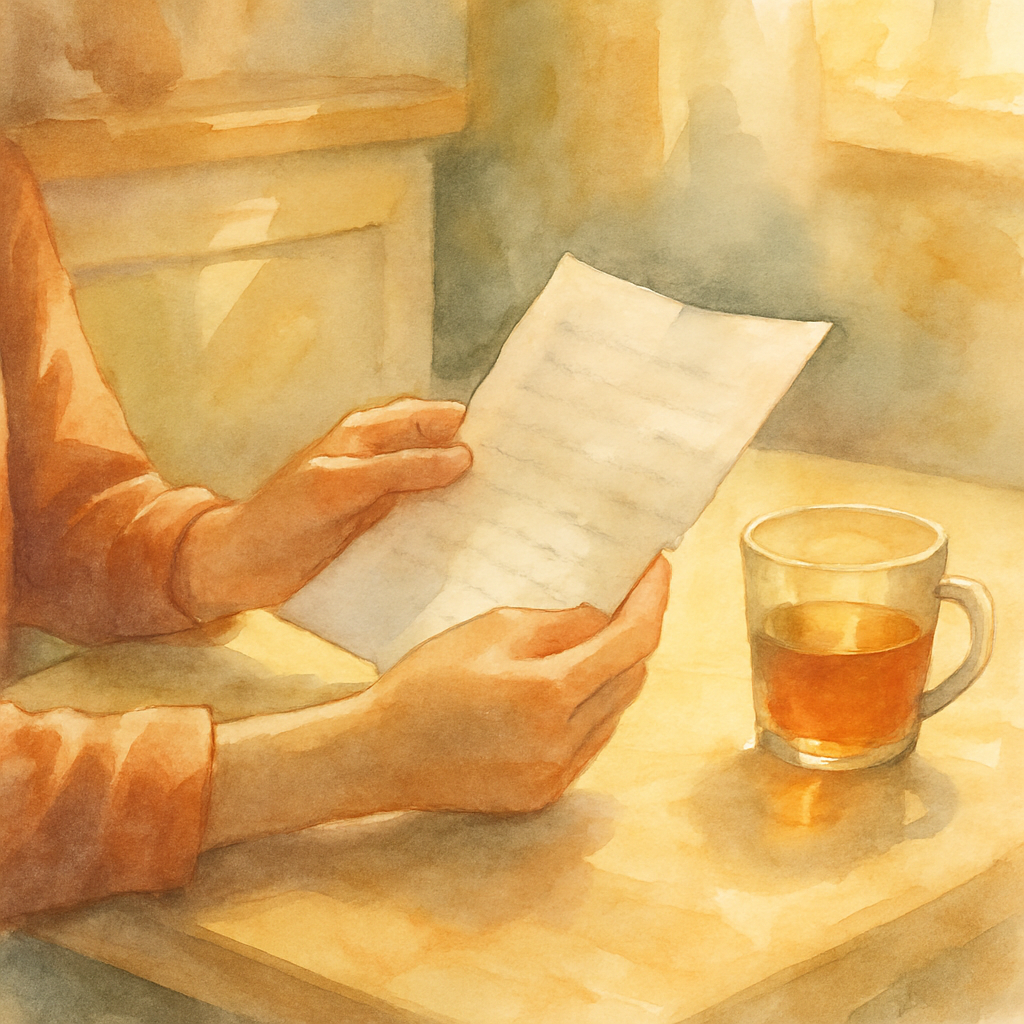
🎨 Illustration prompt
A close-up of Layla's hands holding a folded sheet of paper at a small kitchen table. Soft morning light. The paper is slightly creased, the writing visible (suggested, not legible). Beside it, a small glass of tea half-full. The girl's hands are mid-action, just opening the letter. Watercolor style, soft warm tones. No text legible in the image.
لَيلى عُمرها أَحَدَ عَشرَ عامًا. تَعيش هي وأَهلها وجَدّتها في بَيروت، في شَقَّةٍ صَغيرة في حَيِّ أَشرَفِيِّة. الجَدَّة اسْمُها سَلمى، ولكن لَيلى تَدعوها "تيتا."
تيتا تَطبُخ كُلَّ يَومٍ تَقريبًا. تيتا تَحكي قِصَصًا عن لُبنان قَبلَ الحَرب، وعن الحَيّ كما كان زَمان، وعن الجيران الَّذين رَحَلوا.
ولكن في كُلِّ القِصَص — لم تَذكُر تيتا أبدًا أَحَدًا اسْمُه "يوسُف."
Layla is eleven years old. She lives with her parents and her grandmother in Beirut, in a small apartment in the Achrafieh neighborhood. Her grandmother's name is Salma, but Layla calls her Teta.
Teta cooks almost every day. Teta tells stories about Lebanon before the war, about the neighborhood as it used to be, about neighbors who left.
But in all the stories — Teta has never once mentioned anyone named "Youssef."
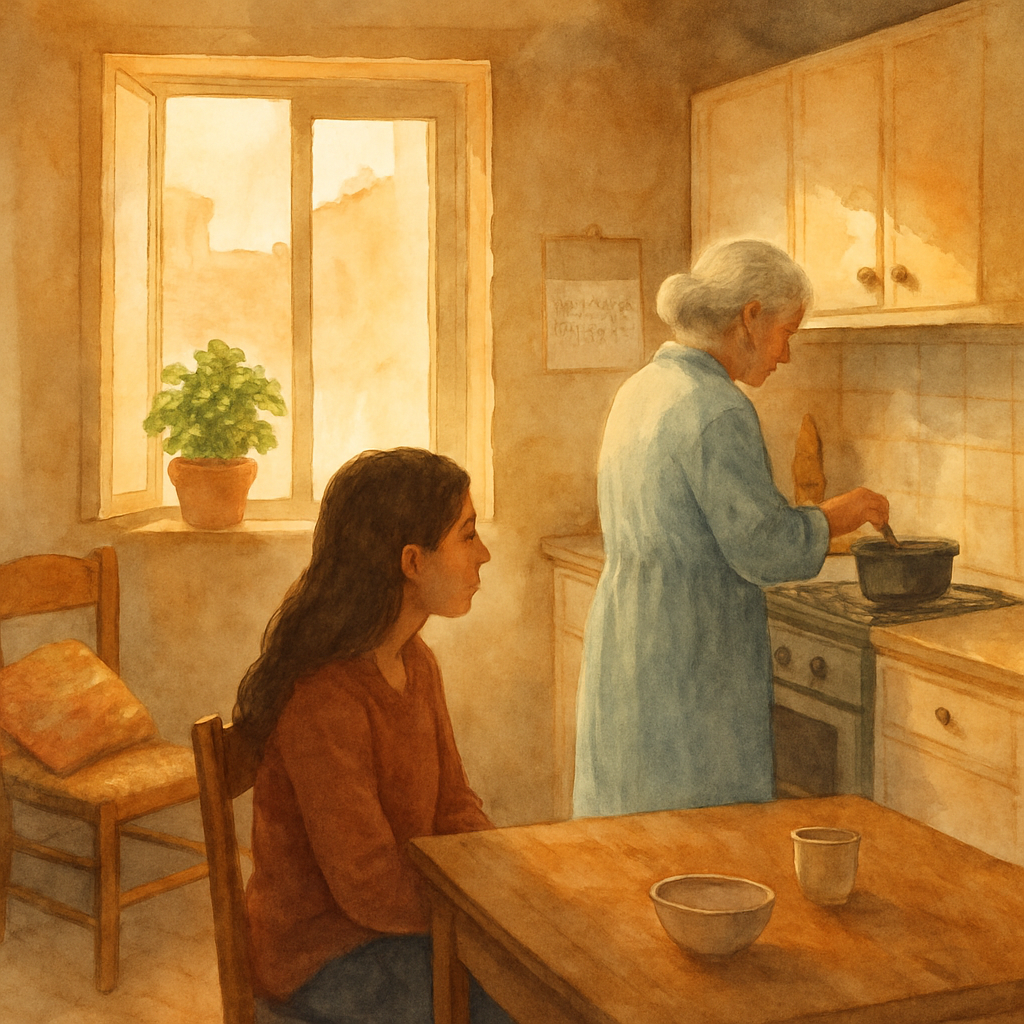
🎨 Illustration prompt
A wide shot of a Levantine apartment kitchen at morning. Teta — a woman in her 70s with silver hair pulled back, wearing a soft pale blue housecoat — is at the stove, stirring something in a small pot. Layla sits at a wooden table, watching her, but Teta's back is to her. The light is gentle, golden. A pot of basil on the windowsill, two cushions on a nearby chair, a calendar on the wall. The scene is warm but holds a small silence. Watercolor. No text in the image.
في الأُسبوع الماضي، كانت لَيلى تَبحَث عن دَفترٍ قَديم في خِزَانَة تيتا. وَجَدَت صُندوقًا خَشَبيًّا صَغيرًا، وفي داخِله صور قَديمَة. صورة لِتيتا شَابَّة. صورة لِجَدِّها — الَّذي ماتَ قَبل أن تولَد لَيلى. ثُمَّ صورة لِوَلَدٍ صَغير، رُبَّما في عُمرِ خَمس سَنَوات، يَضحَك ويَحمِل كُرَةً حَمراء.
على الجِهَة الخَلفِيَّة من الصورة، بِخَطِّ تيتا: "يوسُف، 1969."
عِندَما سَأَلَت لَيلى أُمَّها: "مَن هو يوسُف؟" — صَمَتَت أُمُّها لَحظَة. ثُمَّ قالَت: "اِسأَلي تيتا."
Last week, Layla was looking for an old notebook in Teta's closet. She found a small wooden box, and inside it were old photographs. A photo of Teta as a young woman. A photo of her grandfather — who had died before Layla was born. Then a photo of a small boy, maybe five years old, laughing and holding a red ball.
On the back of the photo, in Teta's handwriting: "Youssef, 1969."
When Layla asked her mother, "Who is Youssef?" — her mother was silent for a moment. Then she said, "Ask Teta."
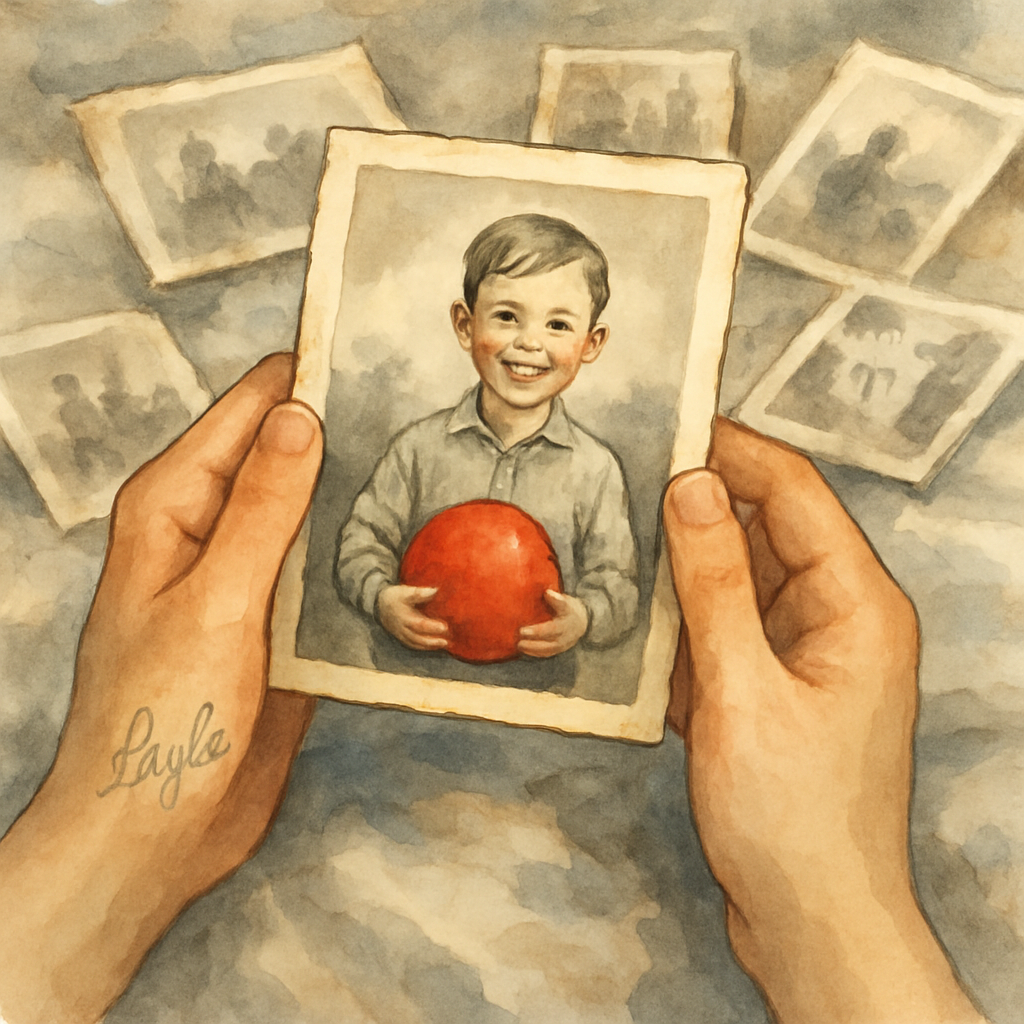
🎨 Illustration prompt
Layla's hands holding a small black-and-white photograph of a smiling boy with a red ball. The photo edges are softly yellowed with age. Around the photo on a bedspread are other old photos, slightly out of focus. The red ball in the photo is the only spot of warm color. Watercolor style. No text legible in the image.
بَيْنَ الفُصُول · Between the Chapters
Stop for a moment.
Layla has just learned that there is someone her grandmother has never told her about. Have you ever found something in your family — a photo, a letter, an object — that made you wonder about someone you never knew?
الفَصْلُ الثَّاني · Chapter Two
The Old House
في الصَّباح التَّالي، رَكِبَت لَيلى وتيتا سَيَّارَةَ أَب لَيلى. مَشَوا قُرابَة سَاعَة، نَحوَ الجَنوب، إلى قَريَةٍ صَغيرة في الجَبَل. بَيتٌ من حِجارَةٍ بَيضاء، بِبابٍ خَشَبيٍّ قَديم، وعَلى البَاب لَوْحَةٌ نُحاسيَّةٌ صَغيرَة كَتَبَ عَلَيها بِخَطٍّ عَرَبيّ:
عَائِلَة الحَدّاد · 1923
تَوَقَّفَت تيتا قُرب الباب. وَضَعَت يَدَها على اللَّوحَة. لَم تَدخُل.
"هذا بَيت أَهلي،" قالَت تيتا بِصَوتٍ هادِئ. "كُنَّا أَربَعَة إِخوَة. أنا، وعَمَّتُك سَميرة، وأَخي إِلياس — وأَخي الأَصغَر يوسُف."
The next morning, Layla and Teta got into Layla's father's car. They drove for about an hour, south, to a small village in the mountains. A house of white stone, with an old wooden door, and on the door a small brass plate written in Arabic script:
Haddad Family · 1923
Teta stopped near the door. She placed her hand on the plate. She didn't go in.
"This is my parents' house," Teta said quietly. "We were four siblings. Me, your great-aunt Samira, my brother Elias — and my youngest brother Youssef."
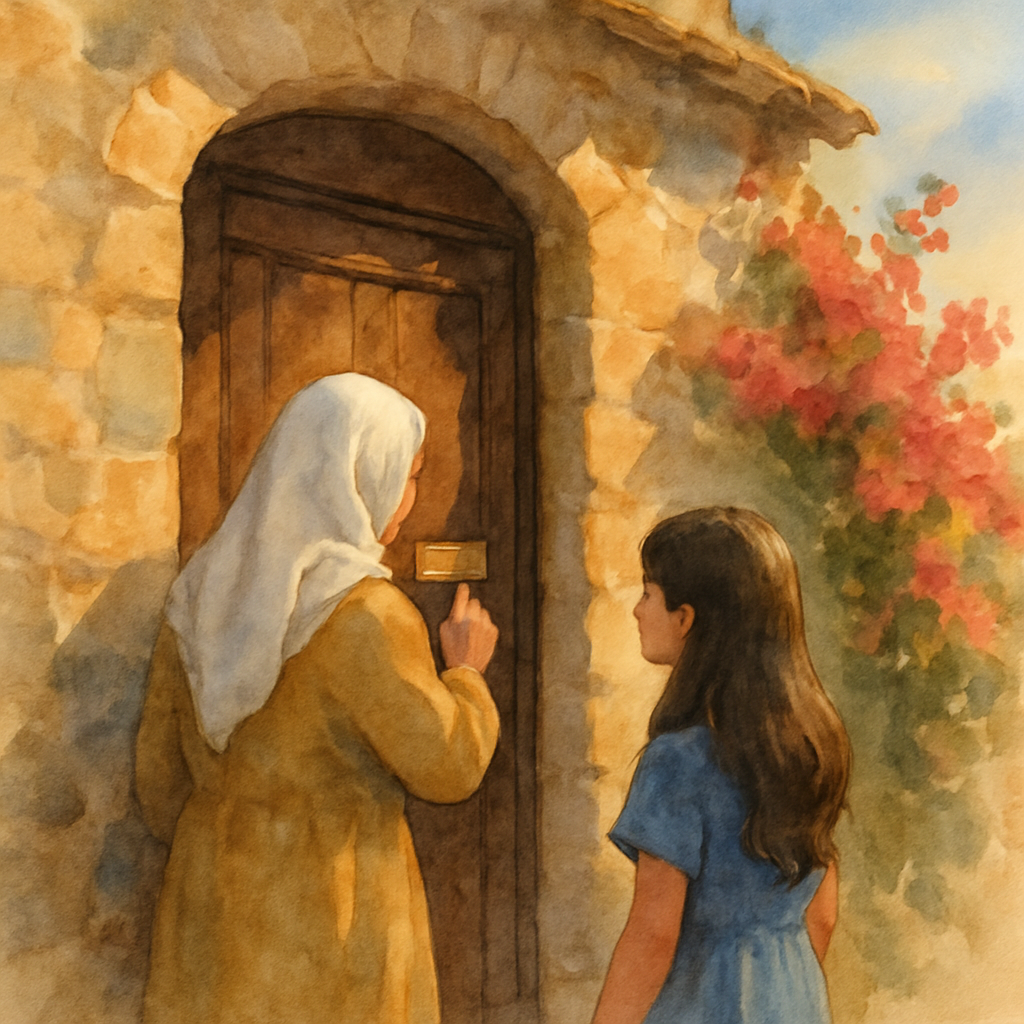
🎨 Illustration prompt
Teta and Layla standing in front of the old stone house door, seen from slightly behind. Teta's hand rests on a small brass nameplate on the door. Layla is half a step behind, watching. The wooden door is weathered but dignified. Bougainvillea spills from a stone wall nearby. The light is afternoon golden, the sky a soft Mediterranean blue. Watercolor. No text in the image (the nameplate text from the story can be implied but not legible).
جَلَسَتا على دَرَجَة الباب. لَم تَدخُلا. الجَدَّة لَم تُرِد أن تَدخُل اليَوم. فَقَط أن تَجلِس.
"يوسُف كان أَصغَر مِنّي بِخَمسِ سَنَوات،" قالَت تيتا. "كان يَضحَك كَثيرًا. كان يَحمِل كُرَتَه الحَمراء أَينَما ذَهَب. كانوا يَدعونَه 'يوسُف الكُرَة' في القَريَة."
ابتَسَمَت تيتا، ابتِسامَةً صَغيرة، كَأَنَّها تَرى شَيئًا بَعيدًا.
"في صَيف 1975، بَدَأَت الحَرب. كانت عَائِلَتُنا في القَريَة. كُنّا نَتَوَقَّع أَنَّ الحَرب ستَنتَهي بَعد أَسابيع. ولكن... لَم تَنتَهِ. وَفي إِحدى اللَّيالي، خَرَج يوسُف لِيَجلِب الخُبز من جارٍ قَريب. هو كان ابن عَشر سَنَوات. لَم يَعُد."
They sat on the doorstep. They didn't go inside. Teta didn't want to go in today. Only to sit.
"Youssef was five years younger than me," Teta said. "He laughed a lot. He carried his red ball wherever he went. They called him 'Youssef the Ball' in the village."
Teta smiled, a small smile, as if she were seeing something far away.
"In the summer of 1975, the war began. Our family was in the village. We thought the war would end in a few weeks. But… it didn't. And one night, Youssef went out to get bread from a nearby neighbor. He was ten years old. He never came back."
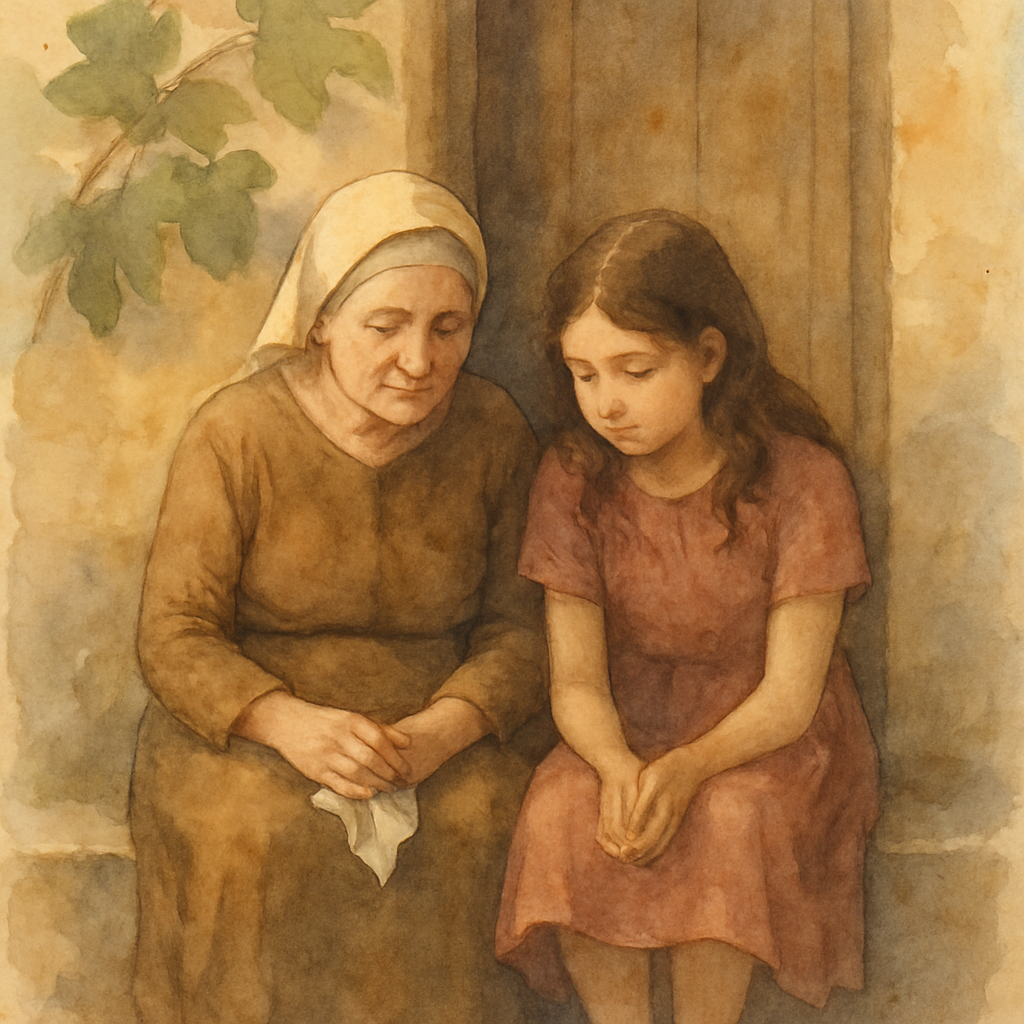
🎨 Illustration prompt
Teta and Layla sitting side by side on the stone doorstep of the old house, both looking down at the ground, not at each other. Teta has one hand resting in her lap, the other holding a folded handkerchief. Layla is leaning slightly toward her, her shoulder almost touching Teta's. The afternoon light is softer now, golden. A few fig leaves on the wall behind them. The mood is tender, sad, intimate — not dramatic. Watercolor, gentle. No text in the image.
سَكَتَت تيتا طَويلًا. لَم تَبكِ، ولكن لَيلى رَأَت دَمعَةً صَغيرة في زاوِيَة عَينها.
"بَحَثنا عَنهُ أَسابيع. ثُمَّ أَشهر. ثُمَّ سَنَوات. لا أَحَد عَرَف ما حَصَل. ربَّما أَصابَه شيء في الطَّريق. ربَّما... لا نَعرف."
أَخَذَت لَيلى يَد تيتا. كانت يَد تيتا بَارِدَةً قَليلًا. لَيلى لَم تَقُل شَيئًا. أَحيانًا، أَفضَل شَيءٍ تَفعَلُه هو أن تَكون هُناك.
"لِماذا لَم تُحَدِّثيني عَنهُ من قَبل، تيتا؟" سَأَلَت لَيلى أَخيرًا.
تيتا نَظَرَت إلى البَاب. إلى اللَّوحَة. ثُمَّ إلى لَيلى.
"لأَنَّ بَعضَ الأَسماء ثَقيلَة. يَحتاج المَرء إلى أن يَكبَر قَليلًا لِيَستَطيع حَملَها. أَنتِ الآن في عُمرِ يوسُف عِندَما رَحَل. لِذلِك — حانَ الوَقت لِتَعرِفي."
Teta was silent for a long time. She didn't cry, but Layla saw a small tear in the corner of her eye.
"We looked for him for weeks. Then months. Then years. No one knew what had happened. Maybe something happened to him on the way. Maybe… we don't know."
Layla took Teta's hand. Teta's hand was a little cold. Layla didn't say anything. Sometimes the best thing you can do is just be there.
"Why didn't you tell me about him before, Teta?" Layla finally asked.
Teta looked at the door. At the nameplate. Then at Layla.
"Because some names are heavy. You need to grow a little before you can carry them. You are now the age Youssef was when he disappeared. So — it was time for you to know."
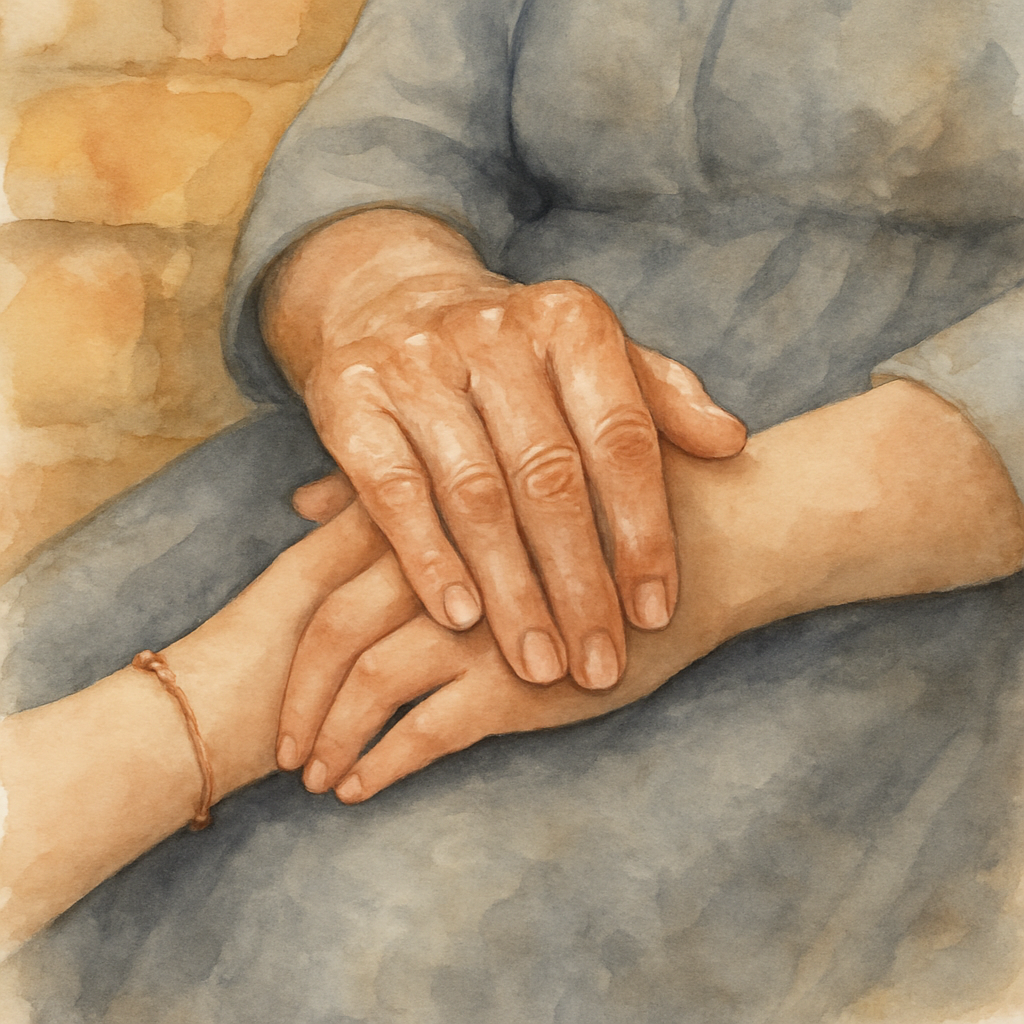
🎨 Illustration prompt
A close-up of two hands — Teta's older, slightly veined; Layla's younger, smaller — clasped together gently. They rest on the fabric of Teta's grey dress. A single small bead bracelet on Layla's wrist. Out of focus behind, the soft stone wall of the house. The image is warm, very gentle, focused entirely on the held hands. Watercolor. No text in the image.
بَيْنَ الفُصُول · Between the Chapters
Stop again.
Teta said: "Some names are heavy. You need to grow a little before you can carry them." What do you think she meant by this? Are there any stories in your own family that adults have not yet told you — or that you sense are waiting for you?
الفَصْلُ الثَّالِث · Chapter Three
The Name on the Door
قَبل أن يَرجَعا إلى بَيروت، فَتَحَت تيتا حَقيبَتَها. أَخرَجَت قِطعَةً صَغيرَةً من النُّحاس، مُلَمَّعَةً حَديثًا. كانت لَوحَةً صَغيرة، بِحَجم اليَد، عَلَيها كَلِمَة واحِدَة بِالعَرَبيَّة:
يوسُف
Before they went back to Beirut, Teta opened her bag. She pulled out a small piece of brass, freshly polished. It was a small plate, the size of a hand, with a single word in Arabic:
Youssef
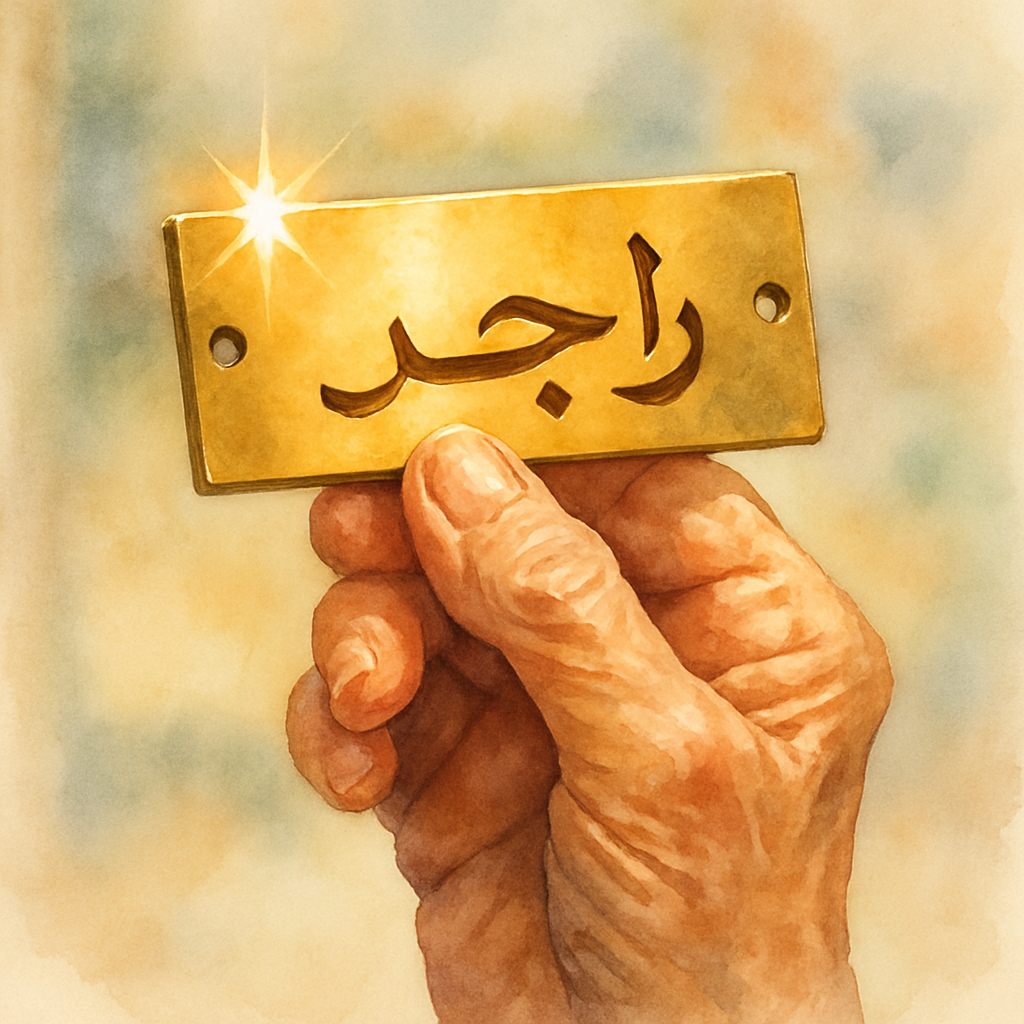
🎨 Illustration prompt
Teta's hand holding up a small, freshly-polished brass nameplate, just one word in Arabic engraved on it. The plate catches the afternoon light, shining warmly. Background is soft and out of focus. Watercolor style with bright catch of light on the brass. No text legible in the image.
"صَنَعتُها قَبلَ شَهرين،" قالَت تيتا. "كُنتُ أَنتَظِر اليَوم الَّذي أَستَطيع فيه أن أُحَضِّرها هُنا. مَعَك."
أَخَذَت تيتا مِسمارًا وشاكوشًا صَغيرًا من حَقيبَتها — كانت قد خَطَّطَت لِكُلِّ شَيء — وثَبَّتَت اللَّوحَة الصَّغيرة بِجَانِب لَوحَة العائِلَة على البَاب.
عائلَة الحَدّاد · 1923 يوسُف
ثُمَّ تَراجَعَت تيتا خَطوَتَين، ونَظَرَت إلى البَاب طَويلًا.
"I made it two months ago," Teta said. "I was waiting for the day I could bring it here. With you."
Teta took a small nail and hammer from her bag — she had planned everything — and fixed the small plate beside the family plate on the door.
Haddad Family · 1923 Youssef
Then Teta stepped back two paces and looked at the door for a long time.
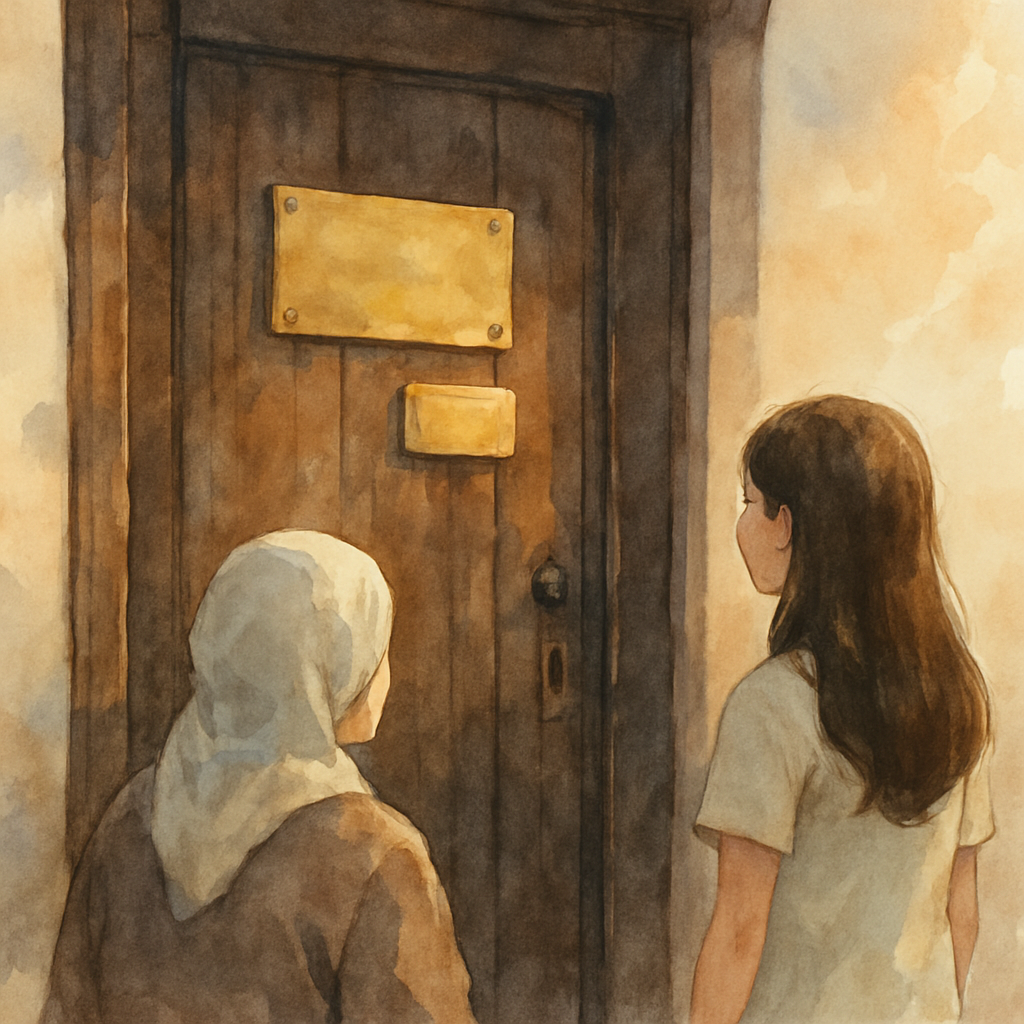
🎨 Illustration prompt
A view of the old wooden door now with two brass plates on it — the older family plate, and a small new one beside it. Teta stands a few steps back, with Layla beside her, both looking at the door. The new plate gleams slightly brighter than the old one. The composition feels like a quiet completion — something that needed to happen has finally happened. Watercolor style, late afternoon light. No text legible (the plate writing from the story is implied but blurred).
"يا لَيلى،" قالَت تيتا. "الأَسماء لا تَموت. هي تَنتَظِر فَقَط مَن يَكتُبُها. الآن — يوسُف هُنا. على البَاب. حَيث يَجِب أن يَكون مُنذ زَمَنٍ طَويل."
لَيلى نَظَرَت إلى اللَّوحَة الجَديدَة. ثُمَّ إلى تيتا. ثُمَّ إلى الباب القَديم.
"تيتا،" قالَت لَيلى. "هَل سَنَعود؟"
"نَعَم،" قالَت تيتا. "في كُلِّ سَنَة. أَنا وأَنتِ. وفي يَومٍ ما — أَنتِ وأَولادُكِ."
في طَريق العَودَة إلى بَيروت، لَم تَتَحَدَّثا كَثيرًا. لَم يَكُن هُناك ما يُقال. ولكن لَيلى أَمسَكَت بِيَد تيتا طَوال الطَّريق، حَتَّى وَصَلَتا إلى البَيت.
في تِلكَ اللَّيلَة، قَبل النَّوم، أَخَذَت لَيلى قَلَمًا ودَفتَرًا، وكَتَبَت اسمًا واحِدًا في الصَّفحَة الأولى:
يوسُف الحَدّاد
ولَن تَنساه أَبَدًا.
"Layla," Teta said. "Names don't die. They only wait for someone to write them. Now — Youssef is here. On the door. Where he should have been a long, long time ago."
Layla looked at the new plate. Then at Teta. Then at the old door.
"Teta," Layla said. "Will we come back?"
"Yes," Teta said. "Every year. You and me. And one day — you and your children."
On the way back to Beirut, they didn't talk much. There was nothing more to say. But Layla held Teta's hand the whole way home.
That night, before sleep, Layla took a pen and a notebook, and wrote one name on the first page:
Youssef Haddad
And she will never forget him.
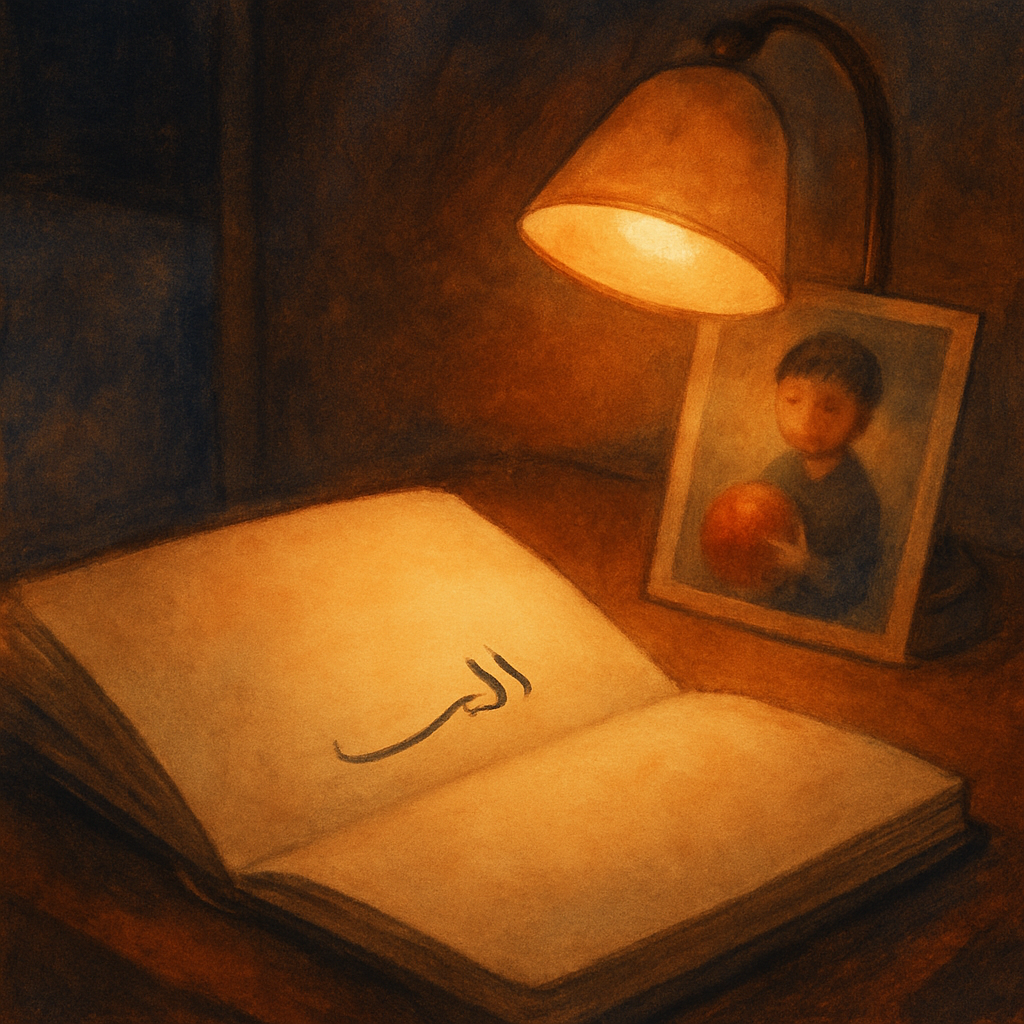
🎨 Illustration prompt
A close-up of an open notebook on a bedside table at night. A single name handwritten in Arabic on the page (the writing visible as a graceful line, but not legible as specific letters). A small reading lamp glowing warm beside it. The mood is quiet, completed, peaceful. A photograph leaning against the lamp — the boy with the red ball, just visible in soft focus. Watercolor style with deep warm tones, the lamp light spilling across the page. This is the emotional anchor of the book. No text legible in the image.
كَلِمَاتٌ جَدِيدَة · New Words
| Arabic | How to say it | English |
|---|---|---|
رِسَالَة |
ri-sā-lah | letter |
خَطّ |
khatt | handwriting (also: line) |
جَدَّة / تيتا |
jad-dah / tay-tah | grandmother (Levantine: teta) |
شَقَّة |
shaq-qah | apartment |
حَيّ |
hayy | neighborhood |
صُنْدُوق |
sun-dūq | box |
صُورَة |
sū-rah | photograph / picture |
لَوْحَة |
law-hah | plaque / nameplate |
نُحَاس |
nu-hās | brass / copper |
حَرْب |
harb | war |
ذِكْرَى |
dhik-rā | memory |
ثَقِيل |
tha-qīl | heavy |
اِنْتَظَرَ |
in-ta-za-ra | waited (verb) |
صَنَعَ |
sa-na-'a | made (verb) |
🗣️ Talk about it
These are not test questions. They are conversation starters — ideal for a quiet kitchen table chat, or in the car.
- What did Teta mean by "some names are heavy"? Have you ever had a piece of information you weren't ready to know? Or that someone trusted you with only when you were old enough?
- Teta waited until Layla was the same age Youssef was when he disappeared. Why do you think she chose that particular moment?
- The story isn't only about loss — it's also about remembering. What does it look like, in your family, to remember someone who isn't here anymore? A photo on a shelf? A favorite food? A story told again and again?
✏️ Try it (one of these, your choice)
- Ask one elder in your family about a name they don't usually talk about. Listen more than you speak. Don't push if they aren't ready.
- Make a tiny family tree of your own — even just your grandparents, parents, you. Write the names in Arabic if you can, or in transliteration. Hang it somewhere.
- Write a short letter to someone in your family who has died (a grandparent, a great-aunt, an older relative you didn't get to meet). You don't have to send it anywhere. Just write it. Sometimes that's enough.
- Draw the brass nameplate as you imagine it. What does your family name look like in Arabic?
A note for grown-ups reading along
This story touches on the Lebanese Civil War (1975–1990) through one family's lens. It does so gently and without graphic detail — Youssef simply "doesn't come back," and the story is about the long shape of grief, not the violence itself. This is appropriate for ages 10 and up.
If your child is from a Levantine family that lived through this war (or any war), this story may open important conversations. Read it with them, not just at them. Pause at the Between the Chapters moments. Let them ask. Let them sit in silence.
For families whose own histories are different — Palestinian, Syrian, Iraqi, Sudanese, or any family with displacement or loss — the story still works. The names change, the shape of the grief is the same.
On the Arabic: Tier 4 stories use selective vowel marks — only on harder words. This is closer to grown-up Arabic, and a good challenge for readers who already handle Tier 3 comfortably. If your child stumbles, sit with them. Repetition is still the curriculum.
On the dialect: This story is in Modern Standard Arabic, with Levantine cultural and emotional sensibility. Words like teta (grandma) are Levantine spoken Arabic — they appear in the dialogue but not in the narration.
— Hayya Beena Naqraa (هَيَّا بِنَا نَقْرَأ)