شَجَرَة الرُّمَّان
The Pomegranate Tree
A Hayya Beena Naqraa story · Tier 4 (Novella · رِوَايَة) · For ages 10–12
A short chapter book in three chapters. Heritage learners and intermediate Arabic readers. Vowel marks appear only on harder or less-common words.
Cover page
شَجَرَة الرُّمَّان
The Pomegranate Tree
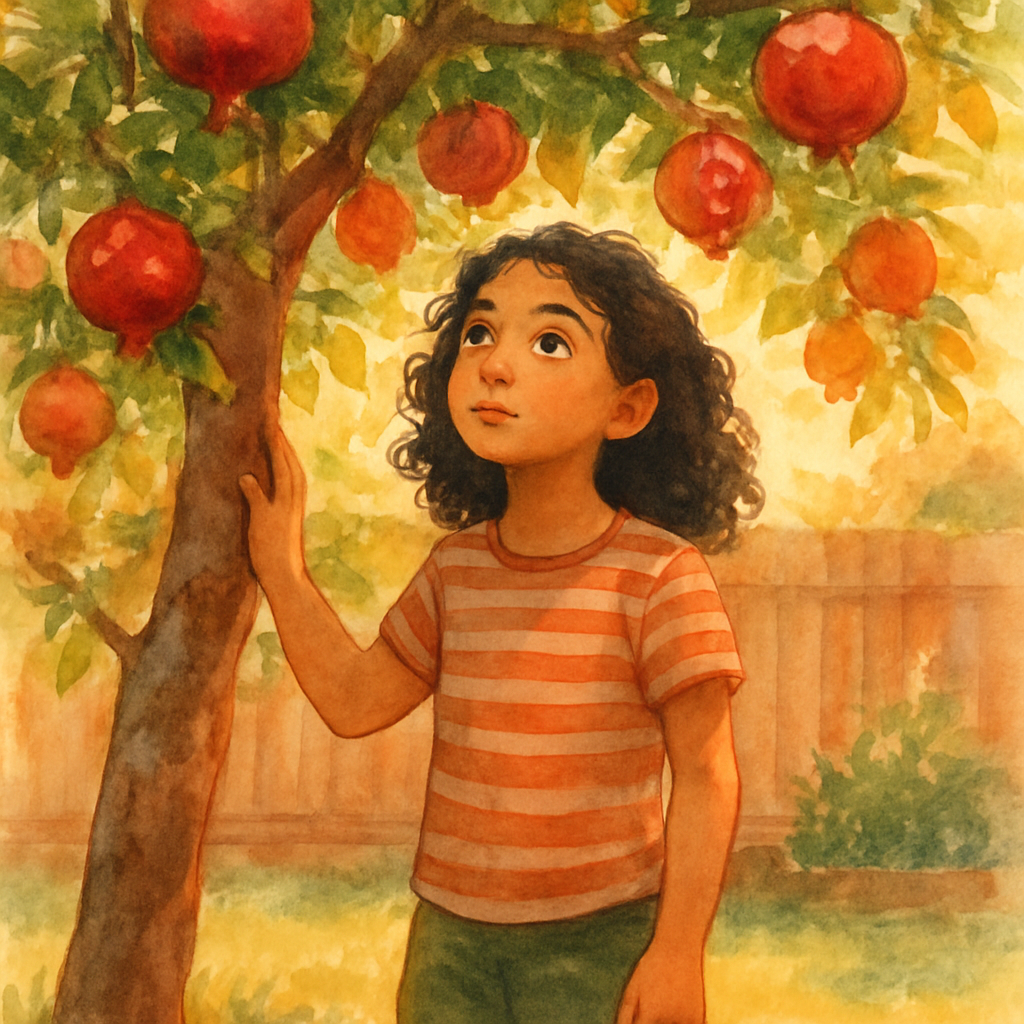
🎨 Illustration prompt
A soft watercolor illustration of an 11-year-old Palestinian-American girl with dark curly hair and warm brown eyes, standing under a large pomegranate tree in a sunlit California backyard. The tree is heavy with ripe red pomegranates, some split open to show ruby seeds. She is looking up into the branches, one hand resting gently on the bark. Late afternoon light filters through the leaves, casting dappled shadows on the grass. The fence behind her is wooden, with a small herb garden at its base. Watercolor style, warm palette — terracotta, deep red, olive green, golden light. No text in the image. Aspect ratio: 4:5 portrait.
A note before we begin
This book is told in three short chapters. You don't have to read it all at once. After each chapter, there's a small "بَيْنَ الفُصُول · Between the Chapters" moment — a question or a small thing to notice.
The Arabic uses selective vowel marks — only on harder or less common words. Common words go without. This is closer to how grown-up Arabic books are written, and it's a good challenge for readers who are growing.
الفَصْلُ الأَوَّل · Chapter One
The Tree in the Backyard
في حَديقَة بَيت لَيلى، في مَدينَةٍ صَغيرة في كاليفورنيا، تَقِف شَجَرَة كَبيرة. شَجَرَة رُمَّان.
عُمرها أَكبَر من عُمر لَيلى. أَكبَر من البَيت نَفسِه، رُبَّما. أَوراقُها خَضراء داكِنَة، وأَزهارُها بُرتُقاليَّة حَمراء في الرَّبيع، وفي الخَريف تَحمِل ثِمارًا كَبيرَة كَأَنَّها مَصابيح حَمراء بَين الأَغصان.
لَيلى عُمرها أَحَدَ عَشرَ عامًا. هي تُحِبّ الشَّجَرَة مُنذ كانت صَغيرَة. تَلعَب تَحتَها. تَقرَأ كُتُبَها عَلى الكُرسِيِّ الخَشَبيِّ القَريب مِنها. ولكِنَّها لَم تَسأَل أَبَدًا: مِن أَين جاءَت هذه الشَّجَرَة؟
In Layla's backyard, in a small city in California, there stands a big tree. A pomegranate tree.
It is older than Layla. Older than the house itself, maybe. Its leaves are dark green, its flowers a reddish orange in spring, and in autumn it carries large fruits like red lamps among the branches.
Layla is eleven years old. She has loved the tree since she was little. She plays under it. She reads her books on the wooden chair beside it. But she has never once asked: where did this tree come from?
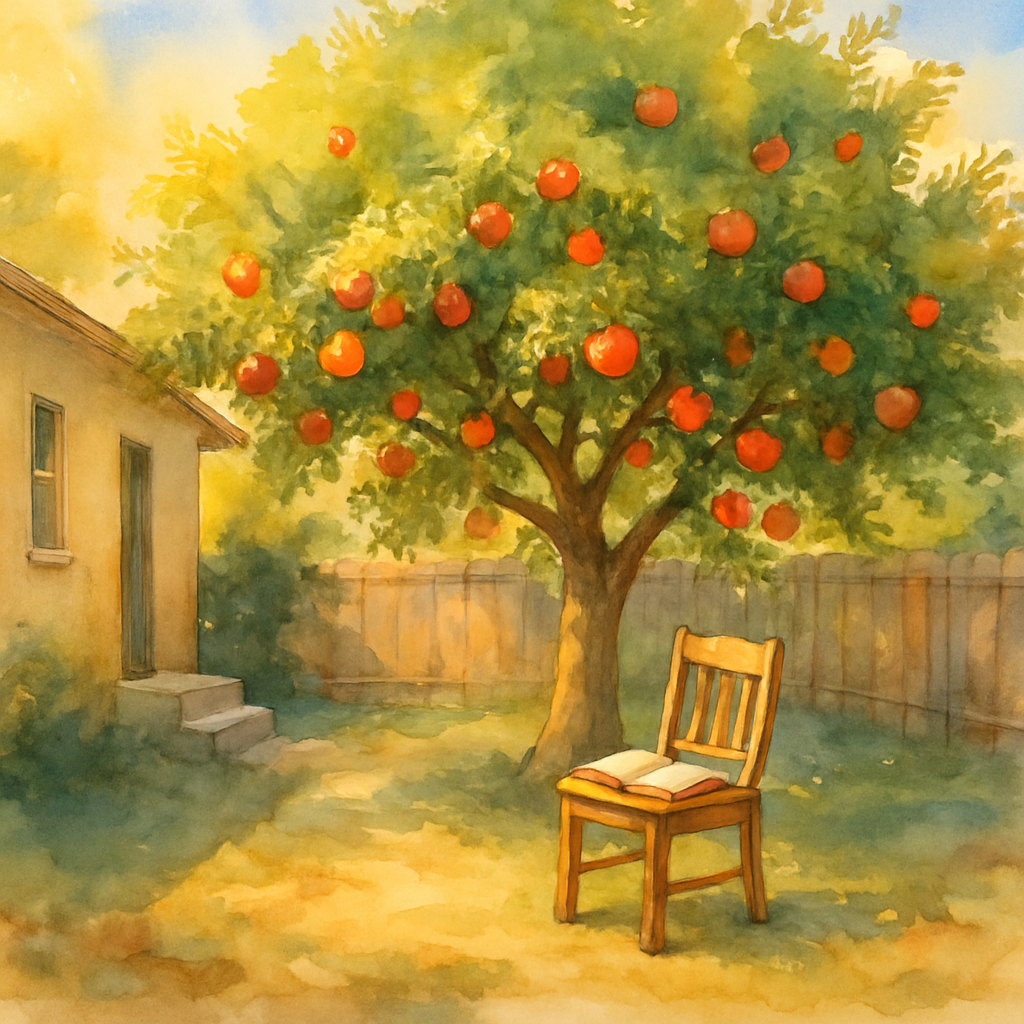
🎨 Illustration prompt
A wide watercolor view of a California backyard with a single large, mature pomegranate tree at its center, heavy with red fruit. A small wooden reading chair sits beneath it with an open book on the seat. The fence is weathered wood, and a small concrete back step leads from a modest single-story house. Sunlight slants in from the left. The tree feels like the heart of the scene — protective, generous. Watercolor style, warm and luminous. No text in the image.
سِتّو — هكَذا تَدعو لَيلى جَدَّتَها، بِالكَلِمَة الفِلَسطينيَّة الَّتي تَعني "جَدَّة" — تَعتَني بِالشَّجَرَة كُلَّ يَوم. تَخرُج في الصَّباح، بِفِنجان قَهوَتِها بِيَدِها، وتَقِف تَحت الأَغصان. تَلمِس الأَوراق. تَزيل الأَعشاب الصَّغيرة من حَول الجِذع. تَتَكَلَّم مَع الشَّجَرَة بِصَوتٍ خَفيض، بِالعَرَبيَّة.
أَحيانًا، تَسمَع لَيلى سِتّو تَقول: "صَباح الخَير، يا حَبيبَتي."
ولَيلى تَعرِف أَنَّ سِتّو لا تُحَدِّث أَحَدًا في البَيت. هي تُحَدِّث الشَّجَرَة.
Sittu — that is what Layla calls her grandmother, the Palestinian word for "grandma" — takes care of the tree every day. She goes out in the morning, her cup of coffee in her hand, and stands under the branches. She touches the leaves. She pulls the small weeds away from the trunk. She talks to the tree in a low voice, in Arabic.
Sometimes Layla hears Sittu say, "Good morning, my dear."
And Layla knows Sittu is not talking to anyone in the house. She is talking to the tree.
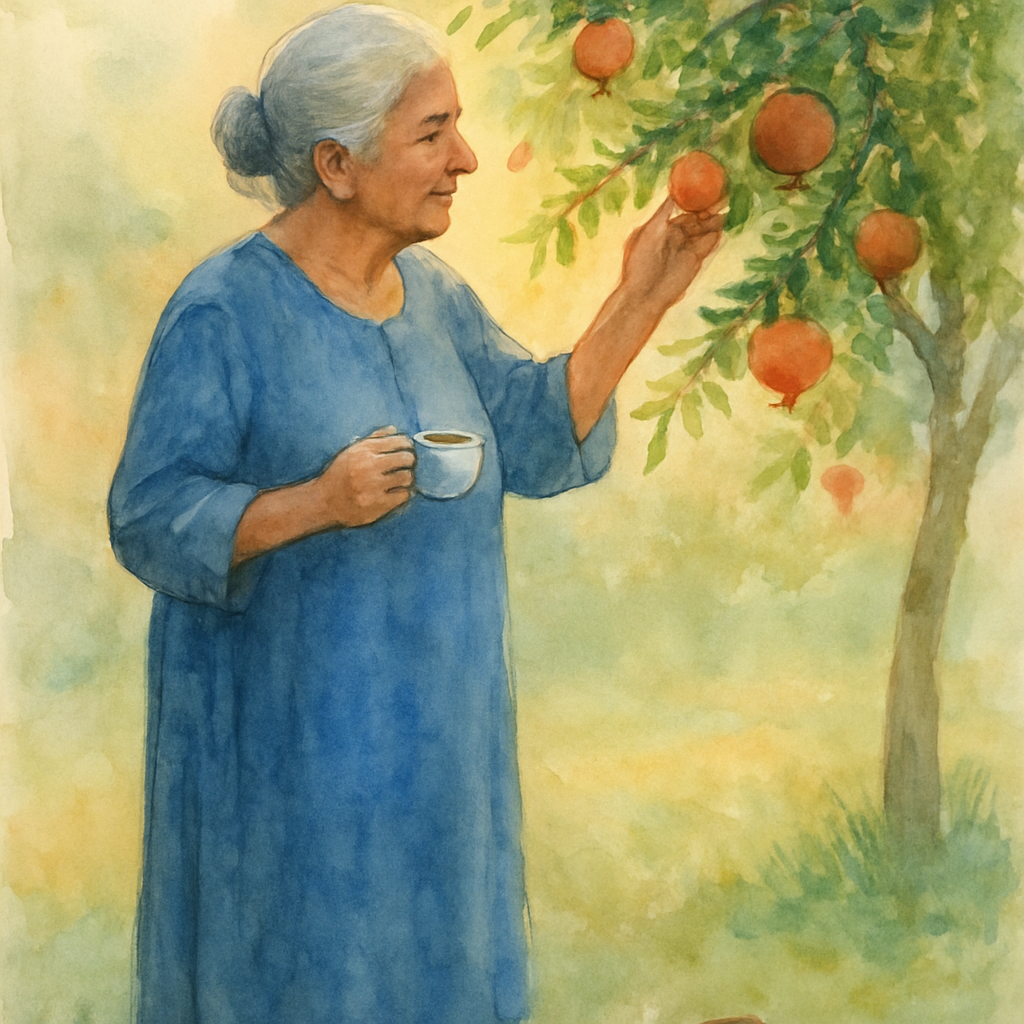
🎨 Illustration prompt
An older Palestinian woman in her 70s, silver hair pulled into a soft bun, wearing a long blue housedress, stands beneath the pomegranate tree in early morning light. She holds a small coffee cup in one hand and is gently touching a low branch with the other. Her face is calm, almost smiling, eyes on the tree. The morning light is silver-gold and dewy. A pair of slippers visible at her feet on the grass. Watercolor style, very tender. No text in the image.
في يَومٍ من أَيّام تِشرين الأَوَّل، عادَت لَيلى من المَدرَسَة، وَوَجَدَت سِتّو جالِسَةً تَحت الشَّجَرَة، على الكُرسِيِّ الخَشَبيّ. كانَت تَحمِل رُمَّانَةً واحِدَة في حِجرِها.
"تَعالَي، يا لَيلى،" قالَت سِتّو. "اِجلِسي."
جَلَسَت لَيلى عَلى العُشب، قُرب رِجلَي جَدَّتها.
"أَظُنُّ أَنَّكِ كَبُرتِ بِما فيه الكِفايَة الآن،" قالَت سِتّو، وهي تَنظُر إلى الرُّمَّانَة في يَدِها. "هذه الشَّجَرَة لها قِصَّة. وأَنا — لَم أَحكِها لَكِ بَعد."
نَظَرَت لَيلى إلى سِتّو. ثُمَّ إلى الشَّجَرَة. الأَوراق كانَت تَتَحَرَّك قَليلًا في الهَواء.
"اِحكي لي، يا سِتّو."
One day in October, Layla came home from school and found Sittu sitting under the tree, on the wooden chair. She was holding a single pomegranate in her lap.
"Come here, Layla," Sittu said. "Sit."
Layla sat on the grass, near her grandmother's feet.
"I think you're old enough now," Sittu said, looking down at the pomegranate in her hand. "This tree has a story. And I — I haven't told it to you yet."
Layla looked at Sittu. Then at the tree. The leaves were moving a little in the air.
"Tell me, Sittu."
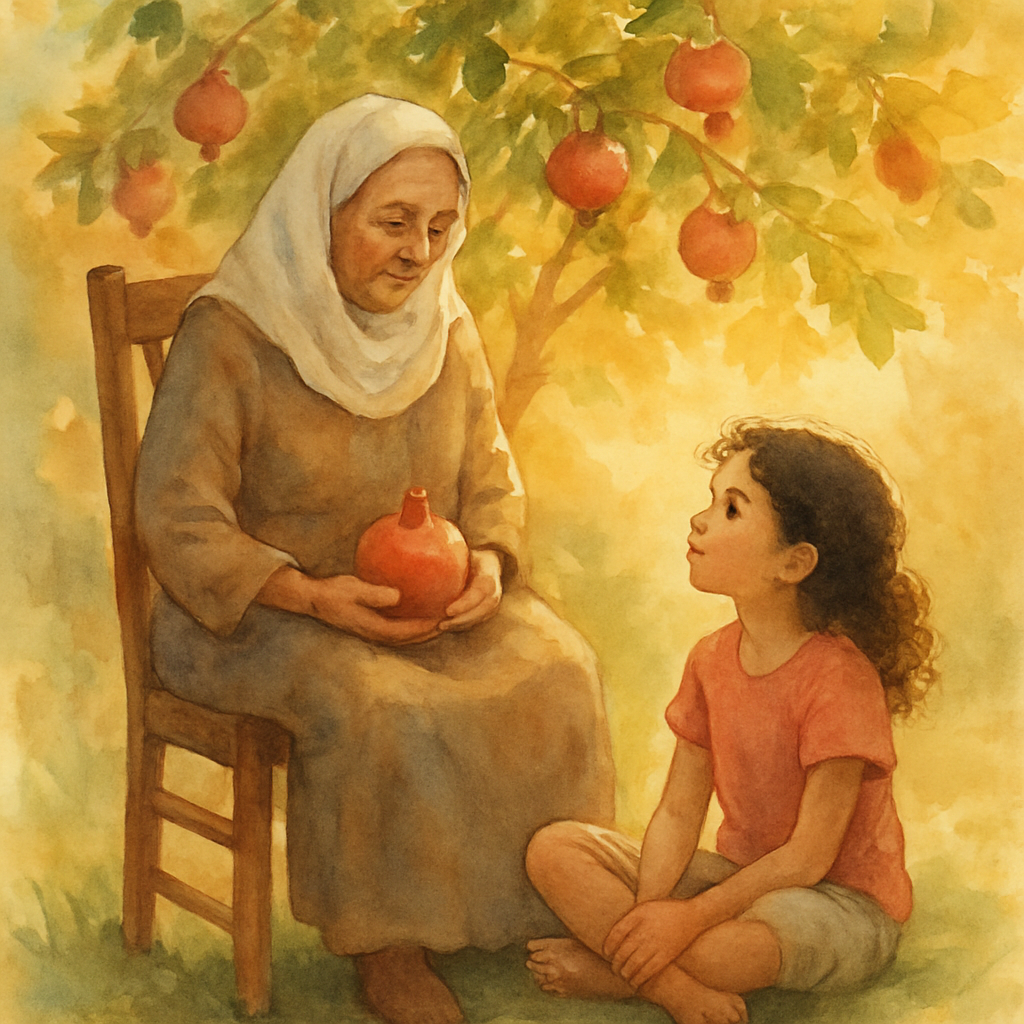
🎨 Illustration prompt
Sittu seated on a wooden garden chair beneath the pomegranate tree, with a single ripe pomegranate cupped in her lap. Layla, an 11-year-old girl with curly dark hair, sits cross-legged on the grass beside her grandmother's feet, looking up at her with open, waiting eyes. The afternoon light is warm honey-gold, slanting through the leaves. The mood is hushed, intimate — a story about to begin. Watercolor style, soft and warm. No text in the image.
بَيْنَ الفُصُول · Between the Chapters
Stop for a moment.
Layla has lived with the pomegranate tree her whole life, and never asked where it came from. What objects in your own family — a plant, a piece of jewelry, a kitchen pot, a photograph — carry stories you don't yet know? What might happen if you asked?
الفَصْلُ الثَّاني · Chapter Two
The Seed
سِتّو بَدَأَت بِبُطء. كَأَنَّ الكَلِمات ثَقيلَة، وعَلَيها أَن تَرفَعَها واحِدَة واحِدَة.
"كُنتُ في عُمرِكِ تَقريبًا. لا، أَصغَر. كُنتُ بِنتًا صَغيرَة في قَريَةٍ في فِلَسطين. اِسم القَريَة — لا يَهُمّ الآن. المُهِمّ أَنَّ لَنا كانَ بَيت. ووَراء البَيت، كانَت تَقِف شَجَرَة رُمَّان كَبيرة. أَكبَر مِن هذه. زَرَعَها جَدّي."
سَكَتَت قَليلًا.
"في سَنَة 1948، حَصَلَت أَشياء صَعبَة في بِلادِنا. النّاس اضطُرّوا أَن يَترُكوا بُيوتَهم. عائِلَتي أَيضًا. قالوا لَنا: 'سَتَرجِعون بَعد أُسبوع، أُسبوعَين.' أَخَذنا قَليلًا من الثِّياب. مِفتاح البَيت. وَلا شَيء آخَر تَقريبًا."
Sittu began slowly. As if the words were heavy, and she had to lift them one by one.
"I was about your age. No, younger. I was a small girl in a village in Palestine. The name of the village — it doesn't matter now. What matters is that we had a home. And behind the house stood a big pomegranate tree. Bigger than this one. My grandfather planted it."
She paused.
"In the year 1948, hard things happened in our country. People had to leave their homes. My family too. They told us: 'You'll come back in a week, two weeks.' We took a little clothing. The key to the house. And almost nothing else."
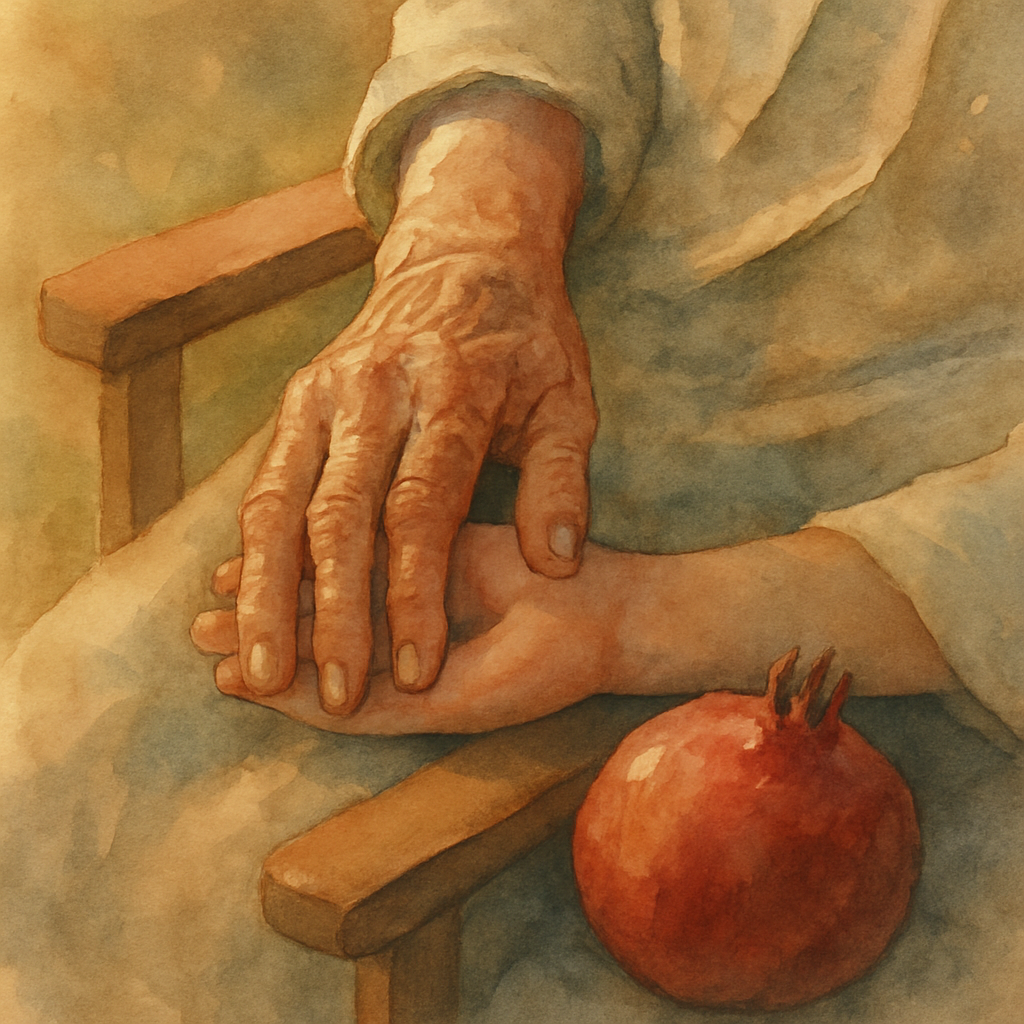
🎨 Illustration prompt
A close-up of Sittu's weathered hand resting on Layla's smaller hand, both on the wooden arm of the garden chair. The pomegranate sits in Sittu's lap, just visible at the edge. The light is now a softer gold, late afternoon. The mood is grave and tender — a story being passed from one hand to another. Watercolor style, very quiet. No text in the image.
"قَبل أَن نَخرُج من البَيت، أَبي ذَهَب إلى الشَّجَرَة. قَطَف رُمَّانَةً واحِدَة. كَبيرَة، حَمراء. وَضَعَها في يَدي وقال: 'اِحمِليها يا بِنتي. هذه مِن أَرضِنا.'"
"مَشَينا أَيّامًا. عَبَرنا الجِبال. ذَهَبنا أَوَّلًا إلى لُبنان، ثُمَّ إلى الأُردُن. وفي الطَّريق، عِندَما لَم يَبقَ لَنا طَعام، فَتَحنا الرُّمَّانَة. أَكَلنا حَبَّاتها. كُلّ العائِلَة. كانَت حُلوَةً جِدًّا، يا لَيلى. لَن أَنسى طَعمَها أَبَدًا."
"ولكِن — وأَنا جائِعَة، صَغيرَة، مُتعَبَة — عَرَفتُ شَيئًا. عَرَفتُ أَنَّ عَلَيَّ أَن أُنقِذ البِذْرات. لا أَدري كَيف عَرَفتُ. لَفَفتُهُنَّ في قِطعَة قُماش صَغيرَة، ووَضَعتُهُنَّ في جَيبي."
"Before we left the house, my father went to the tree. He picked one pomegranate. Big, red. He put it in my hand and said, 'Carry this, my daughter. This is from our land.'"
"We walked for days. We crossed mountains. We went first to Lebanon, then to Jordan. And on the way, when we had no food left, we opened the pomegranate. We ate its seeds. The whole family. It was so sweet, Layla. I will never forget that taste."
"But — even hungry, small, tired — I knew something. I knew I had to save the seeds. I don't know how I knew. I wrapped them in a small piece of cloth, and put them in my pocket."
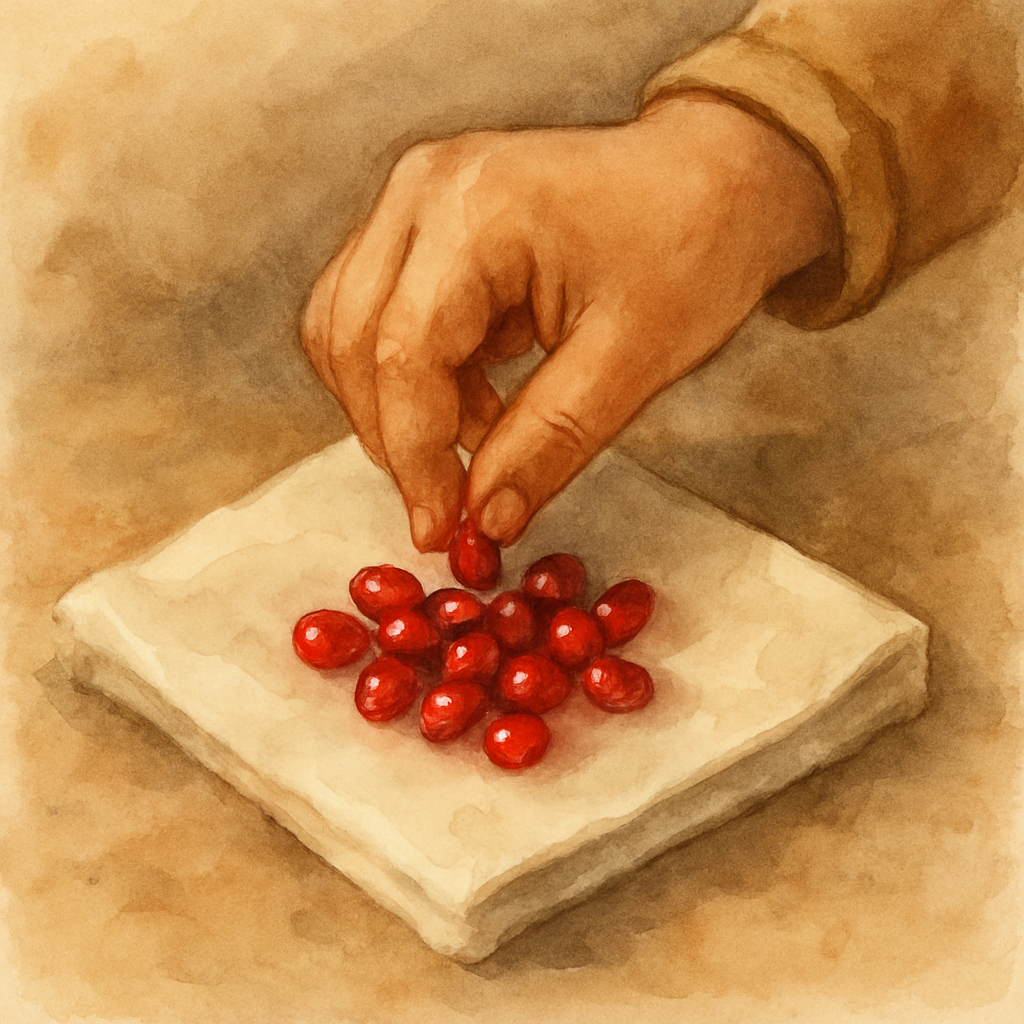
🎨 Illustration prompt
A small inset memory image: a child's hand (a younger Sittu's hand) carefully placing pomegranate seeds onto a folded square of white cloth. The seeds are deep ruby red, glowing slightly. The cloth rests on a dusty surface, perhaps a stone. The hand is small, the fingernails a little dirty from travel. Soft, sepia-warm watercolor tones with the seeds as the brightest spot of color. No text in the image.
"حَمَلتُ تِلكَ البِذْرات ثَلاثينَ سَنَة، يا لَيلى. ثَلاثين. مِن مُخَيَّمٍ في لُبنان إلى بَيتٍ في الأُردُن. ثُمَّ هُنا، إلى كاليفورنيا، عِندَما تَزَوَّجتُ جَدَّكِ. كانَت البِذْرات مَعي دائِمًا، في صُندوقٍ صَغيرٍ من خَشَب."
"وعِندَما اشتَرَينا هذا البَيت — أَوَّل بَيتٍ بِحَديقَة — فَتَحتُ الصُّندوق. زَرَعتُ البِذْرات كُلَّها في التُّراب. لَم يَنبُت إِلّا واحِدَة."
نَظَرَت سِتّو إلى الشَّجَرَة فَوقَها.
"هذه هي، يا لَيلى. هذه الشَّجَرَة هي من شَجَرَة أَبي. من الشَّجَرَة الَّتي أَكَلتُ مِنها وأَنا بِنت صَغيرَة، في القَريَة الَّتي لا أَستَطيع الرُّجوع إِلَيها."
لَم تَستَطِع لَيلى أَن تَتَكَلَّم. الدُّموع نَزَلَت قَبل أَن تَفهَم لِماذا. وَضَعَت رَأسَها على رُكبَة سِتّو. وسِتّو وَضَعَت يَدَها على شَعرِها، بِبُطء، بِبُطء.
"I carried those seeds for thirty years, Layla. Thirty. From a camp in Lebanon to a house in Jordan. Then here, to California, when I married your grandfather. The seeds were always with me, in a small wooden box."
"And when we bought this house — our first house with a backyard — I opened the box. I planted all the seeds in the soil. Only one grew."
Sittu looked up at the tree above her.
"This is the one, Layla. This tree is from my father's tree. From the tree I ate from when I was a little girl, in the village I can never return to."
Layla couldn't speak. The tears came down before she understood why. She put her head on Sittu's knee. And Sittu put her hand on Layla's hair, slowly, slowly.
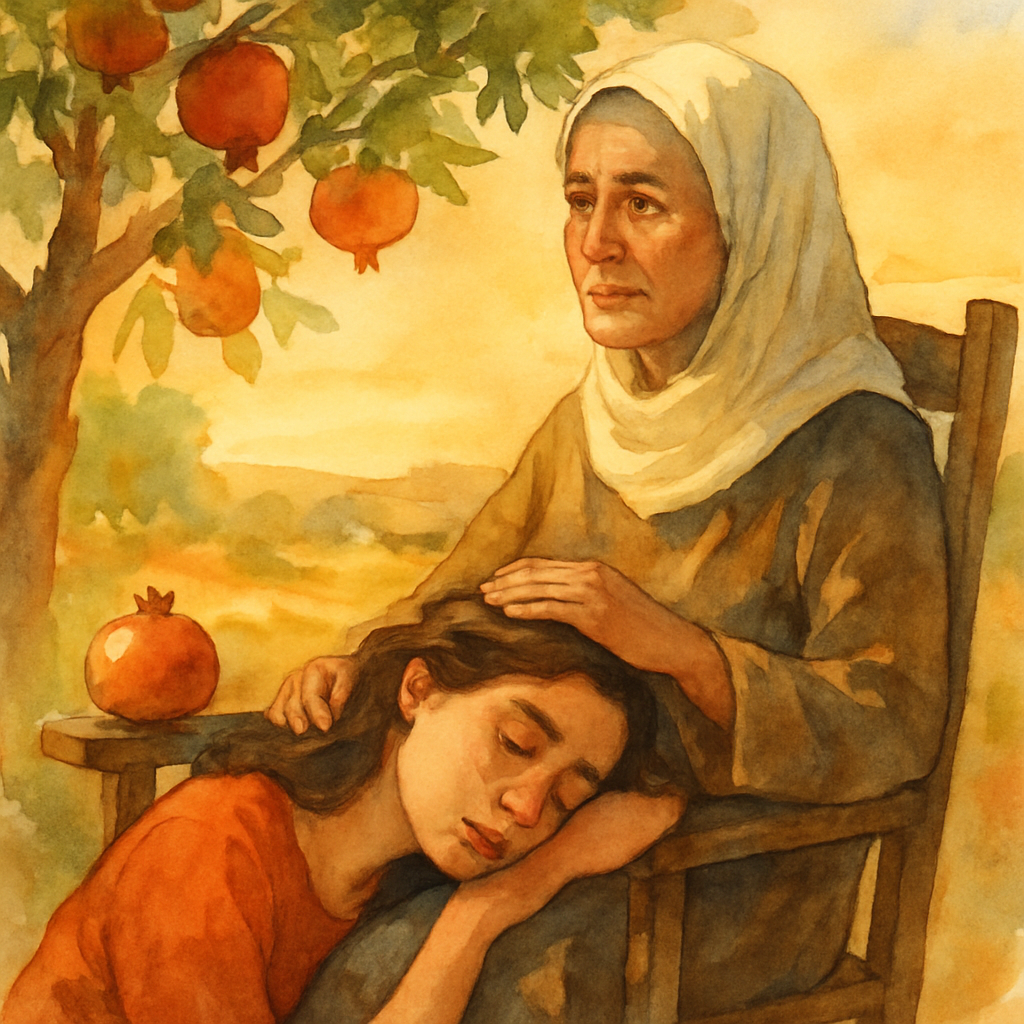
🎨 Illustration prompt
Layla resting her head on Sittu's knee under the pomegranate tree, eyes closed, a single tear visible on her cheek. Sittu's hand is resting gently on Layla's hair, her face calm, looking out toward the horizon — not down at Layla. The pomegranate sits forgotten on the chair's arm. Late afternoon light, deep gold, casting long shadows. The whole image is held in warmth, not sadness alone. Watercolor style, very tender. No text in the image.
بَيْنَ الفُصُول · Between the Chapters
Stop again.
Sittu's village is a place she will never see again. She carried a seed, and she planted it, and the tree grew in another country. Is there a place in your family's past — a city, a village, a house — that someone you love has never been able to visit again? What do you carry instead? A recipe? A song? A word? A way of saying hello?
الفَصْلُ الثَّالِث · Chapter Three
The Inheritance
بَعد ذلِك اليَوم، بَدَأَت سِتّو تَأخُذ لَيلى مَعَها كُلَّ صَباح إلى الشَّجَرَة.
"هذا في الشِّتاء، نَحنُ نُقَلِّم الأَغصان،" قالَت سِتّو، وهي تُريها كَيف تَقُصّ الأَغصان الصَّغيرَة الَّتي ماتَت. "الشَّجَرَة تَحتاج هذا. مِثل قَصّ الشَّعر. تَنبُت أَقوى بَعدَه."
"وهذا في الصَّيف، نَحنُ نَسقيها — ولكِن لَيس كَثيرًا. الرُّمَّان لا يُحِبّ الماء الزّائِد. جُذورُها قَويَّة. تَعرِف كَيف تَجِد الماء بِنَفسِها."
"وفي الخَريف، نَنظُر إلى القِشرَة. عِندَما تَصير حَمراء داكِنَة، وفيها بَعض الخُطوط البُنّيَّة، تَكون الرُّمَّانَة جاهِزَة. تَسمَعينَها أَيضًا — اِضرِبيها بِأُصبُعِكِ. إذا كانَ الصَّوت كَالطَّبل، هي ناضِجَة."
لَيلى كانَت تَكتُب كُلَّ شَيء في دَفتَرٍ صَغير. لَم تُرِد أَن تَنسى.
After that day, Sittu began taking Layla with her every morning to the tree.
"This is winter, we prune the branches," Sittu said, showing her how to cut the small branches that had died. "The tree needs this. Like cutting hair. It grows back stronger."
"And this is summer, we water it — but not too much. Pomegranate doesn't like extra water. Its roots are strong. It knows how to find water on its own."
"And in autumn, we look at the skin. When it turns dark red, with some brown lines, the pomegranate is ready. You can also hear it — tap it with your finger. If the sound is like a drum, it's ripe."
Layla wrote everything down in a small notebook. She didn't want to forget.
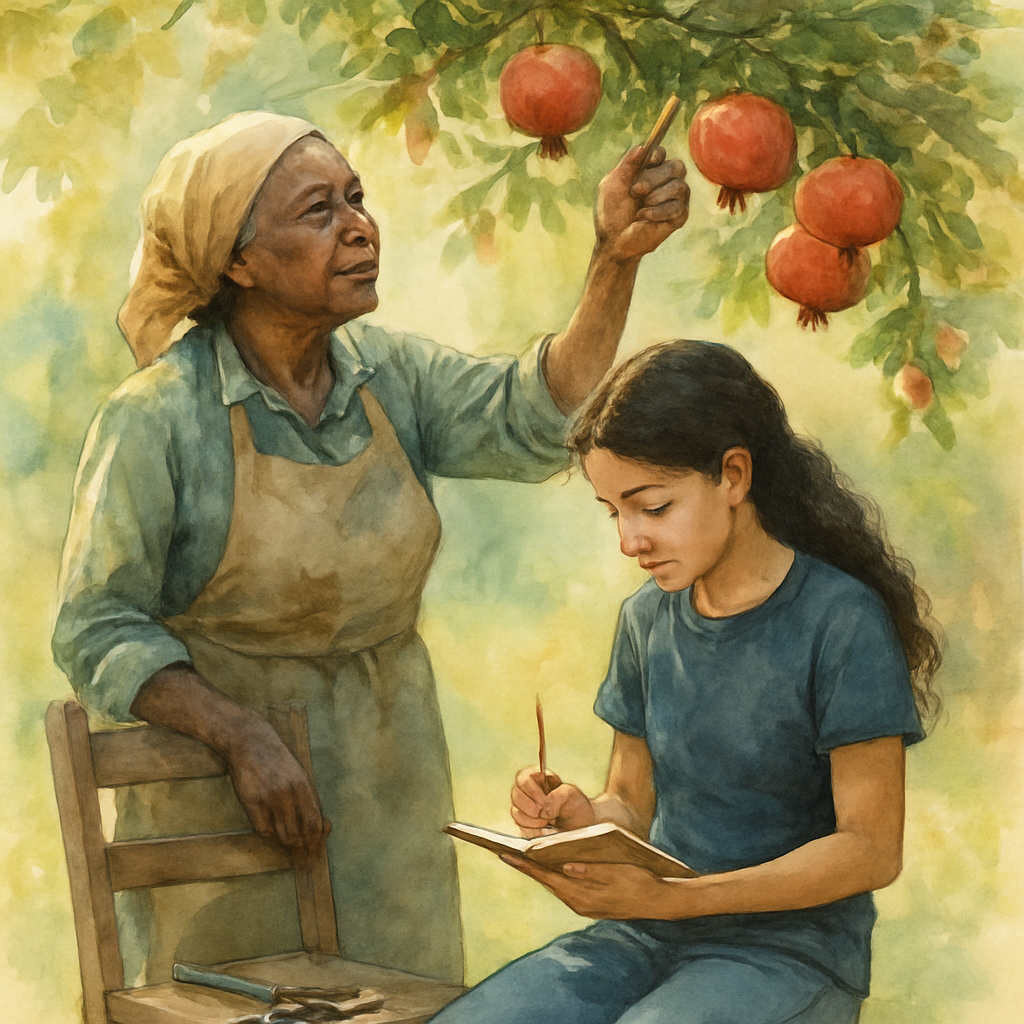
🎨 Illustration prompt
Sittu and Layla side by side beneath the tree, Sittu pointing up at a cluster of pomegranates while Layla holds a small notebook and pencil, writing carefully. Both wear gardening clothes — Sittu in a faded apron, Layla in jeans and a t-shirt. A pair of small pruning shears rests on the wooden chair. The morning light is bright and clear. The mood is purposeful, alive — a passing-down. Watercolor style. No text in the image.
في يَومٍ من أَيّام الخَريف، قالَت سِتّو: "تَعالَي. هذه الواحِدَة جاهِزَة."
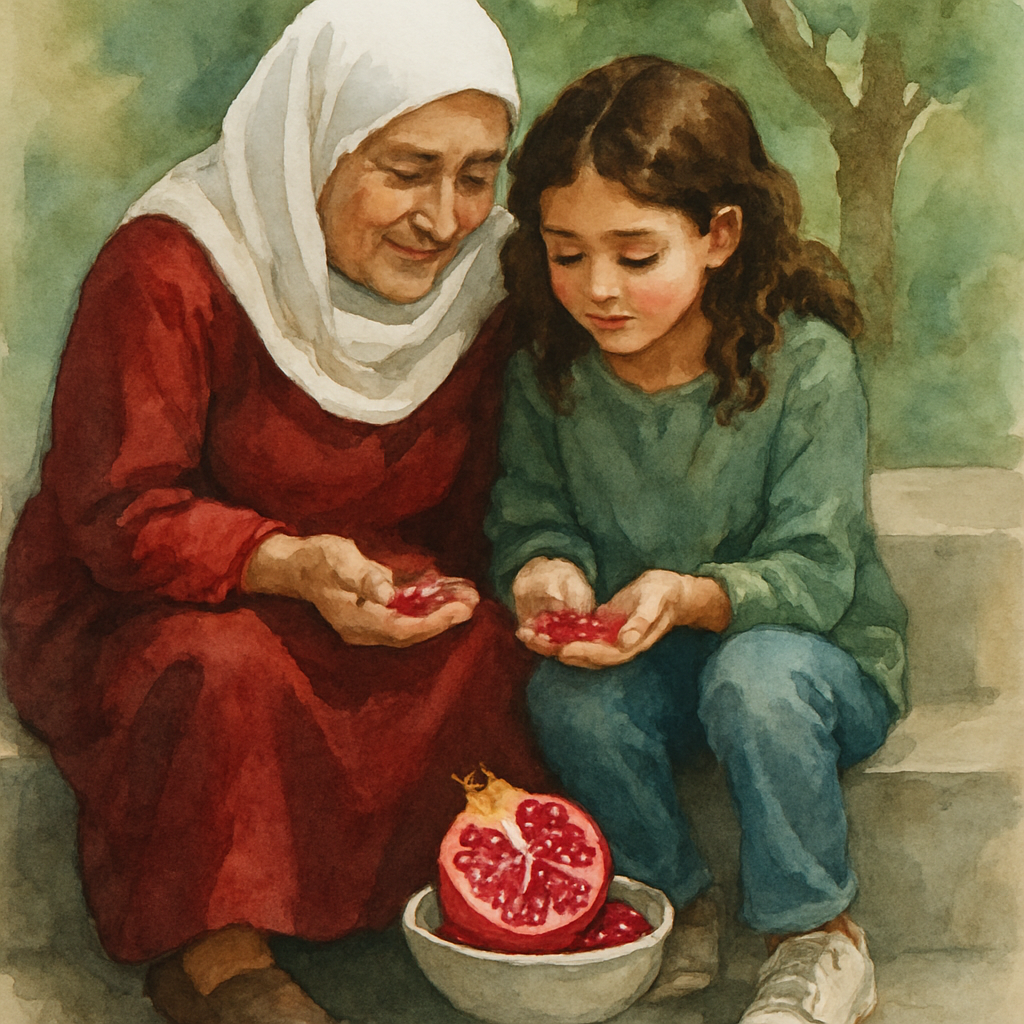
اِختارَت رُمَّانَةً كَبيرَة. قَطَفَتها بِيَد لَيلى — يَد سِتّو فَوق يَد لَيلى. جَلَستا عَلى دَرَجَة البَيت الخَلفيَّة. سِتّو فَتَحَت الرُّمَّانَة بِسِكّينٍ صَغيرَة. الحَبّات الحَمراء، اللَّامِعَة كَالياقوت، ظَهَرَت في الدّاخِل.
أَكَلَتا مَعًا، يَدًا بِيَد، حَبَّةً حَبَّة.
"يا لَيلى،" قالَت سِتّو. "عِندَما لا أَكون هُنا بَعد، هذه الشَّجَرَة لَكِ. وعِندَما يَكون لَكِ بِنت أَو وَلَد — سَيَعرِفون قِصَّتَها أَيضًا. نَحنُ لا نَستَطيع الرُّجوع إلى القَريَة. ولكِن نَستَطيع أَن نَحتَفِظ بِما جاء مَعَنا."
One autumn day, Sittu said, "Come. This one is ready."
She chose a big pomegranate. She picked it with Layla's hand — Sittu's hand over Layla's hand. They sat on the back step of the house. Sittu opened the pomegranate with a small knife. The red seeds, shining like rubies, appeared inside.
They ate together, hand by hand, seed by seed.
"Layla," Sittu said. "When I'm no longer here, this tree is yours. And when you have a daughter or a son — they will know its story too. We can't go back to the village. But we can keep what came with us."
🎨 Illustration prompt
Sittu and Layla sitting close together on a concrete back step, an open pomegranate split between them in a small ceramic bowl. The ruby seeds are bright and glistening. Both have a few seeds in their cupped palms. Sittu's slipper-clad foot rests next to Layla's sneaker. The tree rises behind them, slightly out of focus. The mood is warm, generous, a quiet ceremony. Watercolor style, jewel-toned reds against soft greens and stone. No text in the image.
في الأُسبوع التَّالي، في المَدرَسَة، طَلَبَت مُعَلِّمَة لَيلى أَن يَكتُب كُلّ طِفل عَن "شَيءٍ مُهِمّ في عائِلَتي." كَتَبَت لَيلى مَقالَةً صَغيرَة بِعُنوان "شَجَرَتي."
عِندَما قَرَأَتها المُعَلِّمَة، قالَت: "يا لَيلى. هذه أَجمَل شَيء كَتَبتِهِ في حَياتِكِ."
مَرَّت السَّنَوات. سِتّو كَبُرَت أَكثَر، ثُمَّ رَحَلَت — بِهُدوء، في فِراشِها، في صَباحٍ من أَيّام الرَّبيع. الشَّجَرَة كانَت مُزهِرَة في ذلِك الصَّباح.
كَبُرَت لَيلى. صارَت اِمرَأة. اِنتَقَلَت إلى مَدينَةٍ أُخرى — ماساتشوستس — وكانَ لَها بِنت صَغيرَة، سَمَّتها سَلمى، عَلى اِسم سِتّو.
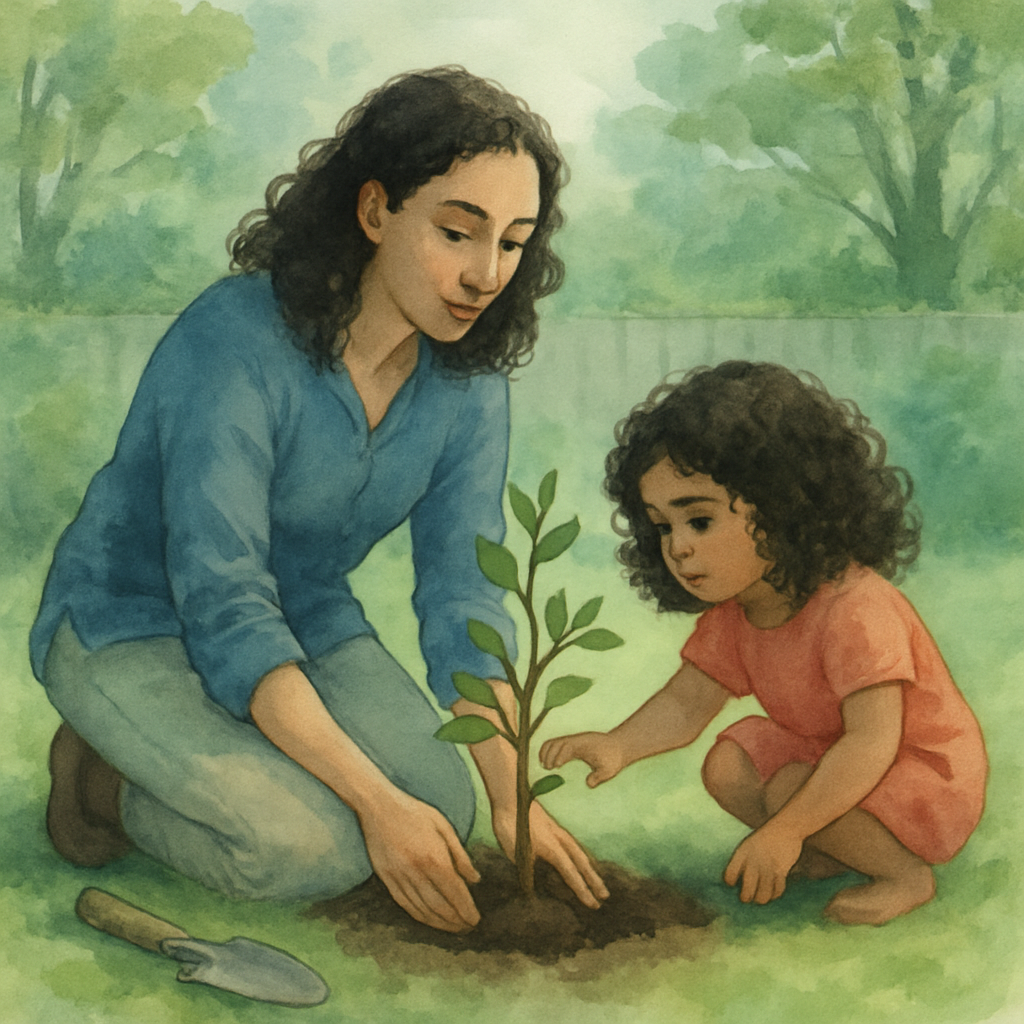
وفي حَديقَة بَيتِها الجَديد، حَفَرَت لَيلى حُفرَةً صَغيرَة في التُّراب. زَرَعَت غُصَينًا صَغيرًا، أَخَذَتهُ من شَجَرَة سِتّو — جِيلَين من الشَّجَرَة الأَصليَّة، الَّتي كانَت في القَريَة، في فِلَسطين.
وقالَت لِبِنتِها، الَّتي كانَت تَقِف بِجانِبِها: "هذه شَجَرَتُنا، يا حَبيبَتي. ولها قِصَّة. سَأَحكي لَكِ يَومًا، عِندَما تَكبَرين قَليلًا."
القَريَة الَّتي لا نَستَطيع الرُّجوع إِلَيها — تَعيش، بِطَريقَةٍ ما، في كاليفورنيا، وفي ماساتشوستس، وحَيثُما تُسافِر البِذْرات.
The next week, at school, Layla's teacher asked each child to write about "something important in my family." Layla wrote a small essay titled "My Tree."
When her teacher read it, she said, "Layla. This is the most beautiful thing you've ever written."
The years passed. Sittu grew older, and then she was gone — quietly, in her bed, on a spring morning. The tree was in bloom that morning.
Layla grew up. She became a woman. She moved to another city — Massachusetts — and had a small daughter, whom she named Salma, after Sittu.
And in the backyard of her new house, Layla dug a small hole in the soil. She planted a small sapling, taken from Sittu's tree — two generations from the original tree, the one in the village, in Palestine.
And she said to her daughter, who was standing beside her, "This is our tree, my love. And it has a story. I'll tell you one day, when you're a little older."
The village we can't return to — it lives, somehow, in California, and in Massachusetts, and wherever the seeds travel next.
🎨 Illustration prompt
A grown-up Layla, now in her thirties, kneeling in a different backyard with a different quality of light — cooler, New England green — placing a small pomegranate sapling into a freshly dug hole. A little girl, maybe four years old, with the same dark curly hair, crouches beside her, hand reaching out to touch a leaf of the sapling. A garden trowel rests on the grass. The mother's expression is calm, full. The sapling is small but alive. Watercolor style, gentle spring light. This is the emotional anchor of the book. No text in the image.
نَحنُ لا نَستَطيع الرُّجوع إلى القَريَة. ولكِن نَستَطيع أَن نَحتَفِظ بِما جاء مَعَنا.
We can't go back to the village. But we can keep what came with us.
كَلِمَاتٌ جَدِيدَة · New Words
| Arabic | How to say it | English |
|---|---|---|
رُمَّان |
rum-mān | pomegranate |
بِذْرَة |
bidh-rah | seed |
وَطَن |
wa-tan | homeland |
غُرْبَة |
ghur-bah | being far from home / diaspora |
تُرَاب |
tu-rāb | soil / earth |
جُذُور |
ju-dhūr | roots |
ذِكْرَى |
dhik-rā | memory |
أَرْض |
ard | land |
هَوِيَّة |
hu-wiy-yah | identity |
جِيلَيْن |
jī-layn | two generations |
بَلَد |
ba-lad | country / village |
وَرِثَ |
wa-ri-tha | inherited (verb) |
قَريَة |
qar-yah | village |
ناضِج |
nā-dij | ripe |
🗣️ Talk about it
These are not test questions. They are conversation starters — ideal for a quiet kitchen table chat, or on a walk.
- Sittu waited until Layla was eleven to tell her the story of the tree. Why do you think she waited? Do you think there's a "right age" for hard stories? Or is it more about the right moment?
- Sittu's father gave her one pomegranate to carry. Of all the things he could have given her, he chose that. Why a pomegranate? What does a seed mean, when you can't take anything else with you?
- The story ends with Layla planting a sapling in another city, for her own daughter. What does it mean to "keep what came with us," even when we can't go back? Are there things your own family has kept and passed down — recipes, songs, ways of speaking, plants in the garden?
✏️ Try it (one of these, your choice)
- Ask one elder in your family about something they brought with them when they moved — from one country, one city, one house to another. What did they choose to keep? What did they have to leave?
- Plant something. A seed from a fruit you ate. A cutting from a houseplant. Watch it grow. Notice how long it takes. Notice what it needs.
- Draw your family's tree — not a family tree of names, but an actual tree. What kind of tree would it be? What grows on it? Where are its roots? Where do its branches reach?
- Write a short letter to a child in your family who hasn't been born yet — a future niece, nephew, daughter, son. Tell them one thing you want them to know about where your family came from.
A note for grown-ups reading along
This story touches on the Nakba — the displacement of Palestinians from their villages in 1948 — through the lens of one family and one tree. It does so gently and without political argument. The grandmother in this story carries a seed across exile, plants it in California, and passes it to her granddaughter. This is appropriate for ages 10 and up.
If your child is from a Palestinian family — or a Syrian, Lebanese, Iraqi, Sudanese, Armenian, or any family that has known displacement — this story may open important conversations. Read it with them, not just at them. Pause at the Between the Chapters moments. Let them ask. Let them sit with the feelings that come.
For families whose own histories are different, the story still works. The tree could be any inheritance — a recipe, a language, a song, a way of greeting an elder. The shape of the love is the same.
The pomegranate (الرُّمَّان) is a deeply meaningful fruit in Palestinian culture — appearing in poetry, embroidery (tatreez), folk songs, and the courtyards of village homes for centuries. Many Palestinian families in diaspora do, in fact, grow pomegranate trees from seeds carried across the years. This story is fiction, but the practice it describes is real, and ongoing.
On the Arabic: Tier 4 stories use selective vowel marks — only on harder words. This is closer to grown-up Arabic, and a good challenge for readers who already handle Tier 3 comfortably. If your child stumbles, sit with them. Repetition is still the curriculum.
On the dialect: This story is in Modern Standard Arabic, with Palestinian cultural and emotional sensibility. Words like sittu (grandma) are Palestinian spoken Arabic — they appear in the dialogue and in the heart of the story, but not in the narration.
— Hayya Beena Naqraa (هَيَّا بِنَا نَقْرَأ)